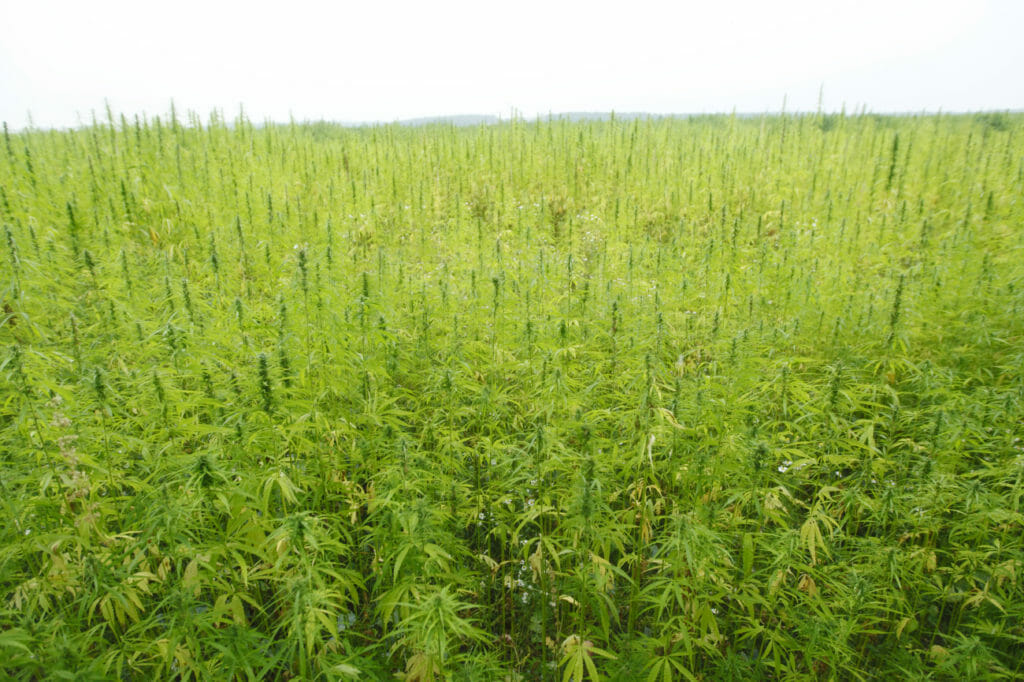
The Agriculture Improvement Act of 2018 (“2018 Farm Bill”) legalized hemp by removing the crop and its derivatives from the definition of marijuana under the Controlled Substances Act (“CSA”) and by providing a detailed framework for the cultivation of hemp. The 2018 Farm Bill gives the US Department of Agriculture (“USDA”) regulatory authority over hemp cultivation at the federal level. In turn, states and Indian tribes have the option to maintain primary regulatory authority over the crop cultivated within their borders by submitting a plan to the USDA (Note: The terms "Indian" and "tribes" are used in this post following the 2018 Farm Bill's usage; it is also worth noting that the term "Indian law" is used by the Washington State Bar Association and the Oregon State Bar, among others).
联邦与州层面的相互作用已促使各州出台多项立法和监管改革。事实上,多数州已提出(并通过)法案,授权在本州境内进行工业大麻的商业化生产。此外,虽数量较少但呈增长趋势的州也开始对工业大麻衍生产品的销售实施监管。
鉴于这些立法变化,我们推出涵盖全美50个州(及海外地区)的系列分析,探讨各司法管辖区对大麻二酚("工业大麻CBD")的监管政策。 若忽略印第安保留地的现状,本系列将不完整。部分原因在于各州通常无权管辖部落领地——这片横跨全美、面积约5620万英亩的广袤区域。因此,若忽视部落法规,全国大麻CBD分布图将出现相当于爱达荷州面积的空白区域。
这不仅是学术层面的问题。各部落正积极利用2018年《农业法案》赋予的权利——该法案明确允许部落提交大麻种植计划,从而消除了此前导致州级大麻禁令凌驾于部落法律之上的法律模糊地带。 美国农业部迄今已批准32项部落计划,数量几乎是获批州计划的两倍(尽管许多州仍在执行2014年试点计划规则)。除已获批计划外,另有1项计划正在审核中,另有1项计划待重新提交。另有三个部落已表达未来向美国农业部提交计划的意向。
Tribes from 20 states have submitted or plan to submit plans. South Dakota is the state with the most activity, with seven tribes that have submitted or plan to submit a plan. California comes second with five tribes, while third place is shared by five states (Montana, Nebraska, New Mexico, New York and Oklahoma). Kansas and North Dakota have two tribes each, while Arizona, Colorado, Florida, Iowa, Michigan, Minnesota, North Carolina, Oregon, Texas, Utah and Wisconsin have one. Some tribes' jurisdiction extends across state lines, and in those cases they have been counted separately for each state.
资格
In general, tribal hemp plans are similar to those submitted by states. However, one distinction is that many tribal plans have provisions addressing the eligibility of non-tribal members to obtain hemp licenses. For instance, the Confederated Tribes of Warm Springs' plan (which is also a tribal regulation) provides that hemp license applicants be a "wholly-owned tribal entity." The term "tribal entity" is sometimes used to refer to an instrumentality of a tribal government, but in this context, it probably refers to a corporate entity that is wholly owned by members of the tribe. In any case, the point is that there is a limitation based on affiliation to the tribe. Based on the plan's language, it appears that individual tribe members can also apply for licenses.
The La Jolla Band of Luiseño Indians' plan is somewhat clearer on this score. It provides that only "Tribal members age of 21 and over, living on the reservation and Tribal entities" can apply for licenses. By contrast, the Pala Band of Mission Indians' plan has no apparent restrictions of this kind. The Miccosukee Tribe of Indians of Florida's plan explicitly provides for applications by businesses "not owned by the Tribe or a Tribal member," provided they hold an Indian trader license.
法规 主管机构
In some instances, tribes are creating regulatory commissions, as is the case of Michigan's Little Traverse Bay Bands of Odawa Indians. The Odawa's commission will have between three and five members. Other tribes, such as the Miccosukee, are establishing the position of hemp control officer (HCO). Others, like the La Jolla Band, have not designated a specific instrumentality to serve as regulator.
One factor that has likely impacted each tribe's choice of regulator is its size. For example, according to the La Jolla Band's plan, the population of its reservation is 500. Similarly, the Miccosukee have about 600 members, according to the tribe. By contrast, the Odawa have over 4,500 enrolled members. Especially considering that conflicts of interest (such as tribal government positions or involvement with hemp businesses) are likely to rule out some candidates, it might be impractical for some of the smaller tribes to form commissions.
CBD
Most of the tribal plans do not address the legality or regulation of CBD products, and we must wait for additional regulatory action in the case of those tribes. However, some plans do provide some details of what the regulatory regime will be. For example, the Fort Belknap Indian Community's plan provides that a license must be obtained in order to sell hemp products, including CBD products. The plan also provides that the inclusion of hemp in a consumable products "shall not by itself render the product misbranded or adulterated."
部落大麻CBD议题亟待深入探讨,未来数月我们将着重推进相关研究。我们将重点审视大麻种植计划中的技术条款,同时密切关注新提交的申请材料。此外,我们将深入分析部落大麻CBD活动的经济背景,并更深入地探究印第安法律与大麻法律的交汇点。
本系列往期报道请参阅以下链接: