《2018年农业改进法案》(即2018年农业法案)通过将大麻及其衍生物从《管制物质法案》中定义的大麻范畴中移除,并为大麻种植提供详细框架,从而实现了大麻合法化。该法案赋予美国农业部(USDA)对联邦层面大麻种植的监管权。 各州可选择向美国农业部提交计划,从而保留对其辖区内种植作物的主要监管权。
联邦与州层面的相互作用已促使各州出台多项立法和监管改革。事实上,多数州已提出(并通过)法案,授权在本州境内进行工业大麻的商业化生产。此外,虽数量较少但呈增长趋势的州也开始对工业大麻衍生产品的销售实施监管。
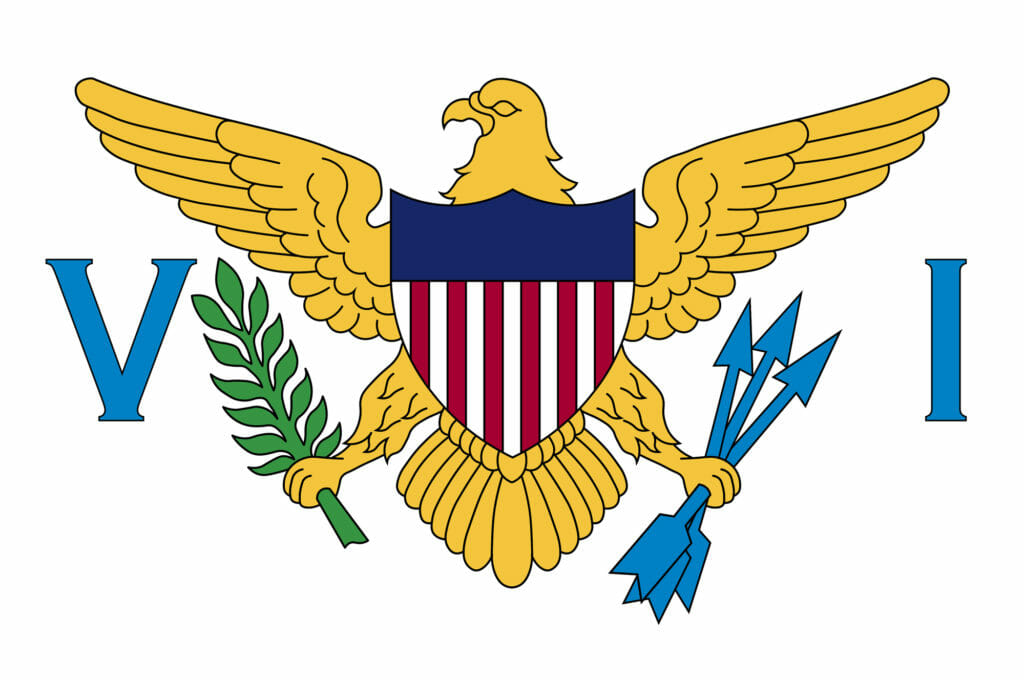
In light of the rapidly evolving legislative changes, we are also presenting a 50-state series analyzing how each jurisdiction treats hemp-derived cannabidiol (Hemp CBD).Today we actually go beyond the 50 states, to the easternmost jurisdiction under the American flag, the U.S. Virgin Islands (USVI).
According to the USDA, the USVI has submitted a hemp plan for the department’s review. This was confirmed in January by a member of the territory’s Hemp Board. Unfortunately, it appears that the hemp plan draft is not publicly available. In fact, there is basically no information on the subject on government websites, and our efforts so far to obtain information from USVI officials have not been successful.
Despite the lack of official information, press reports indicate that the territory’s government is taking steps to boost the hemp industry. In January, town meetings were held in all three of the USVI’s main islands—St. Thomas, St. Croix and St. John—by the Department of Licensing and Consumer Affairs (DLCA) to discuss the state of cannabis, including hemp, in the territory. A DLCA official “said the agency created a new license category for stores specifically selling hemp products.” These licenses cost $260, but businesses already licensed as retailers can get updates for $50. Retailers must attest in writing to their intent to comply with federal law.
The USVI’s hemp plans are interwoven with its overall cannabis plans. In January 2019, Gov. Albert Bryan Jr. signed the Virgin Islands Medical Cannabis Patient Care Act (the “Act”), although implementing regulations have not yet been approved. In December 2019, Gov. Bryan proposed an amendment to the Act that would allow for “non-prescription use”of medical cannabis, which appears to be widely understood as an euphemism for recreational use. The proposal would also allow sacramental use by Rastafarians.
Despite the evolving legal framework, there appears to be a clear vision of how cannabis production will proceed in the USVI:
The number of licenses granted on each island would be based on population and area. On St. John, licenses would be granted to three dispensaries, five manufacturers and ten micro-cultivators, or small farmers. A micro-cultivator, according to draft legislation, would be permitted to grow 50 flowering plants and 100 nonflowering plants at one time.
Panelists explained that the legislation drafted by the Office of Cannabis Regulation was designed to provide long-term residents with access to the marijuana cultivation industry. The idea is to keep big marijuana manufacturers (already established in states like California and Colorado) from coming into the territory and taking over the industry.
The requirements for applicants are stringent. Anyone who applies for a license in the territory must prove that more than 50 percent of the business is owned by a local resident; residents must prove they’ve lived in the territory and paid taxes for at least ten out of the last 15 years.
Despite this vision, as of now, “no locally made cannabis products can be sold in the Virgin Islands because the territory does not have a laboratory that can certify either the concentration of THC or the purity of CBD products.” The territory’s geography is proving to be an issue in this regard. While there is talk of setting up a lab at the University of the Virgin Islands, “this alone will not solve the problem.”
Here’s why: Unless a lab certified to test THC content was built on St. John, a cannabis plant grown as hemp on St. John would have to be transported to a lab on St. Thomas or St. Croix for testing.
As the law stands now, that plant would have to pass over bodies of waters controlled by the federal government which outlaws marijuana. The federal government would not be able to readily determine whether the plant grown on St. John was hemp or marijuana based on its THC level; until the plant was tested and certified as hemp, it could be subject to confiscation and its owners could be charged with transporting a controlled substance.
Regarding the legality of CBD products, a DLCA official said, “If the product sold is pre-packaged and contains under 0.3 percent THC, we’ll leave you alone.” CBD products are openly being sold in the territory.
With the USVI’s tropical climate providing suitable conditions for cannabis growth, jumping on the Hemp CBD trend seems like a smart move for the territory. The millions of tourists who visit the islands every year should provide a solid consumer base. It will be interesting to see if and how the hemp plan makes allowances for the USVI’s particular geographical situation.
For additional updates on changes to USVI hemp and hemp CBD laws, please stay tuned to the Canna Law Blog. For previous coverage in this series, check out the links below: