Manufacturing in China: China Trademark Registration Should Be the First Thing You Do
Companies preparing to manufacture in China usually worry first about designs, tooling, and confidential information. Those are real risks, but a much simpler problem can disrupt a China supply chain: someone registers the brand appearing on your product before you do. Sometimes that person is a professional trademark squatter with no connection to your business. Sometimes the problem comes from much closer to home.
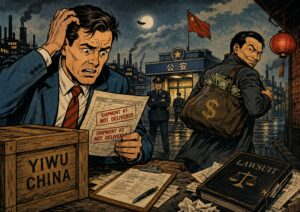
We once dealt with an American company whose Chinese manufacturer had registered 17 of the company's trademarks without permission and then approached the company's customers offering the same product at a 40 percent lower price. That is about as direct a lesson as you can get: if your brand matters to your China manufacturing, protect it before someone in or around your supply chain has a reason to do so first.
Trademark squatters have also become more aggressive about using registrations to interfere with supply chains, as we discuss in Trademark Squatters Are Coming for Your Supply Chain in Swarms Now.
Your Foreign Trademark Does Not Protect You in China
China generally gives trademark priority to the first applicant. A U.S., EU, UK, Australian, or other foreign trademark registration does not by itself give you trademark rights in China. Prior use, bad faith, and other rights can matter in the right case, but if you are relying on those arguments, you are already fighting from behind. You are paying lawyers, waiting on a proceeding, and trying to recover a position you could have secured much more easily by filing first.
If you know what brand will appear on products made in China, the China trademark question should be addressed before production begins. Filing early is only part of the job, because the application also needs to cover the right mark, products, classes, and subclasses. We discuss those decisions in more detail in China Trademark Registration: Why U.S. Companies Need More Than a Filing Agent.
“We Don't Sell in China” Does Not Solve the Problem
Many manufacturing companies tell us they do not need a China trademark because every product they make there will be exported. That misses the practical risk. If your brand appears on products, labels, packaging, hangtags, cartons, manuals, or other materials while the goods are in China, another party's China trademark registration can create problems before those products ever reach your customers.
China Customs is one reason. Trademark owners can record their rights with China Customs, and Customs can detain outbound as well as inbound goods suspected of infringement. When the legitimate brand owner holds the registration, that is a useful anti-counterfeiting tool; when someone else has registered your brand first, the same system can become a supply-chain problem. Our Guide to China Customs IP Recordation explains how the process works.
The factory creates a second pressure point because it is the party applying the mark to the products and packaging in China. Most factories have no interest in continuing to use a disputed trademark while two other companies fight over who owns it, so a dispute you eventually win can still delay production or shipments at exactly the wrong time. This is why companies that manufacture in China but never sell there still need a trademark strategy. For a deeper look at that situation, see Manufacturing in China but Not Selling There? Your China Trademark Strategy Should Be Defensive, Focused, and Fast.
What It Costs to Buy Your Own Name Back
Years ago, a Canadian coat company came to us after China Customs stopped a major shipment of its coats because another Chinese company had registered the Canadian company's brand name and complained to Customs. By the time our client came to us, every practical option was bad. It could fight over the registration, rebrand, or try to buy the trademark from the company that held it. The company bought it, and the price was six figures.
That is the part companies tend to underestimate. A China trademark application costs very little compared with what happens after somebody else controls a brand that your factory needs to put on every product leaving China. The cost is not limited to legal fees or the price of buying the mark back. A trademark dispute can arrive after inventory has been produced and paid for, customer delivery dates are approaching, and containers are supposed to be moving, which gives the other side leverage you could have avoided by filing earlier.
Filing an application takes relatively little time, but registration does not happen overnight. A company that waits until its first purchase order or production run is already late.
Filing the Trademark Is Easy. Filing the Right Trademark Is Not.
Registering something is not the goal. Registering what your business actually needs is. One of our clients learned that the hard way. The company sold protective work gloves and had registered its trademark in China years earlier, so when China Customs stopped one of its shipments, it understandably assumed the registration would protect it. It did'nt.
The company's earlier lawyer had registered the mark for gloves worn as clothing. Protective work gloves belonged elsewhere in China's classification system, and a competitor had registered the mark for the goods our client actually sold. That registration was then used against the shipment. The client had asked for a trademark registration for gloves and had received one. Nobody had asked the question that mattered: what kind of gloves?
China uses the international Nice Classification system, but Chinese trademark practice also divides many classes into subclasses. A filing in the right broad class can still leave the products that matter exposed, so two companies can hold the same or similar mark in what looks to a non-specialist like the same general category and still have very different rights.
The mark itself also matters. If you use your brand name without your logo, registering only a combined word-and-logo design can leave you with less useful protection than separate filings. If your product develops a Chinese-language name, that can raise another filing question, and the registration should belong to the company that ought to own the China trademark rather than whichever affiliate happens to be easiest to put on the application.
Direct China Filing or Madrid?
For a business focused primarily on China, we generally prefer a direct national China application because it gives counsel more control over how the goods and services are fitted into China's classification and subclass system. The Madrid System can make more sense when a company is pursuing trademark protection across many countries as part of a coordinated international portfolio.
Neither route is right for everyone, and the decision should follow the company's actual trademark strategy rather than a desire to use the cheapest or simplest filing mechanism. We discuss that tradeoff in The Madrid System for Trademarks: Powerful, But Not Always the Right Tool.
File Before Manufacturing Starts
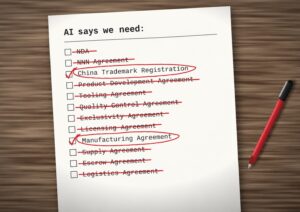
A China trademark registration does not replace an NNN Agreement, Manufacturing Agreement, Product Development Agreement, or tooling and design protections where those are needed because each addresses a different risk.
If your brand will appear on products made in China, however, the trademark question belongs near the front of the process. Identify the marks that matter, determine which goods and subclasses need protection, decide who should own the registrations, and file before production starts. Protecting your brand before someone else files it is almost always easier and cheaper than trying to recover it afterward.