






How to Protect Your IP in China: Answers to the Questions Foreign Companies Ask Most
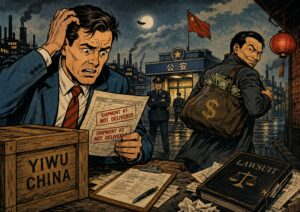
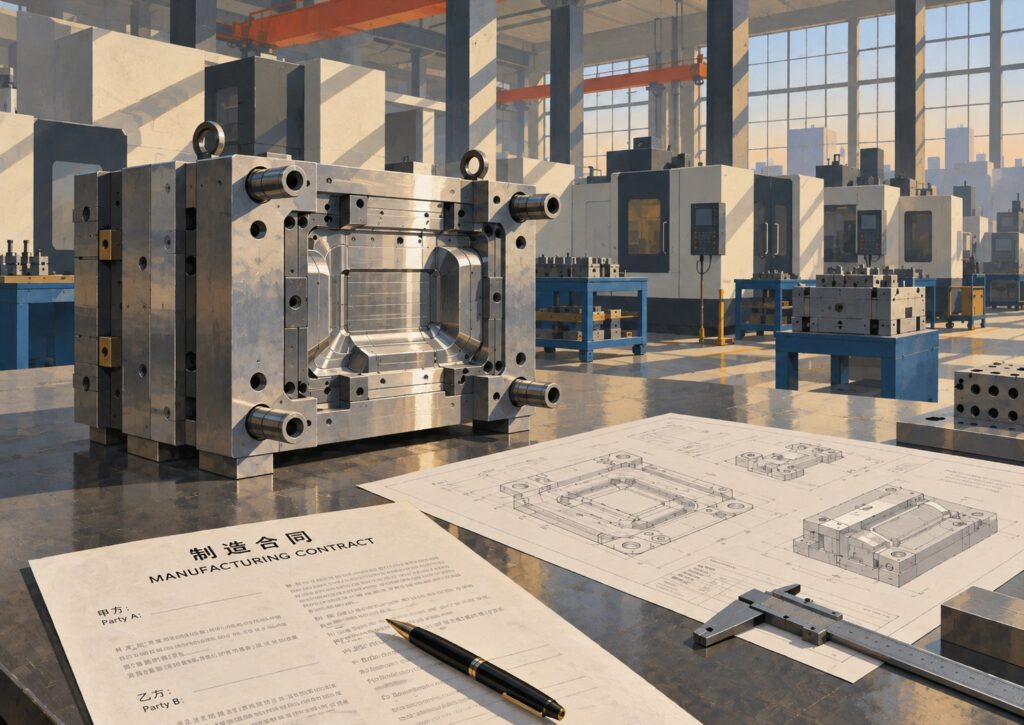
A manufacturer paid $90,000 for molds used to make its products in China. Two years later, when it needed those molds back, the factory refused to release them. The company ended up paying $200,000 to recover tooling it had already bought. It had a good argument that the molds belonged to it, but it had never signed a tooling agreement covering ownership, permitted use, or the factory's obligation to return them. That omission gave the factory far more leverage than it should have had. A proper agreement at the start would have cost a small fraction of what the dispute ultimately cost.
We see variations of this story all the time. A foreign company shows its product, brand, or technology to a Chinese company and figures it will deal with protection later. By the time it does, the Chinese company already has what it needs and much of the foreign company's leverage is gone. Protecting intellectual property in China is entirely possible, and most of the important protections are far cheaper to put in place while the relationship is still good.
The best time to protect your IP is before the other side has it. That starts with knowing exactly who you are dealing with and being careful about what you disclose. The contracts need to fit both China and the particular relationship, and rights worth protecting in China generally need to be registered there. This post answers the China IP questions foreign companies ask us most often and links to the posts where we cover each subject in depth. Trademarks get shorter treatment here because our China Trademark Registration: The Complete Guide for Foreign Companies covers registration, ownership, squatters, and enforcement in detail.
Before You Share Anything
Is it possible to protect IP in China?
Yes. Chinese courts enforce properly drafted contracts against Chinese companies. Chinese trademark, copyright, and patent registrations give you rights that Chinese courts, agencies, e-commerce platforms, and China Customs will act on.
The bigger problem is that foreign companies often rely on protections that do little or nothing for them in China: a U.S. trademark registration, a Western NDA, or years of friendly relations with a factory. You need a trustworthy counterparty, contracts written for China and for the actual relationship, and the appropriate IP registrations. We discuss how these protections work together in The Three Keys to Protecting Your IP in China and Internationally.
What should I find out before I contact a Chinese manufacturer?
Find out exactly who you are dealing with. The English name on a website, Alibaba page, or email signature tells you little about the legal entity behind the business. You want the company's registered Chinese name and Unified Social Credit Code and a clear picture of who owns and controls it. You also want to know whether it actually operates the factory it claims to operate and whether the company taking your money is the company signing your contract.
Foreign buyers regularly think they are contracting with a factory when they are really dealing with a trading company or intermediary with few assets. A strong contract against a company with nothing to lose does little good. Our Overseas Manufacturing Due Diligence: A Guide for Avoiding Costly Mistakes explains what to investigate before you send money or confidential information. For larger or riskier transactions, our China Company Reputational Reports draw on Chinese public records and on records available only to China-licensed lawyers.
How much should I tell a factory before signing anything?
Tell it only what it needs to quote your job. A factory needs enough information to decide whether it can make your product and at what price. It does not need your complete technical package before it has signed anything. You can almost always get a meaningful quotation without handing over the drawings, formulas, or other information that would let the factory reproduce the product.
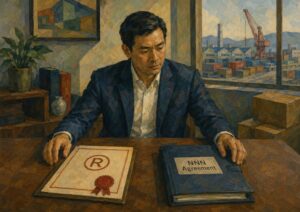
Before you give the factory anything it could use to compete with you, sign a China NNN Agreement. File your principal China trademark before your factory and sourcing agent have spent months using the name. We explain what to protect and when in China NNN Agreements: What They Do, What They Don't, and How to Get Them Right.
How can I structure production to protect my product?
For some products, the safest approach is to keep one supplier from having everything it needs to copy the product. You might keep a critical component, formula, or final assembly step out of the primary manufacturer's hands, or have different suppliers make different components so no single factory sees the complete design.
A more complicated supply chain brings costs and risks of its own, so this does not work for every product. But sometimes one component, process, or file is what prevents a factory from reproducing your product on its own. Keeping control of that piece can protect you better than another page of contract language.
Contracts That Work in China
Is an NDA enough to protect my product?
No. A Western NDA focuses on disclosure: you share confidential information and the other side agrees not to reveal it. With a Chinese manufacturer, the greater risk is often what the manufacturer itself does with the information. It can use your design to make a competing product, sell overruns elsewhere, or use what it learns about your customers and pricing to go around you.
A China NNN Agreement addresses non-disclosure, non-use, and non-circumvention, and it needs to be drafted for China. It should name the correct Chinese company, be written in Chinese with the Chinese version controlling, and provide remedies the factory will take seriously. For a mainland Chinese manufacturer, that usually means drafting for enforcement in China against the actual Chinese company and its assets.
Timing matters. An agreement signed after the factory already has your drawings and prototypes starts from a much weaker position. Our China NNN Agreements: What They Do, What They Don't, and How to Get Them Right and NDAs Do NOT Work for China but NNN Agreements Do cover these issues in depth.
When Do I Need More Than an NNN Agreement?
An NNN Agreement is for the first stage of the relationship. It protects your information and business relationships while you evaluate a potential manufacturer and disclose sensitive information. It does not govern quality standards, mold and tooling ownership, subcontracting, production obligations, or what happens when the relationship ends. Once you move into production, you need a China Manufacturing Agreement that governs the manufacturing relationship itself.
One of the most damaging mistakes we see is a foreign company that starts with an excellent NNN Agreement and later signs a manufacturing agreement containing a standard clause that supersedes all prior agreements. If the manufacturing agreement does not preserve or replace the NNN protections, the company can wipe out the very IP protections it worked so hard to put in place.
If the factory will help design, engineer, or prototype your product, settle ownership before that work begins. Who owns the CAD files, tooling designs, prototypes, improvements, and other development work? Can either side use that work outside the project? Those questions belong in a Product Development Agreement signed before development begins.
The High Cost of China Contract Mistakes shows what can happen when a company relies on an NNN Agreement when it really needs a Product Development Agreement. Do I Need a China NNN Agreement or a China Manufacturing Agreement? Usually Both and China Manufacturing Contracts: When One Agreement Is Not Enough explain how the agreements fit together.
Should my China contract be in English or Chinese?
Use Both Languages, and Make One Control
We have drafted thousands of China contracts. Nearly all were in both Chinese and English, and not one made both versions equally controlling. There is no good reason to do that. If the versions differ, the parties can end up fighting over what the contract says before they ever reach the underlying breach. We see provisions giving both languages “equal legal effect” all the time in contracts prepared by Chinese companies, and I do not believe that is an accident.
Just this morning, a client sent me a proposed contract from one of its Chinese manufacturers containing this:
This Contract is made in two copies, one for each party. The Chinese and English versions shall have equal legal effect. In case of any discrepancy between the two versions, the Chinese version shall prevail.
The provision contradicts itself. First it says the Chinese and English versions have equal legal effect. Then it says the Chinese version controls if they differ. “Equal legal effect” accomplishes nothing except to create another issue to argue about.
That matters because the foreign company is usually the one that needs to bring the claim. If the manufacturer breaches, the foreign company has to decide whether the amount at stake justifies the cost of enforcement. Suppose the English version supports the foreign company's position and the Chinese version supports the manufacturer's. The foreign company now gets to spend money on lawyers and translators arguing about whether the versions conflict, what “equal legal effect” means, and which language governs the disputed provision. The manufacturer, meanwhile, already has the money, the molds, the product, or whatever else caused the dispute.
Those costs change the economics of a case. A claim worth pursuing under a clear contract can stop making economic sense once the manufacturer has another threshold issue to fight over. Enough friction causes companies to walk away from claims they otherwise would pursue. That is why I am skeptical when I repeatedly see language like this in manufacturer-drafted contracts. Even if the manufacturer ultimately loses the argument, delay and added enforcement costs still work in its favor.
An internally contradictory language clause should also make you suspicious of the rest of the translation. If the drafters failed to reconcile an obvious provision dealing with which version controls, check carefully for less obvious differences elsewhere.
For a contract you may need to enforce against a Chinese manufacturer in a Chinese court, Chinese should control. The manufacturer can read the controlling text before signing, and the Chinese judge can work from the contract itself rather than from a translation prepared after the dispute began. The English version still matters because the foreign party needs to understand and administer the agreement. The contract should simply say which version controls.
We make the case at greater length in Why Your China Manufacturing Agreements Should Almost ALWAYS Be in Chinese and in the “A Worse than Worthless NNN Agreement” section of The High Cost of China Contract Mistakes.
Where should disputes with a Chinese manufacturer be resolved?
For most manufacturing contracts with a mainland Chinese company whose assets are in mainland China, we prefer a Chinese court. The right forum depends on where the counterparty and its assets are and what relief you are likely to need. You may need the return of molds, an order stopping infringing production, or preservation of the manufacturer's assets. A Chinese court gives you direct access to those remedies against a Chinese defendant. A U.S. judgment adds another enforcement step and can leave you with a judgment that is difficult or expensive to turn into actual relief.
We think highly of CIETAC, but it costs more than a Chinese court, and a CIETAC tribunal cannot itself freeze assets. A request to freeze a manufacturer's assets in a CIETAC arbitration has to go through a court. CIETAC can make sense when a Chinese state-owned counterparty insists on arbitration or when the manufacturer is in a smaller city where its local court may favor it. Hong Kong arbitration also works well in the right case, in part because parties to qualifying Hong Kong arbitrations can seek certain interim measures from mainland Chinese courts.
What makes no sense is automatically choosing New York, London, Hong Kong, Singapore, or Beijing because somebody uses the same clause in every international contract. Too much depends on the defendant, its assets, the likely dispute, and the remedies you will need. We draft the dispute resolution clause last. On difficult transactions, we sometimes have two to five of our China lawyers work through the forum and enforcement issues together. Our How to Sue a Chinese Company covers these issues in detail.
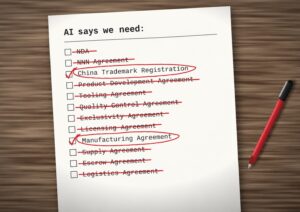
AI-drafted China contracts have been particularly bad on dispute resolution. In the last few months, at least three unrelated companies sent us AI-drafted contracts with essentially the same provision. Each left governing law, forum, controlling language, and enforcement to be “selected by qualified counsel” later. A contract that leaves those choices for later has no workable dispute resolution clause. We discuss that problem in Your AI-Drafted China Contract Says It Needs a Lawyer. Listen to It..
Do contract damages provisions make a difference?
We put contract damages provisions in most of our China manufacturing agreements because they affect how factories behave. When you seek asset preservation, a well-drafted damages provision can give the court a concrete amount on which to base a freeze of the manufacturer's bank accounts. Chinese manufacturers generally know this.
The amount still has to be defensible. Chinese law allows a court to adjust agreed damages that are materially out of line with the actual loss, so an inflated number can make the provision less useful. The better approach is a credible amount tied to a clearly defined breach.
Who owns the molds?
Paying for molds does not settle who owns them, as the client in our opening example learned. Your contract should say who owns the physical tooling and the designs behind it, where the tooling will be kept, who may use it, and when it must be returned.
Tooling disputes usually arise when the relationship is already deteriorating. You want to move production, and the factory suddenly claims an unpaid engineering fee, asserts ownership of the design, or stops responding. By then the factory holds most of the leverage. That is how our client ended up paying $200,000 to recover tooling it had already bought.
Who Owns Your Molds? How Overseas Factories Hold Tooling Hostage—and How to Stop Them and THE Guide to Molds and Tooling in International Manufacturing walk through the contract terms that prevent this.
Registering Your Rights in China
Do I need a China trademark if I only manufacture there?
Usually, yes. We have seen companies learn this when China Customs detained their goods. Your U.S. or other foreign trademark registration gives you no rights in mainland China, and China generally gives priority to the earlier applicant. A third party that holds the Chinese registration for the brand on your products or packaging can have China Customs detain your goods even when none of them will be sold in China.
If you manufacture in China but do not sell there, your strategy can be narrow and defensive. We explain how in Manufacturing in China but Not Selling There? Your China Trademark Strategy Should Be Defensive, Focused, and Fast. Our China Trademark Registration guide covers filing strategy and enforcement in detail.
Should I file a China design patent?
If your product's appearance is an important part of its value, a China design patent should be part of the discussion. We handle those filings for our clients. A design patent protects a product's ornamental appearance, including its shape, pattern, or a combination of design features, for 15 years from filing.
Timing is critical because China judges novelty against designs already made public anywhere in the world. A Kickstarter campaign, a trade show, or a listing on your own website can destroy novelty unless a narrow statutory exception applies. China does not have the broad one-year grace period some U.S. companies are accustomed to. If you first filed a design application in another qualifying country, you have six months to file in China and claim that earlier date.
Should I register copyrights in China?
Consider Chinese copyright registration when the value lies in the creative work itself, including artwork, packaging, and software. China protects qualifying foreign works without registration, but a Chinese copyright certificate provides useful evidence of ownership and creation. That can help when you ask a platform to remove a listing, ask China Customs to act, or sue.
We have represented many artists whose works are fabricated in China, and for them copyright ownership and registration can be central to the manufacturing arrangement. If a freelancer created the work, do not assume payment transferred the copyright. Establish the chain of title in writing before you send anything to a factory.
China Copyright Law: It Pays to Register, China Copyright Law: The Basics, and Protecting Your Artwork Internationally: What Artists Need to Do Before the Work Travels cover the details. Our China Trademark Registration guide explains how trademark and copyright protection can work together for a logo.
Partners, Distributors, and Employees
Can my Chinese distributor register my trademark for me?
It can, but you should own the Chinese registration and license the distributor to use the mark for its distribution work. A distributor that owns your Chinese registration gains leverage over whether you can replace it or continue using your own brand in China. That leverage tends to show up when the relationship ends.
Your distribution agreement should prohibit the distributor from filing your marks, their Chinese-language versions, or anything confusingly similar in its own name. It should also address what happens if the distributor has already done so. We discuss the problem in China Trademarks and Your Chinese Distributor.
Do I have to give my IP to a Chinese joint venture?
Usually not. A joint venture may need the right to use your technology, brand, or know-how. It does not need to own them. We generally keep core IP outside the joint venture and license the venture only what it needs for the purposes, territory, and period the business requires.
If engineers inside the joint venture improve your technology, decide in advance who owns those improvements and whether either shareholder can use them outside the venture. Once core IP has been transferred into a joint venture, getting it back after the relationship fails is extremely difficult.
How do I protect trade secrets with employees in China?
Start with employment contracts that address confidentiality and ownership of employee-created IP. Back those contracts with properly implemented company rules and regulations, which carry real weight under Chinese employment law.
A company claiming trade secret protection also has to show it took reasonable steps to keep the information secret. Limit access to people who need it, control devices and credentials, and have a real exit process when employees leave.
Post-employment non-competes need separate attention. Chinese law limits them to senior management, senior technical personnel, and other employees with confidentiality obligations. The restricted period cannot exceed two years, and the employer must pay compensation during that period. Putting a non-compete in every employment contract can saddle you with compensation obligations for employees who never needed restricting. Our China Employee Non-Compete Agreements: Essential Guidelines and Compensation Requirement and China Employment Law FAQs cover the rules.
When Something Has Already Gone Wrong
My Chinese factory is copying my product. What can I do?
Your options depend heavily on what you did before the copying began. A China NNN Agreement or manufacturing agreement puts you in a much stronger position if it names the correct Chinese company, is drafted for enforcement in China, and includes a damages provision. Chinese IP registrations add administrative, Customs, and court remedies. Without those protections, the available claims and remedies are usually narrower and more expensive to pursue.
Do not start with an angry demand letter. Preserve the record first: your agreements, WeChat messages, and anything showing when and how the factory received your information. Then determine exactly whom you would be proceeding against. A factory, its trading company, and its owner are not interchangeable even when the same people run all three. How to Sue a Chinese Company covers evidence, asset freezes, and enforcement in detail.
Someone registered my brand in China first. Now what?
Start with the Chinese trademark record. Find out exactly what was filed, who filed it, which goods or services it covers, and where the application stands. Before contacting the applicant, preserve the evidence you may need for an opposition, invalidation, or other challenge.
If the application is still in its opposition period, act immediately. The current opposition period is three months. China's revised Trademark Law takes effect on January 1, 2027, and reduces the opposition period to two months for applications governed by the new law.
Our China Trademark Registration: The Complete Guide for Foreign Companies walks through the options, including when a negotiated purchase makes more commercial sense than an opposition, invalidation, or cancellation proceeding. Five Practical Steps Foreign Brands Should Take to Prepare for China's New Trademark Law covers the 2027 changes.
Where to Start
If you are about to work with a Chinese manufacturer, do the important work while it still wants the deal. Find out who the company really is. File the China trademark you do not want somebody else to own. Get the NNN Agreement signed before turning over information the factory can use without you. If the factory is helping develop the product, settle ownership before development starts, and have the manufacturing agreement in place before production.
If production is already underway and some of this never happened, do not assume it is too late. Review the contracts you have, search the Chinese trademark register, and find out who actually controls your molds, drawings, CAD files, formulas, and other technical material. Then fix what you can while the relationship is still functioning. Once the factory wants out, or realizes that you do, nearly everything gets harder and more expensive.