










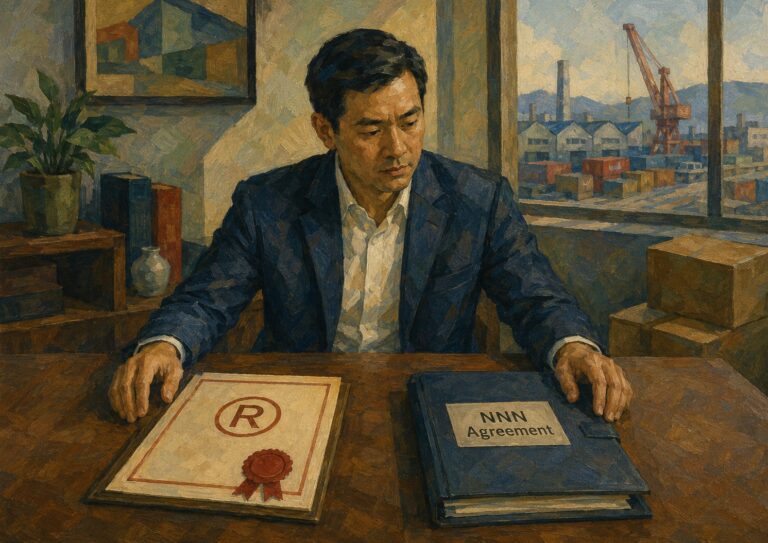
China NNN Agreement or Trademark Registration? Usually Both
A China trademark registration and an NNN Agreement protect different assets against different parties. Most branded manufacturing projects need both, but each has its own deadline.
A China trademark registration and an NNN Agreement protect different assets against different parties. Most branded manufacturing projects need both, but each has its own deadline.

An NNN Agreement protects sensitive information while you evaluate Chinese factories. After you select the manufacturer, a Manufacturing Agreement governs quality, delivery, tooling, IP, and remedies. Here is how the two contracts work together and when one agreement can do both jobs.
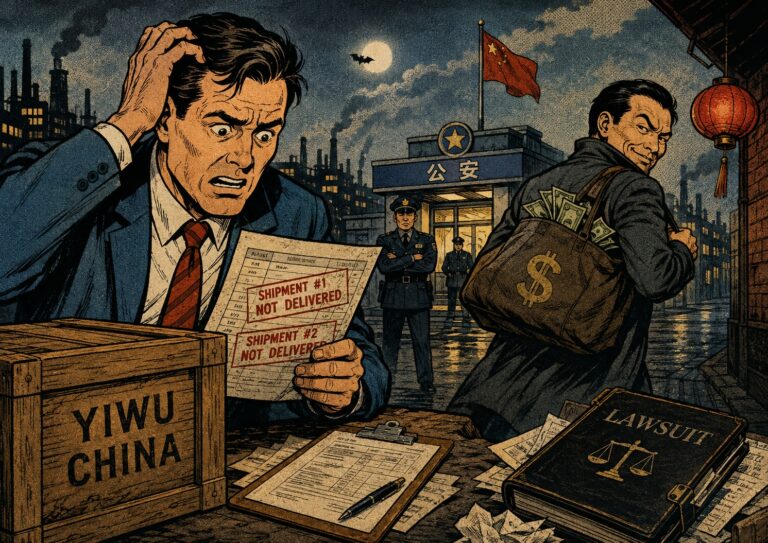
A buyer paid a Yiwu intermediary $147,000. Most of the goods never shipped. Here is why we told the buyer to skip the lawsuit and go to the police instead.

Buying expensive equipment directly from China can save a business substantial money, but the risks rise quickly when the product is customized and the seller already has most of the purchase price. These seven questions help buyers protect themselves before they pay.

The Hong Kong Intermediary Trap: Do Not Contract with the Wrong China Company Foreign buyers like dealing with Hong Kong intermediaries. The emails are clear, the invoices look familiar, the bank account feels safer, and the person on the other end usually speaks better English than the factory contact. But in China manufacturing, invoices are

China Supply Chain Restructuring: Legal Traps in Moving, Selling, or Exiting China A U.S. manufacturer decides to move production from China to Mexico. The company's technical team starts shipping over production files and the company opens early talks with a Chinese buyer for the plant. The move looks routine. Then the files raise an export-control
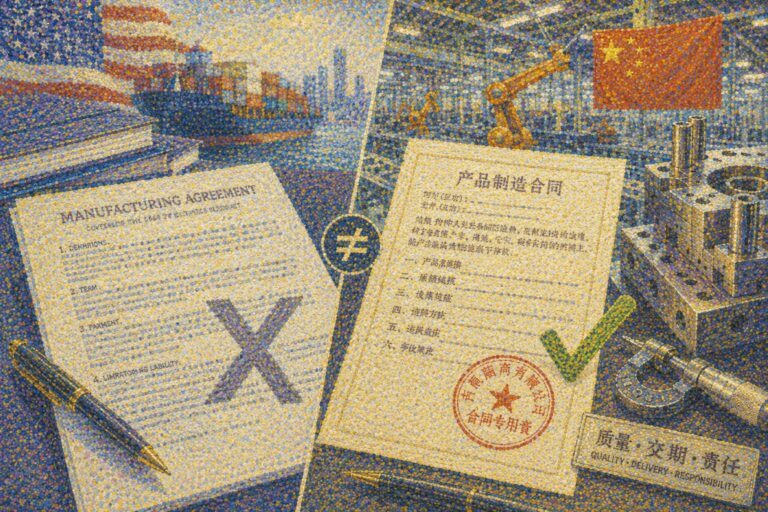
China Manufacturing Contracts: Why Your Draft Does Not Work Clients often send us a U.S. manufacturing agreement and ask whether it can save time or money on a China manufacturing contract. It cannot. Sometimes the ask is smaller: can we just spend a couple of hours reviewing it? We decline because we will not bill

China Manufacturing Contracts: When One Agreement Is Not Enough A U.S. company recently called one of our international dispute resolution lawyers after receiving a message from its Chinese factory. Future orders, the factory said, would require a 34% price increase, effective immediately. The factory had the client's molds. It had the client's designs. And it

China’s New Supply Chain Security Rules Raise the Risks for Foreign Companies On April 7, 2026, China turned supply chain decisions into national security decisions. The regulations took effect the same day. No transition period. These regulations, issued as State Council Order No. 834, give Chinese authorities a formal mechanism to investigate and punish foreign
China NNN Agreements work when they deter Chinese companies from misusing your IP. Here is when they help, when they do not, and how to draft one that will actually work.