China Supplier Fraud in Yiwu: Why We Recommended the Police, Not a Lawsuit
We receive some version of this email nearly every week. A company finds a supplier or sourcing agent in China, pays for the goods, and then watches one promised delivery date after another come and go. By the time the buyer reaches us, months have passed, the money is gone, and the supplier has either gone completely silent, or is still promising to ship.
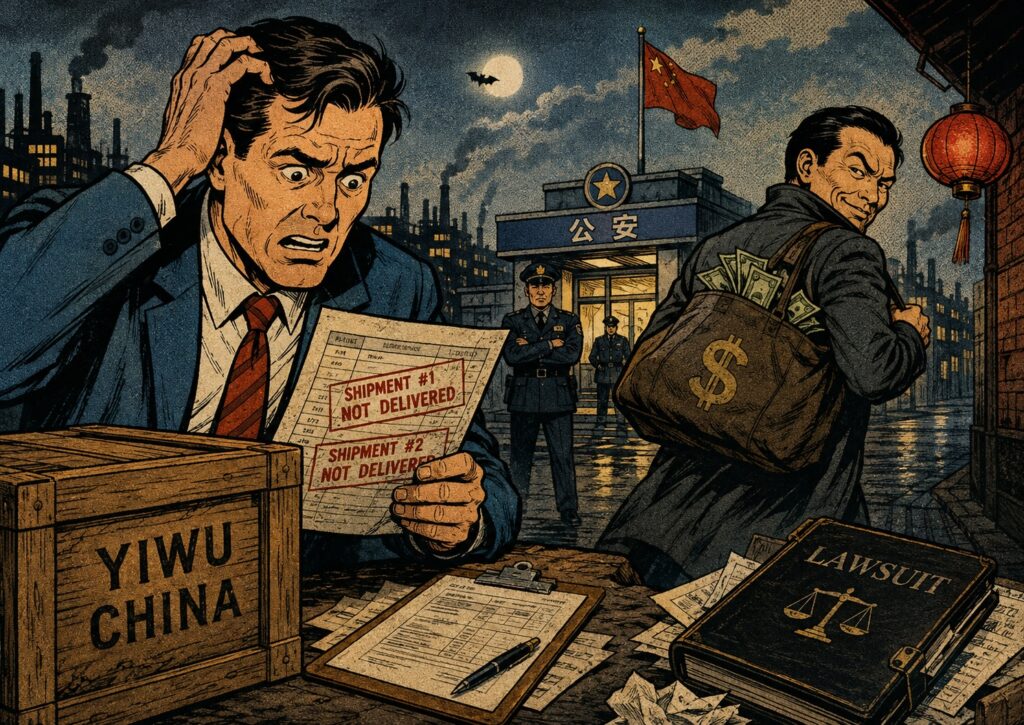
One buyer traveled to Yiwu and arranged three shipments through a local intermediary, paying roughly $177,000 in four installments. The first shipment, worth about $35,000, arrived. The rest, worth roughly $142,000, never left China. By the buyer's account, the intermediary passed no more than 20 percent of the money to the actual factory. It spent months claiming production was almost finished, then claiming the goods had shipped. The buyer sent two representatives to visit. The promises continued, but nothing moved.
The buyer came to us expecting to sue. We told it to do something else: retain experienced Chinese counsel in China and take the matter to the police. What follows is adapted from our reply, with identifying details removed.
The Advice We Gave
Dear [Potential Client]:
Thank you for explaining the situation so clearly. I am sorry you are dealing with it.
I will be direct because it will save you time and money. This matter belongs with a reputable Chinese lawyer experienced in economic-crime complaints who can deal directly with the appropriate police bureau. It is not a case our lawyers should try to manage from outside China.
Based on what you have described, this looks like more than a late shipment. The intermediary collected full payment, apparently forwarded only a small portion to the actual manufacturer, and repeatedly claimed the goods were being finished or had already shipped. The key question is what the intermediary intended when it took your money. Its apparent failure to fund production, followed by months of false production and shipment reports, is important evidence.
In China, the line between a commercial dispute and an economic crime does not always fall where a foreign buyer expects. We have written separately about when business disputes in China turn criminal. Your lawyer will need to organize the evidence and determine whether it supports presenting this as intentional fraud rather than a contract that simply went bad.
There is no guarantee the police will open a criminal case. They can treat failed supplier deals as private commercial disputes, especially when the documents make the matter look like an ordinary failed transaction. Your choice of lawyer therefore matters. You want someone who knows how to present the payment history, what happened with the factory, and the false shipment statements in a way the local authorities will take seriously.
A civil lawsuit should not be the automatic alternative. Before suing, you need to identify the proper defendant and determine whether it has assets worth pursuing. You also need to know whether those assets can be preserved and whether any judgment can realistically be collected. As we explain in International Litigation: Winning the Lawsuit Is Often the Easy Part, a judgment against a company with no meaningful assets may have little practical value.
Do not treat the criminal route as a cheaper way to collect a debt. It makes sense only if the evidence supports an actual criminal complaint. If it does, the police have investigative powers a private plaintiff does not. A criminal investigation can also uncover and preserve assets that might otherwise disappear, improving your chances of recovering your money.
You should now preserve every relevant record. Keep the contracts, purchase orders, invoices, payment records, communications with the intermediary and factory, inspection and shipping documents, and every message claiming the goods were finished or shipped. Preserve the original electronic files and prepare a dated chronology. Do not rely on screenshots when the original messages are still available.
Do not send a demand letter or warn the intermediary before local counsel determines the next step. A premature warning can give the other side time to move money, delete communications, pressure the factory, or disappear. Our article on why demand letters to China suppliers often backfire explains the risk.
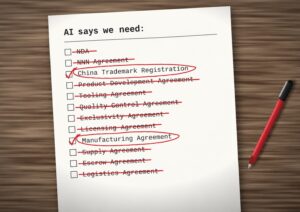
You should also check your China trademark position. A trademark registration will not recover the missing money and would not have prevented this payment fraud. If your brand appears on your products, packaging, labels, or shipping materials, you do not want the intermediary, the factory, or someone else registering it in China and using that registration against you. We explain this problem in Manufacturing in China? Register Your Trademark Before Someone Else Does.
Choose your Chinese lawyer carefully. Asset-recovery work attracts unlicensed intermediaries and consultants who promise quick results, collect an upfront fee, and accomplish little. Ask whether the lawyer personally handles police complaints, has dealt with economic-crime matters in the relevant jurisdiction, knows what evidence the police will expect, and will appear before the authorities rather than simply passing the matter to someone else.
We are not the right firm to run this local criminal complaint, and I will not pretend otherwise. I will ask around our firm, and if one of our lawyers has worked with suitable counsel in the Yiwu area, I will send you the name [which I subsequently].
Once this matter is behind you, we would be glad to help structure your manufacturing relationships so you are not this exposed again.
Best regards,
Dan
Sometimes the Best Legal Advice Is Not to Hire Us
The buyer expected us to recommend a lawsuit. We did not. A law firm should not take a matter simply because it can identify a legal claim. The question is whether the work gives the client a reasonable chance at a useful result. Here, that work required local access, experience presenting economic-crime complaints to Chinese authorities, and the ability to deal with the police in person. That is not what our firm does.
It would have been easy to accept a retainer, send an aggressive letter, and start pursuing a civil claim before determining whether litigation made economic sense. We did not charge the buyer anything. We told it the better course was to find Chinese counsel with experience taking economic-crime complaints to the local police, and that was the end of our involvement.
When a Supplier Dispute Becomes a Crime
A Chinese product supplier can break a contract without committing a crime. A factory runs short of cash, production stalls, or the goods arrive late or defective, and none of that, standing alone, establishes fraud. These are ordinarily commercial disputes for litigation or arbitration. This matter looked different. Intermediaries make money by sitting between buyers and factories, and even a large margin does not make the arrangement fraudulent. Here, according to the buyer, the intermediary took full payment, sent very little of it to the factory, and then spent months reporting production and shipments that apparently did not exist.
Chinese criminal law reaches forms of commercial fraud that foreign companies sometimes assume belong entirely in civil court. Whether these particular facts were enough was for experienced Chinese criminal counsel and the local authorities to determine. Foreign buyers should resist the temptation to call every bad supplier deal fraud. A criminal complaint needs evidence. But the existence of a contract does not, by itself, make the problem purely contractual.
Verify the Supplier and Contract With the Company That Controls Production
The buyer had gone to Yiwu, and others had visited the intermediary too. None of that established that the intermediary manufactured anything, controlled the factory, or actually had the ability to produce the goods. My law firm has run countless China company due diligence investigations that began in much the same way and ended with a single person working from a rented office. In one matter, a company had wired seven figures to an impressively credentialed "manufacturer," received nothing, and learned only afterward that there was no factory behind it and no meaningful assets worth suing for.
Before sending serious money, confirm the company's exact registered Chinese name and find out who actually owns and operates it. Check its business scope and whether the operation matches what the company claims to have. A factory tour, a warm reception, and an invoice in English tell you almost nothing. The company taking the money is not always the company making the goods. A trading company, Hong Kong affiliate, sourcing agent, or local broker can handle communications and payments while an unrelated mainland factory does the production. We discuss this problem in The Hong Kong Intermediary Trap: Do Not Bind the Wrong China Company.
A proper China manufacturing agreement should bind the company that actually controls production and identify it by its exact registered Chinese name. We also generally want the agreement executed with that company's official chop. If an intermediary genuinely belongs in the deal, the contract should spell out its role and responsibilities rather than pretending it is the factory.
What to Do When a China Supplier Takes Your Money
If a Chinese supplier has taken your money, stop firing off reactive messages and start preserving the evidence and taking steps to protect your company against the fight that might ensure. Quietly confirm the legal identity of every company involved and determine which entity actually received the money. Identify the real factory. Make sure that your China trademarks and other IP are in order. Before spending on legal fees, find out whether anyone you can realistically pursue still has assets worth chasing. Then get a lawyer who actually knows this area and is equipped to handle the actions that make the most sense for your situation. The facts should drive whether your next move is a criminal complaint, a civil suit, arbitration, asset preservation, or some combination of those remedies.