Buying Expensive Equipment from China: Seven Questions to Answer Before You Pay
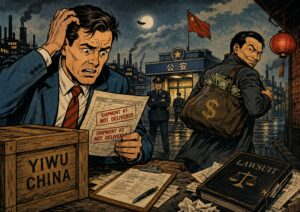
I was spurred to write this post by four different companies that came to us in the last two months with problems involving food trucks they had purchased from China. The details differed: one never arrived; others showed up with serious problems. In each case, the attraction was easy to understand. The Chinese seller offered a customized product at a price well below what the buyer expected to pay locally. The seller was responsive, the photos and videos looked good, and the transaction seemed straightforward until something went wrong, after the seller had received most or all of the money.
Food trucks prompted this post, but the larger issue is buying expensive, one-off equipment from China. The same concerns arise with packaging machines, CNC equipment, agricultural machinery, robotic systems, specialized construction equipment, and entire factory production lines.
A $42,000 food truck and a $3 million production line justify very different levels of due diligence. A company spending $3 million can bring in engineers, visit the factory, conduct extensive testing, negotiate staged payments, and spend serious money on the contract. Nobody is going to spend $80,000 protecting a $20,000 food truck purchase.
Yet many of the underlying questions are the same: Who are you buying from, what are they building, and how will you know it works before it leaves China?
The smaller purchase can be harder in its own way because the economics do not support the protections available on a major industrial project. If a $42,000 deal goes bad, the buyer can have an excellent legal claim that makes no economic sense to pursue. That reality should shape the transaction from the beginning.
Alibaba Is Useful, But Understand What It Protects
Many buyers believe that if they buy through Alibaba and something goes wrong, Alibaba will make them whole. Alibaba's Trade Assurance program provides some buyer protections, and using it is safer than sending money directly to an unknown supplier outside the platform.
But buyers too often assume that protection is broader and lasts longer than it does. Alibaba's current standard Trade Assurance refund policy gives ordinary buyers 30 days from delivery to claim a refund. Enterprise and Enterprise Pro buyers get 60 days. Alibaba also offers additional after-sales programs for qualifying machinery and other products, so buyers should check the current terms that apply to their particular purchase.
Thirty days can disappear quickly with complex equipment. The machine arrives, gets unpacked and installed, goes through initial testing, and only then enters regular commercial use. Some problems do not become apparent until the equipment has been running under normal operating conditions.
Over the past ten years, we have probably been asked to take on around 100 lawsuits against Alibaba arising from failed China transactions. We have declined every one of them because we did not see a realistic roadmap to prevailing against Alibaba itself.
That experience is worth keeping in mind when evaluating Trade Assurance. Alibaba's buyer-protection programs can be useful, especially during the applicable dispute window, but buyers should not assume Alibaba will ultimately stand behind a failed equipment purchase. Once the platform process is over, the dispute is usually with the Chinese seller, not Alibaba. Use Alibaba's protections when they are available, but do not mistake them for a long-term guarantee of an expensive piece of equipment.
The Seven Questions
1. Who Exactly Are You Buying From?
An Alibaba storefront is not due diligence. Reviews, platform badges, factory photos, and a highly responsive salesperson do not tell you enough about the company taking your money. Determine the Chinese legal entity behind the deal and whether it is the manufacturer or an intermediary. Make sure the company signing the contract makes sense in light of the company building the equipment and the account receiving your money.
Multiple entities are not automatically a problem. A manufacturer can use a related export company for legitimate reasons, and plenty of trading companies provide real value. The danger is thinking you contracted directly with a factory and learning during a dispute that your actual counterparty is an intermediary with little control over production. We see the same issue when buyers bind a Hong Kong or other intermediary instead of the mainland China company that actually controls production.
For specialized equipment, you also need to think beyond delivery. Years later, the buyer often still depends on that same company for replacement parts, software updates, technical support, warranty work, or modifications. Its ability to support the equipment matters almost as much as its ability to build it.
2. What Exactly Are You Buying?
Many equipment disputes begin with specifications that were never really specifications. Is the machine "industrial grade"? Yes. Is the food truck built for "commercial use"? Yes. Can the production line make 2,000 units per hour? No problem. None of those answers gives you a usable standard against which to test the finished equipment. The specifications need to pin down what matters: materials, tolerances, key components, production capacity, power requirements, software, and anything else that determines whether the machine will actually do the job.
Performance claims deserve particular attention. A promise that a machine produces 2,000 units per hour means little unless the parties agree on what it will produce, at what quality level, under what conditions, and for how long. A factory cannot be expected to know which unstated assumptions matter to you. Leave gaps and the manufacturer will fill them somehow, perhaps differently from how you would. Important requirements belong in writing before production starts.
3. How Will You Know It Works Before It Leaves China?
Factory photographs and videos are useful for following production, but they are poor substitutes for independent testing. The factory decides what the video shows, which functions are demonstrated, how long the machine runs, and what stays outside the frame. A machine running smoothly for five minutes on camera does not establish that it meets the agreed specifications or will perform under normal production conditions.
For an expensive one-off purchase, arrange independent inspection and testing before shipment. The scope should fit the equipment. A food truck needs inspection of the truck and its important systems. A packaging machine should run the products it is supposed to package. Production equipment should demonstrate the required output and quality under agreed conditions.
For major machinery, this often becomes a formal factory acceptance test, or FAT. The name matters less than the substance: agree in advance on what gets tested, how it gets tested, what counts as passing, and what happens if the equipment fails. A defect discovered at the Chinese factory can often be corrected by the people who built the machine. The same defect discovered after shipment can involve technicians, replacement parts, international freight, downtime, and an argument over who pays.
4. How Much Money Will Still Be Unpaid When You Test It?
When I look at payment terms, I want to know what the factory will still want from the buyer when a problem is discovered. Usually, the best answer is money. If a factory acceptance test shows that the machine cannot hold the required production speed, a manufacturer still waiting for a substantial payment has an immediate reason to fix it. The same incentive exists when an inspection finds defective wiring, missing components, or poor fabrication before the balance is paid.
Once the manufacturer has been paid in full, you are asking it to spend additional time and money fixing equipment for which it has already received the entire purchase price. At that point, the buyer has to rely on the contract and whatever remedies it can realistically enforce. Holding back money is much easier than trying to recover it from someone else's account.
The familiar 30 percent deposit and 70 percent before shipment structure is common, but it is not automatically appropriate for expensive equipment. If the remaining 70 percent becomes due simply because production is "complete," the buyer can end up fully paid before the machine has passed meaningful testing.
There is no universal payment formula. Tie payments to events that matter. Depending on the equipment and how much room you have to negotiate, that can include completion of production, satisfactory testing, shipment, installation, commissioning, or final acceptance. Do not give away your strongest source of leverage while important work remains unfinished.
5. Can You Import, Install, and Use the Equipment?
A Chinese salesperson tells you the company has sold the same machine to customers in your country. Past shipments do not establish that this machine can be installed and operated at your site. The requirements that govern a particular machine depend on the product, how it will be used, and where it will operate. Electrical systems, safety rules, environmental requirements, vehicle regulations, workplace standards, insurance requirements, licensing, utilities, and industry-specific rules can all become relevant.
The manufacturer knows its machine. It should not be the only party telling you whether that machine can be installed and operated at its destination. Companies buying multimillion-dollar equipment usually understand this. They bring in engineers and other local specialists before committing to the purchase. Buyers of less expensive machinery are more likely to accept the seller's assurance that it has "shipped many to your country."
The factory can deliver exactly what it promised and you can still end up with equipment that requires expensive modifications before you can use it. Resolve local requirements before production starts, while changes are still relatively easy to make.
6. Who Will Keep the Equipment Running?
Buyers negotiate hard on price and rarely think about the morning two years out when the machine stops working. For specialized equipment, that question can matter more than shaving another few percentage points off the purchase price. The machine is useful only while you can keep it running.
Start by finding out which components tend to fail and which spare parts should ship with the machine. Determine whether replacements are standard parts available locally or proprietary parts available only from the manufacturer. The documentation matters too, particularly manuals, electrical diagrams, software information, and troubleshooting guides. Software creates its own dependency. Equipment that requires proprietary software, remote access, or continuing support from the Chinese manufacturer ties the buyer to that company long after the sale. Understand that relationship before you commit to it.
Repairability deserves the same attention. A standard commercial machine built from widely available components can often be serviced locally. A proprietary robotic system built around the manufacturer's parts or software leaves the buyer dependent on that manufacturer when those systems fail. A cheap sensor or control board can shut down a very expensive machine. When that happens, the price of the failed part is often trivial compared with the cost of lost production.
The purchase price tells you what it costs to acquire the machine. It does not tell you what it will cost to own it.
7. What Happens If the Manufacturer Does Not Perform?
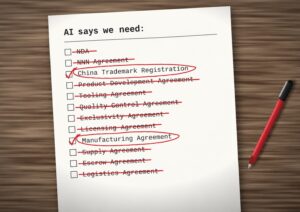
Work through this question while everyone is still getting along. An Alibaba order, pro forma invoice, email chain, and WeChat history can all provide evidence of what the parties discussed. For a substantial customized equipment purchase, you want a China manufacturing contract built around the actual transaction and the actual Chinese counterparty. The agreement should incorporate the specifications that matter and address testing, inspection, payment, delivery, defects, warranties, replacement parts, technical support, and delays. If installation and commissioning are part of the deal, spell those out as well.
A production line that performs properly during testing in China but cannot achieve the promised output after installation presents a different problem from a machine that arrives physically damaged. The contract should account for the ways this particular deal can realistically fail. Dispute resolution needs the same practical thinking. A company with $3 million at stake can justify an enforcement effort that would be absurd over a $42,000 food truck. Smaller transactions are often unforgiving for exactly this reason: the buyer can be legally right and still have no economical way to force the seller to make things right.
A good China equipment purchase agreement is more than a document for a future lawsuit. Its immediate value is forcing the parties to resolve important questions while they still want the deal to happen.
If Your China Equipment Purchase Is Already Going Wrong
Move quickly, especially if the purchase went through Alibaba or another platform with filing deadlines. Do not spend weeks accepting assurances that the salesperson is "checking with the engineer" or "waiting for management" without first determining when your platform rights expire. Alibaba's current standard Trade Assurance policy gives ordinary buyers 30 days from delivery to seek a refund, with 60 days for Enterprise and Enterprise Pro buyers.
Preserve the contract, specifications, Alibaba messages, WeChat conversations, invoices, payment records, shipping documents, photographs, videos, inspection reports, and communications concerning defects or delays.
Technical disputes usually benefit from technical evidence. An engineer's report on why the machine fails to meet spec is worth more than another fifty messages arguing with the salesperson. Then look at the economics. Identify the company that received the money, determine what your contract provides, consider what practical remedies and assets exist, and compare the likely cost of pursuing the claim with the amount you can realistically recover.
There is no virtue in spending $50,000 to win a $42,000 dispute. There can also be serious money left on the table when a company assumes too quickly that nothing can be done. The decision should follow an assessment of the particular Chinese company, the contract, the evidence, the amount at stake, and the available enforcement options.
Protect the Purchase Before You Need to Enforce It
Buying equipment directly from China can make excellent commercial sense. The mistake is treating an expensive, customized equipment purchase like an ordinary online order. A $42,000 food truck does not justify the same level of engineering, testing, contracting, and due diligence as a $3 million production line. The basic questions remain much the same.
Once the factory has been paid and the equipment has left China, correcting mistakes gets harder and more expensive. Do the hard work while the factory still wants something from you.
If your company is preparing to buy substantial machinery or customized equipment from China, our international manufacturing lawyers help companies structure these transactions before payment and production make the difficult problems much harder to fix.