







Why Demand Letters to China Suppliers Often Backfire
Last week, two companies that were not clients contacted me about long-delayed shipments from China. Both wanted essentially the same thing: a lawyer's letter demanding that their Chinese suppliers ship the goods immediately. Both seemed to think a strongly worded letter would finally get their factories moving. I told them I would not send the letters they wanted.
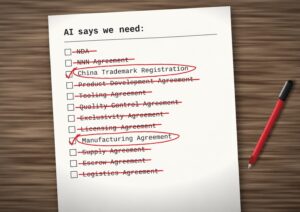
Neither company had a China-focused manufacturing agreement with clear delivery obligations and effective remedies. Neither had registered its brand in China, and neither had thought through what its supplier might do after receiving a legal threat. They were understandably frustrated, but frustration is a poor basis for deciding how to handle a China supplier dispute. A demand letter sent under those circumstances can leave the buyer considerably worse off than before.
I'm not against demand letters. We send them, and some work very well. What concerns me is the assumption that hiring a lawyer to threaten a Chinese factory automatically gives the buyer leverage. It doesn't.
Why a Demand Letter Can Make a China Supplier Dispute Worse
Companies often come to us asking for a demand letter when what they really want is for us to scare their supplier into shipping. Sometimes a letter will accomplish that. But the factory needs to believe that ignoring it will have consequences, and those consequences need to be ones the buyer can actually deliver. A threat of litigation means very little if the supplier has no reason to fear the litigation or any resulting judgment.
Before I send a letter, I want to know what the supplier agreed to do, what it has failed to do, what the buyer can prove, and where any judgment or award could be enforced. I also want to know who controls the finished goods, the tooling, and the buyer's brand in China. Those questions tell me far more about the value of a demand letter than how aggressively the letter is written. A supplier that believes the buyer has no practical way to force compliance will often treat the letter as an admission of just how stuck the buyer is.
Purchase Orders and Emails Are Not the Same as a Good Manufacturing Agreement
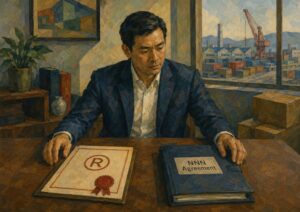
The two companies that contacted me had purchase orders, emails, and what they considered clear understandings with their suppliers. What they did not have was a manufacturing agreement that clearly established delivery obligations, remedies for delay, and a realistic means of enforcing those obligations in China. That matters, especially once the relationship has deteriorated and each side has a different version of what was agreed.
Purchase orders and emails can form binding contracts under Chinese law. I would never tell a buyer it has no rights simply because it lacks a signed, stand-alone manufacturing agreement. But those documents frequently leave important questions unanswered. Was the delivery date firm or an estimate? Which company actually agreed to manufacture the goods? What remedy applies if the shipment is late, and where will the buyer pursue it? It is much easier to threaten enforcement than to establish these things after a dispute has started.
A badly prepared demand letter can also tell the factory something the buyer would rather keep to itself: the buyer is desperate for the goods, has little room to maneuver, and may not have a credible legal remedy. The letter is supposed to create pressure on the supplier. Instead, it can give the supplier a better understanding of the buyer's weaknesses.
An Unregistered China Trademark Gives Your Supplier Another Way to Hurt You
The contract is only part of the problem. If you manufacture branded products in China and have not registered your trademark there, you have left another important risk unaddressed. China is generally a first-to-file country for trademarks, so using your brand in the United States, Europe, or elsewhere does not by itself give you a Chinese registration. Prior rights and bad-faith filings can provide grounds to challenge an application, but those fights take time and money, and their outcomes are not guaranteed.
A supplier that files for your mark can complicate the relationship even before the application is resolved. If it obtains the registration, its leverage increases substantially. It can assert rights to your brand in China, create problems with marketplaces, and threaten your ability to move branded goods out of the country. We have written about the problem in China Trademark Registration: The Complete Guide for Foreign Companies. I would much rather have a client pay to register its mark at the beginning of a manufacturing relationship than pay to fight over that mark after the factory has turned hostile.
How China Customs Can Become Part of the Dispute
China allows owners of registered trademarks to record those rights with China Customs. A recorded rights holder can seek detention of goods suspected of infringing its mark, subject to the relevant procedures. Customs does not automatically detain a shipment merely because somebody complains, and a pending trademark application is not the same as a registration. Still, a supplier that gets control of your mark can use the prospect of Customs trouble as considerable leverage.
For a company already waiting on overdue products, even a temporary hold on shipments is a serious problem. Retail deadlines are missed, customers get angry, and the buyer can find itself negotiating over its own brand simply to get goods moving again. We discussed this in Trademark Squatters Are Coming for Your Supply Chain in Swarms Now. The time to address China trademark protection is before a supplier dispute, when you still have options and a working relationship.
A Supplier Trademark Filing Turned One Payment Dispute Into a Year-Long Fight
A U.S. outdoor gear company came to us after its Chinese supplier filed a trademark application for the company's brand during a payment dispute. The buyer had worked with the factory for years and considered it a reliable partner. When quality problems arose, the buyer withheld payment on a shipment. The supplier responded by applying to register the buyer's own brand name in China.
Over the following months, the dispute expanded well beyond the original quality and payment issues. The factory threatened to interfere with the buyer's peak-season exports if it obtained the trademark registration, and it demanded payment to resolve the matter. The trademark battle lasted more than a year and disrupted the buyer's distribution plans. A demand letter about the quality dispute would not have removed that problem. Registering the brand before the dispute began likely would have kept the factory from gaining that particular source of leverage in the first place.
What a Threatened China Supplier Can Do in Response
Buyers sometimes assume their Chinese suppliers will either obey a demand letter or ignore it. There are other possibilities, and some are considerably worse. A factory can put the buyer's orders at the back of the line, refuse to release finished inventory, or make it difficult to recover molds, dies, production files, and other tooling. Depending on the circumstances, it can also begin selling similar products to other buyers or create problems around the buyer's brand.
Consider a common situation: a factory is late, the buyer threatens a lawsuit, and the buyer stops making payments. The factory responds by holding the finished goods and refusing to return the tooling. The buyer now has a delivery problem, a tooling problem, and a serious obstacle to moving production elsewhere. None of this means the supplier is legally entitled to take those steps. It means the buyer needs to consider what the supplier can do in practice, rather than assuming a legal threat will bring the dispute to an end.
Payment disputes also raise the possibility of a Sinosure claim. If the supplier has insured its receivables through Sinosure, China's state-owned export credit insurer, it can submit an insurance claim arising from the allegedly unpaid amount. That can lead to collection efforts against the foreign buyer, even when the buyer disputes what is owed. Our guide to Sinosure claims explains why it is important to understand the claim and respond deliberately rather than simply calling the collection agent and arguing about the invoice.
Many suppliers would rather negotiate and keep a good customer. I still look closely at the particular supplier's options and incentives before deciding whether a threat will help. If the factory controls goods, tooling, or a brand the buyer needs, that has to be part of the decision.
What I Want in Place Before Sending a Demand Letter
1. A China Manufacturing Agreement the Supplier Has Reason to Respect
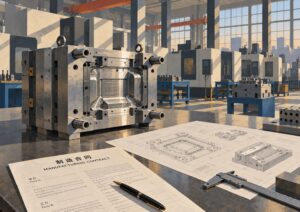
For most mainland China manufacturing relationships in which the factory's assets and operations are in China, we generally favor a manufacturing agreement governed by Chinese law, in Chinese or with Chinese as the controlling language, and enforceable in an appropriate Chinese court. I've seen far too many contracts that look impressive to an American buyer but give that buyer no sensible way to pursue the factory where its assets are located. Choosing a U.S. state as the governing law and a U.S. court as the forum is not inherently wrong, but it should be a deliberate choice based on the transaction, not something copied from a domestic contract.
There are situations in which Hong Kong or Singapore arbitration, or another arrangement, makes good sense. The relevant questions are who the contracting parties are, where their assets are, and how an award or judgment can actually be enforced. Whatever forum you choose, the agreement should address delivery deadlines, damages for delay, quality standards, inspection rights, confidentiality, use of your IP, and ownership and return of tooling. Reasonable agreed damages for late delivery can be particularly useful, although Chinese courts have authority to adjust excessive amounts. For more on the details, see Drafting China Contracts That Work and How to Get Your China Product Deliveries on Time.
A manufacturing agreement doesn't guarantee the factory will perform. But it gives us something concrete to point to when it doesn't, and it gives the factory a reason to take the letter seriously. A short letter identifying an enforceable obligation and a next step we're prepared to take usually carries more weight than several pages of threats.
2. China Trademark Protection Before the Relationship Turns Bad
I also want to know that the buyer has filed for, and preferably obtained, the Chinese trademark registrations appropriate for its products. A registration needs to cover the relevant goods and subclasses, and it does not eliminate every IP risk. But it makes it much harder for a supplier to use the buyer's own brand as a weapon in a manufacturing dispute. If you are manufacturing branded goods in China, this is a cost of doing business there, even if you have no plans to sell to Chinese consumers.
I regularly see companies spend heavily on product development, packaging, marketing, and inventory while putting off a comparatively inexpensive China trademark filing. They assume the factory will have no interest in their brand because the parties have worked together for years. That assumption can become expensive the moment the relationship sours.
3. A Plan for What Happens After the Letter Arrives
Before we threaten a supplier, I want to know exactly what our client is trying to accomplish. Getting finished goods released is a different objective from recovering a deposit, securing replacement products, or retrieving tooling so another factory can take over. Each requires a different approach, and sometimes the best first communication is a relatively restrained one that leaves room for a practical solution.
I also want an answer to a simple question: what are we going to do if the supplier says no? If the buyer has no realistic next step, an aggressive letter is often a mistake. It is better to find that out in our office than after the factory receives a threat and responds by taking control of the very goods or tooling the buyer is trying to recover.
When a China Demand Letter Actually Works
We have had considerable success with carefully prepared lawyer's letters in China payment and contract disputes. Sometimes the response is an acknowledgment of the problem and a proposal to pay or settle. At other times, the supplier explains its position, and the exchange gives us enough information to negotiate a practical resolution. Those results are more likely when the recipient knows we understand the facts, the governing law, and what enforcement would look like.
The best letters are usually fairly short, written in Chinese, and focused on specific obligations and realistic consequences. I see little value in sending five pages of outrage to a factory that already knows its customer is upset. Before we send anything, we look at the documents, the evidence, what the supplier has at stake, and whether the next step threatened in the letter is one we are actually prepared to take.
There is one important qualification to all of this advice. Some contracts require a formal notice of breach, an opportunity to cure, or a particular method of sending notice. Legal deadlines can matter as well. A buyer should not lose an otherwise valid claim by delaying a required notice while conducting a broader review. The answer is to distinguish a notice needed to preserve rights from an unnecessarily aggressive letter designed mainly to frighten the supplier.
If Your China Shipment Is Late, Check These Ten Things First
When a shipment is overdue and the factory is not responding, I would rather spend time finding out what is really happening than start by drafting an angry letter. These are the questions I would want answered before advising a company to escalate. You do not need perfect answers to all ten, but the unanswered questions should be part of the decision.
- Who is the actual supplier? Get the company's full Chinese legal name, registration details, and registered address. Check whether the entity that signed the contract is the one operating the factory and holding the goods. If the paperwork identifies a Hong Kong trader while production occurs at a separate mainland company, that distinction matters enormously.
- What has actually been produced? Find out which goods are finished, which remain in production, and where they are being held. When the amount at stake justifies it, arrange independent verification rather than relying entirely on what the salesperson tells you. A demand for immediate shipment is of limited use if the factory has not made the products.
- What do the documents say? Gather the contract, purchase orders, specifications, payment records, inspection reports, shipping documents, and important email and WeChat exchanges. Review them together, including any notice requirements, cure periods, and approaching deadlines. What the parties actually agreed to matters more than what either side now remembers.
- Who controls the tooling? Determine who owns the molds, dies, and production files and where they are located. Check whether your documents require the factory to return them and whether the factory claims a right to hold them. If you will need to move production, tooling control can be as important as recovering the current shipment. Our China IP protection guide discusses some of the relevant protections.
- Is your brand protected in China? Check whether you have filed for or registered your Chinese trademark and whether anybody else has filed for the same or a conflicting mark. Confirm the owner, goods, and subclasses rather than assuming a registration somewhere in the world is enough. If you discover a supplier filing, address it as part of the dispute strategy before sending threats.
- What outcome do you really need? Decide whether the priority is getting the goods, recovering money, obtaining a remake, securing a discount, or ending the relationship. A supplier cannot negotiate sensibly with a buyer whose demands keep changing. Your lawyer also needs that answer to decide whether a demand letter is worth sending.
- What have you already said? Read the messages your team has sent, particularly anything threatening litigation, accusing the supplier of fraud, or withholding payment. Stop sending angry follow-ups while you assess the situation. You do not want to discover later that someone on your side made a promise, admission, or threat that complicates the dispute.
- How can the supplier respond? Consider whether it controls finished inventory, unfinished products, tooling, design files, or access to a necessary component. Think about the commercial and practical steps it can take, even if you believe those steps would breach the contract. You should have a response in mind before provoking one of those moves.
- What is the right sequence? Sometimes we begin with a measured request for information or a proposed shipping schedule. Sometimes we recommend a formal notice, and sometimes a demand letter is justified immediately. The choice depends on the facts, the applicable deadlines, and what the client is able and willing to do next.
- Is the amount at stake worth a legal fight? A focused review of the documents and leverage is often money well spent when a significant shipment or a continuing supply relationship is at risk. It also sometimes shows that litigation would cost more than the likely recovery. I would rather tell a company that early than collect fees for a letter that accomplishes nothing.
How We Handle China Supplier Disputes
When someone contacts us about a China supplier problem, we start with what can actually be done. We want to know which legal entity owes the obligation, where the goods and tooling are, what the documents establish, how much has been paid, and whether the company has protected its brand. We also look at how dependent the buyer is on that factory and how a dispute would affect customers and future production. The legal merits matter, but a good legal claim is not always the same thing as a good business solution.
Once we understand the situation, we can recommend whether to send a letter, try a commercial negotiation, seek a specific legal remedy, or prepare an orderly move to another manufacturer. We don't assume escalation is the right answer, and I don't want to charge a company to make threats that are unlikely to work. If you have a delayed China shipment and want a realistic assessment of your options, contact Harris Sliwoski before you threaten your supplier.
China Supplier Demand Letter FAQ
Should I Send My Demand Letter in English or Chinese?
If enforcement in China is a realistic possibility, I generally prefer a letter written in Chinese or accompanied by a professionally prepared Chinese version. The factory's management needs to understand the claim and the consequences without having to interpret an American lawyer's legal language. A letter that reads like the opening salvo of a U.S. lawsuit can be less persuasive than a concise explanation of what the supplier is required to do under Chinese law.
Does It Matter Whether the Letter Comes From U.S. or Chinese Counsel?
It matters, though not as much as some companies think. A letter from a U.S. law firm can get attention, but the factory will want to know what can happen to it in practice. The important questions are whether the lawyer understands the contract and the relevant law and whether the threatened enforcement is credible. Letterhead alone is not leverage.
I Have Only Purchase Orders and Emails. Do I Still Have Rights?
You very well might. Purchase orders, emails, and the parties' conduct can establish enforceable obligations under Chinese law. The harder questions are often what was agreed, who agreed to it, and what remedy is available for the particular breach. I would review the documents before telling you either that you have a strong case or that you have no case at all.
Will a U.S. Contract Help in a Dispute With a Chinese Supplier?
Sometimes it will, particularly if the supplier has assets outside mainland China or the dispute-resolution provisions provide a realistic enforcement path. Foreign judgments can be recognized in China in certain circumstances, but enforcement is not automatic. I would want to know where the supplier has assets and how you expect to collect before deciding how much value the U.S. contract adds.
What If My Contract Is With a Hong Kong Company but the Factory Is in Mainland China?
This is a common arrangement and one that deserves scrutiny. The Hong Kong company may owe the contractual obligations while the mainland factory controls the products and tooling you need. Those are not necessarily the same legal entity, and you should not assume a contract with one gives you direct rights against the other. We look at the corporate structure and the actual transaction before deciding whom to pursue.
Do I Need a China Trademark If I Never Sell Products in China?
If you manufacture branded products in China, I strongly recommend protecting the mark there even if all your sales occur elsewhere. Your goods are being produced and exported from China, and a registration held by another party can create problems at both stages. Waiting until the relationship goes bad can leave you fighting over your own brand while your inventory sits in a factory or port.
What If My Supplier Has Already Filed My Trademark in China?
The first thing is to determine what was filed, when it was filed, and whether it is still an application or has become a registration. Opposition, invalidation, and other challenges may be available depending on the facts, including evidence of bad faith or prior rights. Those proceedings take time, so the trademark problem needs to be considered alongside any effort to get your goods or tooling released.
Can My Supplier Really Use China Customs Against My Exports?
A supplier that obtains the relevant Chinese trademark registration can seek Customs recordation and use the available infringement procedures. That does not mean every complaint results in detention, and a mere pending application does not provide the same rights. But the risk of a shipment being held can be enough to change the commercial balance of a dispute, particularly when delivery dates are critical.
Should I Stop Paying If My China Factory Is Late?
Not without first reviewing the contract and the facts. Withholding payment can be justified in some situations, but it can also lead the factory to hold goods, stop production, or claim that you are the party in breach. If receivables insurance is involved, the dispute can expand to collection efforts by or on behalf of Sinosure. I would want a clear plan before using nonpayment as leverage.
Is Suing a Chinese Manufacturer Realistic?
Yes. Chinese courts can provide effective remedies in the right circumstances, especially when the agreement is suited to enforcement there and the evidence is strong. The practical issues include identifying the correct defendant, locating assets, proving the claim, and evaluating the cost and time involved. The possibility of a credible lawsuit often helps resolve a dispute without having to file one.
When Should I Actually Send a Demand Letter?
When we know what the supplier owes, have evidence of the breach, understand the likely response, and have a realistic next step if the demand is refused. Sometimes a contractual notice has to go out promptly to preserve rights, and I would not delay it simply because the relationship is tense. What I try to avoid is a letter sent only because the buyer is angry and wants the factory to know it.
What Should I Have Ready When I Contact a Lawyer?
Start with the supplier's full legal name and location, the products involved, the amount at stake, and what has been paid and shipped. Provide the key contracts, purchase orders, specifications, inspection reports, and relevant correspondence, along with what you know about the goods, tooling, and trademark registrations. Tell us what outcome you actually want and how quickly you need it. With that information, we have a much better chance of telling you something useful before you make the dispute worse.
Additional Reading on China Manufacturing and Supplier Disputes
China Manufacturing Contracts
- How NOT to Write a China Contract
- China Manufacturing Contracts: Why Your Draft Does Not Work
- China Manufacturing Contracts: When One Agreement Is Not Enough
- Why Your China Manufacturing Agreements Should Almost Always Be in Chinese
China Trademarks and Supplier Risks
- Manufacturing in China: China Trademark Registration Should Be the First Thing You Do
- The Growing Threat of Chinese Factory Competition, and How to Fight Back
Preventing Manufacturing Problems