







How to Buy IP Legal Services: What You Need and What You Don’t
One of the more frustrating parts of being an international business lawyer is watching companies spend thousands of dollars protecting intellectual property that presents little risk while leaving their most valuable assets exposed. We see companies pay for confidentiality agreements they do not need, register trademarks in the wrong countries or classes, and develop products without making sure they will own the resulting designs and tooling.
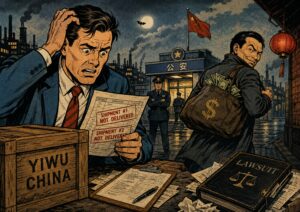
Then their manufacturer starts selling their products to competitors, refuses to return their molds, or a distributor registers their trademark. Fixing these problems costs far more than preventing them, and sometimes there is no good solution.
The problem usually starts before the lawyers get involved. Business owners decide they need a trademark, patent, NDA, or IP agreement without first figuring out what they are trying to prevent. They then shop for the lowest price and tell their lawyer exactly what they need, and their lawyer gives that to them.
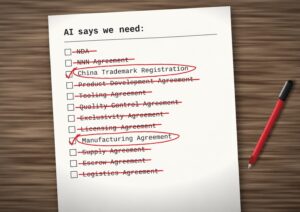
The lawyers at my law firm (and many other law firms) start by trying to identify what would hurt the business if someone copied it, took it, or prevented the company from using it. Once you understand those risks and where they are most likely to arise, you can decide which intellectual property legal services are worth buying. We discuss this problem further in When AI Tells You What Legal Work You Need.
What Your Business Owns and What Needs Protection
Most business IP falls into four categories: trademarks, patents, copyrights, and trade secrets. They protect different things, and confusing them leads to unnecessary spending.
| What your business needs to protect | Legal services worth considering |
|---|---|
| Brand names, logos, and product names | Trademark clearance searches, registrations, enforcement |
| Inventions and new technology | Patentability assessments, patent applications |
| Software, photographs, artwork, written content | Copyright registration, ownership agreements, licensing |
| Formulas, processes, confidential business information | Trade secret protection, confidentiality and non-use agreements |
| Product designs, molds, and tooling | Manufacturing agreements, tooling ownership agreements, IP assignments |
| Technology shared with manufacturers or business partners | NNN agreements, product development agreements, technology licensing |
| Work created by employees or contractors | Employment and contractor IP assignment agreements |
Before paying to protect IP, make sure you own it. Paying a contractor to develop software or design a product does not automatically transfer every intellectual property right to your company. Ownership depends on the work, applicable law, and the parties' agreements.
We see this problem with overseas manufacturers. A company pays for product development and assumes it owns the designs. Months later, it wants to change factories and discovers that its manufacturer claims ownership of the drawings, technology, or tooling. Our article on how companies give away their IP in China without realizing it describes how this happens. By the time lawyers get involved, the factory holds most of the leverage.
Where Your IP Needs Protection
Intellectual property rights are largely territorial. A U.S. trademark registration does not provide worldwide protection, and a U.S. patent does not ordinarily protect an invention against activities conducted entirely outside the United States. Yet companies regularly assume their U.S. trademark protects products manufactured in China because they sell only to American customers. It does not give them corresponding Chinese trademark rights. Our article on how to protect your IP internationally explains the broader considerations for businesses operating across borders.
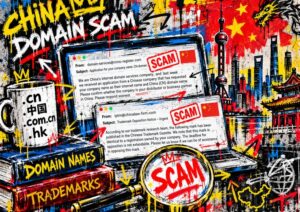
China (and most of the rest of the world as well) is principally a first-to-file trademark country. Subject to exceptions, priority goes to the party that files first for the relevant mark and goods or services. Ten years of selling a branded product in the United States will not, by itself, prevent someone else from registering that brand in China.
We once dealt with an American company whose Chinese manufacturer registered 17 of its trademarks without permission, then offered the American company's customers the same products for 40 percent less. We describe that matter in How to Protect Your Trademarks as China Manufacturing Declines. In another matter, China Customs detained a major shipment belonging to a Canadian coat manufacturer because another company had registered its trademark in China. After reviewing the options and the cost of further delays, we negotiated the purchase of the trademark for six figures.
Companies manufacturing in China should register their core trademarks there, even if they never intend to sell to Chinese consumers. Someone else's Chinese registration can prevent them from manufacturing and exporting their own goods. That does not mean every company needs a Chinese-character trademark. If it sells only outside China, uses an English-language brand, and has no established Chinese name, a Chinese-character registration is usually an unnecessary expense. Protect the brand appearing on the goods and packaging first. We explain this in our guide to China trademark registrations.
The same reasoning applies elsewhere. Registration in a market you do not serve and have no plans to enter sometimes makes sense, but the expense needs a justification. I would rather see a company properly protect its most important trademark in three countries than scatter registrations across fifteen without knowing what each accomplishes. For companies considering registrations in multiple countries, our article on international trademark registration explains how the Madrid System works and what a single international application does and does not accomplish.
Which IP Protections Should Come First?
Most small and midsize businesses cannot afford every available IP protection. Their priorities depend on how they operate. A manufacturer, software developer, and consumer brand face different risks.
If You Manufacture Products Overseas
Suppose your U.S. company has designed a branded consumer product and found a Chinese factory willing to make it. Before buying legal services, determine what information the factory will receive, what it can do with that information, and how difficult switching manufacturers would be. If your brand is settled, file the China trademark application now. Our article on China NNN agreements versus trademark registrations explains why companies frequently need both forms of protection.
If you are approaching several factories with proprietary designs or valuable technical information, get a China NNN agreement signed before disclosure. Unlike a conventional American NDA, an NNN addresses unauthorized use and circumvention as well as disclosure. It protects you while evaluating prospective manufacturers, including those you reject.
After choosing a factory, you need a manufacturing agreement covering product specifications, quality standards, inspections, IP and tooling ownership, unauthorized subcontracting, and enforceable remedies. It should also prevent the factory from misusing your information and designs.
If you select your manufacturer before disclosing valuable information, and your manufacturing agreement contains the necessary non-disclosure, non-use, and non-circumvention provisions, you do not need a separate NNN. If you have already shared proprietary information under an NNN, the manufacturing agreement should address whether the earlier agreement remains effective and preserve rights arising from earlier disclosures and breaches. Your agreement with the chosen factory also does not bind rejected factories. See Do I Need a China NNN Agreement or a China Manufacturing Agreement? Usually Both.
Tooling needs protection too. One client paid $80,000 for molds, then paid its manufacturer $200,000 to recover them just eight months later. The production shutdown cost approximately $800,000 in lost revenue. The company had paid for the molds without securing its right to recover them. A proper mold and tooling agreement, or adequate tooling provisions in a manufacturing agreement, costs far less.
Make sure the contract binds the correct company. We routinely see Chinese manufacturers identified by English trade names rather than their registered Chinese legal names. Sometimes a Hong Kong trading company negotiates the deal while a mainland factory makes the products and holds the tooling. An excellent contract against the wrong company offers little practical protection. We explain why this matters in Why Accurate Chinese Company Names on Your Contracts Must Be Non-Negotiable.
For a broader discussion of trademarks, manufacturing contracts, and other protections, see How to Protect Your IP in China: Answers to the Questions Foreign Companies Ask Most.
If You Are Developing Software or Technology
Before worrying about international patents, a software company should examine its developer agreements. Do they transfer the necessary IP rights to the company and impose enforceable confidentiality obligations? Does the company understand restrictions on third-party code and control access to its source code? These questions become critical during investment or acquisition due diligence. Discovering that a former contractor owns important rights in your software can be expensive. Address ownership while the developers are still working with you.
Copyright protection arises automatically, but registration matters when infringement occurs. For a U.S. work, registration or refusal by the Copyright Office is ordinarily required before filing a federal infringement lawsuit. Subject to statutory exceptions, registering after infringement begins can prevent recovery of statutory damages and attorney fees. For published works, registering within three months after first publication can preserve eligibility for those remedies even when infringement begins before registration.
Early registration therefore makes sense for valuable software, photographs, artwork, and other works likely to be copied. It does not mean registering every piece of marketing material. Consider the work's value and exposure to infringement.
Patents require a separate assessment. A patent application makes sense when a qualifying invention provides an important competitive advantage, but international patent protection is expensive, and publication can disclose information that might otherwise remain secret. This work belongs with a patent specialist.
If You Are Launching a Consumer Brand
For many consumer businesses, trademarks take priority over patents. Begin with a clearance search to identify infringement risks and assess registrability, then determine the appropriate countries and trademark classes.
A protective-glove company came to us after China Customs detained its shipment. Its previous lawyer had registered its trademark in Class 25, which covers gloves worn as clothing. The client's protective work gloves belonged in Class 9. A competitor registered the mark for the relevant goods and used that registration to interfere with shipments. We discuss the matter in China Trademark Registration: Why U.S. Companies Need More Than a Filing Agent. The Chinese trademark lawyer had registered the trademark for gloves, as requested. What the client needed was someone who asked what kind of gloves it sold. A cheap filing covering the wrong products can be worse than no filing because it creates false confidence.
IP Legal Services You Can Skip
I wish more lawyers discussed unnecessary legal spending with prospective clients. A substantial number of companies asking us for China NNN agreements do not need them. Another form of protection works better, or the risk does not justify the cost. We have said this publicly for years, although drafting NNN agreements is part of our practice.
Small clothing companies are a good example. We almost never draft China NNN agreements for businesses sourcing ordinary apparel without disclosing valuable proprietary information. An NNN binds the factory that signs it. It does not bind the industry or prevent unrelated manufacturers from copying designs they are otherwise legally free to copy. Those manufacturers remain subject to applicable trademark, copyright, patent, and other IP laws, but they are not bound by your contract. Such companies usually need a China trademark for their brand before an NNN. The calculation changes when a company develops genuinely original designs or shares confidential technical information with prospective manufacturers.
Trademark applications offer another example. One company came to us after purchasing 11 China trademark applications from an online filing service when one would have covered its actual exposure. The extra applications provided no useful protection. We discuss this in our guide to China trademark registrations. Multiple registrations sometimes make sense, but each should address a real risk or business plan.
We also receive requests to review American NDAs and manufacturing contracts for use in China. We frequently decline because their governing-law provisions, dispute-resolution terms, and substantive protections were designed for another legal system. Reviewing them will not make them suitable China contracts. Starting with a contract drafted for the transaction and jurisdiction is usually more efficient. See China Manufacturing Contracts: Why Your Draft Does Not Work.
Companies also overspend on trade secret programs and foreign patents. A company with little valuable confidential information should question the need for an elaborate trade secret program. A startup should have a business reason before pursuing patents in numerous countries. Be skeptical of lawyers who recommend every available remedy without discussing its cost and likely value.
Choosing an IP Lawyer Who Understands Your Business
IP lawyers have different specialties. A patent lawyer who excels at pharmaceutical patents may have little experience negotiating Chinese manufacturing agreements. An international business lawyer experienced in trademarks and contracts should not prosecute complicated software patents. Trademark registration and trademark litigation also require different skills.
Firm size tells you little about whether a lawyer can handle your matter. A small IP boutique may be best for specialized patent work, and a solo practitioner can be excellent for routine filings. Foreign manufacturing, distribution, and licensing matters often call for international business experience. Our article, The High Cost of China Contract Mistakes, describes what can happen when companies hire lawyers without the necessary experience.
At Harris Sliwoski, much of our international IP practice involves protecting companies before they work with foreign businesses and helping them when those relationships go wrong. We have seen companies register trademarks while overlooking tooling ownership and sign confidentiality agreements that do nothing to prevent manufacturers from competing with them. Those experiences inform our advice about where clients should spend their legal budgets.
Questions to Ask Before Hiring an IP Lawyer
Spend less time asking how long a lawyer has practiced and more time asking how that lawyer would approach your business. My favorite question is "What would you protect first if this were your company?" Then ask why. A lawyer who recommends five trademark applications, two contracts, and an international patent strategy before learning about your business deserves skepticism.
I would also ask:
- Have you handled this problem before? Request examples involving similar products, industries, or jurisdictions.
- What would you tell us not to buy? The answer helps distinguish judgment from salesmanship.
- How is our IP protection most likely to fail? This reveals whether the lawyer understands real disputes.
- Who will handle our work? Determine who makes the important decisions and who performs the work.
- What will we have when the work is finished? An application, registration, signed contract, and enforceable legal right are different things.
- What will it cost if something goes wrong? Ask about refusals, oppositions, breaches, and enforcement.
A good lawyer should answer in language you understand. If you leave the consultation unsure what the lawyer proposes or why you need it, keep asking before hiring.
How IP Legal Fees Work
IP legal services are sold under several pricing arrangements. Routine filings and some contracts work well with flat fees. Litigation and complicated advisory work usually require hourly or phased billing. Monthly fixed fees sometimes make sense for ongoing portfolio management.
| Fee structure | Typical work | Questions to ask |
|---|---|---|
| Flat fee | Trademark filings, copyright registrations, standard agreements | What is included, and what costs extra? |
| Hourly | Litigation, complex licensing, specialized advice | What is the estimated total cost, and when will it be updated? |
| Phased project fee | IP audits, multi-country filings, complex transactions | What does each phase deliver? |
| Monthly fixed fee | Ongoing portfolio management and advice | What services are included and excluded? |
A Lower Quote Is Not Always a Better Deal
Suppose one firm quotes $1,000 for a trademark application and another quotes $2,000. The cheaper quote excludes clearance searches, government fees, and nearly all post-filing work, while the higher quote includes some or all of those services. Or perhaps only one firm understands which trademark classes cover your products. Remember the protective-glove company: it paid for a trademark registration without getting the protection it needed. There is also the question of judgment. A less expensive lawyer may lack the experience to distinguish what you need from what you don't, or may be more interested in generating fees than saving you money. You could end up paying for 11 trademark applications when one would have protected your business just as well.
Patent estimates require particular care. The initial filing cost does not tell you what you will spend responding to examiner objections, filing abroad, or maintaining issued patents. Find out which stages each estimate covers.
Get the Scope and Price in Writing Before Work Begins
Your engagement agreement should say exactly what you are buying. For trademarks, identify the marks, jurisdictions, classes, clearance searches, and government fees. Specify whether office action responses are included and what happens if someone opposes the application.
For manufacturing contracts, establish which agreements the firm will prepare, whether manufacturer verification is included, what languages will be used, which version controls, and whether the fee covers negotiations and revisions. Ask how the agreement will be made enforceable where the manufacturer operates.
The same principles apply to patents, IP ownership reviews, licensing, and litigation. Define the deliverables, your responsibilities, and the additional work requiring your approval. Distinguish the lawyer's preparation time from government processing time. A firm can file a trademark application promptly without controlling when or whether it is approved.
Agree in advance how unexpected work will be billed, including trademark conflicts, patent examiner rejections, and substantial contract revisions. Competent lawyers should be comfortable discussing these issues before starting. Before signing, make sure you understand what the firm will do, why your business needs it, what you will receive, and what you will pay. Resolve anything unclear before authorizing the work.
Frequently Asked Questions About IP Legal Services
How much does it cost to hire an intellectual property lawyer?
It depends on the work. Routine trademark filings and standard IP agreements are frequently handled for flat fees, while patent applications, complex licensing agreements, and IP disputes usually cost considerably more.
For international trademark registrations, we often tell clients to budget $2,000 per country, including all legal fees, government fees, and other costs, when deciding whether registration makes business sense. That figure is a reasonable estimate for many countries, though some cost less than $1,000 and others as much as $4,500.
Be careful when comparing quotes. A cheaper filing that excludes clearance searches, government fees, and follow-up work can ultimately cost more than a higher quote that includes them. Find out exactly what you are buying.
If I pay someone to develop my product, do I own the designs and tooling?
Not automatically. Paying a contractor or manufacturer for development work does not by itself transfer every intellectual property right to your company. Ownership depends on the work, applicable law, and the parties' agreements. Companies often discover this when they try to change factories and their manufacturer claims the drawings, technology, or molds.
One of our clients paid $80,000 for molds and eight months later paid its manufacturer $200,000 to recover them. The production shutdown cost approximately $800,000 in lost revenue. A proper tooling agreement, or adequate tooling provisions in your manufacturing agreement, costs far less. Make sure the agreement binds the company that actually holds the tooling under its registered Chinese legal name.
Does my U.S. trademark protect my brand in China?
No. Intellectual property rights are largely territorial, and a U.S. registration gives you no corresponding trademark rights in China, even if everything your factory makes ships to American customers. China is principally a first-to-file trademark country, so, subject to exceptions, priority goes to the party that files first for the relevant mark and goods or services.
Ten years of selling your brand in the United States will not, by itself, stop someone else from registering it in China. One American company's Chinese manufacturer registered 17 of its trademarks without permission and then offered its customers the same products for 40 percent less. Our China trademark registration guide explains how to protect your brand there.
Do I need a China trademark if I don't sell in China?
If you manufacture branded products in China, you should ordinarily register your core trademarks there. Someone else's Chinese registration can prevent you from manufacturing and exporting your own goods.
China Customs detained a major shipment belonging to a Canadian coat manufacturer because another company had registered its trademark in China. After weighing the options against the cost of further delays, we negotiated the purchase of that registration for six figures. Register the brand appearing on your goods and packaging first. A Chinese-character version is usually an unnecessary expense if you sell only outside China, use an English-language brand, and have no established Chinese name.
Do I need a China NNN agreement, a China manufacturing agreement, or both?
Usually both, and timing decides it. If you are approaching several factories with proprietary designs or valuable technical information, get an NNN signed before disclosure. It addresses unauthorized use and circumvention as well as disclosure, and protects you against factories you reject, which your eventual manufacturing agreement will not bind.
The manufacturing agreement with your chosen factory covers product specifications, quality standards, inspections, IP and tooling ownership, unauthorized subcontracting, and remedies. If you choose your manufacturer before sharing anything valuable, and your manufacturing agreement contains the necessary non-disclosure, non-use, and non-circumvention provisions, you do not need a separate NNN. We explain this in Do I Need a China NNN Agreement or a China Manufacturing Agreement? Usually Both.
Do I need to register my copyrights?
Copyright protection arises automatically, but registration matters when infringement occurs. For a U.S. work, registration or refusal by the Copyright Office is ordinarily required before filing a federal infringement lawsuit.
Subject to statutory exceptions, registering after infringement begins can prevent recovery of statutory damages and attorney fees. For published works, registering within three months after first publication can preserve eligibility for those remedies even when infringement begins before registration. Early registration makes sense for valuable software, photographs, artwork, and other works likely to be copied, though not for every piece of marketing material.
Will a China NNN agreement stop factories from copying my clothing designs?
It binds only the factories that are parties to the agreement. Other manufacturers remain subject to trademark, copyright, patent, and other IP laws, but your contract does not bind them, and they are free to copy designs the law otherwise lets them copy.
That is why we almost never draft China NNN agreements for small clothing companies sourcing ordinary apparel without disclosing valuable proprietary information. Those companies usually need a China trademark for their brand before an NNN. The calculation changes when a company develops genuinely original designs or shares confidential technical information with prospective manufacturers. See China NNN Agreements: What They Do, What They Don't, and How to Get Them Right.
Will you review my American NDA or manufacturing contract for use in China?
We frequently decline. American NDAs and manufacturing contracts often contain governing-law provisions, dispute-resolution terms, and substantive protections designed for another legal system. Reviewing them will not necessarily make them suitable China contracts.
Starting with a contract drafted for the transaction and jurisdiction is usually more efficient. Whatever agreement you use should identify the manufacturer by its registered Chinese legal name, because an excellent contract against the wrong company offers little practical protection. We explain why in China Manufacturing Contracts: Why Your Draft Does Not Work.
Why do quotes for the same trademark filing vary so much?
Two quotes that look comparable often cover different work. A $1,000 trademark quote that excludes clearance searches, government fees, and nearly all post-filing work buys less than a $2,000 quote that includes those services. Quotes also reflect differences in the lawyers' experience and judgment.
A protective-glove company paid for a China trademark registration in Class 25 when its work gloves belonged in Class 9. A competitor registered the mark for the relevant goods and used it to interfere with the company's shipments. Before hiring anyone, get a written scope identifying the marks, countries, classes, included searches, government fees, and charges for responding to refusals or oppositions. For more on the glove case, see China Trademark Registration: Why U.S. Companies Need More Than a Filing Agent.
Can one lawyer handle trademarks, patents, copyrights, and international IP protection?
Some lawyers handle several areas of IP law, but few are equally experienced in all of them. Patent prosecution requires specialized qualifications, and negotiating an international manufacturing agreement calls for different experience from registering a trademark.
You do not need a separate law firm for every matter. An international business law firm can coordinate trademark protection, contracts, and foreign counsel while bringing in patent specialists when needed. Our firm, for example, does not draft utility patent applications. We bring in or refer clients to lawyers who specialize in that work. Ask who will actually handle each part of your matter.
Can I protect my intellectual property without hiring a lawyer?
Yes. You can file many trademark and copyright applications yourself and take steps to protect confidential information. The risk is paying for the wrong protection or overlooking something important.
One company bought 11 China trademark applications when one would have covered its actual exposure. Another hired a lawyer who registered its protective work gloves in the wrong trademark class. Both paid for legal services without getting the protection they needed. A good IP lawyer earns the fee partly by knowing what you do not need to buy.