






Selling Products in China: The Complete Legal and Distribution Guide
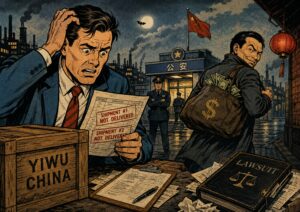
A company we had never represented came to us after China Customs detained a large shipment of coats made for it in China. The coats bore a brand the company had used for years, but someone else owned the Chinese trademark registration and was using it to block the shipment. The company also sold its coats in China, where it was being threatened with having them pulled from store shelves. It wanted to fight, and it had arguments. But its shipment was stuck in Customs, its Chinese sales were at risk, and every week of delay cost money. We negotiated a six-figure purchase of the Chinese trademark. Had the company come to us before doing business in China, we would have advised it to register its trademark for a tiny fraction of what it ultimately paid.
Over decades of helping foreign companies sell into China, we have seen how mistakes made before the first sale can cause expensive problems years later. Sometimes the mistake is failing to register a trademark. Other times it is granting an unproven distributor exclusive rights to all of China, letting a Chinese partner control the regulatory approvals needed to sell a product, or extending credit to buyers without checking their finances.
Selling into China does not necessarily require a Chinese subsidiary or a large upfront investment. We have represented companies that have sold there successfully for years without forming a Chinese entity. One longtime American client has exported sophisticated industrial equipment to China for nearly two decades, using staged payments and carefully chosen export terms to limit its risk. The key is making important decisions in the right order and avoiding commitments that are difficult to undo.
1. Choose How You Will Sell Your Products in China
Before deciding whether you need a Chinese company, decide what you want your China business to do. A manufacturer selling specialized equipment to five Chinese factories needs a different legal structure from a consumer brand trying to reach thousands of customers through stores and online platforms. The table below shows where we usually start, though product regulations, what you will actually be doing in China, and your economics can change the answer.
| Your business | Where we usually start |
|---|---|
| Testing demand for consumer products | Independent Chinese distributor |
| Selling specialized equipment to a few Chinese companies | Direct exports |
| Generating orders through local representatives | Chinese sales agency |
| Selling consumer products online | Cross-border e-commerce or authorized Chinese seller |
| Building substantial local operations | Chinese subsidiary |
| A business that requires or clearly benefits from a Chinese co-owner | Joint venture |
| Selling rights to technology or intellectual property | Licensing agreement |
Selling Through an Independent Chinese Distributor
For many small and midsize foreign businesses, an independent distributor is the most practical way into China. The distributor buys your products and resells them to Chinese customers, usually handling some combination of importing, warehousing, local marketing, customer relationships, and after-sales service. You avoid much of the cost of setting up your own China operation, and in exchange you give up some control over how your products reach customers.
We helped a Spanish manufacturer of industrial building materials enter China through distributors in Shanghai, Beijing, and Chongqing. This gave it regional coverage without forming a Chinese subsidiary or granting any one distributor exclusive rights nationwide. We registered its Chinese trademarks and negotiated distribution agreements covering territory, performance, exclusivity, and compliance. Sales grew, and the company retained the flexibility to change distributors as its China business developed. We have handled similar arrangements for companies across a wide range of industries, including publishing, food, and auto parts.
Selling Directly to Chinese Customers
You do not always need a physical presence in China. The industrial-equipment client I mentioned above keeps its manufacturing and principal operations in the United States and sells high-end machinery directly to Chinese buyers, relying on staged payments and export arrangements designed to reduce its exposure. Direct sales work particularly well when your customers are sophisticated businesses that can handle the importing themselves and you do not need local staff, warehouses, or consumer marketing. You still have to deal with product approvals, customs, shipping terms, payment, and warranties, but many foreign companies spend far too much time figuring out how to form a Chinese company before asking whether they need one.
Using a Chinese Sales Agent
Before appointing a Chinese sales agent, decide which products and customers the agent can pursue, whether the arrangement will be exclusive, and how commissions will be calculated and paid. Your agreement also needs to address who controls customer relationships, what authority the agent has to negotiate or conclude sales, who pays for marketing and after-sales service, and what happens to commissions when the relationship ends. These questions are particularly important when you plan to have several agents covering different Chinese territories or customer groups.
Be careful about calling someone an independent contractor when that person is effectively running your Chinese sales office. Chinese employment and permanent-establishment rules look at what the person actually does, not merely at the title in the agreement, and an arrangement that works for an independent sales agency can create very different problems when the agent is really a full-time employee of the foreign company.
Establishing a Chinese Subsidiary
A Chinese subsidiary makes sense when you need your own local employees, substantial inventory operations, Chinese invoicing, or continuing services that independent parties cannot efficiently handle. A wholly foreign-owned Chinese company is commonly called a WFOE, though the broader legal category is a foreign-invested enterprise, and it comes with registration, accounting, tax, employment, registered-capital, and corporate-governance obligations. China's 2024 Foreign Investment Negative List, effective November 1, 2024, removed the remaining foreign-investment access restrictions in manufacturing, but other industries remain restricted, and product-specific operating licenses still matter.
From 2005 through 2015, we formed what I estimate was more than 100 Chinese entities for our clients. From 2016 through 2025, we formed fewer than ten, most of them before COVID. Subsidiaries still make sense for some businesses, but most of our clients now want Chinese customers without the cost and risk of operating inside China.
Products Manufactured in China but Sold in China
Some foreign companies have their products made in China and then want to sell them to Chinese customers. The goods never leave China, but the foreign company owns the brand and controls the commercial relationship. We have dealt with this many times, and the common mistake is assuming the foreign company can simply buy from its Chinese manufacturer and resell domestically without looking at the Chinese invoicing, VAT, and business-registration consequences.
One arrangement we have used has the Chinese manufacturer sell the products to an approved Chinese distributor, with the foreign company receiving an appropriately structured payment under a separate license or other commercial agreement. The foreign company keeps contractual control over the product and the distribution arrangement while Chinese entities handle the domestic sale. The tax treatment and legal structure depend on the actual facts, so have the arrangement checked against current Chinese customs, VAT, invoicing, and business-licensing rules before you adopt it. Our article How to Manufacture in and Sell to China Without a WFOE discusses this approach in detail.
Joint Ventures and Licensing
We generally discourage forming a Chinese joint venture just to sell products. A joint venture creates an ownership relationship, and disagreements over control, management, profits, or intellectual property can be much harder to resolve than disputes under an ordinary distribution agreement. We have seen proposed joint ventures turn into licensing deals once the foreign company understood the cost and complexity of shared ownership, and we helped a California financial-software company license its technology to a Chinese software business instead of setting up its own operations there. A licensing arrangement must specify the rights the Chinese party receives, the territory, payment, sublicensing restrictions, the treatment of improvements, and protection of the underlying intellectual property. We go through these decisions in China Technology Licensing: The Questions We Ask.
2. Confirm That Your Products Can Legally Be Imported and Sold
Before you negotiate purchase commitments or sign an exclusive distribution agreement, find out whether your products can legally be sold in China. We have seen proposed distribution deals for products that had not received the Chinese approvals required to import them. In one matter, the distributor was supposed to buy three months of projected sales inventory even though none of the products had been approved for import. We recommended defining the first purchase obligations and setting a deadline tied to the regulatory approval process, because otherwise our client risked granting valuable distribution rights to a company that might never import anything.
Customs Classification and Product Approvals
Start with the correct customs classification, product specifications, country of origin, and applicable Chinese standards, because import duties, inspections, permits, and restrictions all turn on those details. Certain products require China Compulsory Certification (CCC). Others fall under industry-specific regimes, including those for food, cosmetics, medical devices, and healthcare products. A distributor's general importing experience does not establish that it can legally import your particular goods, so get a product-specific explanation of what approvals you need, who will obtain them, how long they are likely to take, and which company will hold them.
Food and Beverage Products: The 2026 Rules
China changed its registration system for overseas food manufacturers on June 1, 2026, when GACC Decree 280 replaced Decree 248. The new rules revised the list of food categories that require a recommendation from the competent authority in the exporting country, and under GACC's 2026 implementation measures that catalogue now contains 17 categories, with manufacturers of other foods following different registration procedures. Decree 280 also revised parts of the renewal process. Registration still matters for covered manufacturers, and products can run into customs problems when the manufacturer lacks a required registration. Before you ship, determine whether your product falls within Decree 280, what documentation it needs, and what other food-import requirements apply.
Medical Devices, Cosmetics, and Other Regulated Products
Medical devices can require filing or registration under China's NMPA framework, depending on their classification. Cosmetics have their own registration and notification requirements, and particular product claims can change the regulatory treatment. China also imposes Chinese-language labeling and other product-information requirements on many imported goods, with the specific content and format depending on the product. Your distribution agreement should say who obtains the approvals, who reviews the labels, and who deals with rejected shipments and regulatory investigations.
Who Controls the Registrations?
Suppose your distributor holds a regulatory registration you need to import your product. You terminate that distributor and appoint a replacement, only to discover the registration cannot simply be transferred, and your sales stop while you complete whatever procedures Chinese law requires. Regulatory rights and transfer procedures differ by product, and you need to know what they are before you let a distributor control a registration. The agreement should state who holds each approval, who pays for it, and what cooperation the distributor must provide when the relationship ends.
3. Calculate What Your Products Will Cost in China
Foreign manufacturers often underestimate what their products will cost by the time a Chinese customer can buy them, because the factory price is only the start. Your calculations need to account for import duties, VAT, any consumption tax, shipping, insurance, inland transportation, storage, marketing, and the distributor's margin.
Import duties depend on classification, origin, and the relevant tariff schedule. Many manufactured goods are subject to 13 percent Chinese import VAT, while other rates or exemptions apply to certain categories. The importer may be able to credit import VAT under Chinese tax rules, which affects the ultimate economic cost. Assume, for illustration, a product with a customs value of $110, a 10 percent import duty, a 13 percent VAT rate, and no consumption tax, and leave aside domestic expenses and the distributor's margin.
| Component | Amount |
|---|---|
| Customs value | $110.00 |
| Import duty | $11.00 |
| Import VAT | $15.73 |
| Total initial cost including import taxes | $136.73 |
When you quote prices, specify the Incoterms rule, the named place, and the Incoterms version. FCA, FOB, CIF, DAP, and DDP allocate costs and risks differently, and Incoterms do not independently determine when title passes. We had a client that did not know which Chinese port would receive its future shipments. We told it not to commit to shipping terms that could leave it paying unpredictable costs and to let the distributor choose the port on terms that protected its margins. Protecting your margins can matter more than trying to predict every destination port before the distribution network even exists, a point we also make in China Distribution Contracts: The Questions We Ask.
4. Register Your Chinese Trademarks Before You Start Selling
If you sell a branded product, file your Chinese trademark applications before you sign with a distributor or ship your first order. China is predominantly a first-to-file trademark jurisdiction, your U.S. registration does not automatically provide Chinese trademark protection, and an earlier Chinese filing by someone else can interfere with your ability to sell your own products there. The Canadian coat manufacturer I described at the start of this article paid six figures for a Chinese registration it could have filed for itself years earlier. We explain why early filing matters in our China Trademark Registration Guide.
The Protective Gloves Registered in the Wrong Class
Another client of ours sold protective work gloves. A lawyer in China it had hired earlier registered its trademark in Class 25, which covers gloves worn as clothing. Protective work gloves generally belong in Class 9, and a competitor registered the mark for those goods and used that registration to get Customs to detain our client's shipment. Our client had a Chinese trademark registration, just in the wrong class, because the original filing relied on the ordinary word "gloves" without accounting for what these gloves actually do. China's classification and subclassification system makes product-specific filing decisions important, and registering your English brand name in the correct classes is only part of the job. Companies selling in China should also decide on and protect the Chinese-language brand names their customers will use.
Not Every Distributor Who Registers Your Trademark Is Trying to Steal It
My colleague Fred Rocafort has written about distributors that register foreign brands to protect their own investment in those brands. A distributor that spends money promoting an unregistered foreign trademark runs the risk that someone else will register it, so sometimes the distributor files the application because the foreign supplier never bothered to. When the relationship is going well, getting ownership transferred back to the supplier can be relatively easy. When the relationship breaks down, that same registration becomes the distributor's bargaining chip. This happens often enough that we discuss it in China Trademarks and Your Chinese Distributor. You should own your Chinese registrations, and your distribution agreement should prohibit unauthorized filings, cover Chinese-language names developed during the relationship, and require the distributor to cooperate with legitimate trademark enforcement.
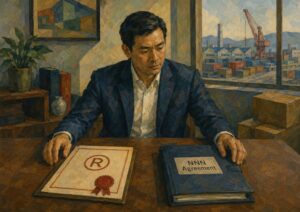
Patents, Trade Secrets, and NNN Agreements
Think about patents, design patents, copyrights, and trade secrets as well. Patent terms in China depend on the category of patent and the filing rules, while trademark registrations generally last ten years and can be renewed. If your distributor or manufacturer will receive confidential designs, technology, or sensitive commercial information, you need contractual non-use and confidentiality protections. A conventional distributor selling finished products does not necessarily need a separate NNN agreement, especially when the distribution agreement contains the necessary provisions. We generally prefer to protect the information and rights that matter to the actual business rather than pile up overlapping legal documents.
5. Investigate Your Distributor Before Signing
When a Chinese distributor promises extraordinary sales, find out what is behind the promise. Ask which customers it already sells to, what comparable products it distributes, and how it actually covers the territory it wants, because those relationships tell you more than its presentation does. We have long warned foreign companies against assuming that a distributor that does well in Shanghai has the network to cover all of China, since regional coverage, sales staff, warehouses, and relationships vary enormously. Not every small sale justifies an extensive investigation, but a distributor seeking exclusive rights, substantial credit, or control over your Chinese customer relationships warrants much more scrutiny. Our Foreign Company Due Diligence work is designed to help clients find those problems before they sign.
Verify the Correct Chinese Company
Get the distributor's registered Chinese legal name, Unified Social Credit Code, business license, ownership details, and relevant permits. Check available litigation records, enforcement proceedings, financial information, and the track record of the actual company proposing to sign. Be especially careful when a business negotiates under a Hong Kong name but expects some unidentified mainland company to import, store, or sell your goods, and do not assume that a signature from a related Hong Kong company binds the mainland distributor.
In The Hong Kong Intermediary Trap: Do Not Bind the Wrong China Company, I describe a dispute in which an American company paid $2 million to a Hong Kong entity instead of the mainland Chinese company to which it owed the money. The mainland company had already sued, and paying the Hong Kong entity did not discharge the debt. The matter ended with our Chinese client receiving an additional six figures. Treating legally separate companies as interchangeable is a basic mistake, and this was an unusually expensive version of it.
Your contracting entity, importer, distributor, and payer all need to be identified correctly, and if different companies perform those functions, bind each one that has obligations and document its role. When you sign, use the distributor's exact registered Chinese legal name, verify the signer's authority, and have the contract executed with the appropriate company chop. A verified physical chop is not universally required for a binding Chinese contract, and not every transaction justifies additional verification, but larger or higher-risk deals can.
6. The Ten Questions We Ask Before Drafting a China Distribution Agreement
Before we draft a China distribution agreement, we send our client questions like the ones below. Most are commercial rather than legal, and answering them is often harder than the drafting, because the answers determine what the contract must say and frequently expose disagreements the parties have not resolved. It is much better to find out that you and your distributor disagree about who owns your Chinese online store before that store has customers, employees, and years of marketing investment behind it.
- Who exactly is the distributor? Which Chinese legal entity will sign, import, pay, warehouse, and sell the goods?
- Which products are covered? Does the contract include future products, modifications, and replacement models?
- What territory does the distributor receive? Is it all of mainland China, specified provinces, or particular sales channels?
- Can it appoint sub-distributors? Who is responsible for their conduct, regulatory compliance, and trademark use?
- Will the distributor receive exclusivity? What minimum purchases or other measurable commitments justify those rights?
- Have the products received Chinese regulatory approval? Who obtains any outstanding approvals, and who controls them afterward?
- Who owns the trademarks and other intellectual property? What happens to Chinese brand names, marketing materials, and online stores developed by the distributor?
- What are the payment and delivery terms? What deposits, credit limits, shipping arrangements, and remedies for late payment apply?
- Who handles customer service, warranties, and recalls? Who bears the costs when problems arise?
- How can the arrangement end? What happens to exclusivity, inventory, unpaid invoices, customer data, online accounts, and regulatory registrations?
7. Negotiate Exclusivity, Sales Targets, and Termination Rights
A distribution agreement has to give your Chinese distributor a reason to invest in your product without leaving you permanently dependent on it. Exclusivity is usually where that gets hardest, because the distributor wants it as security for its investment and you want the ability to take it away when the distributor does not perform.
Make Minimum Purchases Specific
A promise to use "best efforts" to sell your products is not the same as a commitment to buy $500,000 of goods a year. If the distributor wants exclusivity, require measurable purchase or other obligations and spell out what happens when it misses its targets. In one matter, we pushed back on sales milestones that covered only one of several products, and we questioned whether the proposed targets made sense before the products had Chinese import approvals. We wanted targets both sides could actually track. Quarterly purchase commitments often work better than complicated provincial forecasts, though the right arrangement depends on the product and on how much work the distributor must do before sales can begin.
Beware the Distributor That Agrees to Everything
A supplier we advised wanted either party to be able to terminate on 90 days' notice. That sounds good for the supplier, but a serious distributor planning to spend real money introducing a foreign brand to China often will refuse it. The distributor has little reason to pay for marketing, regulatory approvals, and customer development if you can cancel just as those efforts begin producing sales. A distributor that accepts a term like that without objection deserves scrutiny, and one that insists on reasonable security for its investment can be the more serious partner.
Give the distributor an initial term long enough to support the investment it has agreed to make, tie renewal rights to performance, and preserve your remedies for nonpayment, material breach, failure to obtain approvals, and missed purchase targets. Depending on the situation, the consequence of underperformance can be termination, loss of exclusivity, or a smaller territory.
Pricing and Competition Law
Your agreement should distinguish between the prices you charge your distributor and the prices it charges its own customers. China's Anti-Monopoly Law restricts certain fixed or minimum resale price arrangements, so do not copy your U.S. pricing policy into a Chinese agreement without having it reviewed. The same care applies to some exclusive dealing and other distribution restrictions, whose legality depends on the arrangement and the relevant competition-law standards.
Expand Distribution Rights as They Are Earned
Start with a limited grant and expand it as the distributor earns it. The first orders show whether it pays, clears customs, reports accurately, and reaches customers, and a distributor that performs can earn more territory, a longer term, or rights to additional products. That gives the distributor something to work for without locking you into an arrangement that is not working.
8. Structure Payments to Reduce Collection Risk
We strongly favor getting substantial payment before you lose control of your goods. For a new distributor whose finances you have not checked, start by asking for full payment before shipment or a substantial advance deposit, and extend credit when the distributor's financial position, payment record, or other safeguards justify it. Depending on the transaction, credit insurance and limits on outstanding receivables can also reduce your exposure. Letters of credit are another option, but their value depends on the issuing bank, the documents required, and whether a reliable bank confirms the obligation. We generally prefer advance payment when we can get it.
Do Not Finance an Unknown Distributor
Our distribution-contract article describes how our clients typically handle shipping and payment. Conservative manufacturers require payment before shipment, while others use short credit terms but keep the right to go back to advance payment when problems arise. A distributor that asks for 90 or 120 days to pay because its customers need credit is asking you to finance part of its business. That can make sense in an established relationship, but it is a poor starting assumption with a buyer whose finances you have not verified.
Document Who Pays You and Why
Chinese banks routinely process legitimate payments for imported goods, but they must follow China's banking and foreign-exchange rules, so your contracts, invoices, shipping records, and payment instructions should accurately document the transaction. If a company other than your distributor will be paying you, find out why and put the arrangement in writing. Royalty payments, technology-license fees, and certain services can raise separate Chinese tax and foreign-exchange issues, and if your agreement includes these payments, allocate the tax burden and documentation responsibilities expressly.
9. Control Your Chinese Online Store and Marketing
China's major online platforms can give you access to customers that conventional distribution alone would struggle to reach, and for many consumer brands the important question is who owns and controls the online store. Suppose your distributor sets up your official Chinese store, builds its following, buys the advertising, and creates the product listings. Three years later you end the relationship. The store sits in the distributor's account, the distributor refuses to cooperate with your replacement, and you either negotiate with your former distributor for a store you thought was yours or start over. That problem is much easier to prevent than to resolve. Where the platform allows it, set up the account so you control it from day one and the distributor operates it with your permission. The agreement should cover credentials, advertising accounts, photographs, translated materials, and product listings, and what happens to each of them when the relationship ends. A contractual promise to transfer an account is not enough if the platform's own rules prohibit the transfer, so read those rules before you sign.
Cross-Border E-Commerce
Cross-border e-commerce is another route. Qualifying arrangements can give foreign brands access to Chinese consumers without a conventional domestic wholesale subsidiary, but they carry their own legal requirements and are not a blanket exemption from Chinese product or import regulation. Check whether your product qualifies, what transaction limits apply, and which consumer-protection rules you must meet, and remember that taxes, platform fees, advertising, and fulfillment all come out of your margin. Our article Six Smart Strategies for Selling to China Without Being in China looks at several ways businesses approach that market.
Advertising Claims and Promotions
Do not let your distributor make whatever advertising claims it thinks will sell product. China regulates false or misleading advertising, certain absolute superiority claims, online promotions, endorsements, and advertisements for regulated products, and a distributor chasing sales has its own reasons to push those limits with your brand name on the ad. Require your approval for marketing claims involving health, safety, performance, or regulatory status, and make the distributor responsible when it or its marketing agency makes claims you never approved.
10. Plan for Customer Data, Product Liability, and Export Controls
Your distributor often controls the relationships with your end customers. That is part of what you are paying it for, but it can create serious problems the day you need to reach those customers yourself, whether for a safety notice, replacement parts, maintenance, or a new distributor. Decide up front what customer information the distributor must give you and how you are permitted to use it, and do not assume a clause requiring delivery of all customer information overrides Chinese privacy restrictions. China's Personal Information Protection Law and related regulations can apply when customer records contain personal information, and they can also affect transfers of that information to a foreign supplier. China's 2024 cross-border data-transfer rules relaxed certain requirements, but the parties still need to determine which obligations and exemptions apply.
Some American companies pay less attention to defective products in China because they expect damages there to be lower than in the United States. That overlooks what a product scandal can do to a brand, even when the branded company did not manufacture the defective goods. In July 2014, a Shanghai television station aired hidden-camera footage showing that Shanghai Husi Food had falsified production dates and supplied expired meat. Husi was part of OSI, an Illinois-based company that supplied major restaurant chains. McDonald's restaurants in Beijing and Shanghai ran short of menu items, while McDonald's warned investors that the scandal was hurting regional sales and threatening its annual outlook. Yum Brands reported that the publicity had damaged consumer confidence and sales at its KFC and Pizza Hut businesses in China. The reputational and commercial damage did not depend on a consumer winning a large damages award. It came from misconduct in the companies' supply chain. For a foreign brand relying on a Chinese distributor, the lesson is to specify who oversees product handling, investigates complaints, manages recalls, and communicates with customers and regulators. A contract cannot prevent every failure, but it can give the brand owner faster access to information and a clearer way to respond.
Chinese product liability law also gives injured consumers remedies that foreign sellers cannot dismiss. China's Civil Code permits punitive damages in specified cases involving products that a manufacturer or seller knows are defective, or failures to take effective remedial measures after learning of a defect, when the conduct causes death or serious harm to health. The conditions matter: punitive damages are not automatic whenever a product fails. Separate food and drug rules can also create serious exposure, and China has continued to develop its treatment of personal-injury compensation.
For a supplier or distributor, the practical question is what happens when someone reports a dangerous defect. The manufacturer needs prompt notice and reliable information about where the affected products went. The distributor needs clear instructions about stopping sales, preserving evidence, contacting purchasers, and cooperating with regulators. The agreement should allocate these responsibilities and costs, but it cannot eliminate statutory obligations to consumers. This matters especially when a distributor makes warranties or safety claims without approval, or when inventory moves through several regional dealers. Companies should require workable records, recall procedures, and insurance coverage before a defect forces everyone to improvise. A supplier that cannot find its own products or customers will struggle to contain the commercial damage, whatever the eventual lawsuit costs.
Chinese product-quality and consumer-protection laws impose obligations on manufacturers, importers, and sellers in relevant circumstances. Decide who pays when the distributor makes a warranty promise you never authorized, and who deals with Chinese regulators if your product develops a safety problem. The agreement should cover defect reporting, repairs, recalls, product tracing, and customer notices, and say who bears each of those costs. Then check whether your product liability insurance covers sales in China and what it excludes.
American companies selling certain products or technologies into China need to consider U.S. export controls, restricted-party requirements, and prohibited end uses, and China maintains its own export-control and sanctions-related measures that affect some transactions, particularly when products, components, or technology move out of China. An ordinary consumer-product shipment usually carries far less export-control risk than a sale of advanced electronics or dual-use equipment, so match the review to what you are selling and to whom.
11. Make Your China Distribution Agreement Enforceable
When the distributor and its assets are in mainland China, we often recommend Chinese law, a Chinese court, and a bilingual contract that makes Chinese the controlling language. We have drafted thousands of China contracts, nearly all of them in both Chinese and English, and not one of them provided that both languages would apply in a dispute. One language has to govern, both sides need to know which one before they sign, and for a contract you will enforce in a Chinese court, that language is Chinese. I explain what goes wrong when a contract makes both versions official in The High Cost of China Contract Mistakes.
Chinese Courts Versus Arbitration
We generally favor Chinese courts for conventional distribution agreements when the counterparty's assets are in China, and the main reason is enforcement. China's property-preservation procedures can allow a claimant to ask a court to freeze a Chinese company's bank accounts or other assets before the underlying dispute is resolved, subject to the court's requirements and, in some cases, security. We also put enforceable contractual damages provisions in our China contracts, distribution agreements included, because they can help establish the claim and strengthen our client's position when seeking remedies. A contractual damages clause does not, by itself, entitle anyone to an asset freeze. Similar court-ordered preservation can be requested in connection with CIETAC arbitration, though the procedures differ.
We think highly of CIETAC, and it is a legitimate alternative, particularly for more complex international arrangements. Chinese government-owned entities frequently insist on it, and it also makes sense when the counterparty is in a small, less sophisticated city. CIETAC can cost more than Chinese court litigation, and an arbitral tribunal does not itself execute asset freezes or awards; Chinese courts provide the necessary preservation and enforcement measures. Those measures can be available before or during arbitration, so it would be wrong to suggest that choosing CIETAC means giving up access to asset preservation. A CIETAC award rendered in mainland China is a Chinese award, enforced by Chinese courts under China's Civil Procedure Law. The New York Convention matters when you need to enforce that award outside China, and it provides the framework for recognizing and enforcing qualifying foreign arbitral awards in China.
Because the choice turns on so many factors, we usually draft the dispute resolution clause last, once we fully understand the parties, their assets, the likely disputes, and the remedies our client will need. We also usually delete mandatory negotiation, escalation, and mediation steps from our contracts. They favor whichever party is more likely to breach by delaying the other side's claim, they waste time and money, parties forced to mediate early generally do not want to, and nothing stops the parties from mediating whenever they choose. If it comes to a lawsuit, we walk through what happens next in How to Sue a Chinese Company.
U.S. judgments are not categorically unenforceable in China. Chinese law permits recognition and enforcement of qualifying foreign judgments in certain circumstances, including under reciprocity principles. But collecting on a U.S. judgment against Chinese assets can involve expense and uncertainty you should weigh before you sign the contract.
12. Decide Now What Happens When the Relationship Ends
Many foreign suppliers concentrate on pricing and sales targets, barely discuss termination, and then discover they have signed with a distributor that was easy to appoint and is hard to replace. Most of what makes a distributor hard to replace comes up earlier in this article: a trademark registered in its name, an online store in its account, customer records it will not hand over, an import registration it holds. Your agreement should resolve each of those before the relationship starts, along with unpaid invoices, pending orders, unsold inventory, and continuing warranty obligations. Some inventory sell-off rights can make commercial sense, but they should be limited and should not let the distributor keep presenting itself indefinitely as your brand's authorized Chinese distributor. If your distributor holds your product registrations, the problem described in Section 2 arrives at exactly this moment, so confirm the procedures for replacing the registered importer or other locally responsible party before you exercise any termination rights.
No Automatic Distribution Goodwill Payment
China does not generally impose an automatic statutory goodwill payment simply because an ordinary distribution agreement ends, unlike some legal regimes governing commercial agents. That does not eliminate contractual compensation obligations or claims arising from a wrongful termination. If the distributor expects reimbursement for certain market-development expenses or payment for its inventory when the relationship ends, negotiate those obligations expressly.
Frequently Asked Questions About Selling Products in China
Can a U.S. company sell products in China without establishing a Chinese company?
Yes. Many American businesses export directly to Chinese customers or sell through independent Chinese distributors without forming Chinese subsidiaries, though their goods and transactions still have to comply with Chinese import, tax, and product regulations. A subsidiary becomes more relevant when the foreign company needs substantial local operations or its own Chinese employees.
Should I appoint one Chinese distributor or several?
Choose the arrangement that actually reaches your customers. A strong nationwide distributor can work, but regional distributors sometimes provide better coverage and reduce your dependence on any one company. Whatever you choose, verify a distributor's sales capabilities before granting it territory, and do not give nationwide exclusivity based on promises alone.
How long should a China distribution agreement last?
Long enough to give a serious distributor a reasonable chance to recover its investment. The right term depends on the product, regulatory approvals, marketing costs, and expected sales cycle. The agreement should specify whether renewal is automatic, what performance targets must be met for renewal, and how much notice either side must give. It should also spell out what happens when the distributor misses its targets, including when you can withdraw exclusivity or terminate the agreement and what notice and opportunity to cure are required. These provisions can be difficult to negotiate and draft, and disputes over them frequently lead to litigation. Never sign a five-year exclusive agreement that leaves you stuck with a distributor that never makes a sale.
Is my U.S. trademark valid in China?
Your U.S. registration does not automatically provide registered trademark rights in China. File in China, covering the correct goods and services and considering the relevant Chinese-language names. Your Chinese distributor should generally receive permission to use your mark rather than ownership of it.
Do I need a China NNN agreement before appointing a distributor?
Usually not for a conventional distributor selling finished branded products. A separate NNN agreement becomes more valuable when you share confidential technology, designs, manufacturing information, or other information the recipient could exploit, and your distribution agreement should contain suitable intellectual property and confidentiality provisions either way.
Can I require my Chinese distributor to charge a minimum retail price?
Minimum resale price restrictions can raise serious problems under China's Anti-Monopoly Law. Agreeing on your own wholesale price is different from controlling your distributor's downstream prices, so have any resale-pricing arrangement reviewed before you implement it.
Should I use Chinese courts or arbitration?
If your distributor and its assets are in China, we often recommend Chinese courts for a conventional distribution agreement, largely because a Chinese court can freeze a Chinese company's bank account and an arbitration tribunal has no comparable power of its own. Arbitration can make sense for more complex international arrangements or when the Chinese party is government-owned. The right forum depends on the parties, their assets, and the remedies likely to matter.
What is the biggest mistake foreign companies make when selling in China?
Giving up control before the Chinese side has earned it. That means granting nationwide exclusivity without purchase commitments, letting a distributor own your trademarks or online accounts, or extending substantial credit to a buyer you never investigated.
Working With Our China Lawyers
Before signing with a Chinese distributor, work through the ten questions in Section 6. If you cannot answer some of them, those are the issues to resolve before committing your products, trademarks, and Chinese market to the relationship. We help companies choose and investigate distributors, register their Chinese trademarks, negotiate distribution agreements that can be enforced in China, and resolve disputes when something goes wrong. We will also tell you when a more elaborate or expensive legal option would do little for you.