China Lawyer Scams and Bad China Contracts: How Foreign Companies Get Burned
Foreign companies doing business in China spend plenty of time worrying about dishonest suppliers, IP theft, unpaid invoices, disappearing manufacturers, and unreliable distributors. They spend much less time worrying about the person they hired to protect them from those problems. That can be an expensive mistake.
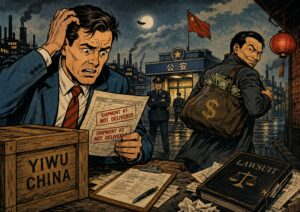
Our China lawyers have dealt with companies that paid to form Chinese companies that were never formed, register trademarks that were never registered, and create joint ventures that never existed. We have reviewed contracts drafted by people who had no business drafting contracts. We have also seen a particularly ugly variation: a Chinese lawyer, or someone claiming to be one, takes money from the foreign client, takes money from the Chinese counterparty, and makes the controlling Chinese version of the contract materially less favorable than the English version sent to the foreign client. These cases are unusual enough to be memorable but common enough that we keep seeing variations of them.
There are plenty of excellent Chinese lawyers and law firms. The problem for a foreign company is figuring out who it has hired before handing over money, intellectual property, negotiating strategy, or legal control. Since COVID, we have seen a sharp increase in websites and online providers offering China trademarks, NNN agreements, manufacturing contracts, distribution agreements, licensing agreements, and other legal services at extraordinarily low prices. Some are legitimate low-cost providers. Others appear to have little understanding of Chinese law, and some look like outright scams. The trouble often stays hidden until the Chinese relationship goes bad. By then, a bargain trademark filing or $100 contract can become very expensive.
China "Lawyer" Fraud: Cases We Keep Seeing
The best time to discover a problem with your lawyer, company formation, trademark filing, or contract is before you send money, technology, tooling, or confidential information to China. Many companies discover the problem only when they need the legal protection they thought they had bought.
1. The China Company That Never Existed
Years ago, a well-known U.S. company retained us because it suspected its China general manager had stolen millions of dollars. As we investigated the general manager, we began looking closely at the company's Chinese subsidiary. There was no subsidiary. The supposed WFOE had been conducting nearly $100 million a year in manufacturing operations and had more than one hundred employees, but nobody had ever legally formed the company.
We spent months working with Chinese government officials to legalize the operation and deal with back taxes and related problems. The scale of that case was extraordinary, and we would not expect to see it repeated today. Smaller versions still show up. A foreign company asks us for help with its China entity, and we discover that the entity it thinks it owns does not exist. If somebody forms a Chinese company for you, independently verify its formation and ownership.
2. The Joint Venture That Wasn't
A U.S. company once contacted us because the Chinese joint venture it believed it owned had been successfully selling products in the United States for years. The American company had never received any profits. The client gave us its Chinese-language "JV documents." They were not joint venture formation documents. They were essentially an agreement with a Chinese individual under which he was supposed to go form a joint venture.
He never did. There was no joint venture company and no ownership interest for the American company to enforce. Cases like this sometimes begin with what looks like an innocent shortcut: the foreign company agrees to use a local lawyer or service provider already working with the Chinese side. That can save time and money. It can also leave the foreign company without anyone whose job is to protect it.
3. The China Trademark That Was Never Registered
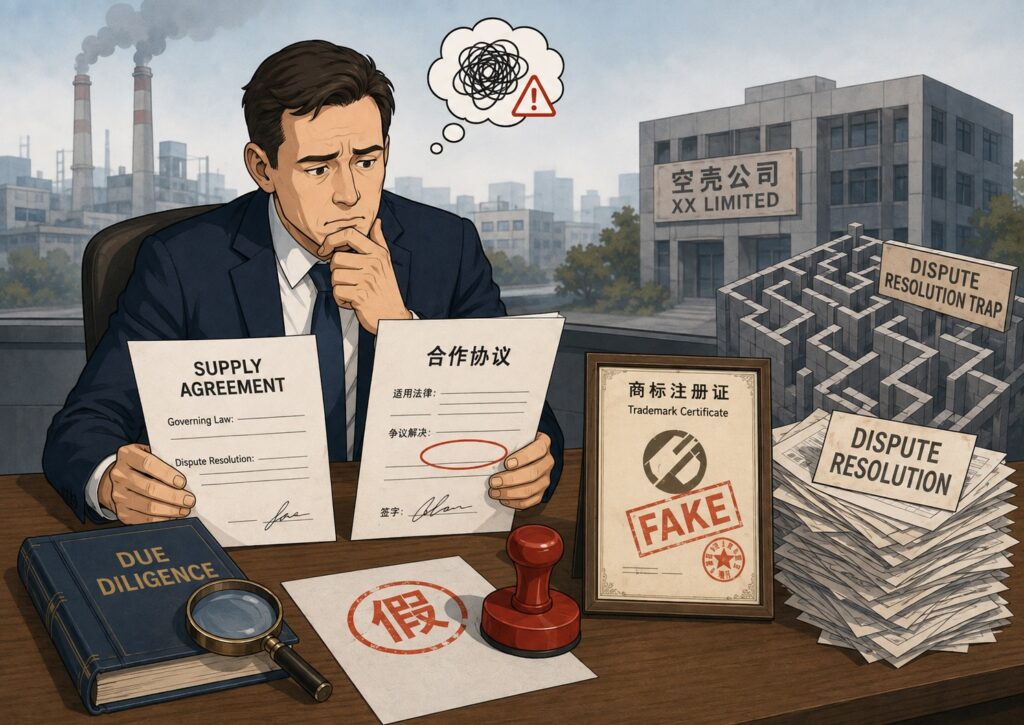
Another recurring problem involves companies that believe they own a China trademark because somebody sent them a certificate or an email saying the work was done. One U.S. company came to us after its former Chinese distributor began manufacturing and selling products under the American company's brand. The client insisted the distributor had previously registered the trademark for it and produced an impressive-looking certificate. The trademark had been registered, but not for our client. It was in the name of a Chinese individual our client had never heard of. The American company had paid for the registration. Someone else owned the trademark.
In another case, a company hired an extremely inexpensive online service to register its China trademark. Two years later, Chinese customs seized the company's products for infringing somebody else's trademark. The supposed service provider had taken the company's money and apparently never filed the application. By the time the company came to us, trying to rescue its China operations was expensive, uncertain, and commercially unattractive. It walked away from China.
Do not use an email from the filing service as proof that you own a China trademark. Check the official record. And if your products are being manufactured in China, register your trademark before someone in your supply chain does it first.
4. The English Contract Says One Thing and the Chinese Contract Says Another
This is one of the nastier schemes we have encountered. A foreign company hires a Chinese lawyer, or someone claiming to be a lawyer, to prepare a bilingual contract. The company reviews the English version, negotiates changes, and approves the deal. The provider then goes to the Chinese counterparty and takes money from that side as well. The Chinese-language contract the foreign company eventually signs does not match the English version it approved.
That becomes especially dangerous when the Chinese version controls. There are often good reasons for making Chinese the controlling language of a contract meant to be enforced in China. The danger is assuming the two versions say the same thing when nobody independent has checked. The differences are not always obvious. A damages provision can be weakened. An obligation can become discretionary. A deadline can be softened by an exception. A definition can be narrowed. A remedy can disappear. The English looks fine, and the Chinese text governs. The foreign company usually does not discover the differences until a dispute starts.
When the Chinese version controls, someone independent of the drafter should confirm that it reflects the deal you approved. I would be especially cautious when the drafting lawyer was introduced by the Chinese counterparty or has an existing relationship with it.
Cheap China Legal Work Can Cost a Lot
The internet is full of providers offering China legal documents for prices that bear little relationship to the work involved. You can find supposed China lawyers willing to draft or review manufacturing contracts, NNN agreements, licensing agreements, distribution contracts, IP documents, and trademark applications for astonishingly little money. Low price does not prove incompetence, though it certainly increases the odds. The problem is that foreign companies often shop primarily on price when they have no practical way to judge the work they receive.
We usually see the result after the relationship with the Chinese counterparty has deteriorated. The contract contains provisions lifted from U.S., British, or Australian templates and was never drafted to work as a China manufacturing contract. Important remedies do not fit Chinese law. The dispute clause makes enforcement needlessly expensive. Defined terms conflict. The agreement uses vague standards where measurable requirements were needed. The wrong Chinese entity signed it. Sometimes the contract simply fails to address the commercial risk that later destroys the deal.
Clients in this position often tell us they could not afford a conventional law firm when they entered the deal and assumed an inexpensive contract was better than none. When it comes to China, that is often not the case. In the United States, judges will often try to divine what a contract intended to say and may even favor the fairer interpretation. In China, courts are far more likely to focus on the contract itself and hold the parties to what it says. A bad contract can be worse than none because it creates false confidence. The company sends drawings, pays for molds, discloses customers, wires a large deposit, or gives the factory another six months because management thinks the agreement provides leverage that is not really there. It can also be worse because it can literally take away any recourse. We see this all the time.
Sometimes the Contract Itself Is the Wrong One
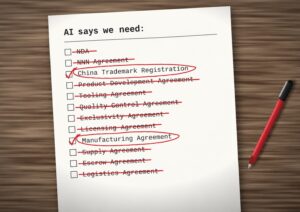
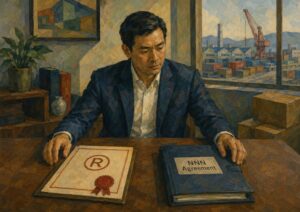
Poor drafting is only part of the problem. Someone first needs to decide what legal document the company needs. We see companies buy a China NNN Agreement when the main issue is ownership of technology and IP created during product development. They needed a Product Development Agreement.
Other companies focus on confidentiality while their real risks involve quality failures, late deliveries, tooling ownership, unauthorized sales, or production by subcontractors. Those issues belong in a Manufacturing Agreement. We have seen licensing agreements used for relationships that were really distribution arrangements, distribution agreements used where the actual relationship was manufacturing, and generic NDAs substituted for contracts that needed to deal with China-specific manufacturing risks.
The drafting can be excellent and still miss the point. This is the weakness in buying China contracts from a menu. A listing such as "China NNN Agreement - $375" makes the contract look like a standardized product. The right document depends on what the Chinese company will do, what it will receive, what can go wrong, and what you need to happen if it does. If we took the last 500 China NNN Agreements we have written, I would bet no two are exactly the same. And under Chinese law, it is critical to get the Chinese company's exact registered name in Chinese and to confirm that the company is authorized by the Chinese government to engage in the conduct described in the contract. For these reasons, we review the Chinese company name in the official corporate registry before every Chinese contract we draft.
Bad Dispute Clauses Can Make Good Rights Worthless
We have reviewed contracts with decent substantive protections buried behind terrible dispute-resolution provisions. One agreement required disputes to be arbitrated before three arbitrators in both Chinese and English. Enforcing the contract would require a relatively small foreign company to fund three arbitrators, bilingual proceedings, extensive translation, and international arbitration counsel. Its manufacturer knew that too. The company technically had rights, but exercising them was expensive enough to strip much of their value.
Another agreement permitted claims against a Chinese company to proceed through U.S. litigation or vaguely described U.S. arbitration. The client assumed that a U.S. judgment or award would translate easily into collection in China. It does not work that way.
China has recognized and enforced some U.S. court judgments, including a California judgment recognized by the Wuhan Intermediate People's Court in 2017, and subsequent Chinese Supreme People's Court guidance has adopted a broader framework for evaluating reciprocity. Recognition still requires a Chinese proceeding and depends on the circumstances. A clause sending every dispute to a U.S. court therefore deserves careful scrutiny when the defendant and most of its assets are in China.
The dispute clause has to fit the transaction. Where are the assets? What claims are most likely? How large is a probable dispute? Will interim relief matter? Which arbitration institution, seat, language, governing law, and number of arbitrators make sense?
Those questions should be answered before anybody inserts a dispute-resolution provision.
Confidentiality and Chinese Lawyers
Foreign companies need to understand what confidentiality means when they retain counsel in China. Article 38 of China's Lawyers Law requires lawyers to protect state secrets and commercial secrets, prohibits disclosure of client privacy, and generally requires confidentiality for information that clients and others do not want disclosed, subject to statutory exceptions.
It is dangerous for an American company to assume that confidentiality in China works like attorney-client privilege in the United States. China's Civil Procedure Law gives courts broad authority to investigate and collect evidence from organizations and individuals, and people with knowledge relevant to a case generally have obligations to provide evidence or testimony under Chinese procedural law. An American executive should not assume that putting a Chinese lawyer on an email creates the same protections the executive expects at home.
National security laws add another concern. Article 7 of China's National Intelligence Law requires organizations and citizens to support, assist, and cooperate with national intelligence work according to law. Article 14 authorizes intelligence authorities to request necessary support, assistance, and cooperation from organizations and citizens.
Those provisions do not mean Chinese lawyers routinely deliver ordinary commercial client files to the government. They do mean that companies handling sensitive technology, sanctions matters, national-security issues, politically sensitive investigations, or similar information should decide in advance what local counsel needs to know and how communications should be structured.
How to Reduce the Risk
Most of the problems described above can be caught before they become expensive.
1. Verify the Person and the Firm
Do not assume someone who calls himself a "China lawyer" online is licensed to practice law in China. Identify the lawyer, the firm, the office, and the person responsible for the work. If you are hiring a foreign lawyer for a China matter, understand what that lawyer will handle and what will be done by Chinese counsel.
2. Ask How the Lawyer Came Into the Deal
A lawyer recommended by your Chinese manufacturer, distributor, employee, sourcing agent, or proposed joint venture partner deserves additional scrutiny. The referral itself proves nothing. The relationships matter. Find out whether the lawyer has represented the Chinese counterparty, receives referrals from it, or has any other financial relationship that could affect independence.
3. Verify Important Legal Work
If someone forms your Chinese company, verify the company. If someone registers your trademark, verify the trademark. If someone tells you that you own an interest in a joint venture, verify the company registration and ownership records. "Done" is not evidence.
4. Know Which Contract Language Controls
There is nothing inherently wrong with making Chinese the controlling language of a China contract. We often prefer it. You still need to know what the Chinese says. If a bilingual contract provides that Chinese controls, review the Chinese text with the same care as the English. If the drafter's independence is open to question, have someone else compare the two versions before signing.
5. Think About Enforcement While You Still Have Leverage
Before signing, find out where the counterparty's assets are and consider what you would actually do if it breached the agreement tomorrow. Draft the dispute provision from there. Do not choose a court, arbitration institution, governing law, or language merely because it is familiar. Familiarity has little value if the resulting judgment, award, or interim remedy cannot be used effectively where the assets are.
6. Buy the Legal Tool the Deal Requires
NNN Agreements, Manufacturing Agreements, Product Development Agreements, Distribution Agreements, Licensing Agreements, trademark registrations, and company formations solve different problems. Identify the business risk first. Then decide what legal work addresses it. Companies get into trouble when they reverse that sequence.
Price Is a Poor Proxy for Quality
Some excellent lawyers charge less than their competitors. Some expensive lawyers do poor work. The invoice does not answer the questions that matter. You need to know who you hired, who that person really represents, whether the promised work was actually done, whether the Chinese text matches the English, whether the contract fits the deal, and whether you can enforce it where the counterparty has assets.
A surprising number of companies reach us only after one of those questions produces an ugly answer. By then the factory has the tooling, a competitor owns the trademark, the supposed joint venture does not exist, the controlling Chinese contract says something different from the English version, or the company has a claim that costs more to pursue than it is worth.
China business already carries enough risk. Your legal work should reduce it.