Protecting Your Artwork Internationally: What Artists Need to Do Before the Work Travels
An artist sends drawings and 3D files to an overseas foundry. The foundry casts the commissioned sculptures, keeps the molds, photographs the unfinished work, and pulls a few extra casts. Images appear online before the artist’s exhibition opens. Soon, sellers are offering cheaper versions under the artist’s name.
The artist owns the copyright. That helps, but it does not answer the questions that matter now. Who owns the molds? Which court can act quickly? Is there reliable evidence of creation and ownership? Can the listings come down? Is the artist’s name protected? Where are the infringer’s assets?
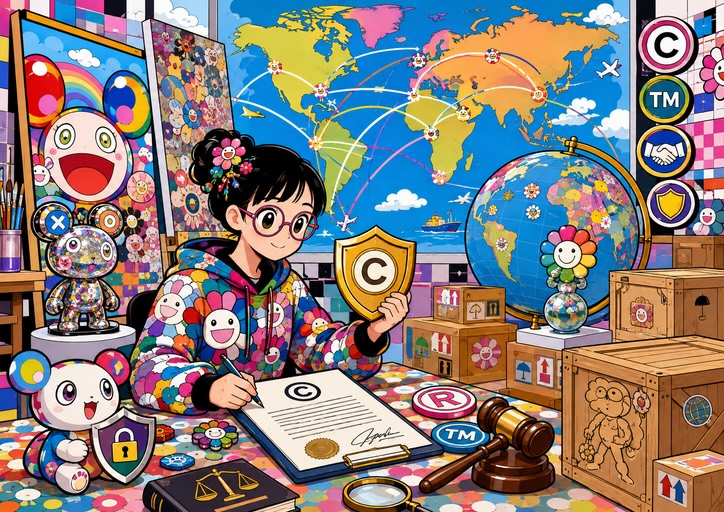
No single registration protects artwork across borders. Effective protection combines proof of ownership, targeted registrations, strong contracts, production controls, brand protection, and an enforcement plan tied to where the work is made, sold, licensed, and copied.
The right plan depends on the work. A painter selling originals through galleries faces different risks from a sculptor casting editions in China, a furniture designer showing at Milan, or a concept artist whose creature design later appears in films, toys, games, and merchandise. The goal is to identify where valuable work is exposed and close those gaps before the work leaves the artist’s control, not to protect every work in every country.
Owning the Artwork Is Not the Same as Owning the Copyright
Buy a painting and you own the painting. You do not automatically acquire the right to put the image on posters, print it on merchandise, use it in advertising, or license it to anyone else. Unless the artist transfers those rights, they remain with the artist.
The same rule applies to sculpture. A collector can own the bronze without owning the right to cast another. A gallery can possess a work for exhibition without any right to reproduce it. A museum can own a canvas while someone else owns the copyright in the image. U.S. law expressly treats the physical object and the copyright as separate property.
The separation works both ways. Under the U.S. first-sale doctrine, the lawful owner of a physical copy can generally resell or publicly display that copy without the artist’s permission. The owner still cannot manufacture reproductions. Other countries apply their own rules on resale, display, and exhaustion. These distinctions belong in sales agreements, commission agreements, gallery contracts, certificates of authenticity, and licenses. Price does not answer them.
A company commissions a $75,000 painting for its lobby. Five years later, it puts the image on product packaging and builds a national advertising campaign around it. The company thinks it bought the artwork outright. The artist thinks the fee covered one canvas on one wall. A clear commission agreement would have settled the question before the campaign launched.
Build a Clean Chain of Title
Many disputes that look like infringement cases are really ownership disputes. Artists work with studio assistants, photographers, fabricators, digital modelers, galleries, publishers, and other artists. Any of them can contribute copyrightable material. A studio can pay for work without receiving the copyright. An artist can transfer rights to a company and then keep signing licenses personally. Those inconsistencies become expensive when a licensee, insurer, distributor, or court asks who owns what.
Payment alone does not transfer copyright, and stamping “work made for hire” on an invoice does not make it so. Under U.S. law, an employee’s work within the scope of employment can qualify as work made for hire. A commissioned work qualifies only if it falls within one of the statute’s listed categories and both sides sign the required agreement. Most commissioned paintings and sculptures do not fit those categories. A transfer of copyright ownership also generally has to be in a signed writing.
Build a documented chain of title with agreements that identify who created each element, who owns the resulting rights, and what has been licensed or assigned. The paper record must match the creative record. Keep dated sketches, drafts, source files, invoices, correspondence, and photographs of the work in progress. For digital and mixed-media work, native files and version histories usually prove more than a screenshot of the finished image. For sculpture, preserve the path from drawings and maquettes through scans, digital models, mold records, and casting photographs.
Keep ownership consistent across registrations and contracts. If a company owns the copyright, applications and licenses must identify the company. If the artist owns it personally, the studio’s agreements must not suggest otherwise.
Copyright Is International, but Rights Are Enforced Country by Country
Copyright protection arises automatically in Berne Convention countries without registration as a condition of protection. That does not create a single worldwide copyright. Each country applies its own law to infringement, ownership, remedies, procedure, moral rights, and evidence. An artist suing in France relies on French law. A claim against a Chinese foundry proceeds under Chinese law and procedure. A U.S. registration does not replace either system, and WIPO does not issue a worldwide copyright.
Copyright also has limits. U.S. fair use can permit uses for criticism, commentary, news reporting, teaching, scholarship, research, and parody, depending on the facts. No fixed word count, image percentage, or other formula makes a use lawful. Other countries apply their own exceptions, including forms of fair dealing. A use can be lawful in one country and infringing in another. The relevant question is what right the artist can prove and enforce in the country where the problem is occurring.
Registration Turns a Right Into Leverage
Artists sometimes skip registration because copyright already exists. Doing so can forfeit remedies and evidentiary advantages that matter later.
In the United States, a copyright owner generally needs a registration or refusal from the Copyright Office before filing a federal infringement action over a U.S. work. Timing also affects remedies. Registration before infringement begins, or within three months after first publication, preserves eligibility for statutory damages and attorneys’ fees. A registration made before or within five years after first publication also carries evidentiary weight in court.
The Copyright Office now permits group registration of two to twenty published two-dimensional artworks on one application and one fee. The works must be created by the same author, owned by the same claimant, and first published within the same calendar year. Paintings, illustrations, sketches, logos, fabric designs, and collages can qualify. Sculptures, technical drawings, and photographs are not eligible; photographs have their own group procedures.
“Published” is a technical copyright term. Posting an image online for public viewing is not necessarily publication, while distributing authorized copies, or offering them for further distribution, can be. Confirm publication status rather than guess, especially when using the group option or counting the three-month deadline.
Registering in every country rarely makes economic sense. Focus on the countries tied to production, major sales, licensing, exhibitions, and likely infringement. For a sculptor casting in China, a Chinese voluntary copyright registration can provide useful evidence of ownership and support court, platform, and customs enforcement. Registration does not create the copyright, and it does not replace the underlying chain of title.
Settle registration strategy before a dispute. Once infringement begins, some remedies may already be gone and the best evidence may be scattered across old devices, contractors, and studios.
International Fabrication Requires Production Controls
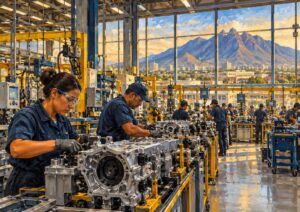
Artists who use overseas foundries, printers, ceramic studios, textile mills, or digital-production houses face risks that copyright registration cannot solve by itself. A standard nondisclosure agreement addresses secrecy. The larger risk is unauthorized use: extra copies, overruns, retained rejects, cheaper substitute materials, undisclosed subcontracting, premature publicity, or use of the artist’s name and work to advertise the factory’s services.
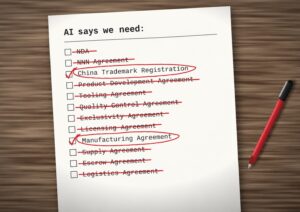
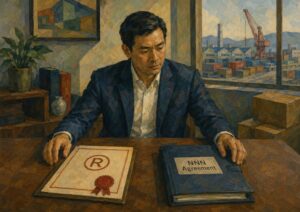
For China, the first contract is usually a China-specific NNN Agreement signed before the artist sends drawings, models, samples, or production files. NNN stands for non-disclosure, non-use, and non-circumvention. Non-use is critical because it prohibits the factory from exploiting the work even if it never discloses the work to anyone. The agreement must identify the manufacturer by its exact registered Chinese legal name and be drafted for enforcement in China, where the factory and its assets are located. A contract signed under an informal English name can leave the artist pursuing the wrong entity.
Once production begins, the artist needs a manufacturing agreement that addresses specifications, materials and tolerances, inspection, delivery, payment, shipping, subcontracting, publicity, remedies, and dispute resolution. For most China manufacturing arrangements, that means a Chinese-law contract with damages provisions and a dispute mechanism built for enforcement against the factory and its assets, not a domestic form translated after the deal is underway.
Edition controls require special care. The contract must state the authorized edition size, artist’s proofs, foundry proofs, numbering system, replacement rules, treatment of rejects, and what happens to molds when the edition is complete. If the contract authorizes eight numbered casts and two artist’s proofs, leave no room for the foundry to create “samples,” “archives,” or unnumbered extras.
Production assets can be more valuable to a counterfeiter than the finished work. Molds, plates, screens, scans, 3D files, high-resolution images, and signature files all need clear ownership and use restrictions. The contract must separate ownership from possession, govern storage and return, prohibit unauthorized liens, and require destruction when appropriate.
Keep authentication materials outside the factory’s control. Maintain an edition ledger that records every authorized piece, proof, replacement, and destroyed cast. Do not leave blank certificates, signature files, seals, and molds with the same production shop. That combination lets a factory make copies that are difficult to distinguish from the originals.
Galleries and Licensees Need Narrow, Written Authority
A gallery agreement must cover more than the commission percentage. For an international relationship, define the territory, term, works covered, exclusivity, pricing, discount authority, payment deadlines, shipping, insurance, risk of loss, and treatment of unsold inventory.
Keep the intellectual-property grant no broader than the gallery needs. A gallery requires enough authority to promote an exhibition and sell the work. It does not ordinarily need a standing right to manufacture merchandise, license images to third parties, or use the art in unrelated campaigns. The agreement also needs to control use of the artist’s name and biography and require the gallery, when the relationship ends, to return the work, account for sales, correct its listings, and stop presenting itself as the artist’s representative.
Licensing requires even tighter boundaries because the licensee is authorized to reproduce the work. Consider a painter who licenses one image to a European label for a limited run of silk scarves. The label later uses the image on handbags, shirts, and store interiors, then lets an Asian affiliate manufacture the expanded line. The artist receives royalties on scarves while the image spreads across products and countries that were never part of the deal.
A sound license identifies the works, products, media, channels, territory, and term. It addresses sample and advertising approvals, sublicensing, derivative material, royalty calculations, audit rights, quality control, and leftover inventory. “Worldwide rights” and “all media” can be appropriate when the economics justify them. Do not use them by habit.
Protect the Artist’s Name as a Brand
Copyright protects the artwork. Trademark law protects names, signatures, studio names, and other symbols when consumers understand them as identifying the source of goods or services. An artist’s name does not become a trademark merely because it appears on a canvas. It must function as a source identifier in the relevant market. Once it does, trademark registration can strengthen claims against counterfeiters who attach the artist’s name to unauthorized work, merchandise, or listings.
Copyright and trademark law address different conduct. A seller who copies a sculpture and markets it under the artist’s name can create both copyright and trademark claims. Remove the artist’s name and the copyright claim remains, while the trademark claim can weaken. Artists whose names function commercially should consider both forms of protection.
Trademark rights are territorial. A U.S. registration does not produce automatic protection in China, the European Union, or Japan. The Madrid System allows qualified applicants to seek protection in multiple countries through one international filing process, but each designated country applies its own law and can refuse protection.
Search before filing. Think about translations and transliterations of the artist’s name, especially in countries where collectors, galleries, or the press use a local-language version. The same analysis applies to studio names, distinctive signatures, and recurring series names that operate as brands. A title used only for one artwork usually does not function as a trademark.
Moral Rights and Resale Rights Change at the Border
Many countries recognize moral rights that protect an artist’s personal connection to the work. Article 6bis of the Berne Convention addresses the right to claim authorship and to object to prejudicial distortions or modifications. National implementation varies sharply.
The United States provides narrower protection. The Visual Artists Rights Act covers attribution and integrity rights for a defined category of visual art, subject to exclusions and waiver rules. Posters, technical drawings, motion pictures, applied art, and many commercial works fall outside VARA. The limitations matter when a buyer alters a work, removes the artist’s name, relocates a mural, modifies a site-specific sculpture, or destroys art incorporated into a building.
A U.S.-style waiver does not necessarily work abroad. International commission, installation, and fabrication agreements must address attribution, modification, relocation, restoration, and destruction directly, while accounting for rights that local law does not permit an artist to waive.
Resale royalties also vary. More than eighty countries recognize some form of artist’s resale right, or droit de suite, but the Berne Convention does not require it. National laws differ on covered sales, rates, duration, collecting mechanisms, and reciprocity. The United States has no general federal resale royalty. Whether a royalty is due can turn on where the sale occurs, the artist’s nationality, and the law governing the transaction.
When Artwork Becomes a Product
Artists increasingly create sculptural furniture, lighting, jewelry, textiles, and limited-edition objects that sit between fine art and commercial design. Copyright protection for applied art differs by country, particularly when artistic and functional features overlap.
Design registrations, called design patents in the United States, can protect the appearance of a useful product where copyright protection is uncertain or incomplete. WIPO’s Hague System allows eligible applicants to seek design protection in multiple countries through one international application.
Timing is often decisive. Public disclosure can destroy novelty in some countries, while others provide grace periods of six or twelve months. An artist planning to unveil a furniture line, launch a crowdfunding campaign, or post detailed product images needs to decide on design filings before the reveal.
A designer shows a sculptural chair at a major fair, posts studio photographs, and begins taking orders. Six months later, a home-goods company releases a near copy. Copyright may protect some decorative expression, but a timely design filing could have provided a cleaner claim directed at the chair’s appearance. After public disclosure, protection may survive in some countries and be lost in others. The filing plan must follow the product’s actual markets, not the label “art” or “design.”
Film and Entertainment Projects Send Art Into New Markets
A substantial part of our international art IP work comes through movie and entertainment clients. Film, television, advertising, animation, and games rely on concept drawings, character designs, storyboards, paintings shown on screen, title sequences, sets, props, costumes, and posters. Each element raises two basic questions: who owns it, and what uses were cleared?
A production company needs a chain of title showing that it holds the rights required to finance, distribute, advertise, and license the project. Distributors, sales agents, insurers, and financiers expect that documentation. Artists need the same clarity from the other side. Permission to hang a painting in one scene is not necessarily permission to use it in the trailer, poster, streaming thumbnail, merchandise, sequel, or game.
Suppose a concept artist designs a distinctive creature for a small film. The film succeeds, and the creature appears in sequels, toys, clothing, games, and a theme-park attraction. The original agreement says little beyond the artist’s fee. That missing language now affects the producer, distributors, licensees, investors, and artist. Entertainment companies often need broad rights to edit, animate, reproduce, distribute, and promote a project. State those rights, and match the credit and compensation to their scope.
AI Has Changed Both Creation and Misuse
Artists use generative AI for research, variations, compositing, and editing. They also see their work used in training datasets, imitated through prompts, and uploaded to systems under terms they never reviewed. Under the U.S. Copyright Office’s current approach, using AI as a tool does not disqualify an otherwise copyrightable work. Protection extends to human-authored expression, including creative selection, arrangement, and modification, but not to material generated without sufficient human authorship. Prompts alone generally do not establish authorship of the output.
Artists using AI need to preserve evidence of their own creative contribution: preliminary drawings, source material, layer files, selections, edits, and version histories. Prompts can document the process but do not replace evidence of human expression. Registration applications must disclose and exclude material that is not claimed as human-authored when the Copyright Office’s rules require it.
Platform terms deserve review before anyone uploads unpublished art, confidential designs, or client files. Contracts with foundries, galleries, licensees, production companies, and other recipients need to address AI expressly. They must prohibit use of the artwork, source files, scans, and photographs to train or fine-tune a model unless the artist has agreed in writing. A generic prohibition on “copying” may not resolve a dispute about model training.
Preserve Rights Information and Plan Enforcement Before Infringement
Attach accurate ownership information to digital files and preserve evidence of where it appeared. Copyright management information can include the title, artist, copyright owner, and terms of use. Section 1202 of the U.S. Copyright Act can create a separate claim when someone knowingly falsifies that information or intentionally removes or alters it with reason to know that doing so will facilitate or conceal infringement. Metadata, notices, and watermarks help identify the work and support the evidence trail, but they are easy to remove and do not substitute for registration or contracts.
Customs recordation is underused. Owners can record qualifying U.S. trademarks and copyrights with U.S. Customs and Border Protection, which can detain, seize, forfeit, and destroy infringing imports. A trademark generally must be on the USPTO’s Principal Register. Copyright owners can also record on a temporary basis while an application for registration is pending with the Copyright Office.
China Customs protects trademarks, copyrights, related rights, and patents in import and export goods. Rights holders can record qualifying rights with the General Administration of Customs and ask Customs to detain suspected infringing shipments. For artists whose work is manufactured in China, export-side enforcement can be as important as pursuing sellers after the goods reach foreign markets.
When infringement appears online, preserve evidence before contacting the seller: dated screenshots, full URLs, seller and platform identifiers, prices, claimed quantities, and shipping origins. A test purchase can reveal packaging, return addresses, payment accounts, and the businesses behind anonymous listings.
Then choose the strongest claim and the forum that can produce a useful result. Copyright reaches the copied image or object. Trademark reaches misuse of the artist’s name or brand. A design registration reaches a product’s protected appearance. Contract claims can be strongest when the infringer is a former gallery, licensee, or manufacturer. Platform takedowns can remove listings, but repeat sellers return under new names. Durable enforcement often requires tracing the factory, importer, distributor, or payment channel supplying the goods.
The artist’s home court is not automatically the best forum. The practical questions are where the defendant, assets, evidence, production, and sales are located, and whether a judgment can be enforced there.
A Protection Plan Should Follow the Work
Before drawings, scans, or production files go abroad, confirm who owns the rights and obtain any needed assignments from collaborators. Map the countries where the work will be made, sold, exhibited, and licensed. Register the rights that carry practical value in those places, while watching U.S. timing rules and the evidentiary value of local registrations.
Put contracts in place before disclosure. For fabrication, control the edition, molds, files, rejects, authentication materials, subcontracting, publicity, and exit. For galleries and licensees, define territory, exclusivity, permitted uses, approvals, payment, accounting, quality control, and what happens when the relationship ends. Protect the artist’s name where it functions as a brand. Address AI use in writing. Record important rights with customs where border enforcement can interrupt the supply chain. Keep the source files and decide who will monitor platforms and pursue the source when copies appear.
Harris Sliwoski handles international IP work for artists, designers, galleries, manufacturers, filmmakers, and entertainment companies. We have drafted thousands of China-specific NNN Agreements and regularly advise on international fabrication, copyright, trademarks, licensing, chain of title, customs recordation, and enforcement. Much of this work comes through our movie and entertainment practice, where artwork crosses borders and moves into new media quickly.
We enjoy this work because the legal issues are as varied as the art itself. Artwork carries personal and commercial value, and the legal plan should protect both without obstructing legitimate production, exhibition, or licensing. Putting those protections in place is far easier before the artist hands over the files, molds, or rights.