




Protecting Your Product From China: The 101
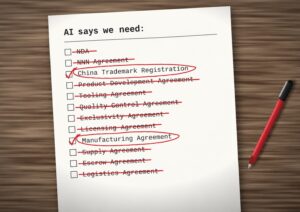
One of the first things our international manufacturing lawyers do for a company manufacturing in China is figure out which contracts and intellectual property registrations it actually needs. The answer turns on the product, what the Chinese company will do, what information it will receive, whether it will help develop the product, what tooling is involved, and where the finished product will be sold.
No single contract or registration protects everything, so the job is to identify the risks that can actually hurt your business and put the right protections in place before you hand over what you are trying to protect. What follows are the principal agreements and registrations our China lawyers consider.
1. NNN Agreement
A China NNN Agreement protects your information and business relationships while you evaluate potential manufacturers. NNN stands for non-disclosure, non-use and non-circumvention, and a well-drafted one restricts the Chinese company from disclosing your information, using it to compete with you, or going around you to your customers and other business relationships.
Its most important work usually happens early, before you have chosen a manufacturer and before you disclose designs, specifications, prototypes, customer information, pricing or anything else you would not want used against you. A conventional Western NDA rarely addresses these risks well enough because it is built to stop disclosure rather than competitive use.
Not every China manufacturing project needs a standalone NNN Agreement. An NNN is primarily a pre-selection and pre-disclosure tool. Once you have selected your manufacturer, the same non-disclosure, non-use and non-circumvention protections can usually be incorporated into a properly drafted Manufacturing Agreement. What matters is that the protections fit the transaction and are in place before the relevant information changes hands.
For the full discussion, see China NNN Agreements: What They Do, What They Don't, and How to Get Them Right.
2. Product Development Agreement
If the Chinese company will do real development work rather than simply manufacture an existing product to finished specifications, you may need a Product Development Agreement.
It is one of the most overlooked China manufacturing contracts, and the pattern we see when it is missing rarely varies. A company gives a factory a concept and preliminary specifications, and the factory says it can turn the concept into a manufacturable product. The two sides then spend months exchanging drawings, producing prototypes, swapping components, testing versions and solving engineering problems, until they find themselves disagreeing about whether the product is finished, whether it meets the requirements, how much more development will cost, and who owns what has been created.
A Product Development Agreement settles those issues before the work begins. Depending on the project, it should define the product to be developed, the technology each party contributes, development milestones, specifications, prototypes, testing and acceptance, development costs and payment triggers, and what happens if the project fails. It should also mark clearly where development ends and production begins, because a buyer should never be committed to purchasing a product that has not been successfully developed and accepted.
Ownership deserves particular attention. Having come up with the original idea, paid for the development, or planned to sell the finished product under your own brand does not necessarily mean you own everything the factory creates along the way. The risk grows when the Chinese company contributes engineering, software, firmware, tooling designs, testing, production know-how or technical modifications.
Your contracts should state who owns your existing IP, the resulting product, the drawings and other development work, and any improvements made during the relationship. These provisions belong in the Product Development Agreement or the Manufacturing Agreement rather than in a separate "Product Ownership Agreement," and they need to be settled before development starts, not after the parties disagree about who created what.
Most companies making ordinary changes to existing products do not need a separate Product Development Agreement. New colors, labels, logos, packaging or minor dimensional changes usually do not justify one, while genuine engineering or product creation often does.
For more, see The 101 on China Product Development Agreements.
3. China Manufacturing Agreement
Once you have selected your manufacturer and are ready for production, the Manufacturing Agreement becomes the central contract in the relationship. A good one is written for the day something goes wrong rather than as a statement of good intentions while everything is going right.
Depending on the transaction, it should cover product specifications and quality standards, inspection and acceptance, pricing and payment, production quantities, and delivery deadlines and the consequences of late delivery. It should address defective products, intellectual property ownership, and the non-disclosure, non-use and non-circumvention protections carried forward from the NNN stage.
It should also deal with molds and tooling, subcontracting, product changes, packaging, warranties, exclusivity if there is to be any, termination, contract damages and other remedies, and governing law and dispute resolution. Purchase orders, emails, WeChat messages and factory-issued quotations are rarely adequate substitutes.
The agreement also has to bind the right Chinese company. A beautifully drafted contract with a Hong Kong trading company does little good if a different mainland company owns the factory, employs the workers, holds the tooling and receives your confidential information.
The agreement should also be built around enforcement, with governing law, language, forum, damages, the location of the factory's assets and the remedies you are likely to need considered together rather than copied from whatever contract your company used on its last domestic deal.
For how Manufacturing, NNN, Product Development and Tooling Agreements fit together, see China Manufacturing Contracts: When One Agreement Is Not Enough.
4. Molds and Tooling
If you pay for molds, dies, jigs, fixtures, test equipment or other tooling, your contracts should make clear who owns it, who may use it, where it will be kept and when it must be returned.
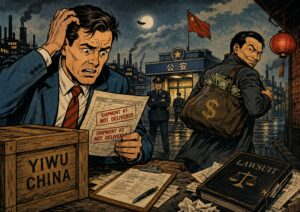
Paying for a mold does not necessarily answer any of those questions, and companies usually learn this when they decide to change manufacturers. The factory has the tooling on its floor and refuses to release it, claims to own it, demands additional payment, or keeps using it to make products for itself or others.
Sometimes these protections belong in a standalone Tooling Agreement, but more often a clearly separated tooling section in the Manufacturing Agreement can do the job. The right structure depends less on what the tooling cost than on what would happen to your business if you lost access to it.
If replacing your molds would shut down production for months, delay a launch or cost you important customers, the tooling provisions deserve serious attention.
For a deeper discussion, see Who Owns Your Molds? How Overseas Factories Hold Tooling Hostage—and How to Stop Them.
5. China Trademarks
Contracts protect you against the companies that sign them. A trademark registration protects a different right against a far larger group of potential infringers, which is why a company manufacturing a branded product in China should think about China trademark protection early.
China is a first-to-file country, and waiting until you begin selling there can be a serious mistake because your brand is exposed in China long before your first sale. Your manufacturer sees it, as do your packaging company, the factory's suppliers and subcontractors, and possibly your competitors.
A properly drafted NNN or Manufacturing Agreement can prohibit your factory from registering your trademark, but that promise binds only the factory and does nothing to stop an unrelated third party from filing first.
A China registration can matter even if you never plan to sell in China, because someone else holding rights to your mark there can disrupt your manufacturing, packaging and exports. We have seen China Customs stop a client's shipment because a competitor held the China registration covering the client's own products.
In most branded China manufacturing projects, contracts and trademark registrations complement each other, and you need both.
For more, see China Trademark Registration: Why U.S. Companies Need More Than a Filing Agent.
6. China Patents
If your product is innovative in how it works or distinctive in how it looks, consider whether Chinese patent protection makes sense. China offers invention patents, utility model patents and design patents, and which, if any, fits depends on the product and what you are trying to protect.
Design patents matter most for products whose value lies in their appearance, and they can also serve a defensive purpose by reducing the risk that someone else obtains a Chinese design patent covering a product you are already manufacturing and uses it to block your exports.
Our own China patent work is limited to design patents, and we refer invention and utility model matters to patent counsel.
Contracts and patents solve different problems. An NNN or Manufacturing Agreement restricts what your factory may do with your product and information, while a patent gives you rights against companies that never signed anything with you.
Patent strategy is highly product-specific and not every product warrants a China filing, but timing matters for all of them. China design patents generally require novelty as of the filing or priority date, so publicly disclosing or selling the product anywhere in the world before filing can destroy your ability to obtain protection. China recognizes only narrow exceptions, so the safest course is to file before disclosure or launch.
For what a Chinese design patent filing requires, see China Design Patents: The Info We Need.
Put the Protections in Place in the Right Order
These agreements and registrations do different jobs, and timing matters for each of them.
Sign any NNN Agreement before disclosing valuable information. If real product development will occur, settle the development process and ownership before development begins. Address tooling ownership and control before the factory is holding molds you cannot easily replace, put the Manufacturing Agreement in place before full-scale production, and file important trademarks and patents early enough that nobody beats you to rights you assumed were yours.
Not every company needs everything on this list, and one of the most valuable things our lawyers do is tell clients which protections they do not need.
A company buying a simple off-the-shelf product with no meaningful brand and no valuable information to disclose faces very different risks from one sending proprietary CAD files to a factory that will engineer a new branded product using expensive custom molds.
The goal is to figure out what can actually hurt your business, choose the protections that address those risks, and put them in place before a Chinese company holds the information, tooling, money or leverage you are trying to protect.