On December 2, U.S. Customs and Border Protection (CBP) issued a withhold release order (WRO) against cotton and cotton products made by the Xinjiang Production and Construction Corps (XPCC). XPCC has been described as a "state within a state," which "functions like a government in running schools, policing and health care facilities across a number of cities in Xinjiang for its employees and their families." In the same article, I described it less kindly as a "weird beast."
XPCC is in the cotton business. Hard. It accounts for a third of China’s cotton production and "is deeply enmeshed in supply chains across the country and beyond." So enmeshed, in fact, that "textile industry experts say that it is effectively impossible to source textile goods from China without some kind of involvement of the XPCC."
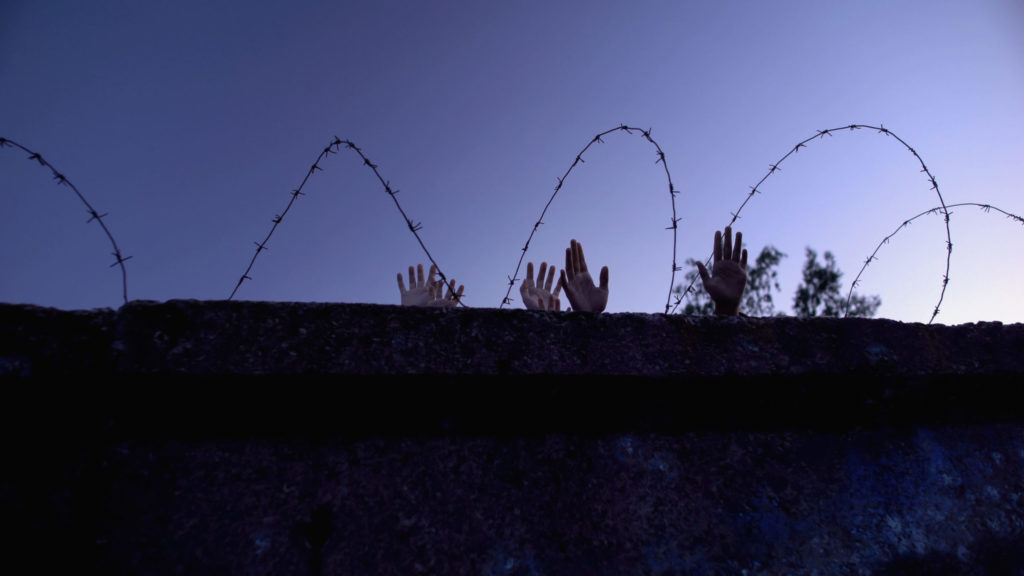
CBP issued the WRO "based on information that reasonably indicates the use of forced labor, including convict labor," by XPCC. Federal law (19 U.S.C. 1307) prohibits importing products made using forced labor. To be sure, the standard of proof followed by CBP does not require particularly ironclad evidence; we know this because we have represented companies (from outside China) falsely accused by their competitors of using forced labor. As most readers will know, however, the state-sanctioned use of forced labor in Xinjiang has been widely reported. According to the U.S. Department of Labor, "it is estimated that 100,000 Uyghurs and other ethnic minority ex-detainees in China may be working in conditions of forced labor following detention in re-education camps." What would be truly shocking is if XPCC was not involved in this abuse, given its central role in the Xinjiang economy.
The order against XPCC is welcome, but enforcement will present a challenge. XPCC "has stakes in more than 800,000 companies and groups in 147 countries," making it easy for the entity to hide its tracks. In addition, as cotton is integrated into final products, such as apparel, it may be harder to trace its origin.
Given these challenging conditions, CBP will be faced with a dilemma. If it only detains products with a clear link to XPCC, it is likely a lot of cotton that should be rightfully detained will pass through the border unimpeded. On the other hand, if it decides to take no chances, it is almost certain that in some instances the just will pay for the sinners (though "just" is relative here, as the Chinese authorities bear sole responsibility for the underlying crisis that led to the ban, meaning it is ultimately their fault if the some Chinese companies pay for the misdeeds of other Chinese companies).
There is talk of a ban on all cotton from Xinjiang, which indicates the U.S. government (USG) might feel comfortable with an "ask questions later" approach, at least as far as Xinjiang cotton is concerned. However, Xinjiang is not the only Chinese province that produces cotton. Just as Chinese companies are transshipping products via Southeast Asia to avoid tariffs, manufacturers could claim their cotton was sourced in, say, Shandong.
It must also be remembered that the forced labor problem is not contained within Xinjiang's borders. As the landmark Uyghurs for Sale report mentions, "the Chinese government has facilitated the mass transfer of Uyghur and other ethnic minority citizens from the far west region of Xinjiang to factories across the country." This means that a factory in Shandong that is actually using Shandong cotton could be just as guilty of using forced labor from Xinjiang.
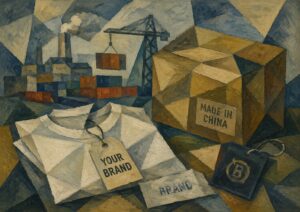
In any case, it is not only the cotton industry in China that uses forced labor, as detailed in Uyghurs for Sale. Forced labor from Xinjiang is being used in "factories that are in the supply chains of at least 82 well-known global brands in the technology, clothing and automotive sectors, including Apple, BMW, Gap, Huawei, Nike, Samsung, Sony and Volkswagen." Beyond this, prison labor—which is also prohibited under 19 U.S.C. 1307—is not uncommon in China, as we noted in Forced Labor in China: Don’t Trust AND Do Verify. As the Department of Homeland Security's acting deputy put it, "'Made in China' is not just a country of origin, it is a warning label."
但美国政府将如何应对这一警告?
美国企业界已明确表示不愿深入追查强迫劳动问题,其反对《维吾尔强迫劳动预防法案》的游说行动便是明证。这意味着当前做法很可能延续:企业将定期发布工作场所报告(WRO),或许在规模上更显大胆,但大门仍将基本敞开。 那些不幸成为新闻曝光或举报对象的工厂将受到惩罚,但对大多数违规者而言,逃脱处罚的几率依然相当高。
It appears that, just as some banks were "too big to fail" during the 2008 financial crisis, China, Inc. is "too big to ban." Some might say that uncomfortable compromises are inevitable. Yes, forced labor products will make their way into the country, they will say, but we cannot afford to shut down China supply chains. But though that sentiment might be troublingly prevalent among those most invested in China trade, does it reflect the American public's view?
Consider the Supreme Court justices' comments when they recently heard arguments in the consolidated Nestle and Cargill cases:
'Many of your arguments lead to results that are pretty hard to take,' conservative Justice Samuel Alito told attorney Neal Katyal, who was arguing on behalf of Nestle and Cargill. The court's three liberal justices were particularly critical of Katyal's position, with Justice Sonia Sotomayor at one point saying it 'boggles my mind.'
这起提交至最高法院的案件已持续审理逾十五年。案件涉及六名马里成年公民,法庭仅以"约翰·多斯"代称。他们声称童年时被从祖国带走,被迫在邻国科特迪瓦的可可农场劳作。据称他们每日工作12至14小时,食物极少,若被认为工作效率低下便会遭受殴打。
The group says that Minneapolis-based Cargill and the American arm of Switzerland-based Nestle 'aided and abetted' their slavery by, among other things, buying cocoa beans from farms that used child labor. The group is seeking to bring a class action lawsuit on behalf of themselves and what they say are thousands of other former child slaves.
雀巢和嘉吉公司均表示已采取措施打击童工奴役现象,并否认存在任何不当行为。
本案涉及1789年首届国会颁布的《外国人侵权法》,该法允许外国公民就侵犯人权行为向美国法院提起诉讼。最高法院大法官们需裁决该法是否允许对美国公司提起诉讼。
Justice Brett Kavanaugh was among the justices with tough questions for Nestle and Cargill's attorney. 'The Alien Tort Statute was once an engine of international human rights protection,' Kavanaugh said before quoting a brief that argued that the companies' position would 'gut the statute.' 'So why should we do that?' he asked.
"Yes, forced labor is terrible, but we are just going to have to deal with it, since we are so dependent on Chinese supply chains. Maybe we can do something about cotton, but we will just have to act like every other industry is fine, even though we know they are not." Would these arguments not be pretty hard to take for most Americans?