



















Get in Touch with Our China Litigation and Arbitration Team
Empiece por rellenar el formulario o llame al 1-888-330-0010 para concertar una primera consulta gratuita.
El asterisco «*» indica que el campo es obligatorio



But you will need our help with litigation in China.
ContáctenosLitigation and judgment enforcement in China is a complicated process. Mainland Chinese courts generally do not enforce U.S. judgments, though there have recently been signs indicating that is changing. See Enforcing U.S. Judgments in China: What You Need to Know.
You therefore may have limited options for bringing suit against a Chinese company that has no assets in the United States or in a country that enforces U.S. judgments. China does enforce court judgments from many other countries, so it’s always critical to research judgment enforcement for the foreign country relevant to your case.
Suing in China via litigation or arbitration is surprisingly often a good choice, and our lawyers have handled many such cases in China, both as lead attorneys, and in helping other law firms with their China disputes.
Arbitration is another avenue worth considering for resolving disputes with Chinese companies. Arbitration offers several benefits, including confidentiality, flexibility in choosing arbitrators, and the ability to enforce arbitral awards internationally via the New York Convention on the Recognition and Enforcement of Foreign Arbitral Awards.
Our team of China litigation and dispute resolution lawyers is well-versed in both litigation and arbitration proceedings in China. We can assess your situation and recommend the best course of action to protect your interests and resolve your dispute effectively.
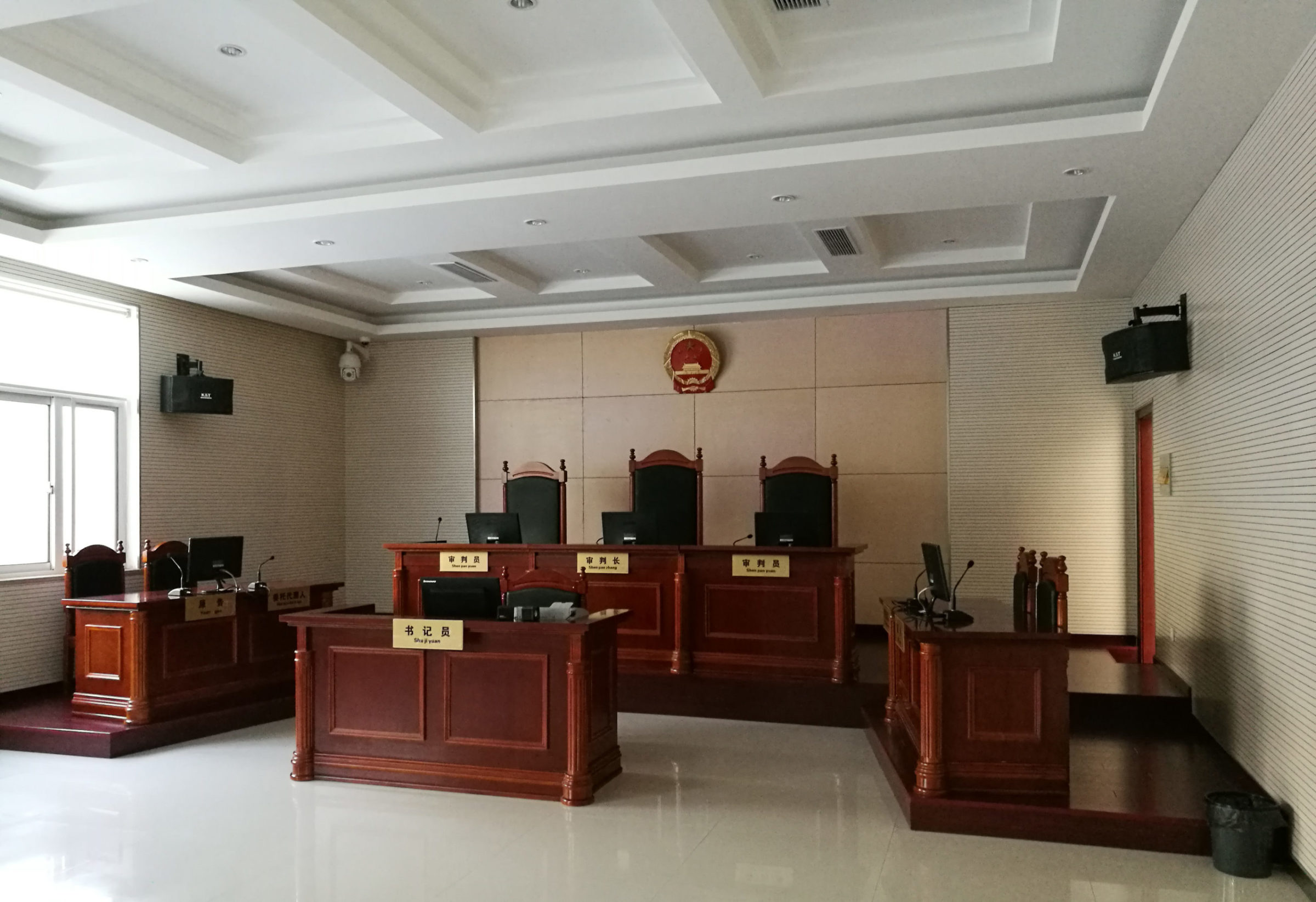
The first step in any legal dispute is establishing jurisdiction, which essentially means determining the appropriate court to hear your case. When your business dispute involves a Chinese company, jurisdiction becomes even more critical
When suing a Chinese company in the United States, you will need the typical contact inquiry necessary for suing any foreign company. See Asahi Metal Industry Co. v. Superior Court of California, Solano Cty., 480 U.S. 102 (1987); Glencore Grain Rotterdam B.V. v. Shivnath Rai Harnarain Co., 284 F.3d 1114 (9th Cir. 2002).
A U.S. court may not always have jurisdiction over a Chinese company. Even if it does, suing a Chinese company in the U.S. can be more complex than suing a domestic company due to several factors:
Our team of China litigation experts understands the intricacies of jurisdiction and can guide you through the process of effectively resolving your dispute with a Chinese company.
The current version is already quite informative, so instead of shortening it, we can improve the structure and flow to make it easier to digest. Here’s a revised version with those improvements:
Suing a Chinese company in a U.S. court requires following specific procedures for delivering legal documents (known as service of process). While this process may seem complex, adhering to the Hague Convention streamlines matters.
The Hague Convention on Service Abroad of Judicial and Extrajudicial Documents in Civil and Commercial Matters is an international treaty that simplifies the process of serving legal documents across borders. Since China adheres to this convention, you can leverage it to serve process on a Chinese company in your U.S. lawsuit.
Service of process under the Hague Convention involves submitting specific documents to China’s Ministry of Justice, the designated central authority. These documents typically include:
In our experience, Chinese courts typically take 3-8 months to effect service of process, but if the Chinese company you are suing is a powerful local business, service may take longer. It does help to repeatedly call and email the relevant Chinese court and China’s Ministry of Justice to help move the process along.
China formally objected to service by mail under Article 10(a) of the Hague Convention on Service and U.S. courts have held that objection valid. See DeJames v. Magnificence Carriers, Inc., 654 F.2d 280 (3d Cir. 1981), cert. den., 454 U.S. 1085; Dr. Ing H.C. F. Porsche A.G. v. Superior Court, 123 Cal. App. 3d 755 (1981).
United States Deposition and Discovery Rules Related to China
Once you file a U.S. lawsuit against a Chinese company, the court’s normal discovery rules apply. China, however, prohibits depositions on its soil, even with witness consent. In its declaration on accession to the Hague Convention on the Taking of Evidence Abroad in Civil and Commercial Matters, China stated it would not abide by those provisions granting consular officers the right to oversee depositions.
In 1989, China allowed a deposition in U.S. v. Leung Tak Lun, et al., 944 F.2d 642 (9th Cir. 1991), but advised that its grant of authority for that particular deposition should not be considered precedent. It has not permitted a deposition since, and conducting one in China may lead to arrest or expulsion. Even deposing a witness in China via the phone likely violates Chinese law and would not be a good idea for anyone planning to go to China.
The easiest way to depose a China‐based witness is usually to do so in the United States, Hong Kong or in a neutral third country.

While the Hague Convention on Evidence allows for document discovery in certain circumstances, obtaining documents from China for a U.S. lawsuit can be challenging. Here’s why:
What This Means for You
Due to these limitations, it’s crucial to carefully strategize your document discovery efforts in China by doing the following, among other things:
Consulting with an attorney experienced in China litigation can significantly increase your chances of obtaining the necessary evidence from China, and we would be happy to assist.

Litigating against a Chinese company in a U.S. court can present unique challenges, but it also offers certain advantages for U.S. companies. Here’s a breakdown of some key factors to consider:
Potential Advantages for U.S. Companies
Challenges to Consider
Importance of Legal Expertise
Successfully litigating against a Chinese company requires a deep understanding of both U.S. and Chinese legal systems. Consulting with an attorney experienced in China litigation can help you:
While there are advantages and challenges to consider, U.S. companies can successfully resolve disputes with Chinese companies through strategic litigation in U.S. courts. Partnering with the right legal team can significantly increase your chances of a successful outcome.
For further insights into suing a Chinese company in a United States court, you may find the Wall Street Journal article Chinese Companies Court Disaster informative. It’s written by one of our most experienced China litigators.

Chinese courts virtually always disregard U.S. judgments since there is no treaty or any reciprocal arrangement between China and the United States regarding recognition or enforcement of civil judgments.
If you’re suing a Chinese company with assets in the United States or a country that generally enforces U.S. judgments (such as the United Kingdom, Canada, or South Korea), filing your case in a U.S. court may be the best way to proceed. Otherwise, the judgment of a U.S. court may end up being of little to no use.
China is a signatory to the 1958 Convention on the Recognition and Enforcement of Foreign Arbitral Awards, so its courts generally will enforce foreign arbitral awards from recognized foreign arbitral bodies. Enforcement is less likely, however, for awards obtained by default. Chinese courts also sometimes delay foreign arbitration award cases for years as a way to hold off on enforcement and make their enforcement numbers look better than they may actually be.
Dispute resolution in China is possible through arbitration, though the process is more limited than domestic arbitrations. Plus, international attorneys have upped their game when it comes to crafting China arbitration clauses. Standard clauses often go to great lengths to protect Chinese companies and frequently don’t include specific language about how and when arbitration occurs.
China has some legitimate arbitral bodies, with the China International Economic Arbitration Commission (CIETAC) being the most prominent.
Generally, these arbitral bodies allow little to no discovery. Often, they permit no live testimony either, so expect them to try your case based on the documents. It typically makes sense to include provisions for English language proceedings in your China arbitration and as many foreign arbitrators as your Chinese counter-party will accept.
When suing a Chinese company in American courts isn’t the right solution, doing so in China may be. The Chinese court system differs from the one U.S.-based attorneys are used to, but it’s more navigable than many American lawyers believe it to be. Foreign companies can and do win cases against Chinese companies in Chinese courts. Though suing in China is usually possible, it’s best to do it with a comprehensive understanding of what the process will actually entail.
First, jurisdiction is rarely a challenge. Articles 3 and 237 of the Civil Procedure Law of the People’s Republic of China grant Chinese courts jurisdiction over international cases involving a foreign plaintiff against a Chinese company.
Second, Chinese courts will enforce the law set forth in a contract. However, Chinese judges emphasize the overall context and “fairness” of the case more than the legal technicalities their American counterparts focus on.
For example, if a company performs a contractual obligation poorly because of an individual employee, a U.S. court would almost certainly hold the company liable for all damages arising from the breach. On the other hand, a Chinese court might rule against liability or severely limit the damages, believing it unfair to penalize a company for the incompetence of one employee.
Third, Chinese courts prohibit nearly all discovery, so you’ll need to have a strong case at the outset to prevail. This precedent also means that you should build your case before you sue, especially since the time from filing to trial is usually less than a year.
Fourth, Chinese courts base their rulings almost exclusively on documentary evidence, not testimony.

Fifth, settlement is rare in Chinese business litigation matters. Litigation costs in China are almost always much lower than in the United States. Plus, after receiving a legal complaint, Chinese culture often views a settlement as losing face. The Chinese company you are suing may prefer to lose the case and blame it on the judge than to settle and have others perceive it as an admission of wrongdoing.
Sixth, Chinese courts rarely issue large damage awards, no matter the case. Businesses there typically operate with low margins, and the courts are reluctant to harm a functioning business or to cause layoffs. In particular, Chinese judges are hesitant to award damages for lost profits or for pain and suffering. Chinese courts simply do not award the sort of damages available in a U.S. court.
Seventh, the ability to collect judgments in China is still not near to the level of the United States or most of Europe, though it is getting better. Chinese courts often lack the authority to enforce collection and get little assistance from the other agencies who have the power to compel payment. In addition, Chinese companies sometimes find it more cost-effective to avoid a judgment by shutting down and re‐opening under a new name.

Dan Harris es una autoridad destacada en el sistema jurídico y el entorno empresarial de China. Además de aparecer con frecuencia en los medios de comunicación para hablar sobre cuestiones jurídicas chinas, es coautor del China Law Blog, que se sitúa constantemente entre los mejores blogs jurídicos en lengua inglesa del mundo.
La revista de la ABA (Asociación Americana de Abogados) nombró al China Law Blog uno de los 20 mejores blogs jurídicos de todos los tiempos, y durante cinco años consecutivos los lectores de la revista lo eligieron como el mejor en su categoría. El China Law Blog los lectores una gran cantidad de información sobre los tipos de clientes a los que prestamos servicio y los retos jurídicos que les ayudamos a resolver cada día.
Ver el blogEmpiece por rellenar el formulario o llame al 1-888-330-0010 para concertar una primera consulta gratuita.
El asterisco «*» indica que el campo es obligatorio

Harris Sliwoski nos ha guiadoHarris Sliwoski en el proceso de constitución de nuestra empresa. Siguen ayudándonos con los trámites de registro necesarios y con el cumplimiento de numerosas normativas. Han sabido responder con rapidez a todas nuestras numerosas preguntas y ofrecernos opciones claras, explicaciones y consejos prácticos. Esperamos seguir recurriendo a Harris Sliwoski forma habitual a medida que nuestra empresa crezca. También nos presentaron a otros expertos profesionales. No dudaríamos en recomendar Harris Sliwoski cualquier empresa que necesite asesoramiento jurídico».
 Three Continents Foods, S.L.U.
Este bufete de abogados nos prestó una ayuda inestimable durante el proceso de obtención de la licencia comercial en el sector del cannabis de California. Nos han ayudado a resolver diversas cuestiones legales con gran rapidez, manteniéndonos informados en todo momento a lo largo del proceso. Todas las personas con las que hemos trabajado enHarris Sliwoski expertas en su campo y siempre hemos tenido la sensación de estar en buenas manos gracias a su representación legal.
Wil Crummer, director ejecutivo PRO Farms
Los asuntos legales siempre dan miedo. Y he tenido que pasar al ataque un par de veces, aunque de mala gana. Contar con Harris Sliwoski me devuelva espalda? Eso hizo que todo fuera mucho menos complicado. Rápidamente me explicaron mis opciones y fueron muy coherentes en sus comunicaciones, plazos y facturación. He tenido la suerte de mantenerme al margen de los asuntos legales durante toda mi carrera, afortunadamente. Cuando las cosas se torcieron un poco, Harris Sliwoski lo solucionó rápidamente.
Aaron Draplin, fundador Draplin Design Co.
Estoy muy satisfecho con este bufete de abogados. Respondieron a todas mis preguntas sobre los negocios relacionados con el cannabis y el marco normativo de California en materia de cannabis, y me han ayudado con diversos asuntos legales de forma rápida y eficaz, manteniéndose siempre en comunicación clara con nosotros durante todo el proceso. Además, me recomendaron a otros profesionales de confianza para satisfacer las necesidades de mi negocio. Todas las personas con las que trabajé en Harris Sliwoski expertas en su campo, y me sentí en buenas manos durante toda la representación legal.
Corey T., director ejecutivo Thinc Cubed, LLC
Harris Sliwoski de 20 años colaborando con los abogados de Harris Sliwoski tanto en mi calidad de empresario como de directivo de un gran sistema sanitario de la costa este, y ello se debe a que siempre me han prestado un asesoramiento en derecho internacional de gran calidad, claro y eficaz. Más recientemente, Harris Sliwoski apoyo jurídico en numerosos asuntos relacionados con la adquisición de productos médicos en todo el mundo. Su apoyo fue especialmente útil durante el inicio de la pandemia de COVID, cuando existía una gran necesidad de conseguir EPI rápidamente, al tiempo que había que lidiar con complicados requisitos legales internacionales y nacionales. El equipo de abogados internacionales Harris Sliwoskinos ayudó llevando a cabo una rápida diligencia debida sobre posibles proveedores, gestionando los trámites legales para obtener productos del extranjero y pasar por la aduana de EE. UU., y redactando contratos para protegernos frente a todo tipo de imprevistos. Lo hicieron prestando, en esencia, un servicio 24 horas al día, 7 días a la semana. No puedo recomendarlos lo suficiente.
Dan Pak Responsable de la cadena de suministro hospitalaria
Harris Sliwoski años representando Harris Sliwoski nuestra empresa en el sector del cannabis legal. Harris Sliwoski asesorado en una amplia variedad de asuntos jurídicos y son auténticos expertos en su campo. Recomiendo encarecidamente Harris Sliwoski cualquiera que tenga dudas sobre la legislación del cannabis o cualquier otro asunto jurídico. Han sido de gran ayuda para nuestra empresa y seguirán guiándonos a medida que evolucione nuestro sector.
Matt Hurt, director de operaciones Cannabis Nation
No encontrarás un socio mejor que Harris Sliwoski orientarte en el complejo mundo de la normativa sanitaria. No solo ofrecen un asesoramiento jurídico sólido y fiable, sino que además son muy receptivos y saben orientarte de tal manera que te ayuden a alcanzar tus objetivos empresariales.
Joseph Axelrod, director jurídico Irwin Naturals
Cuando iniciamos el proceso de creación de una empresa de cannabis «de la semilla a la venta» en Oregón, nos dimos cuenta de que necesitábamos el asesoramiento jurídico de expertos. El sector del cannabis está plagado de posibles riesgos a cada paso, y queríamos contar con el mejor asesoramiento jurídico que pudiéramos encontrar. Tras hablar con varios bufetes y profesionales, nos sentimos muy afortunados de haber elegido Harris Sliwoski nuestro asesor jurídico.
Tony Theiss, director ejecutivo y cofundador Redbarn Cannabis
Recurrimos a Harris Sliwoski todos nuestros asuntos jurídicos internacionales, incluidos los litigios internacionales. En los últimos años nos hemos visto envueltos en un par de grandes disputas legales internacionales y el equipo de resolución de disputas internacionales Harris Sliwoskinos proporcionó asistencia jurídica especializada en ambos asuntos. Siempre se esforzaron por explicarnos con detalle qué estaban haciendo y por qué, así como el coste aproximado de sus acciones en términos de honorarios legales. Y lo más importante: obtuvimos unos resultados excelentes en ambos casos y no me cabe duda de que Harris Sliwoski un factor determinante en ello.
Kevin English, director ejecutivo We Are Camp
Hemos recurrido Harris Sliwoski asesoramiento jurídico en relación con nuestras actividades de fabricación a nivel internacional. Los abogados con los que trabajé conocían a la perfección las cuestiones jurídicas internacionales que afectaban a nuestros diversos proyectos y nos proporcionaron información clave. Valoro especialmente que siempre cumplan lo prometido de forma rápida y eficaz, y que siempre se mantengan dentro de los presupuestos estimados.
Andrea Barona Valladolid, asesora jurídica sénior Fairphone