




















Get in Touch with Our China Litigation and Arbitration Team
请填写表格开始办理,或致电1-888-330-0010预约免费初次咨询。
"*"表示必填项


Litigation and judgment enforcement in China is a complicated process. Mainland Chinese courts generally do not enforce U.S. judgments, though there have recently been signs indicating that is changing. See Enforcing U.S. Judgments in China: What You Need to Know.
You therefore may have limited options for bringing suit against a Chinese company that has no assets in the United States or in a country that enforces U.S. judgments. China does enforce court judgments from many other countries, so it’s always critical to research judgment enforcement for the foreign country relevant to your case.
Suing in China via litigation or arbitration is surprisingly often a good choice, and our lawyers have handled many such cases in China, both as lead attorneys, and in helping other law firms with their China disputes.
Arbitration is another avenue worth considering for resolving disputes with Chinese companies. Arbitration offers several benefits, including confidentiality, flexibility in choosing arbitrators, and the ability to enforce arbitral awards internationally via the New York Convention on the Recognition and Enforcement of Foreign Arbitral Awards.
Our team of China litigation and dispute resolution lawyers is well-versed in both litigation and arbitration proceedings in China. We can assess your situation and recommend the best course of action to protect your interests and resolve your dispute effectively.
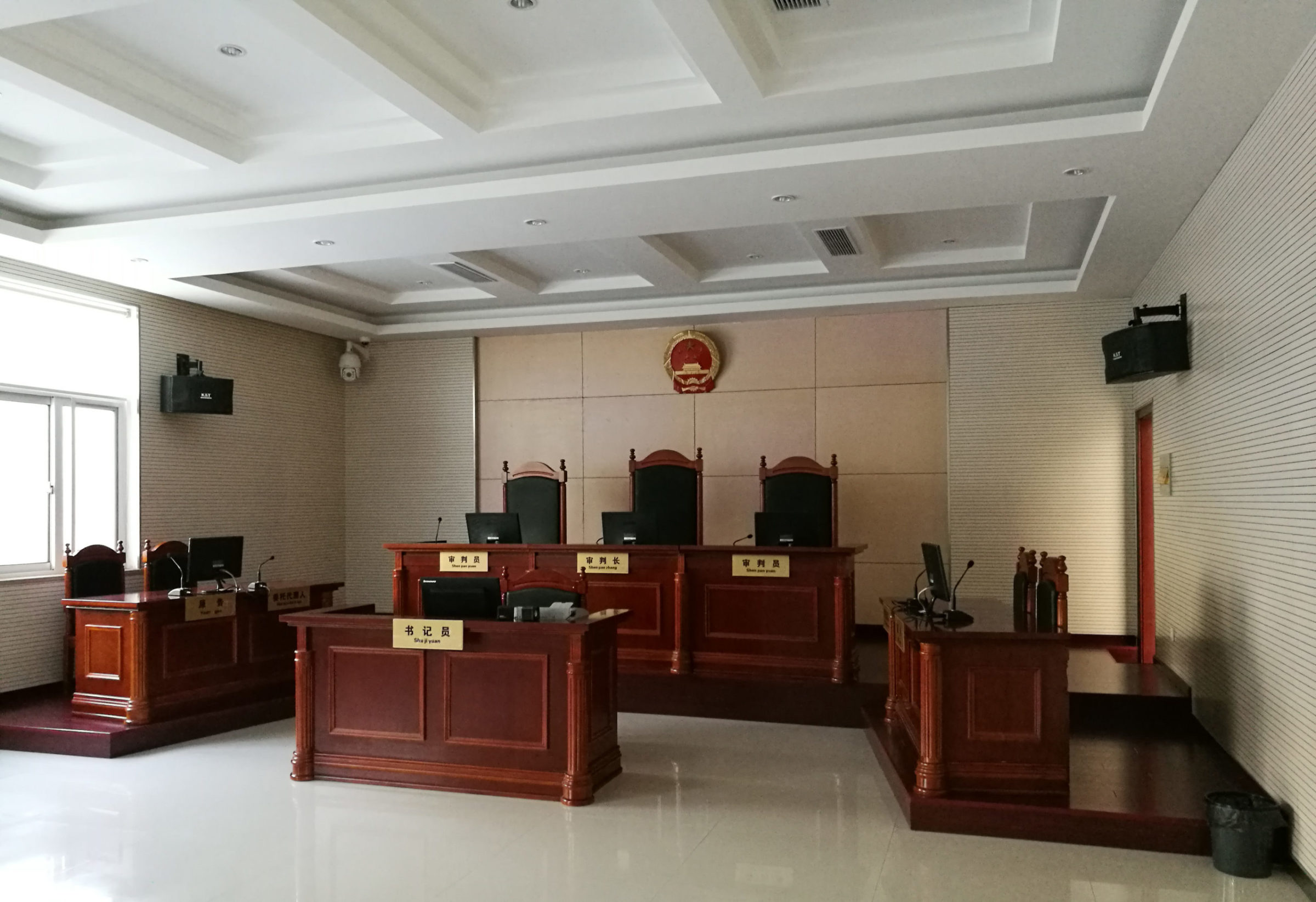
The first step in any legal dispute is establishing jurisdiction, which essentially means determining the appropriate court to hear your case. When your business dispute involves a Chinese company, jurisdiction becomes even more critical
When suing a Chinese company in the United States, you will need the typical contact inquiry necessary for suing any foreign company. See Asahi Metal Industry Co. v. Superior Court of California, Solano Cty., 480 U.S. 102 (1987); Glencore Grain Rotterdam B.V. v. Shivnath Rai Harnarain Co., 284 F.3d 1114 (9th Cir. 2002).
A U.S. court may not always have jurisdiction over a Chinese company. Even if it does, suing a Chinese company in the U.S. can be more complex than suing a domestic company due to several factors:
Our team of China litigation experts understands the intricacies of jurisdiction and can guide you through the process of effectively resolving your dispute with a Chinese company.
The current version is already quite informative, so instead of shortening it, we can improve the structure and flow to make it easier to digest. Here’s a revised version with those improvements:
Suing a Chinese company in a U.S. court requires following specific procedures for delivering legal documents (known as service of process). While this process may seem complex, adhering to the Hague Convention streamlines matters.
The Hague Convention on Service Abroad of Judicial and Extrajudicial Documents in Civil and Commercial Matters is an international treaty that simplifies the process of serving legal documents across borders. Since China adheres to this convention, you can leverage it to serve process on a Chinese company in your U.S. lawsuit.
Service of process under the Hague Convention involves submitting specific documents to China’s Ministry of Justice, the designated central authority. These documents typically include:
In our experience, Chinese courts typically take 3-8 months to effect service of process, but if the Chinese company you are suing is a powerful local business, service may take longer. It does help to repeatedly call and email the relevant Chinese court and China’s Ministry of Justice to help move the process along.
China formally objected to service by mail under Article 10(a) of the Hague Convention on Service and U.S. courts have held that objection valid. See DeJames v. Magnificence Carriers, Inc., 654 F.2d 280 (3d Cir. 1981), cert. den., 454 U.S. 1085; Dr. Ing H.C. F. Porsche A.G. v. Superior Court, 123 Cal. App. 3d 755 (1981).
United States Deposition and Discovery Rules Related to China
Once you file a U.S. lawsuit against a Chinese company, the court’s normal discovery rules apply. China, however, prohibits depositions on its soil, even with witness consent. In its declaration on accession to the Hague Convention on the Taking of Evidence Abroad in Civil and Commercial Matters, China stated it would not abide by those provisions granting consular officers the right to oversee depositions.
In 1989, China allowed a deposition in U.S. v. Leung Tak Lun, et al., 944 F.2d 642 (9th Cir. 1991), but advised that its grant of authority for that particular deposition should not be considered precedent. It has not permitted a deposition since, and conducting one in China may lead to arrest or expulsion. Even deposing a witness in China via the phone likely violates Chinese law and would not be a good idea for anyone planning to go to China.
The easiest way to depose a China‐based witness is usually to do so in the United States, Hong Kong or in a neutral third country.

While the Hague Convention on Evidence allows for document discovery in certain circumstances, obtaining documents from China for a U.S. lawsuit can be challenging. Here’s why:
What This Means for You
Due to these limitations, it’s crucial to carefully strategize your document discovery efforts in China by doing the following, among other things:
Consulting with an attorney experienced in China litigation can significantly increase your chances of obtaining the necessary evidence from China, and we would be happy to assist.

Litigating against a Chinese company in a U.S. court can present unique challenges, but it also offers certain advantages for U.S. companies. Here’s a breakdown of some key factors to consider:
Potential Advantages for U.S. Companies
Challenges to Consider
Importance of Legal Expertise
Successfully litigating against a Chinese company requires a deep understanding of both U.S. and Chinese legal systems. Consulting with an attorney experienced in China litigation can help you:
While there are advantages and challenges to consider, U.S. companies can successfully resolve disputes with Chinese companies through strategic litigation in U.S. courts. Partnering with the right legal team can significantly increase your chances of a successful outcome.
For further insights into suing a Chinese company in a United States court, you may find the Wall Street Journal article Chinese Companies Court Disaster informative. It’s written by one of our most experienced China litigators.

Chinese courts virtually always disregard U.S. judgments since there is no treaty or any reciprocal arrangement between China and the United States regarding recognition or enforcement of civil judgments.
If you’re suing a Chinese company with assets in the United States or a country that generally enforces U.S. judgments (such as the United Kingdom, Canada, or South Korea), filing your case in a U.S. court may be the best way to proceed. Otherwise, the judgment of a U.S. court may end up being of little to no use.
China is a signatory to the 1958 Convention on the Recognition and Enforcement of Foreign Arbitral Awards, so its courts generally will enforce foreign arbitral awards from recognized foreign arbitral bodies. Enforcement is less likely, however, for awards obtained by default. Chinese courts also sometimes delay foreign arbitration award cases for years as a way to hold off on enforcement and make their enforcement numbers look better than they may actually be.
Dispute resolution in China is possible through arbitration, though the process is more limited than domestic arbitrations. Plus, international attorneys have upped their game when it comes to crafting China arbitration clauses. Standard clauses often go to great lengths to protect Chinese companies and frequently don’t include specific language about how and when arbitration occurs.
China has some legitimate arbitral bodies, with the China International Economic Arbitration Commission (CIETAC) being the most prominent.
Generally, these arbitral bodies allow little to no discovery. Often, they permit no live testimony either, so expect them to try your case based on the documents. It typically makes sense to include provisions for English language proceedings in your China arbitration and as many foreign arbitrators as your Chinese counter-party will accept.
When suing a Chinese company in American courts isn’t the right solution, doing so in China may be. The Chinese court system differs from the one U.S.-based attorneys are used to, but it’s more navigable than many American lawyers believe it to be. Foreign companies can and do win cases against Chinese companies in Chinese courts. Though suing in China is usually possible, it’s best to do it with a comprehensive understanding of what the process will actually entail.
First, jurisdiction is rarely a challenge. Articles 3 and 237 of the Civil Procedure Law of the People’s Republic of China grant Chinese courts jurisdiction over international cases involving a foreign plaintiff against a Chinese company.
Second, Chinese courts will enforce the law set forth in a contract. However, Chinese judges emphasize the overall context and “fairness” of the case more than the legal technicalities their American counterparts focus on.
For example, if a company performs a contractual obligation poorly because of an individual employee, a U.S. court would almost certainly hold the company liable for all damages arising from the breach. On the other hand, a Chinese court might rule against liability or severely limit the damages, believing it unfair to penalize a company for the incompetence of one employee.
Third, Chinese courts prohibit nearly all discovery, so you’ll need to have a strong case at the outset to prevail. This precedent also means that you should build your case before you sue, especially since the time from filing to trial is usually less than a year.
Fourth, Chinese courts base their rulings almost exclusively on documentary evidence, not testimony.
Fifth, settlement is rare in Chinese business litigation matters. Litigation costs in China are almost always much lower than in the United States. Plus, after receiving a legal complaint, Chinese culture often views a settlement as losing face. The Chinese company you are suing may prefer to lose the case and blame it on the judge than to settle and have others perceive it as an admission of wrongdoing.
Sixth, Chinese courts rarely issue large damage awards, no matter the case. Businesses there typically operate with low margins, and the courts are reluctant to harm a functioning business or to cause layoffs. In particular, Chinese judges are hesitant to award damages for lost profits or for pain and suffering. Chinese courts simply do not award the sort of damages available in a U.S. court.
Seventh, the ability to collect judgments in China is still not near to the level of the United States or most of Europe, though it is getting better. Chinese courts often lack the authority to enforce collection and get little assistance from the other agencies who have the power to compel payment. In addition, Chinese companies sometimes find it more cost-effective to avoid a judgment by shutting down and re‐opening under a new name.

Dan Harris 是中国法律体系和商业环境领域的权威专家。除了频繁在媒体上就中国法律问题发表见解外,他还与他人合著了 China Law Blog,该博客始终位列全球顶尖英文法律博客之列。
《美国律师协会期刊》将China Law Blog 》China Law Blog 史上20佳法律博客China Law Blog 并连续五年获该期刊读者票选为同类最佳博客。China Law Blog 读者China Law Blog 丰富资讯,涵盖我们服务的客户类型及每日协助解决的法律难题。
查看博客请填写表格开始办理,或致电1-888-330-0010预约免费初次咨询。
"*"表示必填项

Harris Sliwoski 在我们公司成立过程中提供了Harris Sliwoski 指导。他们持续协助我们完成必要的注册手续,并确保我们遵守各项法规。他们能够及时解答我们提出的诸多问题,并提供通俗易懂的方案、解释和实用建议。 随着公司规模的扩大,我们计划继续Harris Sliwoski 。他们还为我们引荐了其他专业人士。Harris Sliwoski 任何需要法律咨询的公司,我们都会毫不犹豫地Harris Sliwoski 。”
 三洲食品有限责任公司
在本公司办理加州大麻行业商业许可的过程中,这家律师事务所提供了巨大的帮助。他们及时协助我们处理了各种法律问题,并在整个过程中与我们保持着清晰的沟通。Harris Sliwoski 事务所的每位合作人员Harris Sliwoski 各自领域的专家,在他们的法律代理下,我们始终感到安心可靠。
威尔·克拉默,首席执行官 PRO Farms
法律事务总是令人心惊胆战。我曾被迫主动出击过几次,心里实在不情不愿。让哈里斯 斯利沃斯基 让哈里斯·斯利沃斯基 支持? 这让事情变得轻松多了。他们迅速为我梳理了所有选项,在沟通、时间安排和账单处理上始终保持着令人耳目一新的统一性。整个职业生涯中,我幸运地远离了法律纠纷——谢天谢地。当事情出现些许差池时,哈里斯 斯利沃斯基 迅速化解了危机。
亚伦·德拉普林,创始人 德拉普林设计公司
这家律师事务所给我留下了深刻印象。他们解答了我关于大麻业务及加州大麻监管框架的所有疑问,并及时协助我处理了各种法律问题,在整个过程中始终与我们保持着清晰的沟通。此外,他们还根据我的业务需求,为我引荐了其他优秀的专业人士。Harris Sliwoski 事务所的每位合作人员Harris Sliwoski 各自领域的专家,在整个法律代理过程中,我始终感到安心可靠。
科里·T,首席执行官 思立方有限责任公司
作为企业主以及东海岸某大型医疗系统的高管,Harris Sliwoski 的律师们合作Harris Sliwoski 20年Harris Sliwoski 这得益于他们始终能高效地提供高水平且清晰的国际法律建议。 最近,Harris Sliwoski 所在全球采购医疗产品相关的诸多事务上Harris Sliwoski 法律支持。在新冠疫情初期,当亟需快速采购个人防护装备(PPE)的同时,还需应对复杂的国际和国内法律要求,他们的支持尤为关键。Harris Sliwoski国际律师团队通过以下方式提供了有力协助:对潜在供应商进行快速尽职调查;处理从海外采购产品并通过美国海关所需的法律后勤工作;起草合同以防范各类潜在风险。他们实质上提供了全天候(24/7)的服务。我对其赞誉之高,难以言表。
丹·帕克 医院供应链主管
Harris Sliwoski 本公司Harris Sliwoski 合法大麻行业的法律事务。Harris Sliwoski 在各类法律事务上为我们Harris Sliwoski 专业建议,他们确实是该领域的专家。Harris Sliwoski 对大麻法律或任何法律事务有疑问Harris Sliwoski 我都强烈Harris Sliwoski 。他们为本公司提供了极大的帮助,并将随着行业的发展继续为我们提供指导。
马特·赫特,首席运营官 大麻国度
Harris Sliwoski 应对错综复杂的医疗保健法规Harris Sliwoski 您很难找到Harris Sliwoski 更出色的合作伙伴。他们不仅能提供稳健可靠的法律建议,反应也十分迅速,更能以切实有效的方式为您提供指导,助您实现商业目标。
约瑟夫·阿克塞尔罗德,总法律顾问 欧文天然食品公司
当我们在俄勒冈州着手创建一家“从种子到销售”的大麻公司时,我们意识到需要专业的法律顾问。大麻行业处处暗藏风险,因此我们希望能获得最优质的法律建议。在与多家律所及多位律师沟通后,我们非常庆幸最终选择了Harris Sliwoski 我们的法律顾问。
托尼·泰斯,首席执行官兼联合创始人 红谷仓大麻公司
我们委托Harris Sliwoski 所有国际法律事务,包括国际诉讼案件。 过去几年间,我们卷入了几起重大的国际法律纠纷Harris Sliwoski国际争议解决团队在这两起案件中都为我们提供了专业的法律协助。他们始终非常细致地向我们解释其工作内容、操作依据以及相关法律费用可能产生的成本。最重要的是,我们在两起案件中都取得了极佳的成果,我确信Harris Sliwoski 对此Harris Sliwoski 关键作用。
凯文·英格利希,首席执行官 我们是营地
我们曾委托Harris Sliwoski 我们的国际制造Harris Sliwoski 法律协助。与我合作过的律师们对我们各项项目涉及的国际法律问题了如指掌,并为我们提供了关键性的见解。我特别欣赏他们总是能迅速高效地兑现承诺,且费用始终控制在预估范围内。
安德烈娅·巴罗纳·巴利亚多利德,高级法律顾问 Fairphone