Sinosure: The Complete Guide for Foreign Buyers
What Sinosure is, what it can do, and how foreign companies should respond
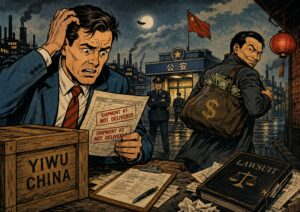
The letter arrives without warning. A collection agency outside Chicago or a law firm you have never heard of writes to say your company owes a Chinese manufacturer a couple million dollars. The letter says China Export & Credit Insurance Corporation has paid the manufacturer's claim and now has the right to collect from you. It gives you an incredibly short deadline and a telephone number. Almost everyone calls the number. Do not do that.
I have handled more than 100 Sinosure matters over the past two decades, most of them after collection efforts had already begun. The largest involved a claim of hundreds of millions of dollars. Only two, possibly three, ended with our client paying Sinosure anything, and in each of those the client chose to pay because the amount was relatively small and business or accounting reasons favored clearing the claim from its books. That record does not prove Sinosure claims are harmless. It reflects a self-selected group of companies that retained experienced counsel and generally followed our advice. It does establish that a Sinosure demand is not an adjudicated debt, that the amount in the letter is not necessarily the amount owed, and that what a company does in the first few weeks can matter as much as the underlying dispute.
I do not know of another American lawyer who has handled these disputes at anything close to that volume. Over those years I have also spoken with many current and former Sinosure people. In March 2024, I testified before the U.S.-China Economic and Security Review Commission, which reports to Congress on the national security implications of trade with China. My testimony and my answers to the Commission's written questions, including about Sinosure, addressed how China's legal and export insurance systems favor Chinese manufacturers over foreign buyers and consumers.
If you are reading this with a demand letter in front of you, you do not need to respond tonight. Preserve the letter, stop uncontrolled communications, and do not try to correct anything you have already said. Anyone from your company in mainland China changes the priorities, and you should read the section below on travel first. If you have been served with a complaint, or with papers from a Chinese court or arbitration commission, send them to your international litigation counsel immediately, because the response deadline is running. If you do not yet have a Sinosure problem, go straight to the section below on prevention. That is the most valuable section in this guide and the least expensive to act on.
What is Sinosure?
Sinosure is China's state-owned export credit insurer. Established in 2001, it operates as a policy-oriented financial institution supporting China's foreign trade and overseas investment. It provides export credit insurance and other financial support for Chinese companies doing business abroad, and it pursues debt recovery when insured receivables go unpaid. Its annual reports describe an institution operating across China and abroad as part of the country's trade-support infrastructure.
For a foreign buyer, the arrangement is simple. A Chinese exporter insures its receivables, and most Chinese companies that sell to foreign buyers on credit do so only because their invoices are insured. Sinosure writes nearly all of that insurance. When the buyer does not pay, the exporter files a claim. If Sinosure pays, usually around 90 percent of the insured loss, it takes subrogation or assignment rights and pursues the buyer through collection agencies or law firms in the buyer's own country.
Sinosure exists to support Chinese exporters, and a foreign buyer should treat it as an arm of the Chinese state's export-promotion apparatus rather than as a commercial insurer that happens to be Chinese. Inside that system, trade finance, supplier credit, insurance, subsidies, and government policy blur together. Sinosure does not act as a neutral tribunal deciding the commercial dispute between the factory and the buyer. It makes no effort to help foreign companies or their lawyers. Indeed, I am convinced that it sometimes seeks to bankrupt those foreign companies to reduce competition for the Chinese companies to which it owes a duty. Buyers who expect a transparent explanation of how a claim was evaluated, why the factory was paid, or how the demanded amount was calculated wait in vain. Sinosure has never once told us that it considered a claim resolved, not even after the clients who chose to pay had paid, and certainly not just because we showed it compelling proof of bad product or late delivery.
In practice, Sinosure is also not one institution. It is an amalgamation of regional offices, each something of a fiefdom, each run differently, and each treating the foreign companies it pursues differently. Within a single office, some managers are far tougher than others. We have spent years tracking how the offices behave, and patterns do emerge, but similar disputes still can follow radically different paths. One sits untouched for eighteen months. Another produces serious collection activity or litigation within days. The amount, the documents, the finances of the parties, the buyer's assets, the office and person handling the claim, and conditions in China all affect what happens next, and no responsible lawyer can give you a reliable timetable after reading only the demand letter.
How does a Sinosure claim begin?
The usual pattern starts with a Chinese factory under financial pressure. It ships late, ships short, misses the agreed specifications, or delivers goods the buyer considers defective. The buyer withholds some or all of the remaining payment, and many buyers move production to another factory in the same region.
Withholding payment can be justified, but it must be done carefully. The contract, the governing law, the inspection records, the timing of the complaint, what the buyer did with the goods, and the buyer's communications all matter. A buyer with a genuine defect claim can badly damage its position by accepting and reselling the goods, staying silent for months, or repeatedly promising to pay before raising quality problems. Why the buyer did not pay matters as much as whether it paid. A documented quality dispute gives counsel something to work with. A buyer that stopped paying because of cash flow problems will find that neither Sinosure nor its collectors will listen or care, because they want money now and believe the buyer can and should borrow to pay it.
The buyer sees only the factory, but the factory rarely stands alone. Most Chinese factories work through networks of subcontractors, so one unpaid invoice can ripple through dozens of smaller businesses and sometimes an entire village. When workers go unpaid, social unrest follows, and social unrest is what local Chinese government officials fear most. They work with the factory to get it paid, and the defect dispute does not interest them. In these settings the factory almost never says it went unpaid because its product was bad. It says the foreign buyer defaulted. Its sub-suppliers sometimes start calling the buyer directly to demand payment.
The factory then files its insurance claim. Once Sinosure pays, the dispute changes character. The buyer no longer faces only a factory that shares a commercial history and may want future orders. It faces an insurer that has paid out money, has no relationship to preserve, and treats the matter as one file among many.
Sinosure also changes how the factory behaves long before any dispute arises. A buyer's oldest protection against bad product is the right to withhold payment. A factory that knows Sinosure will cover most of an unpaid invoice has less reason to fear nonpayment and less economic pressure to get quality and safety right. When it does go unpaid, it files its claim as a buyer default rather than a quality dispute. Sinosure pays, and the cost of the bad goods comes back to the buyer as a demand for product that was defective or never delivered.
What does a typical Sinosure case look like?
For years, our typical Sinosure matter looked like this. An American company orders $2 million of widgets from a Chinese manufacturer and pays $1.4 million up front, with the remaining $600,000 due on delivery. The widgets arrive nearly worthless. The buyer refuses to pay the balance and asks for replacement product. The factory goes silent, or the two sides start talking about a deal, and either way the buyer eventually sells the defective goods at fire-sale prices for $850,000. The factory threatens to sue, the buyer threatens to countersue, and then the buyer does nothing for months on the theory that no Chinese factory will sue it in the United States. Then a collection agency or law firm retained by Sinosure calls, demands the $600,000 (or more), and threatens suit. The factory insists it never contacted Sinosure and urges the buyer to ignore the insurer and pay the factory instead, while Sinosure insists that paying Sinosure will make everything fine. Neither statement can be trusted. The buyer starts out defiant, discovers that no Chinese manufacturer will sell to it on credit anymore, and only then calls a lawyer hoping for a win-win settlement. Sinosure does not do win-win settlements. Ever.
How has Sinosure changed?
For most of the time I have handled these matters, I told clients their biggest immediate risks were inside China rather than in their home country. Sinosure could seize assets and intellectual property in China and squeeze companies and personnel there, but it was reluctant to sue in foreign courts, and it was slow. It usually took months to do anything, and by then we had typically blocked whatever it might have done. Our standard advice was to put protections in place and then, in most cases, pay Sinosure nothing.
That advice still produces good results, but the assumptions behind it no longer hold. Sinosure now encourages, and in some cases appears to support, its insured factories in suing foreign buyers in the buyers' own countries. Sinosure and its insureds sue buyers quickly in China and threaten to take the resulting judgments to American and European courts. Sinosure has also become heavily computerized and far better at searching foreign databases. In some of our matters it began seizing the buyer's assets in China, including its China trademarks and its payments to other Chinese suppliers, before the buyer even knew it had a Sinosure problem. It has also become more willing to pay financially stressed exporters and then pursue foreign buyers aggressively for reimbursement. Sinosure should be viewed for what it is: a Chinese government agency that is tasked with making things go smoothly in China for Chinese companies. It should not be viewed like a Western insurance company.
Sinosure will also often demand payment for goods that were never shipped, including orders the buyer cancelled, whether or not the factory agreed to the cancellation. The other thing that it will often do is revive China factory claims that were resolved years ago, with demands for amounts supposedly still owed. These zombie claims catch buyers completely off guard, and the factory is not always the one reviving them. Factories have told our clients that Sinosure's new computer system found the old debts and that the factory would lose its insurance coverage if it did not pursue them. Sometimes these old claims are barred by statutes of limitations, but Sinosure does not seem to care.
The Chinese government has made clear that it ranks national security above its economy and certainly above doing business with foreign companies. For more on this, see Chinese Government Raids and Shuts Down a Well-Known American Business and Due Diligence in China Just Got a Lot Harder: Now What?. Sinosure reflects the same priorities. China's economic conditions, exporter pressure, policy priorities, and relationship with the buyer's country all affect how Sinosure, suppliers, collection agents, and courts behave.
Is Sinosure actually involved?
Many companies that contact us have nothing from Sinosure at all. They have an email from their supplier saying it has commenced recovery through Sinosure, with a deadline attached. That distinction matters more than it sounds. Chinese suppliers constantly invoke Sinosure as leverage, and sometimes Sinosure never appears. A deadline that shows up only in a supplier's email is far more likely the supplier's date than the insurer's.
The first questions are therefore factual. Has anything reached you from anyone other than the supplier, whether Sinosure, a Chinese law firm, a collection company, or anyone else? Has the supplier produced anything showing that it actually filed a claim? If a collector has appeared, has it shown that Sinosure paid the supplier, and has it produced the assignment or subrogation documents that give it authority to collect? Is the supplier still separately demanding payment? We never accept a demand at face value because it arrives on letterhead naming Sinosure.
Who owns the claim decides who can settle it. If Sinosure has paid the factory and taken its rights, a payment to the factory may resolve nothing. If the factory kept an uninsured portion of the loss or has related invoices outstanding, a payment to Sinosure may not resolve everything. Before any money moves, a buyer needs to know what Sinosure paid, what rights it took, whether the factory kept any interest, whether related invoices remain open, and who has authority to bind each claimant. Paying off the wrong entity can mean you have a lot less money but the very same problem as before you paid.
Who will contact you on Sinosure's behalf?
The American firms we see again and again are Brown & Joseph (usually Angela Keane), The Leviton Law Firm (Don Leviton), USA Debt Recovery Solutions (Arthur Tretiakov), and Creditors Adjustment Bureau and The Law Offices of Kenneth J. Freed. Each has its own style, strengths, and weaknesses. All of them are tough, relentless, and unyielding, because that is what Sinosure wants of them.
Brown & Joseph, an Illinois commercial collection firm, tends to appear first, with a barrage of emails, letters, and calls. A typical letter, with identifying details changed, reads in part:
Please allow this correspondence to serve as notice that this firm has been retained by China Export & Credit Insurance Corporation (Sinosure) on behalf of their policy holder Dongguan ________ Machine, Ltd. . . . Pursuant to the attached Trust Deeds all rights have been assigned to Sinosure to collect this on their behalf. Your failure to cooperate may result in future import and credit implications of goods from the People [sic] Republic of China. . . . [P]lease review the attachments and acknowledge the invoices and amount owed of $545,862.23 for verification purposes. . . . If you are unable to remit payment in full, you will be required to contact me directly before the end of business tomorrow to discuss a reasonable payment plan for our client to review.
Two features of that letter deserve attention. The threat of "future import and credit implications" means Sinosure will stop insuring sales to you, with the consequences described in the section below on your business. The request to acknowledge the invoices and the amount owed "for verification purposes" asks for the single most useful thing a collector can obtain, which is your admission of the debt.
If a matter does not resolve quickly, The Leviton Law Firm frequently steps in. Its website speaks of amicable settlements and workouts that let the parties keep doing business, which has not been our experience with any law firm or collection agency on Sinosure matters. Collectors sometimes describe their role as gathering information, but their job is collection. They are typically paid based on what they recover. Do not expect them to know why you did not pay your supplier, or to care. They may not know the correct amount you owe, or whether you owe anything at all. There is a good chance that your China factory lied to Sinosure about what happened and about the amount, and the collector is not there to investigate your side of it.
Expect pressure beyond letters. Some Sinosure-linked collectors call executives' personal phones, contact affiliates, and make unannounced visits to business and residential addresses. A company needs a protocol covering who may communicate with them, who may not, and what employees must never say. The protocol helps contain the harassment and, more important, keeps employees from creating new bad facts. Just having a lawyer who understands Sinosure can usually stop the most aggressive conduct.
Some Sinosure claims are fraudulent
Not every Sinosure demand arises from a genuine transaction, and roughly one in ten of our Sinosure matters has involved a fabricated one. We have seen forged contracts and invoices, bills of lading for shipments that never happened, and fabricated email correspondence. We have seen several unrelated Chinese exporters assert claims against the same foreign company for transactions the company says never occurred, and in some of those matters the surrounding documents suggested the exporters had also filed customs paperwork for the phantom shipments and collected export tax benefits. The mechanism is simple. Someone obtains a legitimate foreign company's identifying information and builds a false transaction around it, and the company first learns of its supposed purchase when a collection demand arrives.
Fraud also runs the other way. Some foreign buyers order goods they never intend to pay for, operate through thin or disposable entities, and keep each order small enough to make collection uneconomic. Sinosure knows these buyers exist, so a legitimate company with a real quality dispute can enter the process under immediate suspicion. This is one reason documents matter more than explanations. Purchase orders, payment and shipping records, customs entries, emails, WeChat messages, and inspection records often show whether the transaction occurred and what actually happened. We check whether each Chinese document bears the correct official company chop or authorized contract chop of the exact entity involved, whether the Chinese characters match that entity's registered Chinese name, and whether bank accounts, exporter names, shipping records, and invoice details line up across the file.
When collection is not the goal
Most Sinosure matters are about money. Some are not. In several of our matters, Sinosure or those acting for it spent more pursuing the claim than any realistic recovery could justify. They rejected settlement proposals that made obvious economic sense. They added interest, penalties, and fees that pushed the demand far beyond what the buyer could ever pay. Pressure arrived at moments calculated to cause trouble with lenders, insurers, auditors, or a pending transaction. In each of those cases, the buyer also competed, directly or through its distribution channel, with a large Chinese producer employing enormous numbers of people. I cannot prove what anyone intended, but in several of those matters I became convinced that Sinosure's real goal was to push our client into bankruptcy and thereby remove a foreign competitor to one of China's prized exporters.
That possibility changes strategy. If the other side wants only money, financial candor and a reasonable proposal can help. If continued pressure serves another purpose, disclosing your bank relationships, borrowing limits, customer problems, and settlement capacity shows the other side exactly where to press. A company should not reveal that information until it knows who is pursuing the claim, what authority that party has, what it is trying to accomplish, and how the information could be used.
What can Sinosure do to my business?
Much of the damage Sinosure can do has nothing to do with lawsuits. Companies tend to focus on whether Sinosure can win a lawsuit in the United States, which is one part of the risk, but often not the most important one. The real issue is what pressure Sinosure, the factory, and the collectors can realistically apply, given the amount, the documents, where the buyer sits, where its assets are, and how much of its business depends on China.
If your company has assets or operations in China, a dispute puts them in play. The exposure starts with what the factory can physically hold, such as molds, tooling, inventory, samples, pending production, and shipments about to leave China. It extends to money, including deposits, receivables, payments to other Chinese suppliers, and Chinese bank accounts, and to intangible and corporate assets, including confidential information, platform accounts, and interests in a Chinese subsidiary. The factory may control some of those assets before any court gets involved, and molds and pending production can turn into leverage overnight. We have seen trademarks frozen, payments to other Chinese suppliers seized, and shipments held within days of a collection effort opening. The usual tool is a property preservation order, which Chinese courts can issue at the start of a case, and in urgent situations before one is filed, to freeze a defendant's assets in China. Or maybe, Sinosure being the Chinese government, it does these things outside the courts.
Intellectual property presents its own risk. A company that has not registered its trademarks in China can find that its factory, distributor, competitor, or an unrelated squatter files first, and Chinese companies in disputes with foreign buyers regularly register the buyer's brand for exactly that leverage. Once another party controls the Chinese registration, it can use the mark as a bargaining chip and potentially ask Chinese customs to stop goods bearing it. A Sinosure dispute is a terrible time to discover that your brand protection exists everywhere except the country making your products, which is why protecting our client's China IP is one of the first things we do in any Sinosure matter.
Then there is future purchasing. Clients ask about the Sinosure blacklist. No public list exists, and no consultant can get your company removed from one. What does exist is Sinosure's internal credit record, and it can move before Sinosure ever contacts you, because the first thing Sinosure typically does is stop insuring sales to the buyer. Unrelated Chinese suppliers then cut credit, demand larger deposits, insist on letters of credit, or require full payment before shipment, without being able to explain why. Without that insurance, the next $2 million order of widgets means paying $2 million before production, and paying a Chinese factory in full up front is dangerous. The record can outlast the claim. Sinosure never announces that it has cleared a buyer, which is part of the problem, and in our experience nothing short of paying the full amount clears the record. Most of our clients have not paid. We have helped them avoid the consequences, and how hard that is depends on how much of the business runs through China or how quickly production can move elsewhere.
A claim also reaches well beyond China. An unresolved Sinosure claim can trip loan covenants, change borrowing-base calculations, trigger reporting obligations, raise questions from auditors and credit insurers, and draw scrutiny in a sale or financing. It usually has to be disclosed in due diligence and can affect price, escrows, indemnities, holdbacks, representation and warranty insurance, lender approval, and closing timing. A settlement payment to China can set off its own review at your bank, with questions about where the money is going and why. If your company expects a refinancing, audit, capital raise, or sale within the next eighteen months, counsel needs to know at the outset.
Is it safe to travel to China during a Sinosure dispute?
The gravest risk in a Sinosure dispute falls on the people a company sends to China, and while a matter is live, travel there is not safe. As long as the company's people stay outside China, the factory and the local authorities can do little to them. When the buyer's owner or employee travels there, the risk of extrajudicial pressure is high, and it rises sharply near the district where the factory operates, especially if the factory is a major local employer. My advice never varies. Do not send owners, officers, or key personnel to mainland China while the matter is open, and if anyone is there now, have them leave immediately.
The most common form of extrajudicial pressure is what the Chinese call a soft kidnapping. The factory arranges a meeting at its premises or at a cooperating hotel, obtains the visitor's passport, and announces that the visitor will not leave until the bill is paid. Physical violence is not necessary. Control of the visitor's passport and the refusal to let the visitor leave can provide all the leverage the factory needs. If the visitor calls the police, the police say it is none of their business and the bill should be paid, and local officials say the same thing. Resolving these situations without payment is nearly impossible. Our firm has helped many companies whose people were held this way, and in many of those matters the person was held for months. I worry about soft kidnappings as much as I worry about exit bans. When we have secured someone's release, the embassies we worked with consistently issued replacement passports within a day.
Exit bans are the formal version of the same pressure. The traveler enters China normally and is told at departure that leaving is not permitted until the payment dispute is resolved. Chinese law permits exit restrictions in civil, regulatory, and criminal matters, and the U.S. State Department specifically warns that Chinese authorities use exit bans in connection with business disputes. Because an exit ban requires an official process, and a factory that obtains one on a false claim risks penalties, factories more commonly resort to holding someone. A Chinese judgment against your company can supply that official process, as the section below on Chinese judgments explains. Either way, no one can confirm in advance that a particular person is free of restrictions, and no owner or executive connected to a serious dispute should travel to China merely because nobody has threatened anything.
Do not count on the merits to protect your people. Chinese police and local officials will not credit a buyer's claim that it owed nothing because the goods were defective. Show them hundreds of emails or an inspection report, and they will ignore it. Many of our clients in these negotiations believed they could argue that nothing was owed because of the defects. That argument never works. The police just walk away, and the local government officials just hang up the phone. What does get their attention is a formal lawsuit by the buyer against the supplier, preferably in China, or in the buyer's home country with service properly completed under the Hague Service Convention. Evidence of those proceedings has worked where the defect argument failed. But those lawsuits are expensive and only rarely make sense.
If a trip truly cannot be avoided, we offer a pre-travel risk assessment built on a detailed questionnaire about the traveler's personal, business, employment, litigation, and regulatory connections to China, followed by an interview and a written assessment of the risk and how to proceed. Not going will always be both safer and cheaper. For more, see China Exit Bans for Foreign Executives: The Commercial Dispute Risk Nobody Plans For, How to Reduce Your Chances of Getting Kidnapped in China, China Hostage Situations With a New Twist, and the State Department's China Travel Advisory.
Can Sinosure sue me in the United States?
It can, and occasionally it does, but American litigation remains the exception. Of the more than 100 Sinosure matters I have handled, only three have reached a lawsuit in the United States. When a case does get to court, it is not always clear whether Sinosure, the factory, or the American lawyers are calling the shots.
Who owns the claim, the question raised in the section above on whether Sinosure is involved, becomes a litigation issue here. Sometimes the factory sues after receiving an insurance payment. Sometimes Sinosure appears as subrogee. Sometimes the documents leave unclear whether the payment covered the whole loss, what rights transferred, or who can settle. Those facts raise real issues of subrogation, assignment, real party in interest, joinder, and the scope of any release. When an insurer pays the entire loss, it ordinarily becomes the real party in interest on the subrogated claim. When it pays only part, both insurer and insured can retain interests.
The claims themselves are usually breach of contract, goods sold and delivered, account stated, and sometimes unjust enrichment, and the defenses are just as familiar: nonconforming goods, breach of warranty, rightful rejection, revocation of acceptance, failure of consideration, setoff, recoupment, lack of authority, payment, and fraud. For sales between an American buyer and a Chinese seller, the United Nations Convention on Contracts for the International Sale of Goods often governs unless the parties effectively excluded it. The CISG changes the analysis of contract formation, notice of nonconformity, remedies, and fundamental breach. Lawyers who assume the UCC applies without checking can start the case under the wrong law. The CISG supplies no limitations period, so the period turns on the forum, its choice-of-law rules, the law that fills the gap, any contractual provision, and any applicable limitations convention or statute. Four years is common in American sales cases, but it is not universal and should never be assumed from the age of the invoice.
American litigation is expensive and disruptive. It also comes with pleading rules, evidentiary standards, compulsory discovery, and procedural protections, and those requirements can expose weaknesses that stayed hidden while the dispute was only a demand letter. Pressing legitimate quality claims has helped deter Sinosure from suing several of our clients here. It has not reduced those clients' risk inside China, where Sinosure matters can sit quiet for months and then turn serious fast.
Can a Chinese arbitration award or judgment be enforced against me?
Arbitration generally presents the greater enforcement risk. Many Chinese sales contracts, and many of the proforma invoices and sales confirmations factories send with each order, contain a clause sending disputes to CIETAC or another Chinese arbitration commission. China and the United States are both parties to the New York Convention, so an award from one of those arbitrations comes into federal court under Chapter 2 of the Federal Arbitration Act. The claimant has three years to seek confirmation. The grounds for refusing it are few and narrowly construed, and American courts confirm these awards far more predictably than they recognize foreign court judgments. A subrogated insurer generally steps into the factory's shoes, arbitration clause included, so check your contract and every order confirmation for an arbitration clause before deciding anything else.
The defenses that do exist turn mostly on the arbitration agreement and on notice. The Convention requires an agreement in writing, signed by the parties or contained in an exchange of letters or similar communications, and a clause printed on a factory's sales confirmation that the buyer never signed or accepted can be open to challenge. A buyer that never received proper notice of the arbitration, or was otherwise unable to present its case, can also resist confirmation. Both defenses depend on the documents and on what the buyer did after receiving them, so a notice from a Chinese arbitration commission belongs with counsel the day it arrives. We have seen Chinese awards confirmed by American federal courts, and ignoring a Chinese arbitration on the theory that a Chinese decision cannot reach you here is a mistake.
When Sinosure or the factory sues in a Chinese court instead, the big strategic question is whether to defend in China or accept a default and fight enforcement at home. The answer is nearly always complicated, and it turns largely on what the buyer has in China and who travels there. A Chinese judgment can be enforced against assets in China without ever passing through an American court, so molds, inventory, receivables, bank accounts, trademarks, and a Chinese subsidiary are all reachable there. A default also has consequences for people. When a company fails to satisfy a Chinese judgment, Chinese courts can place it on the list of dishonest judgment debtors and restrict the exit of its legal representative and others responsible for its affairs. For a buyer whose owners or managers travel to China, that risk alone can justify defending the case.
Enforcing a Chinese court judgment in the United States is a different matter. A Chinese money judgment is not automatically enforceable here, but it is not automatically worthless either. The two countries have no treaty on judgment enforcement, so recognition proceeds under the law of the state where enforcement is sought, and most states have adopted a version of the Uniform Foreign-Country Money Judgments Recognition Act or its predecessor. American courts have recognized Chinese judgments, most famously in the Robinson Helicopter case, where a federal court in California recognized a judgment from a court in Hubei. Our own firm once had a Chinese judgment recognized in the United States without any pushback from the court.
Recognition requires a separate proceeding. The defendant can raise mandatory and discretionary grounds for nonrecognition that vary by state, including lack of personal jurisdiction, inadequate notice, certain kinds of fraud, conflict with another final judgment, proceedings contrary to an enforceable forum agreement, and repugnance to public policy. Some of these defenses are construed narrowly, and none is automatic.
Personal jurisdiction and service require separate analysis. Having no Chinese office does not end the jurisdictional inquiry, and the contract, the place of performance, any consent clause, business conducted in China, appearance in the Chinese case, and the statute's jurisdictional standards all matter. Transmitting Chinese process to a defendant in the United States can implicate the Hague Service Convention. The analysis turns on the Convention, forum law, and the methods the destination country permits, and China's objections to methods used inside China do not govern service here. A default judgment entered without notice sufficient to permit a defense can face serious recognition problems, but only a careful look at what was attempted, what was received, and what the Chinese court found will show how serious. For more, see our discussion of enforcing or challenging a foreign judgment in the United States.
What should I do when a Sinosure demand arrives?
Do not ignore a Sinosure demand, and do not answer it yourself. Nine times out of ten, when a company tries to resolve a China problem on its own, it makes the problem worse, and with Sinosure the odds are worse still. If a collector reaches you, say no more than that the company will retain counsel and counsel will be in touch.
The collectors' first goal is an admission. They will work hard to get you to confirm some amount, which is exactly what the request to acknowledge the debt "for verification purposes" in the letter above is designed to produce, because an admission makes collection faster, easier, and cheaper, in China and everywhere else. A single WeChat message apologizing for late payment, blaming cash flow, or promising a wire next week can wreck an otherwise strong defense. So can statements that admit the debt, ask for more time, propose payment terms, or promise payment once your own customer pays. Money does the same damage as words. Collectors will tell you that a partial payment or a funded escrow shows good faith. In our experience it only sharpens their appetite, and either one can be characterized as acknowledgment of the debt and used against you with the insurer and on limitations questions. There is an old rule in litigation that you never fund your enemy, and it applies here with full force.
Once a Sinosure demand has arrived, keep the dispute away from anyone in China, the factory most of all. By then the factory is not your ally. It set the insurer on you, and it will deny having done so if denial might get it paid twice.
Preserve everything. The key communications in China disputes tend to live on WeChat, WhatsApp, text messages, personal email, and voice notes, and the fatal admission or the best evidence may be sitting unbacked-up on a logistics manager's personal phone. Decide what must be preserved and who is allowed to speak to whom.
If you have already called the collection agency, you are in good company. Most companies call before speaking with a lawyer. They explain what went wrong, why the products were defective, why they withheld payment, how much they can afford, and what they hope will resolve things. That usually makes the defense harder, though it rarely makes it hopeless. Stop communicating, and write down the date, participants, and substance of every call while your memory is fresh. Do not send a follow-up to clarify or retract anything, because that creates one more statement for the claimant to use.
What our firm does next depends on the file. We never initiate contact with Sinosure about a claim, and we advise our clients' other lawyers not to either. Sinosure handles an enormous volume of claims with finite collection resources, and an unprompted approach tells it the buyer is worried. Sinosure reads worry as evidence that the claim is good and that there are assets worth pursuing, and we have seen dormant matters come to life shortly after well-meant outreach. When only the supplier has threatened Sinosure recovery, we say nothing to Sinosure until we know it is involved.
Once Sinosure or one of its collectors has made a demand, the calculation changes. Sometimes we respond more firmly than clients expect, stating that the client disputes the claim and why, demanding proof of the claimant's authority, directing all communications through counsel, and making clear that any lawsuit will meet a vigorous defense. In other matters, silence serves the client better while it secures molds, changes suppliers, protects trademarks, or deals with its lenders. The same caution applies before escalating against the supplier. As we explain in Why Demand Letters to China Suppliers Often Backfire, a forceful letter sent before the company's China assets are protected can destroy leverage rather than create it.
Waiting to talk is not waiting to act. The protective work should begin immediately, because almost none of it can be done once a claim lands, and the interval between a supplier's threat and a filed claim is the most useful window a company will get. That work starts with whatever is urgent, such as anyone traveling to China, pending shipments, wires about to go out, and molds, tooling, goods, or deposits sitting in China. The right first move may be getting the company's people, evidence, money, molds, and supply chain out of reach rather than sending any letter at all.
Parallel proceedings create one more trap. If the company is also pursuing the supplier in arbitration or litigation, the two strategies can pull against each other. Notices of nonconformity, price-reduction declarations, cure deadlines, and settlement offers prepared for that proceeding are documents the supplier can hand to its insurer, so those decisions should be made with both audiences in view.
How do I settle without paying twice?
Settlement is sometimes the right answer, but protect the company before opening negotiations. Protection and any approach to the factory can run in parallel, but no money should move until the protections are in place. If a resolution with the factory is going to happen, it is far easier to reach while the factory still owns the receivable, before Sinosure pays and takes over. Do not expect much. It is nearly impossible to settle with a Chinese factory in these situations for less than 100 percent, because the factory can collect roughly 90 percent from Sinosure for far less trouble. Trying does no harm. I usually tell companies not to pay a lawyer to negotiate it and to pay a lawyer only to draft the agreement if the negotiation succeeds.
Know what to expect going in. As I once told a client who allegedly owed Sinosure $1.5 million, Sinosure's idea of a settlement is that you pay the $1.5 million in two weeks rather than tomorrow. In more than 100 matters, I have not seen Sinosure meaningfully reduce the principal. When it gives ground, it gives it on timing and on the interest, collection costs, penalties, and legal fees stacked on top. Those additions are often inflated or invented, so each one should be traced to the contracts, the policy, the governing law, and the proof of loss. Even a buyer that owes the money should not overpay.
The greater danger is paying without securing a complete resolution, which means answering the ownership questions in the section on whether Sinosure is involved before any money moves. Consider what happens to a company that skips that step. It still owes $600,000 on the widgets it sold for $850,000. Without a lawyer, it agrees by email to pay the factory $450,000 to end the matter and wires the money. The factory has already collected from Sinosure, and it does not tell Sinosure about the second payment, both because it would have to hand the money over and because it had no authority to make the deal. It will never sell to the buyer again, since it cannot insure the sales. Sinosure's American collectors insist that the $450,000 either was never paid or does not count, because the factory assigned its claims to Sinosure, and they still demand $600,000. The company has now paid the factory $1.85 million for goods it sold for $850,000, remains cut off from credit, faces a lawsuit it cannot afford to defend, and shuts down. Sinosure then threatens the owner personally. We have seen versions of that story, and we have seen the reverse, where a company paid Sinosure and the factory came back for more.
A settlement must be written to work everywhere it will be tested. It should bind both the factory and Sinosure, with releases from each. It should be in Chinese, or bilingual with the Chinese version expressly controlling, and enforceable in China. Chinese authorities routinely ignore English-language agreements enforceable only abroad, and an agreement that makes both languages controlling invites the very dispute it was meant to end. It should carry the official chops of the Chinese parties and confirm the signatories' authority. It should state that the payment settles all claims, that no party will sue anywhere in the world, that the terms stay confidential, and that the creditor will not contact any PRC government authority about the matter. It should deal with the credit consequences of the claim where possible, and it should expressly resolve molds, tooling, inventory, and trademarks rather than leave them to goodwill. A Chinese text and a chop are essential when enforcement in China matters, but neither cures the absence of the right parties or a release that covers the wrong claims.
Do not pay anything until that agreement is signed. A properly drafted settlement does more than end the claim. When a buyer has one, local police and exit authorities will normally side with the buyer, and I have never seen a Chinese party hold anyone or seek an exit ban after being paid under an enforceable written settlement. The experience of companies that paid without one, or with one that missed these requirements, has been uniformly bad. In most of those cases the company ended up paying the full amount, fast. Chinese creditors push for payment without a proper agreement precisely because they can then take the money and still hold someone, seek an exit ban, or call in Sinosure for the rest. A fast payment and a complete settlement are not the same thing.
How should I choose a lawyer?
Hire a lawyer with deep, direct Sinosure experience. Sinosure matters are not mysterious, but they sit at a narrow intersection of international sales law, Chinese manufacturing, credit insurance, cross-border litigation, supply-chain risk, and China-side leverage, and they are document-heavy, fast-moving, and easy to mishandle. General experience with debt collection or China transactions is not enough. Ask any lawyer you consider how many Sinosure matters the lawyer has personally handled, and whether they involved litigation, settlements, fabricated transactions, supplier-credit disruption, China assets, and executive travel. Make the lawyer explain what must be examined before anyone responds and what needs protecting in the first two weeks. Ask about conflicts and institutional relationships, because a lawyer who depends on recurring work from a collection agency, an insurer, or another participant has interests beyond your case, and you are entitled to know that before disclosing your finances, strategy, and settlement authority. Be skeptical of anyone who promises a timetable or promises that a strong quality defense will make the claim disappear.
Bringing in Chinese lawyers requires its own judgment. Many Chinese lawyers are excellent, and they can provide essential advice on Chinese procedure, assets, corporate records, and local law. The problem is structural. China does not protect communications with counsel through anything like the attorney-client privilege American companies expect. Chinese lawyers owe statutory confidentiality duties, but those duties operate within China's legal and governmental system and have exceptions, and Chinese lawyers have told me themselves that government officials regularly visit them and press them for information. We rarely involve Chinese lawyers in these matters. When a matter requires it, we decide first what they need to know and keep everything else with U.S. counsel, because asset locations, supplier identities, financial information, strategy, and settlement authority should never travel further than the representation requires. For more, see The Critical Absence of Attorney-Client Confidentiality in China: Risks and Remedies.
How we handle Sinosure matters
We do not offer quick consultations on Sinosure matters. A short call creates the illusion of an assessment, but without the documents, the facts, and the China-side risk picture, it is no assessment at all. Every company facing Sinosure has a story. The products were defective, the supplier shipped late, the downstream customer refused to pay, the supplier promised a credit, the claim is inflated, the supplier is lying. Some of these stories are true, some are not, and many are partly true but poorly documented. We do not react to narratives. Our job is to find the documents, admissions, leverage points, and business risks that will decide the outcome, and the purchase orders, invoices, shipping and payment records, correspondence, inspection materials, and later account statements frequently tell a different story from the one the client tells.
Over the years I have built a long intake protocol, and I almost never ask a client every question on it. One answer can make the next twenty unnecessary, while another tells us to dig deeper into China assets, travel, supplier leverage, settlement structure, lenders, or document authenticity. Knowing which questions to skip matters as much as knowing which to ask. That is also why I often answer an email by picking up the phone. When one or two questions will reach the heart of a matter, a short call gets there in minutes, while a written exchange can take days and still miss the real issue. I do not publish the full protocol because Sinosure, suppliers, and collection agents read what defense lawyers write.
A few questions come first in nearly every matter. Does the company still need China as a sourcing base, or is it already on its way out? Could it live with key people never safely traveling to China again, losing its current suppliers, or abandoning molds, tooling, inventory, or production in progress? A scorched-earth defense can be commercial suicide for a company that needs those factories next month. What exactly is the unpaid balance, and how much of it does the company contend is not owed because of defects, delays, losses, or price reductions? Who is actually exposed? Claims name one debtor, but we look at who bought, imported, received, resold, and benefited from the goods, whether affiliates or owners were involved, whether assets or operations moved after the dispute arose, and whether anyone signed a personal guarantee, corporate guarantee, credit application, or account-opening document that arguably guarantees the receivable. Who is the creditor? We research the Chinese company to know whom we are up against, usually through a due diligence report.
Two more questions can decide the matter. The first is whether the debt was disputed in writing before Sinosure appeared. Years ago a client accepted a full container, resold most of it through American distribution, paid a large part of the invoice, and went quiet when quality complaints came in, raising defects for the first time when the collection agent called. By then the resale records, the partial payment, and the silence had done most of the supplier's work. The second is whether customs, import, or regulatory problems are in play. Some Sinosure matters involve regulated products such as medical devices, chemicals, electronics, or children's goods, and import holds, seizures, origin problems, labeling issues, fake certifications, and bad test reports can create defenses, offsets, insurance claims, customer claims, settlement leverage, or new exposure for the buyer.
The answers drive the plan. A company that has already left China, documented its dispute well, made no damaging admissions, and has little exposed there can often take a hard line. The analysis changes sharply when the company still depends on Chinese suppliers, has assets there, needs executives to travel, or has weak documentation. The result of our review is a recommendation based on the business rather than the demand letter, whether that means fighting, settling, waiting, protecting assets, changing suppliers, or several of those in the right order. We sometimes tell companies to do nothing. We tell others that their exposure is worse than they realize and that delay will make it worse. Getting the sequence wrong can cost more, sometimes far more, than the amount Sinosure says is owed.
Our results reflect that approach. An electronics company facing a $2.3 million Sinosure claim paid nothing, was never sued, and saw no effect on its operations. A flooring company that refused to pay $3 million for defective product paid nothing and was never sued after we protected its trademarks and receivables in China, preserved its sourcing relationships, and put its quality evidence in front of Sinosure. A hardware startup facing a $480,000 claim, at risk of losing its China trademarks and its supply chain in China and Malaysia, paid nothing after we secured its trademarks and took other steps that made the alleged debt strategically irrelevant. Some of these companies were even able to keep buying from China. Each matter also turned on its own facts, and past results do not guarantee a similar outcome. Companies that come to us too late often tell a different story. They paid everything Sinosure demanded, sometimes more than the original debt, had assets seized, or were cut off from sourcing in China for good.
Sinosure matters move fast and demand immediate attention. A responsible assessment requires the documents, the transaction history, and a full review of the company's exposure in China and at home. If the amount at issue is small, the debt is clearly valid, and you can afford to pay it, hiring us probably will not make financial sense, and we will tell you so. If you face a big demand from Sinosure or your factory and you cannot or do not want to pay it, or if you are considering a settlement with your supplier or with Sinosure, you should have experienced counsel.
How can I prevent a Sinosure problem?
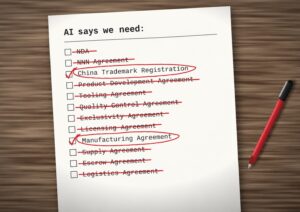
A company cannot eliminate every supplier dispute, but it can make a Sinosure claim far less likely and much easier to defend. Sinosure claims almost always grow out of factory problems, and good contracts prevent factory problems. We have drafted a great many manufacturing agreements with Chinese factories, and as far as we know, Sinosure has never pursued any company for which we drafted one.
Start with the factory. Verify its exact registered Chinese name, ownership, business scope, litigation history, financial indicators, government penalties, and authority to make the product. A polished website, an Alibaba page, and a friendly sales representative reveal very little about the company that will hold your money, tooling, and specifications. Whether the factory can make the product matters less than whether it will be stable enough to perform the contract next year.
Then use a manufacturing agreement written for China. It should name the Chinese counterparty by its exact legal name, be enforceable against that entity, and set objective specifications, inspection procedures, acceptance and rejection rights, delivery requirements, tooling ownership, intellectual-property protections, payment conditions, warranties, and remedies. The right governing law and forum depend on the transaction, the assets, and the enforcement strategy, though Chinese law and Chinese courts are frequently the right answer when performance and assets are in China. Without a China-centric agreement that clearly defines the quality you are buying and your remedies for nonconforming goods, proving and enforcing a quality claim in China becomes much harder, and Sinosure knows it.
Structure payments with the same care. Do not let a large unsecured payable build up with a manufacturer whose finances you cannot see. Tie payments to defined production milestones and passed inspections, and if a factory refuses every arrangement that protects you against defective or incomplete production, consider what that refusal tells you.
Then build the record you will need if something goes wrong. Inspect before shipment, and keep complete records of every quality, delivery, packaging, specification, quantity, inspection, and other performance problem. More important, always, always, always notify the factory as soon as you discover a problem. Do it in writing. Be specific. Describe exactly what is wrong, identify the affected products and shipments, attach photographs, videos, inspection reports, test results, and customer complaints, and state what you expect the factory to do. Give notice in the manner the contract and governing law require, and keep documenting until the problem is resolved. Do not tell the factory you will pay next week if you believe you have a right to reject the goods.
That record is the most persuasive evidence we ever have. One of the principal ways we keep Sinosure from suing our clients in the United States is by showing that litigation would waste its time and money, and nothing shows that better than emails and messages, written before Sinosure appeared, in which the buyer promptly identified the factory's defects, late deliveries, shortages, specification failures, broken promises, and resulting losses. That correspondence shows the debt was genuinely disputed before Sinosure appeared and can directly contradict what the factory later told its insurer. Evidence assembled after a demand can still help, but a quality complaint first documented after the collection letter can look like an excuse. One documented while the goods were still at the factory looks like evidence.
Protect the assets around the transaction. Register your trademarks in China before you disclose the brand or place substantial orders. Document ownership of molds and tooling. Decide which entity buys the goods, which owns the intellectual property, and which holds other valuable assets. Where separate entities have legitimate business purposes and their separateness is respected in practice, that structure can contain the damage from a dispute involving one purchasing company. All of this must happen before trouble begins, because moving assets after a claim arises invites fraudulent-transfer, successor-liability, veil-piercing, and affiliate-liability claims and leaves the company worse off.
For companies with meaningful China exposure, we also conduct Sinosure audits designed to identify these risks before a dispute begins. For a broader prevention framework, see Manufacturing in China: Minimizing Your Risks by Doing Things Right.
The bottom line
A Sinosure demand is not an ordinary collection letter. It can affect your China assets, supplier credit, financing, and people who travel there. Sinosure has also become more aggressive, which makes careless early moves more dangerous. None of that means the buyer must pay. Companies that handle these matters well preserve the evidence, stop uncontrolled communications, protect what is exposed, treat papers from a Chinese court or arbitration commission as urgent, and find out who actually owns the claim before paying anyone. The right strategy depends on the file, but one rule does not: understand the claim before you help the other side collect it.