How to Protect Your IP with International NNN Agreements
If you are a U.S. company doing business with a foreign company, you may need to share intellectual property or other valuable information with it. This might include trade secrets, designs, prototypes, formulas, specifications, customer information or other confidential material. Sharing that information creates risk. The foreign company may copy it, misuse it, disclose it to someone else, or use it to compete with you.
One way to address those risks is to require the foreign company to sign an international NNN Agreement before you disclose anything valuable. NNN stands for non-disclosure, non-use and non-circumvention. Non-disclosure restricts the other party from revealing your information. Non-use restricts it from using your information for its own purposes or to compete with you. Non-circumvention restricts it from using the customers, suppliers or other business relationships it learns through you to go around you. This is broader than the protection provided by many conventional NDAs, which focus primarily on disclosure.
Suppose, for example, that you have developed a new technology for making solar panels and are considering a manufacturer in Vietnam. You send the manufacturer your specifications and samples so it can evaluate the project. The manufacturer never publicly discloses your information, but it uses that information to make competing solar panels, sells them to your customers in the United States and Europe, and shares the technology with an affiliated company that does the same thing. The problem is not merely disclosure. It is unauthorized use and circumvention.
A properly drafted NNN Agreement can restrict those activities by defining what the foreign company may do with your information and what it may not do. But an international NNN Agreement must be drafted for the country, the counterparty and the transaction. The law, available remedies, language, forum and enforcement strategy that make sense in one country may make little sense in another. An agreement designed for China should not simply be recycled for Vietnam, Mexico, Thailand or some other country.
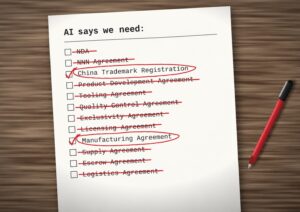
An NNN Agreement is also not always necessary, and it is not a substitute for other forms of protection. Depending on the deal, you may be better protected by registering trademarks, patents or copyrights, structuring your supply chain differently, or using a country-specific Product Development Agreement or Manufacturing Agreement. And an NNN Agreement is often only the first contract in the relationship. Once you select a manufacturer, begin product development or move into production, you may need a more comprehensive agreement. See International Manufacturing Contracts: The Basics.
I emphasize this because we regularly hear from companies that paid for an NNN Agreement when they did not need one, or when a different legal tool would have given them considerably more protection. In those situations, the agreement may be irrelevant to the company's actual risk.
NNN Agreements are often useful and important, but they are not a panacea. The question should never be simply, “Do we need an NNN?” It should be, “What are we trying to prevent, and what legal tool best addresses that risk in this country and this transaction?” Unfortunately, there are plenty of online providers willing to sell companies an NNN Agreement whether they need one or not. For more on that problem, see China Lawyer Scams and Bad China Contracts: How Foreign Companies Get Burned.
What to Do AFTER Your International NNN Agreement Is Signed
We regularly hear from companies that signed an NDA or NNN Agreement and then failed to follow the confidentiality procedures their own agreement required. Sometimes nobody ever explained those requirements to them. When our international lawyers prepare an international NNN Agreement, we typically also send the client an Acknowledgment of Receipt or another mechanism for tracking the confidential information it provides. We remind the client that the agreement works best when its own conduct is consistent with the protections it expects to enforce.
That usually means being clear about what information is confidential, keeping records of what was provided and when, and taking reasonable steps to prevent that information from being disclosed to people or companies that are not authorized to receive it. A fairly typical client email looks like this:
For your review, attached please find the international NNN Agreement you requested, along with a separate Acknowledgment of Receipt to track the confidential information you send. Both documents are fully translated into the language of the other party.
Executing this agreement is only the first step in protecting your IP. Everyone on your team should act consistently with the agreement. If you share confidential information with your counterparty, identify that information as confidential when appropriate, keep track of what you provide, and take reasonable measures to ensure it remains confidential.
The specific instructions vary with the client, the information and the country, but the basic point does not.
If your agreement requires you to identify confidential information, do it. If it requires you to maintain records of disclosures, maintain them. If you claim information is confidential, treat it as confidential yourself. Do not distribute sensitive material freely within your company or to third parties and then expect a court or arbitral tribunal to treat that same material as a closely guarded secret.
You should also keep a clear record of what you send to your foreign counterparty. Depending on the transaction, that may mean maintaining a dated list of drawings, files, specifications, prototypes and other materials; preserving relevant emails and messages; and recording who received what. An NNN Agreement gives you contractual rights. Your conduct and your records can determine how useful those rights are when you need to enforce them.
The agreement matters, but what you do after signing it matters too.