






How Companies Give Away Their IP to Chinese Manufacturers Without Realizing It
When we draft China manufacturing agreements for companies developing new products, most of our clients tell us their main concern is protecting their intellectual property. We frequently discover that these companies have already provided their Chinese manufacturers with valuable designs and technical information and have allowed their manufacturers to develop molds and prototypes without establishing who owns them. By the time they come to us to protect their IP, some of these companies have already given scritical IP away. No foreign product designer intends to make a gift to a Chinese factory owner, but that is exactly what many of them end up doing.
How Companies Unintentionally Give Away Their IP
Here is what usually happens. We begin drafting the contract manufacturing agreement. In our standard set of questions, we ask about the status of molds. The client then reports something like the following: "We have already provided the designs for our molds to our Chinese manufacturer, and the manufacturer has already fabricated the molds. The current issue is how to pay for them."
We then ask about the client's plans for commercializing the product and fabricating production prototypes. The client reports: "We have been working with the manufacturer for months to fabricate a production prototype. The manufacturer agreed to engage its own engineers and designers for this process. We now have two prototypes and are ready to begin production. The only issue now is how to pay for the work on the prototypes."
In both cases, we ask the following sorts of questions:
- What documentation did you use when providing your confidential design information to the manufacturer?
- What did you do to formally protect your IP?
- What did you do to establish ownership of the molds and their designs?
- What did you do to make sure you own the design work that went into developing and manufacturing the prototype?
Far too often, our client answers with something like this: "The only documentation we have is a simple purchase order for the molds. There is no documentation at all relating to the prototype. We were told that using purchase orders at this stage is standard, so we did not think about it." Even a legally binding purchase order is unlikely to help establish ownership of the intellectual property if it says nothing about IP.
Our China lawyers see this scenario, with slight variations, regularly with start-up companies entering China's manufacturing market. We then have to tell our client something like the following: "You indicated that your primary goal is to protect your intellectual property. But you provided your design data to your Chinese manufacturer without an agreement governing its use or ownership. You then allowed the manufacturer to design and fabricate molds and prototypes without establishing who would own the resulting work. Our task now is to determine exactly what you own, what the manufacturer owns, and whether the manufacturer will agree to give you the rights and materials you need. Sometimes it will. Usually it will not."
How Technology Companies Sign Away Their IP
Years ago, I spoke at a major technology event about how to protect IP in China. I rarely use notes when I give a speech, and at some point during that speech (without thinking it through), I mentioned how technology companies tended to get into trouble in China more often than our clients in other industries. I talked about how technology companies focus on building things as quickly as possible and how they tend to put their money into the core of their business -- their technology people -- often at the expense of management and legal work. This way of operating can make sense domestically, but it can be a disaster in China, where it is often impossible to put the necessary legal protections in place later.
The following example is drawn from conversations our China lawyers have had with technology companies over the years. A company contacts us after completing its Kickstarter campaign and tells us it is now ready to get serious about protecting its IP in China. It has been working with a "great" company in Shenzhen and is nearly ready to begin production. The two companies signed a one-page memorandum of understanding (MOU) that talks about how they will cooperate, and the Chinese company has assured our client it will enter into a more comprehensive contract whenever our client is ready.
We review the MOU and tell our client there is a good chance a Chinese court would view it as a binding contract. Worse yet, the Chinese-language portion of the MOU differs from the English-language portion and states that any intellectual property the two companies develop together belongs to the Chinese company. For more on the dangers of signing these preliminary agreements, see China LOI and MOU. Our client's response is usually something like this: "I'm not worried. I'm sure they will sign an agreement giving us the IP because we orally agreed on this before we started the project." We then suggest that our client first confirm its Chinese manufacturer's willingness to sign a new agreement making clear that our client will own the IP associated with its product. If the manufacturer is unwilling to do this, there is little point in our client paying our China lawyers to draft a Product Development Agreement. Very few of these companies have come back to us with a manufacturer willing to sign such an agreement.
There is often another problem with waiting until after a Kickstarter campaign to address IP protection. Publicly disclosing a new product before filing for patent protection can destroy its eligibility for a Chinese patent, subject to limited exceptions. See How to Protect Your Intellectual Property in China for more on why you should address patent protection before publicly revealing your product.
Why Free Product Development Can Cost You Your Product
Our international manufacturing lawyers represent companies that do OEM manufacturing around the world, mostly in China, but also in India, Mexico, Brazil, Colombia, Peru, Vietnam, Thailand, Taiwan, Korea, Malaysia, Indonesia, Bangladesh, and Cambodia. When the product is an existing product, our clients generally understand the basic IP protections we recommend. When the product is new and requires development work, we have had greater difficulty. Our clients too often fail to understand how easy it can be to "gift" their intellectual property to their foreign manufacturer.
Many manufacturers have developed a fairly standardized system for accepting the gift. The foreign company goes to the manufacturer with the basic idea for a new product but has done none of the engineering and related work required to take the design to the point where it can be manufactured in commercial quantities. In some cases, the design has not even been prototyped to determine whether it is practical. The foreign company asks the manufacturer to do all the engineering and prototype work required to commercialize the product design. The manufacturer offers to do this work free of charge in exchange for a commitment from the foreign company to purchase the product from it. The foreign company is excited about obtaining high-level engineering and prototyping work at no charge. The manufacturer is happy because it has just captured a new client for a new product. The design work is not documented by a written agreement. The usual attitude is that if the product is developed in a way acceptable to the foreign company, a formal manufacturing agreement will then be drafted and executed. If there is no success, the foreign company will try elsewhere.
This casual approach is often a failure from a practical standpoint. The manufacturer is not being paid, so the design project is often placed on the back burner, and the manufacturer gives attention to it only when it has spare time. If the manufacturer is a successful company, this spare time may be hard to find. Extensive delays are common. Moreover, what exactly the manufacturer is being tasked with designing and to what standard is usually not specified. So even if the manufacturer finishes the project in a reasonable time, it is often not clear whether the final design meets the needs of the foreign company. For this reason, for any but the simplest of products, it is important to enter into a Product Development Agreement that sets out clear standards of performance and specific milestones for completing the work.
Assume the manufacturer does manage to design and commercialize a final product. Who owns the intellectual property in that product? The manufacturer did much or all of the development work at its own cost, with no specific design agreement with the foreign company. Even if an NNN (non-disclosure, non-use, and non-circumvention) Agreement is in place, ownership of the newly developed IP may be unclear.
Who Actually Owns the Product, Its Designs, and Its Molds?
A Chinese manufacturer does not automatically acquire ownership of a foreign company's existing intellectual property simply because it helps develop the product. But Chinese law also does not automatically give the foreign buyer ownership of everything the manufacturer creates. Under Article 8 of China's Patent Law, unless the parties agree otherwise, the right to apply for a patent on commissioned development work generally belongs to the party that actually created the patentable work. Where the parties jointly create the patentable work, that right generally belongs to them jointly. These rules apply to inventions, utility models, and designs. Similarly, Article 19 of China's Copyright Law generally gives ownership of copyright in commissioned work to the commissioned party when the contract does not provide otherwise. These rules do not give the manufacturer ownership of the buyer's preexisting technology, but they can give the manufacturer valuable rights in the work it creates.
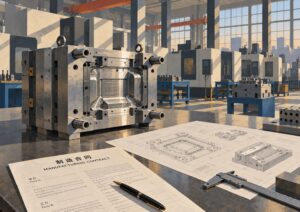
Owning the physical molds is another issue. So is owning the drawings, CAD files, technical specifications, and other materials needed to manufacture the product. Paying the factory for development or tooling does not necessarily establish ownership of any of these things or give the buyer the right to take them to another manufacturer. We explain how this plays out, including a case in which we recovered a client's molds through Chinese court proceedings, in Who Owns Your Molds?
The situation becomes especially dangerous when the factory develops the product around technology, designs, or know-how supplied by its customer. The customer may own some of the intellectual property, while the manufacturer owns or claims rights to other parts. Without clear agreements, neither side may have an undisputed right to use everything needed to manufacture the finished product. The manufacturer may begin producing the product in its own name. When the foreign designer protests, the manufacturer points out that it performed the design and fabrication work for the molds and prototypes and claims it owns the resulting designs and has the right to manufacture the product. That claim is not necessarily correct. Its validity depends on what each party contributed, what was created during development, and which rights are protected by law or contract. A manufacturer can infringe patents, copyrights, or trade-secret rights even if it does not use the foreign company's trademark. Conversely, a U.S. or European patent generally does not prevent manufacturing or sales solely in China merely because those activities would infringe the patent if conducted in a country where it is in force. Patent protection is territorial.
Trade secrets also receive protection under Chinese law, even without a separate NNN Agreement, provided the information qualifies for protection and the circumstances establish unlawful acquisition, disclosure, or use. China's trade-secret protection rules recognize that confidentiality obligations can arise from circumstances beyond a standalone confidentiality contract. Proving those obligations and enforcing them, however, becomes considerably harder when the parties never documented what information was confidential or how the manufacturer could use it.
Without clear written agreements, litigation over ownership of the product, its designs, and its tooling can become expensive, with an uncertain outcome. For a start-up, the cost and delay can kill its chances of bringing the product to market. The company may have invested most of its available capital in development, leaving little money for litigation or starting over with another factory.
How Your Chinese Manufacturer Gains Control Over Your Product
In most cases, however, the Chinese manufacturer is not interested in selling the product under its own name. What it wants is to make sure its customer cannot manufacture the product anywhere else. The manufacturer wants to be the sole factory capable of producing the product, preferably with the legal rights to prevent anyone else from doing so. That gives it something close to monopoly pricing power. This problem can arise even before the first production order. If the parties have been working together to develop a product without a manufacturing agreement or an agreed production price, all the manufacturer need do is quote an outrageously high manufacturing price. If that price is accepted, the manufacturer makes a windfall profit. If the foreign company rejects the price, it may discover that it has no practical way to manufacture the product elsewhere. And if the manufacturer believes it can sell the product itself, it may have just acquired a new product for its own sales line.
Here is how the problem works after production has begun. At some point, the foreign buyer decides it wants to change manufacturers because the existing factory substantially raises its prices, consistently produces defective products, or cannot keep up with the required production volume. The buyer asks that its manufacturer transfer the molds, drawings, and product prototypes to a new factory. The manufacturer refuses. It says: "We own the designs for the molds and the product prototype. We agree not to manufacture the product for ourselves or for any third party, but you cannot take the molds and prototypes to another factory. You can manufacture the product only through us."
Whether the manufacturer actually owns the rights it claims is a separate question. Its possession of the molds, development files, and prototypes gives it enormous leverage regardless. If the buyer insists on moving production, some manufacturers say the buyer is free to start from scratch with a new factory. Others take a harder line, claiming that manufacturing the product elsewhere would infringe their intellectual property. They threaten cease-and-desist letters or litigation to prevent the move. Some of these infringement claims have a legitimate legal basis. Others are attempts to exploit the uncertainty created by poorly documented development work. But even a weak claim can be expensive to resolve. We describe a similar dispute involving a 34 percent price increase and a factory holding its customer's molds in China Manufacturing Contracts: One Agreement Is Not Enough.
Either way, if the product is sufficiently complex, the buyer may find itself practically unable to switch manufacturers. Starting over can require months of engineering work, new molds, new prototypes, and additional testing. A lawsuit may take even longer. In particular, the buyer may be helpless against a substantial price increase. This is why we recommend agreeing on production pricing or a mechanism for determining that pricing before becoming dependent on a manufacturer. See How to Negotiate Lower China Manufacturing Prices. These problems can become even more serious when you try to move your manufacturing out of China altogether. See Your China Exit Strategy Is Also Your IP Strategy.
How Chinese Manufacturers Can Use IP Registrations Against Their Customers
Some manufacturers take the additional step of securing intellectual property registrations relating to the product in their own names. They may register a trademark, register a copyright, or obtain a design patent. They may also record eligible IP rights with China Customs. Depending on the validity and scope of these rights, the manufacturer may be able to interfere with its customer's efforts to have the product manufactured at another factory or exported from China.
The following is drawn from emails our China lawyers have received from companies facing this problem. A foreign company tells us it began working with its Chinese manufacturer about a year ago. It sent its product designs to the manufacturer, paid for the molds, and began receiving finished products. It recently learned that its manufacturer has been using photographs of its product as marketing material on Alibaba and selling its product all over the world. Worse yet, the manufacturer has applied for a Chinese design patent covering the product.
Our client has just begun working with a major online retailer, something it has not yet disclosed to its manufacturer. It has told the manufacturer that unless it signs an agreement protecting our client's IP, our client will stop placing new orders. The manufacturer responds by offering to sign a nondisclosure agreement. Our client asks whether it should continue working with this manufacturer while it files for design patents in the United States and whether its manufacturer's patent claims will prevent it from moving to another Chinese factory. Our biggest concern in these situations is often the Chinese design patent. If the manufacturer obtains a valid Chinese design patent covering the product, it may be able to sue our client and its new Chinese manufacturer for patent infringement, stop production in China, and interfere with exports. Our client's U.S. patent applications will not resolve this problem, and a nondisclosure agreement signed at this stage is unlikely to accomplish much on its own. Our client needs to establish its IP ownership and its right to have its product manufactured elsewhere.
When the foreign company threatens to sue, the manufacturer often points out what it considers obvious. The foreign company has no registered IP in the product in China. There was no written contract relating to developing the product. The manufacturer claims it developed the product at its own cost, and the IP registrations were all done by the manufacturer in its own name and at its own cost. The manufacturer then says, "Go ahead and sue us, in a court in our hometown." The foreign company may have grounds for challenging those registrations or the manufacturer's claimed ownership of the IP. But it would have been considerably less expensive to establish ownership of the IP by contract and secure appropriate registrations before the dispute arose.
What to Do If Your Chinese Manufacturer Claims to Own Your Product
Many clients are skeptical when we explain this situation. They simply cannot believe they have handed so much control over their most valuable asset to another company. Some tell us their Chinese manufacturer is an honest and upright company that would never act in the ways described above. Others say that because they paid for the development work, the factory must recognize that they own the designs and are free to take the molds and prototypes elsewhere.
In the cases our China lawyers have handled involving these disputes, Chinese manufacturers have rarely surrendered their claimed rights simply because their customer paid for the work. The more commercially successful the product becomes, the less incentive the manufacturer has to give its customer the ability to manufacture it elsewhere.
When a company comes to us with this sort of problem, we first try to determine what intellectual property each party actually owns, what agreements exist between the parties, what IP registrations or applications the manufacturer has filed, and whether the product can be manufactured elsewhere without infringing the manufacturer's rights. Before escalating the dispute, we recommend preserving all development records, including dated drawings, design files, emails and other communications with the manufacturer, and evidence of any unauthorized sales or advertising of the product. We also look closely at the economics of the situation. These companies usually have four options, none of them particularly good:
1. Leave China altogether. Depending on the product and the manufacturer's IP rights, moving production to another country may be the best option. But you must still determine whether you have the legal right and the technical information necessary to manufacture the product elsewhere. Leaving China does not necessarily solve contractual or IP ownership problems.
2. Challenge your Chinese manufacturer's IP rights. If your manufacturer has applied for or obtained a Chinese design patent on a product you developed, there may be grounds for challenging that application or invalidating the patent. Much will depend on the development history, the available evidence, and the status of the patent. Even a successful challenge may take considerable time and money, and it will not necessarily get you your molds back.
3. Strike a deal with your Chinese manufacturer. You may be able to persuade your manufacturer to assign its IP rights to you and give you ownership and control of the molds, drawings, and development files in return for your agreeing to continue using that manufacturer for a specified number of years. The manufacturer may agree to this if it believes it can make more money selling the product to you than by selling the product on its own. You may need to commit to purchasing a certain quantity of product each year or paying more for the product than you otherwise would. This is often an unpleasant business decision, but it can be considerably less expensive than litigation or starting over.
4. Move to another Chinese manufacturer. Depending on your existing manufacturer's legal rights, this may be a viable option. But do not assume your existing manufacturer will return the molds you paid for or that your new manufacturer will be willing to continue making your product after receiving a patent infringement threat. Before moving production, determine what rights your existing manufacturer actually has and what it can do to interfere with the move. Otherwise, you risk turning a dispute with one Chinese manufacturer into a dispute involving two manufacturers and an interruption in your production.
If litigation is among the options you are considering, see How to Sue a Chinese Company, which discusses the economics of litigating against Chinese companies, recovering tooling, preserving assets, and enforcing judgments.
How to Protect Your IP Before Developing a Product in China
If you are going to provide valuable confidential product information to prospective Chinese manufacturers, you should ordinarily protect that information with a properly drafted China NNN Agreement before you provide it. If your manufacturer will be doing substantial development work on your product, you should have a Product Development Agreement that establishes who owns the intellectual property created during development, who owns the molds and technical materials, and what rights you will have to use those materials with another manufacturer. Your agreement should prohibit the manufacturer from applying for or registering your intellectual property in its own name and require it to provide you with complete, usable engineering and design files. Owning the CAD files for your product is of considerably less value if you cannot get them.
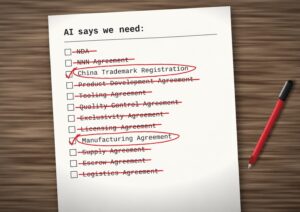
You should also consider what IP registrations you need in China and elsewhere, including China trademark registrations and appropriate patent and copyright protection. Before committing to commercial production, you should have a China Manufacturing Agreement that addresses pricing, quality, IP protection, tooling ownership, and your ability to move production elsewhere. Depending on the circumstances, some of these protections can be combined in a single agreement. See Do I Need a China NNN Agreement or a China Manufacturing Agreement? Usually Both.
The time to negotiate ownership of your product is before your Chinese manufacturer develops it. At that point, the manufacturer wants your business, and if it will not agree to give you the rights you need, you can go to another manufacturer. Once your product has been developed and your manufacturer controls the designs and the tooling needed to make it, you may no longer have that option.