China Trademark Registration: The Complete Guide for Foreign Companies
A Canadian coat manufacturer called us after China Customs detained a major shipment. The company had sold coats under its brand for years, but another company owned the Chinese trademark registration and was using it to keep the coats from leaving China. Our client wanted to sue. We examined its legal arguments, but its immediate problem was getting the shipment released, and we negotiated a purchase of the Chinese trademark for six figures. Filing for that trademark at the outset would have cost a fraction of that amount. Once the coats were detained, our client was weighing the purchase price against the mounting cost of every week of delay.
China trademark registration is usually manageable when a company deals with it early. Trouble starts when a business assumes its home-country registration is enough, leaves registration to its factory, or obtains a Chinese certificate without checking what it covers. We see all three mistakes constantly, and each costs far less to prevent than to fix. China generally gives priority to the first applicant, and a registration in another country does not carry over, so file before your brand reaches Chinese manufacturers or partners, file for the goods you actually make, and make sure the right entity in your corporate group, not your factory or distributor, owns what you file.
What Does a China Trademark Registration Protect?
Trademark rights are territorial. A U.S., Canadian, British, EU, or Australian registration does not give you trademark rights in mainland China. China generally gives priority to the earlier applicant for identical or similar marks on identical or similar goods, which is what lawyers mean when they call China a first-to-file country.
There are exceptions. Prior rights, certain earlier use, and bad faith can all support a challenge to someone else's application, as can a relationship between the applicant and the brand owner. But using your brand first in another country does not on its own give you a superior Chinese right. Nor does being well known at home automatically establish the reputation China requires for well-known trademark protection. These distinctions run through China's Trademark Law.
A registration also has limits. It protects your mark for the goods and services it covers, plus certain confusingly similar uses, but it does not give you a word for every line of business. For a company selling in China, the registration is the foundation for Customs protection and administrative enforcement. It also strengthens your position on Chinese e-commerce platforms, from opening an official brand store to getting copycat listings removed. A company with several product lines should be asking whether its registrations cover the brands and goods its China operations depend on, and plenty of companies that "have a China trademark" cannot answer that question.
What about Hong Kong, Macao, and Taiwan?
Hong Kong, Macao, and Taiwan each run their own trademark systems, and a mainland registration has no effect in any of them. Companies that sell branded goods in Hong Kong or otherwise have meaningful trademark exposure there should consider a separate Hong Kong registration. Taiwan matters for companies that manufacture or sell there. Macao generally becomes relevant only when the company has actual or planned commercial activity there.
Eight Business Reasons to Register a Trademark in China
1. Because you manufacture branded goods in China and do not want your own products stopped at the border. China generally gives priority to the earlier trademark applicant. If someone else registers your brand for the goods you manufacture, that registration can interfere with production and exports even when none of your products are sold in China. The applicant might be a professional trademark squatter, a competitor, a former distributor, or someone connected to your factory. For companies that manufacture in China solely for export, trademark registration is often defensive: the goal is to make sure someone else's Chinese registration cannot be used against your supply chain. We discuss that strategy in Manufacturing in China but Not Selling There? Your China Trademark Strategy Should Be Defensive, Focused, and Fast.
2. Because you want Chinese e-commerce platforms to take counterfeit and unauthorized listings seriously. A foreign trademark registration can help with some international-facing platforms, but domestic Chinese platforms and social-commerce sites are much easier to deal with when you can show a Chinese trademark registration covering the relevant goods. The registration gives the platform a clear Chinese right to act on rather than forcing you to prove ownership through foreign documents and arguments about reputation. If online counterfeiting is a significant problem for your business, Chinese trademark registration should usually be part of the enforcement plan.
3. Because you want to license your brand to a Chinese distributor or other Chinese business partner. A licensing agreement is only as useful as the rights being licensed. If a distributor will sell your products in China under your brand, you should own that brand in China before granting the distributor rights to use it. A competent distributor will usually understand this. A less reliable one may offer to register the mark for you and put the application in its own name. Do not allow your distributor, factory, sourcing agent, or other commercial partner to own a trademark your business depends on. Our article on China Trademarks and Your Chinese Distributor explains why.
4. Because you sell, or plan to sell, branded goods or services in China. A registration in the United States, European Union, United Kingdom, Canada, Australia, or another country does not give you trademark rights in mainland China. Waiting until Chinese sales become substantial can leave you negotiating with an earlier applicant over a brand you already use everywhere else. Companies selling to Chinese consumers should also decide what Chinese-language name they want the market to use and consider registering that name before a distributor, customer, or third party chooses one for them. See Don’t Be Like Mike: Register Trademarks in Chinese.
5. Because you want China Customs to help stop counterfeit exports. A Chinese trademark registration gives you a Chinese right that can be recorded with the General Administration of Customs. Recordation makes it easier for Customs officers to identify suspected counterfeit shipments and notify you so you can act. It is not a guarantee that Customs will catch every infringing shipment, and recordation is not the only way to seek detention of particular goods, but it is one of the most useful tools available to brands facing counterfeit exports from China. Our guide to China Customs IP recordation explains the process.
6. Because you want a practical enforcement right against counterfeiters and other infringers in China. A Chinese trademark registration gives you a much stronger basis for platform complaints, administrative enforcement, Customs action, and civil litigation. Without the relevant Chinese right, you may be left trying to prove prior rights, bad faith, copyright ownership, or some other basis for relief when a straightforward trademark claim would have been faster and cheaper. Registration does not solve every enforcement problem, but it gives you the basic right most trademark enforcement strategies depend on.
7. Because you might want to enter the Chinese market later. You do not need to be selling in China today for a Chinese trademark registration to have value. Product plans change, distributors appear, acquisitions happen, and companies that manufacture in China sometimes decide years later to sell there as well. By then an earlier applicant may already own the mark you wanted to use. A straightforward Chinese application currently takes months to reach registration, so the filing decision should come before the planned Chinese launch, not after it. The right time to file is when losing control of the brand would matter and there is a realistic China connection, not when the opportunity is already at the door.
8. Because clean trademark ownership makes your company easier to finance, invest in, or sell. Buyers and investors look for gaps in intellectual property ownership, especially when a company depends on Chinese manufacturing, has Chinese distributors, or expects future Chinese sales. Discovering during due diligence that a third party owns a key brand in China can delay a transaction, reduce leverage, or force an expensive cleanup under deadline pressure. A company that owns the marks its business actually depends on is simply a cleaner asset. We have seen companies register Chinese trademarks well before any Chinese sales because they understood that preventing a future ownership problem was part of protecting the value of the business.
Do I Need a China Trademark If I Only Manufacture There?
Companies that manufacture in China solely for export often tell us they need no Chinese trademark because they have no Chinese customers. Their exposure comes from production and shipping, not retail. When your factory packs your products into your branded boxes and exports them, your brand is in China the entire time. Someone else's Chinese registration can stop those goods before they ever reach a customer abroad.
That someone is not always a professional squatter. It can be a competitor, a former distributor, or someone connected to your factory. A trademark claim also gives a disgruntled commercial partner one more way to apply pressure during a fight over payment or quality, or after you move production elsewhere.
Do not rely on a factory's assurance that export-only manufacturing is exempt from Chinese trademark law. In its HONDAKIT decision, China's Supreme People's Court held that a Chinese company producing motorcycle kits for a buyer in Myanmar infringed Honda's Chinese registrations. Every unit was bound for export, and the Myanmar buyer had authorized the branding. The Court later listed the case among the most important Chinese IP cases of 2019. Outcomes still turn on the facts, but authorization from whoever owns the mark in the destination country is not a defense you can count on.
For an export-only business, we usually start with the principal brand on the products and packaging. We then identify the goods for which an adverse registration would interrupt production or exports. This focused approach to export-only manufacturing costs far less than building a portfolio for a business selling multiple product lines throughout China.
Companies with neither Chinese sales nor Chinese production should assess their exposure before assuming they need to file. Counterfeiting that originates in China can justify a filing. So can a planned manufacturing move or a credible China expansion. A purely theoretical connection justifies a much smaller budget, and often none.
When Should I File My China Trademark?
File once you are committed enough to the brand that losing control of it would matter, and before you show it to prospective Chinese manufacturers or business partners. Exposure starts earlier than most companies realize. A supplier sees the brand in an email address. A sourcing agent receives a packaging mockup, or a distributor gets a presentation bearing the Chinese name your marketing team just chose. Even an overseas crowdfunding launch is visible in China.
You do not need a signed purchase order or a Chinese distributor before applying. Waiting until the relationship is finalized only gives everyone involved time to file first, so coordinate the search and filing with your planned disclosures. There is a sensible limit. Registering tentative names for products with no development schedule usually wastes money, and long delays before genuine use invite non-use cancellation. We discuss this balance in When to Register Your China Trademark: The Goldilocks Principle.
Can I claim priority from a foreign filing?
Yes, in many cases. If your first application for a mark was filed outside China within the past six months, your Chinese application for the same mark and goods can claim that earlier filing date. The claim is not automatic. For a direct Chinese application, you must claim priority when you file and submit a copy of the first application within three months. The six months run from that first application, not from any eventual foreign registration, as the Trademark Law provides. Tell your China trademark counsel about recent foreign filings right away so a sensible filing schedule never costs you an available priority date.
Which Names and Logos Should I Register?
Start with the marks customers recognize and the marks that appear in your Chinese supply chain. These are often not your company's legal name. Many companies trade under one corporate name and sell under another, with separate brands for their best product lines. Registering only the corporate name leaves the commercially important names unprotected.
For most companies, the principal word mark comes first. Protecting the wording on its own frees you from dependence on any particular design, and marketing teams redesign logos far more often than companies rename brands. Product names merit protection when they function as brands. Model numbers, generic descriptions, and passing slogans do not. Before deciding what to file, ask what losing each identifier would cost the business.
Should I protect my logo with a trademark, a copyright, or both?
A logo trademark and a logo copyright protect different things. A trademark registration protects the logo as a sign of where your goods come from, but only for the goods and services it covers. It is the standard tool against counterfeit goods. A combined registration of name and design does not give you the same flexibility as separate registrations, and a word registration does not protect the artwork around the name.
A copyright protects the artwork itself against copying, in any product category and in any context, including someone else's trademark application. Qualifying foreign artwork can receive copyright protection in China without registration. A Chinese copyright registration certificate is still worth having: it is preliminary evidence of the ownership and creation information it records, which can materially strengthen an opposition or infringement claim. Unlike a trademark registration, it covers no classes and cannot be cancelled for non-use.
Copyright has limits too. It protects original artwork, not a brand name, and a logo that is just the name in an ordinary typeface will not qualify. It also will not stop someone who independently creates a similar design.
Register the logo as a trademark when it appears on your products or packaging, when customers recognize it apart from the name, or when it is what counterfeiters copy. File in the classes covering the goods you actually make and sell. Register a copyright alone when the logo is original artwork but plays a secondary role on your products, or when the budget will not stretch to logo trademarks in every relevant class. A copyright registration gives you dated evidence of ownership and a basis for challenging a squatter, for far less than trademark filings in several classes.
Get both for an important logo that is original artwork and appears on goods made or sold in China. The trademark gives you enforcement for your own products. Copyright can provide a separate basis for acting against copies of the artwork, including while a trademark application is pending and in circumstances that fall outside the trademark's registered classes. A prior copyright is also a recognized basis for opposing or invalidating a squatter's trademark registration, though an invalidation on that ground generally must be brought within five years of the other party's registration. Register the copyright before you send the artwork to Chinese factories. If a freelance designer created the logo, get a written assignment first, because the registration and every later dispute turn on your chain of title.
Do I need a Chinese-language trademark?
It matters most when you sell in China or when a Chinese name is already being used in connection with your business. A company selling to Chinese consumers has to decide what those consumers will call it, because otherwise its distributor or the market will decide for it. Leaving the choice to a distributor is especially risky when the same distributor is handling registration. The Chinese name can translate the original meaning, approximate its sound, or be developed independently, and the best commercial choice often blends these approaches. Clear the name legally while you are choosing it, before anyone prints packaging or announces a launch.
An English-language registration does not secure your Chinese translations or transliterations. Phonetic equivalents, established nicknames, and likely Chinese-language copycats all need attention. Your filing plan should follow how the brand is actually presented and recognized in the market, not every variation someone can imagine. For a company manufacturing in China solely for export, a Chinese-character filing is usually money it does not need to spend.
Which Classes and Subclasses Do I Need?
A protective-glove company came to us after China Customs stopped its shipment. It had registered its trademark in China through a Chinese trademark lawyer, but the registration covered gloves in Class 25, the clothing class. Its protective work gloves belonged in Class 9. A competitor had registered the mark for the right goods and used that registration against the shipment. The original filing succeeded but missed the products the company needed to protect, as we discuss in China Trademark Registration: Why U.S. Companies Need More Than a Filing Agent.
That was a wrong-class problem. China's subclass system creates a second set of problems even after you pick the right class. China uses the international Nice Classification, which sorts goods and services into 45 classes, and then divides each class into more detailed groups called subclasses or similarity groups. Filing in Class 9 does not reserve your mark for everything in Class 9. The application must name the right goods, and coverage in one subclass generally does not reach the others.
The tables are not absolute legal boundaries either. Goods in different subclasses, and sometimes different classes, can still be found similar, because Chinese courts look at commercial characteristics and consumer perception rather than treating the tables as conclusive. Our explanation of China trademark subclasses and basic numbers shows how this works in practice.
This is why we want to see what a company actually makes. Product photographs, technical descriptions, and realistic expansion plans tell us far more than an instruction to copy the class numbers from a U.S. registration. Connected devices show why. If the same mark is used for the equipment, downloadable software, and a paid online service, protecting only the equipment can leave meaningful gaps. The filing plan should address those gaps without paying up front for every remote possibility.
How much additional coverage is justified?
Closely related products and credible near-term expansion often justify broader filings. Under CNIPA's current fee schedule, the base application fee covers up to ten goods or services in a class, with an additional fee for each item beyond ten. Filing in unrelated classes simply because they exist is much harder to justify. One client came to us after buying 11 China trademark applications from an online service when one would have covered its real exposure.
Some brands need broad defensive portfolios, but most smaller companies need to prioritize, and every additional filing should address a real commercial risk or support a realistic business plan. After three years, unused registrations become vulnerable to non-use cancellation. Ask your lawyer to explain in plain English what each proposed application covers and what it leaves out.
Is My Mark Available and Registrable?
A useful China trademark search goes well beyond an exact match for the English name. Depending on the mark, it should consider similar wording, pronunciation, Chinese equivalents, and graphic elements across the relevant goods and services. The status of each result matters too. A pending application presents a different problem from an expired registration or one undergoing cancellation, and an identical name registered for genuinely unrelated goods often presents none.
The search also has to address whether the mark can be registered at all. Generic, purely descriptive, and misleading terms run into trouble even when nothing conflicting turns up. A foreign trademark office's approval settles nothing in China.
No search guarantees registration. Recent applications are not always visible right away, and experienced lawyers can disagree about similarity and distinctiveness. Ask your lawyer to explain the significant results and the uncertainty that remains before you authorize the filing, and make that decision while alternatives are still practical. Changing a tentative product name costs little compared with replacing a brand already printed on finished inventory. Keep your main sales markets in view as well, because a name that is available in China does an export business little good if it infringes someone else's rights where the products will be sold.
Who Should Own the China Trademark?
The trademark should be owned by your company or another entity in your corporate group, not by your factory, sourcing agent, or distributor, even if one of them offers to handle the filing. A promise to transfer the mark later leaves you dependent on that party's cooperation, usually at the worst possible time. A foreign company also does not need a Chinese subsidiary to own a Chinese trademark. Foreign companies without a business establishment in China must file national applications through a lawfully established trademark agency, as the China National Intellectual Property Administration (CNIPA) explains in its guidance for foreign applicants. The agency files on the owner's behalf and owns nothing.
Within your corporate group, decide which entity should hold the right before the paperwork starts. The operating company, the parent, and an IP holding company carry different commercial, tax, licensing, and creditor implications, and there is no universally correct owner. We have seen a client's Chinese trademark end up in its Chinese subsidiary's name because an employee used that entity's details on the application. Nobody noticed until an acquisition, when the buyer found an important trademark in the wrong entity and the closing slipped while the assignment was recorded.
Companies regularly tell us they have no assets in China. A Chinese trademark is one, and it is publicly recorded. We have seen a factory obtain a Chinese judgment against a foreign brand and seize its properly registered trademarks to satisfy it. If creditor exposure or a China exit is a concern, review ownership before a dispute arises. Moving a trademark after claims or creditor problems have emerged can create separate legal issues, and a company planning an orderly China exit should address trademark ownership well before it announces or implements that exit.
Check the applicant's exact legal name, registration documents, and address. Use one consistent Chinese rendering of the company's name across the portfolio. That registry translation is not the same thing as a Chinese brand meant for customers, as we explain in China Trademark Company Names: What You Must Know Before Filing.
Should I File Directly in China or Through the Madrid System?
Foreign companies can get Chinese protection through a national application filed directly in China or through an international registration under the Madrid System that designates China. Madrid offers centralized filing and administration and can make sense for a company already filing in many countries with a precise, limited list of goods. It does not create a worldwide trademark. China still examines the designation under Chinese law, and once protected, a Madrid designation is a full Chinese right, not an inferior one. We still usually file directly in China. For a broader discussion of when Madrid works well and when national or regional filings make more sense, see our guide to international trademark registration.
The goods-and-services wording is where Madrid filings most often run into trouble in China. An international application's specification is tied to the underlying home-country filing, and CNIPA must then fit that wording into China's own classification practice. Careful drafting solves many of these problems. Companies that simply check the China box without reviewing how the specification will read in China are the ones that end up calling us.
For its first five years, an international registration also depends on the underlying application or registration at home. If that basic mark is cancelled or narrowed, the international registration, including its China coverage, is cancelled or narrowed to match. Proceedings begun during those five years can have that effect even when they are decided later. A procedure called transformation can sometimes preserve the original dates by converting the lost protection into national applications, but it requires prompt action and adds cost. These rules are in Articles 6 and 9quinquies of the Madrid Protocol.
Madrid registrations can also require additional paperwork at the enforcement stage. Their documentation comes from WIPO rather than CNIPA, which can add a step when Chinese authorities or platforms want to see a Chinese registration certificate. A direct Chinese application avoids these problems and lets you draft the specification for China from the start. Our comparison of Madrid and direct China trademark applications explains why we prefer the direct route.
How Does the China Trademark Filing Process Work?
Before filing, your lawyer needs the correct owner details, a clear image of the mark, an agreed list of goods and services, and any priority information. Foreign applicants also need supporting documents and an authorization for the agency. Review the final filing package yourself. Confirm that it shows the brand you intend to use and the products you actually sell, because a flawless application for the wrong mark or owner still has to be corrected.
After filing, get the official application details and keep them with the filed Chinese goods-and-services list and an explanation you understand. An agent's invoice or an email saying "submitted" is not enough. You will need the real records when you change factories, when a dispute arises, or when a buyer investigates the company.
CNIPA examines the application. One that clears examination is published for opposition before it registers. The opposition period is three months under the current law and will drop to two months on January 1, 2027. A refusal requires immediate attention. For a direct national application, you have 15 days from receipt of the refusal notice to request review, and translation time and internal approvals do not extend that deadline. Require your lawyer to forward every official notice promptly, with an explanation and the response deadline. The examination and review procedures are set out in China's Trademark Law.
Filing is not registration, and a filing receipt is not clearance to use the mark. A pending application is not an enforceable registered right. It also leaves in place whatever risk someone else's earlier mark poses.
How long does registration take?
We can generally file a straightforward application within seven days of receiving complete information and instructions. An uncomplicated application typically registers in six to eight months, though refusals, oppositions, and related proceedings add time, sometimes a lot of it. Filing promptly secures your application date, but nobody can promise a registration date.
What drives the cost of a China trademark?
Cost turns on how many marks and classes you file and on whether anything goes wrong. Each mark requires its own application. Additional classes add cost, though China allows a single application to cover multiple classes, so single-class versus multiclass filing is a management choice rather than a rule. Look for a flat fee that covers class and subclass selection, a search, preparation and filing of the application, and the government fees. Appealing a refusal, responding to an opposition, monitoring, Customs recordation, renewals, and enforcement are separate work, and each needs its own budget.
Do My China Contracts Still Need Trademark Provisions?
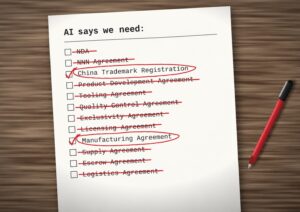
Yes. A trademark registration does not replace a manufacturing, distribution, licensing, or NNN agreement, because those contracts govern what the parties may do within their relationship. Your manufacturer needs limited permission to put your mark on your goods. That permission should not become permission to sell overruns, supply branded goods to other buyers, or register confusingly similar marks. The contract should also address subcontractors, control of branded materials, and what happens when the relationship ends.
A distributor's sales exclusivity does not require handing over your brand. A license should identify the authorized goods, territory, and channels, set quality standards, and say what happens on termination. Record the license with CNIPA. An unrecorded license remains valid between the parties but cannot be asserted against a good-faith third party. Our post on trademarks and Chinese distributors addresses the ownership problem directly.
An NNN agreement can bar the parties who sign it from misusing or registering your marks, but it reserves nothing at CNIPA and binds no one else. Nor does the trademark registration protect confidential drawings, tooling specifications, or an unbranded copy of the product. That is why China NNN agreements and trademark registrations usually work together, with patents, copyrights, and manufacturing terms covering what trademark law does not reach.
How Do I Protect My Registration From Non-Use Cancellation?
China generally does not require proof of use to register a trademark. Once a registration has been in place for three years, though, anyone can seek to cancel it for three consecutive years of unjustified non-use. The relevant period is the three years before the cancellation request, so starting to use the mark after a challenge arrives does not help. Our guide to China trademark use and non-use cancellation explains how the evidence is assessed.
The evidence has to tie the mark to the registered goods, to specific dates, and to qualifying use in China. Use by your manufacturer, distributor, or licensee counts if you can show both the authorization and the commercial activity. For an export manufacturer, a useful file links a purchase order to dated branded packaging, production records, an invoice, payment, and shipping documents. Each document helps explain the others. An invoice that says "parts," or an undated product photo, is close to worthless on its own.
Build this file during ordinary operations. Require access to factory and shipping records while the relationship is working, because pulling them from an uncooperative former supplier is much harder. Paper transactions staged to keep a registration alive are no substitute for real commercial activity.
Genuine export manufacturing can support proof of use in a cancellation case, depending on the evidence. That is a separate question from whether the same manufacturing infringes someone else's mark, and pointing out that the goods never reached Chinese consumers answers neither one. Online evidence needs the same care. A website accessible from China does not by itself prove that every mark on it has been used in China for the registered goods, so keep reliable dates and evidence of the business behind the site.
Use also affects remedies. Under the Trademark Law, an accused infringer can raise your non-use as a defense to damages. An owner that cannot show use or other actual loss can lose its damages claim even with a valid registration.
Can I use the ® symbol?
Not until your Chinese registration issues. Marking an unregistered mark as registered violates Chinese trademark law, and a U.S. or other foreign registration does not make a mark registered in China. Using ® in China before registration creates unnecessary regulatory risk even when the goods are intended for export, so we generally advise clients not to place it on China-made packaging until the Chinese registration has issued.
How Do I Stop Counterfeits?
A Chinese registration supports enforcement wherever counterfeits are made, stored, sold, or exported, and the right response depends on your objective and your evidence. For counterfeit exports, consider recording your registered right with the General Administration of Customs, a process separate from CNIPA registration. Copyrights can be recorded too, which matters when the design itself is what counterfeiters copy. Recordation helps Customs spot suspected infringement and notify you, but it will not catch every counterfeit shipment.
A useful Customs file goes well beyond the certificate. It describes your genuine products and how to tell them apart, names your authorized manufacturers and exporters, and lists contacts who can respond quickly. Keep it current when suppliers or ownership change. Our guide to China Customs IP recordation explains what you need at the border.
Customs notices come with short deadlines, as little as three working days. A request to detain goods also requires you to post security. A company that sits on a notice while it decides internally who owns the problem can lose its chance to act. Recordation is also not the only route. Even without it, a rights holder that learns of a specific infringing shipment can apply to Customs to detain it, but it must identify the shipment and post security up to the value of the goods. These procedures are set out in China's Customs IP protection regulations.
Inside China, platform complaints, administrative enforcement, civil litigation, and criminal enforcement where the thresholds are met each serve a different purpose. Choose the remedy for the problem you actually need to solve. A platform takedown may remove the listing while the factory keeps producing. Administrative enforcement can stop goods without compensating you, and a court judgment is useful only if it can be enforced.
Preserve your evidence before sending a demand that tells the infringer what to hide, and identify the operating company and the actual production or storage site rather than relying on an online seller's display name. For an international counterfeiting problem, coordinate your Chinese rights with your registrations and remedies in the destination markets, because the best place to intervene depends on where the goods, the defendants, and their assets can be reached. Focus on stopping commercially significant infringement, not on piling up complaints against sellers who reappear the next week under a new name.
What Maintenance Does a China Trademark Need?
A national Chinese registration lasts ten years and can be renewed indefinitely in ten-year terms. The renewal window opens twelve months before expiration, with a six-month grace period after it. Madrid registrations renew through WIPO. Put the deadlines in a system someone actually manages, and make sure responsibility transfers when an employee leaves or you change counsel.
Review the portfolio as the business changes. New products may require new applications, and renewing the old registration neither expands its scope nor eliminates non-use exposure. Have someone check material logo changes before assuming the original filing still fits. When the owner's name or address changes, update the register.
Assignments need care. Complete the required approval and recordation, and remember that identical or similar registrations for the same or similar goods must move together. Transferring only the obvious registration can leave a transaction incomplete. The renewal, amendment, and assignment requirements are in the Trademark Law.
Watch for new applications against your important marks. Your registration does not stop similar applications from being filed, and CNIPA's examination is no substitute for your own judgment about whether one threatens your business. A periodic portfolio review should compare the register with what the company now makes, sells, licenses, and plans to launch. It should flag unused registrations and confirm you can prove the use you rely on. Do this before any acquisition, refinancing, distributor change, or manufacturing move.
China Trademark Squatters: What If Someone Registers Your Brand First?
Start with the Chinese trademark record. Identify the applicant, filing date, goods and services, status, and any related proceedings. A screenshot of search results or your supplier’s account of what happened is not enough. Preserve your evidence before contacting the applicant. Emails, contracts, purchase orders, dated presentations, shipping records, trade-show materials, earlier artwork, and prior trademark filings can all matter, especially when they show that the applicant knew your brand before filing.
Not every earlier applicant is a squatter. An unrelated company that independently chose a similar name presents a very different case from a factory, distributor, sourcing agent, or former employee that registered a brand it encountered through your business. What you can do about the filing turns heavily on the facts and the evidence.
How China Trademark Squatting Happens
Some squatters are strangers who spot a foreign brand and register it hoping the owner will eventually pay for it. A crowdfunding campaign, Amazon listing, trade show, social-media account, foreign trademark filing, product launch, or press coverage can expose a previously obscure brand to someone looking for marks worth registering. Other cases involve people already connected to the business. We have seen applications filed by or through manufacturers, distributors, sourcing agents, former employees, licensees, customers, competitors, and other commercial contacts. That relationship can later become important evidence because it helps establish what the applicant knew and when.
Be careful about who receives your trademark information. We have handled matters in which a company sent a mark to a purported filing service and later discovered that someone else had filed it. In some cases, the ownership records and timing suggested a connection between the applicant and the people who had received the filing instructions. The foreign company was then invited to buy its own brand back.
The practical lesson is simple. File early, know who is handling the application, and make sure the correct company is named as owner. Your manufacturer, sourcing agent, distributor, employee, or Chinese subsidiary should not own your principal trademark merely because putting the filing in that entity’s name is convenient.
What Should You Do First?
If someone else has filed your trademark in China, resist the urge to fire off a demand letter. First determine exactly what happened.
1. Confirm what was filed. Identify the applicant accurately, including its registered Chinese name when relevant. Check the mark, filing date, classes, goods and services, and current status. Determine whether the application is still under examination, has been preliminarily approved and published, or has already registered. The answer determines what procedures are still available.
2. Determine whether you can still oppose the application. Opposition is available during the publication period before registration. Under the law in effect through December 31, 2026, that period is three months. Beginning January 1, 2027, China’s revised Trademark Law reduces it to two months. Missing the deadline does not necessarily end the case, but it usually leaves you challenging a registered mark rather than a pending application. That tends to cost more and take longer. Our guide to China trademark oppositions explains the process and the evidence that can matter.
3. Look for a connection between the applicant and your business. Check manufacturers, distributors, sourcing agents, employees, licensees, customers, competitors, filing services, and other contacts. Preserve records showing when the applicant or related parties first encountered your brand. Do that before contacting them. A demand letter can tell the other side exactly which relationships and documents matter to your case.
4. Decide what result makes business sense. Depending on the facts and the status of the mark, the options can include opposition, invalidation, non-use cancellation, a negotiated transfer, coexistence, rebranding, or some combination of those. The best legal argument is not always the best commercial answer. Cost, timing, the importance of the brand, the strength of the evidence, and the effect of delay on manufacturing or sales all belong in the calculation.
5. Treat supply-chain problems separately. A trademark proceeding does not solve an immediate problem at the factory or border. Find out whether the conflicting registration covers the goods you manufacture, whether it has been recorded with China Customs, whether the registrant has already complained, and whether current shipments are at risk. Production and export problems often need attention long before the ownership fight ends.
Can I Oppose or Invalidate a Squatter’s Trademark?
Opposition is available while an application remains in its publication period. Once the mark registers, opposition is no longer available, but invalidation may be. The grounds depend on what happened. Prior rights, certain earlier use, a prior relationship showing knowledge of the mark, well-known trademark protection, deception, and other improper conduct can all matter. A distributor that registers its supplier’s trademark presents a very different case from a stranger that independently files a similar mark.
China’s revised Trademark Law, effective January 1, 2027, strengthens several provisions aimed at abusive filings. It addresses applications filed without a genuine purpose of use when they clearly exceed normal production or business needs, strengthens protections against specified preemptive filings and interference with prior rights, and provides administrative penalties for specified malicious applications. Our article on preparing for China’s revised Trademark Law discusses what those changes mean for foreign brand owners.
We have won these fights. They still take evidence, time, and money. Filing the right trademark before someone else does is almost always cheaper than trying to take it back.
Can I Cancel the Registration for Non-Use?
If the registration has been unused for three consecutive years without valid reason, non-use cancellation can be a particularly effective remedy. This often works well against a squatter that registered a mark to block or sell it but never built a genuine business around it. You generally do not have to prove why the registrant filed the mark. The fight instead turns on whether the registrant can show qualifying use.
CNIPA now expects more from the party seeking cancellation. Under guidance revised in 2025, the applicant must submit preliminary evidence showing that it conducted a reasonable investigation into the registrant’s use. That can include reviewing the registrant’s business scope and operating status and searching its website, WeChat account, e-commerce stores, physical premises, and other relevant channels.
Cancellation should be coordinated with your own filing. Removing the blocking registration does not reserve the mark for you, and another applicant can step in. Our updated guide to China trademark non-use cancellations explains the strategy, and our article on proving trademark use in China covers the evidence that becomes important when use is challenged.
Should I Just Buy the Trademark?
Sometimes. Paying a squatter is unpleasant, but the decision is economic. Compare the asking price with the legal fees, the likely duration of a challenge, the strength of your evidence, the cost of rebranding, and the losses caused by delayed production, detained shipments, or a postponed China launch. A case you are likely to win can still be a poor business choice if the company cannot afford to wait for the result.
That was the problem facing our Canadian coat client. Its merchandise was already being detained, and every week of delay cost money. We ultimately negotiated the purchase of the Chinese trademark for six figures. Filing before manufacturing began would have cost a small fraction of that.
If you buy the mark, investigate first. Confirm who owns it, whether it has been pledged or restricted, whether the seller owns related marks you also need, and whether other applications could recreate the same problem. A signed assignment does not itself transfer a Chinese trademark. The transfer takes effect only after CNIPA approves and publishes it. A time-sensitive purchase also needs an interim plan. Depending on the situation, that can include a temporary license, withdrawal of Customs or platform complaints, cooperation with detained shipments, and restrictions on what the seller can do while the assignment is pending. Paying for the trademark does not automatically release goods already stopped at the border.
The Best Trademark Squatter Strategy Is Still Filing First
China gives foreign brand owners real ways to challenge abusive trademark registrations, and those protections strengthen under the revised Trademark Law on January 1, 2027. None is as cheap or simple as filing first. If your trademark is still available and China matters to your manufacturing, sourcing, sales, licensing, or realistic future plans, file it correctly before someone else does.
What Changes Under China's New Trademark Law on January 1, 2027?
China adopted its revised Trademark Law on June 26, 2026, and it takes effect on January 1, 2027. The current law governs until then. Pending matters require attention to the applicable deadlines and transition rules, not assumptions drawn from summaries of the new law. The opposition period will shrink from three months to two, so any company relying on occasional checks of the register should put a real watch program in place before January.
The revised law will expressly empower CNIPA to cancel, on its own initiative, registrations that have become generic or gone unused for three consecutive years without justification. The enacted law dropped the recurring proof-of-use declaration that appeared in earlier drafts. The 2019 law already bars bad-faith applications filed without intent to use, and the revised law restates that bar in more objective terms, reaching applications that lack an intent to use and clearly exceed normal production or business needs. The revised law does not make defensive filing improper, but every company should be able to explain the business basis for its portfolio.
Beginning January 1, 2027, the law will also expressly recognize use through the internet and other information networks as trademark use, though not every online mention will qualify. Several other changes matter to foreign brands that have been on the wrong end of someone else's registration. Well-known marks will be able to receive cross-class protection even when they are not registered in China. Specified bad-faith filing conduct will be subject to warnings and fines, and courts will be able to penalize trademark lawsuits built on collusion or fabricated facts.
A registration removed through non-use cancellation or invalidation will also no longer trigger the one-year waiting period that now delays the challenger's own application. The implementing rules and early CNIPA and court decisions will show how aggressively these provisions are applied. Our article on preparing for China's revised Trademark Law covers the practical steps.
Where Should I Start?
Before commissioning more applications, compare your existing Chinese registrations with your current products, packaging, Chinese names, and corporate structure. A company with several registrations sometimes has one narrow but serious gap. A company with none should usually start by clearing and filing its principal mark. When money is limited, ask which missing right is most likely to stop production, block sales, or hand a valuable brand to someone else. Fix that first. Then assign someone to handle the notices, renewals, and evidence that keep the protection in place.
Our Canadian client's trademark problem became urgent the day its coats stopped moving. By then every option was expensive, and it was negotiating under pressure. A sound China trademark strategy lets you make these decisions before a detained shipment makes them for you.