El año pasado le pedí a mi buen amigo Andrew Hupert que me explicara qué implica trasladar la producción de China a México, en gran parte comparando ambos países. Elegí a Andrew para esta tarea casi hercúlea porque ha pasado mucho tiempo tanto en China como en México, conociendo sus sistemas de producción desde dentro.
Mi bufete de abogados solía consultar a Andrew con frecuencia cuando empezamos a trabajar en asuntos legales relacionados con China, y en aquella época Andrew vivía allí. Aunque Andrew había vinculado su vida y su carrera a China durante décadas, él —al igual que yo— fue uno de los primeros defensores de un mundo postindustrial sin China. Tanto es así que Andrew se mudó a México, refrescó sus conocimientos de español y comenzó a ayudar a las empresas —especialmente a aquellas que buscaban salir de China— a orientarse en México. ¿Quién mejor, entonces, para escribir sobre lo que se necesita para salir de China (total o parcialmente) hacia México que Andrew Hupert?
Andrew ha escrito una serie de cinco entradas sobre las diferencias entre la industria manufacturera de China y la de México, y os recomiendo encarecidamente que leáis las cinco:
- Guía para directivos chinos sobre operaciones en México: comparación y contraste entre las operaciones en China y México
- México para los directivos chinos, parte 2: China frente a México como centros de la cadena de suministro
- Parte 3: Comparación de la industria manufacturera de China y México a nivel operativo
- México para gerentes chinos, parte 4: Guía para la negociación intercultural
- México para gerentes chinos, parte 5: Los tres tipos de transiciones en la cadena de suministro entre China y México
A finales del año pasado, publicamos «Tres cosas que todo el que se vaya de China a México debería saber», a modo de introducción a lo que esperamos que sea una serie de unas diez entregas que se publicarán a lo largo de los próximos 7 a 9 meses. En esta serie, Andrew escribirá sobre lo que observa en las empresas que trasladan su producción a Latinoamérica o México, y los abogados de mi bufete que ayudan a estas empresas a realizar dichos traslados de forma legal escribirán también sobre lo que ven, a veces junto con Andrew, como es el caso aquí, y otras veces por separado. El texto que sigue a continuación lo hemos escrito tanto Andrew como yo y constituye nuestro segundo artículo de esta nueva serie.
Se ha exagerado mucho la muerte del comercio internacional.
The economy isn’t deglobalizing; it's re-globalizing. Companies and countries are redrawing their supply chains and these new supply chains are forming the basis for new types of cooperation and competition. There will be winners and losers in this reorientation. This is good news for those targeting the United States market, because there are many good opportunities in your own backyard. As US-China relations move from “frenemy” to “strategic competitors” (and possibly towards “enemy combatants”), we can expect to continue to see more shocks to "business-as-usual" China-based supply chains.
Companies are finally realizing that the future of US-China trade is in peril, and their China business can at any time be completely disrupted by politics, regulations, military conflict, pandemics, or economics. The relationship between the two governments is becoming more brittle and dangerous and the few who still insist that US-China decoupling is impossible will find themselves at a severe disadvantage to competitors that have diversified their supply chains before the cargo ships stop moving between Shanghai and Los Angeles. Don't believe us? Just read the news from the last few weeks. See Dell Looks to Phase out Made in China, Apple to start making MacBooks in Vietnam, The Top 1o Global Risks for 2023, Will China’s COVID Re-Opening be Good or Bad for Business?
O escuche lo que nos han contado algunos de nuestros clientes que han trasladado su producción de China a otros lugares:
1. "I sleep better, not just because I worry less about my supply chain, but because I feel better about not supporting such a brutal regime."
2. "Our leaving China before our competitors [this company left China pre-COVID] allowed us to avoid the China tariffs and to underprice our competitors. We gained a good chunk of market share because of this and our competitors are still scrambling to catch up.
3. "We've hired people who've chosen to go with us because they like that we have nothing to do with China."
4. We are hearing more from customers who are intentionally choosing us because our products do not come from China. Some say that they view us as less risky to their suppy chain because of this. Others see us as less risky to their reputations."
Es evidente que México ofrece un gran potencial para las empresas que se dirigen al mercado estadounidense y que buscan algo más que mano de obra barata y proximidad. Pero antes de hacer las maletas y cruzar la frontera hacia el sur, conviene analizar qué es lo que salió mal para la comunidad internacional en China, para que tú (nosotros) no cometamos los mismos errores en México.
1. Tres grandes errores sobre China
A. Falta de control
Las empresas extranjeras en China no tenían autonomía sobre sus propias operaciones. Hasta cierto punto, esto es un problema a la hora de hacer negocios en el extranjero, pero en el caso de China este problema era —y sigue siendo— mucho más grave. La burocracia está presente en todas partes, pero en China las empresas extranjeras tenían que aceptar un nivel de control, intromisión y opacidad que habría supuesto el fin de cualquier acuerdo en cualquier otra economía.
El PCCh nunca ha ocultado su agenda económica (difunde públicamente sus planes quinquenales) y el estricto control sobre las entidades extranjeras siempre ha sido una característica fundamental de la actividad empresarial en China. Las empresas internacionales tienen pocos o ningún recurso a la hora de tratar con el Gobierno chino, y pronto se dieron cuenta de que no tenían acceso a ninguna palanca de poder práctica. Hace 10-15 años, los estafadores afirmaban tener guanxi en China, pero ya nadie se molesta en afirmarlo porque nadie se lo creería.
Chinese regulations included access to your company's servers, customer lists, data and IP, mandatory joint ventures, restricted access to many prime industries (such as media, education technology, Internet, farming, oil and gas, mining, etc.) restricted access to the Internet, and mandatory official CCP labor unions that answered directly to the party. And those who do business in China know this short list is but a sampling of the strait jacket in which foreign companies are tied.
We always knew that choosing to do business in China involved unique challenges, but we took too much comfort in the fallacy of “safety in mutual interdependence”. Supreme Rule Xi has blown away any pretense that China's need for foreign companies would mitigate its oppressive laws and regulations. See For Xi Jinping, the Economy Is Not the Priority.
Pusimos nuestras empresas y nuestras economías en manos de un gobierno notoriamente opaco y agresivo que, en el mejor de los casos, era un «amigo-enemigo», y con mayor frecuencia, un competidor estratégico.
B. Nos tragamos el cuento
We didn't just drink the Kool-Aid, we helped make the Kool-Aid, we helped serve the Kool-Aid, and we kept asking for more of the Kool-Aid. Just look at all the companies that ended up gifting their most important technology to China, many of which went bankrupt in the process. See Giving Your IP to China Out of Love.
The problems foreign companies are encountering in China today are not really the fault of the Chinese government. Many companies accepted it because other companies were accepting it. We've worked with at least a dozen companies whose c-suite executives essentially told us that they were going into China only because their board or their shareholders thought it important. We always knew what the real situation in China, but we accepted it because of the potential profits, prices, and convenience. Implicit was the fallacious notion that China could never fail.
Piensa en el lenguaje que alimentó el mito de la infalibilidad en China:
- La fábrica del mundo
- Todo es difícil, pero nada es imposible
- Más capitalista que nosotros
- Esto es China
- La carrera hacia el abismo.
One particularly powerful example of our complacent approach to China is that the American Chamber of Commerce was the most persuasive and effective lobbyist the PRC ever had on Capitol Hill. Though the AmCham is these days somewhat less of an unmitigated China chearleader, Beijing still expects AmCham to serve China's interests. See China looks to Amcham Shanghai to lobby against US tariffs )
C. Es una trampa/Estrategia sin salida
El error más imperdonable que cometimos en China fue ir allí sin una estrategia de salida. Esto es especialmente cierto, ya que salir de China no es nada fácil. Consulta «Cómo salir de China y sobrevivir » y«Cómo cerrar una WFOE en China sin ir a la cárcel».
For many, China was a slippery slope, and what started as a handful of low-priced purchases eventually grew into a complete surrender of supply chains. For most Western purchasing agents and sourcers, the Plan B and back-up sources were simply other Chinese companies -- often in the same Chinese city.
No solo ignoramos las señales de alerta sobre la excesiva dependencia de China, sino que también hicimos caso omiso de las advertencias de nuestro propio Gobierno, que nos indicaba que las relaciones con China iban por mal camino. El 4 de octubre de 2018, el entonces vicepresidente Pence anunció que Estados Unidos consideraba a China un competidor estratégico. Véase «Declaraciones del vicepresidente Pence sobre la política de la Administración hacia China – La Casa Blanca» (archives.gov). Desde ese anuncio tan público, teníamos motivos para sospechar que nuestros días en China estaban contados. En cuanto los directivos y los analistas se dieron cuenta de lo difícil que era «desacoplarse», eso debería haber encendido una serie de señales de alarma. No fue así. En cambio, muchos responsables de la toma de decisiones han pasado los últimos cuatro años esperando a que las cosas «volvieran a la normalidad».
Since 2018, (See China, the United States and the New Normal), this blog has been warning companies to get out of China or at least try to lessen their footprint there. Virtually nobody listened. In 2019, in China and the West Are Decoupling: Please Act Accordingly, we laid out the issues between China and the West and we all but begged people to "act accordingly." Few did. That same year, in Hong Kong for International Business: Stick a Fork in It, we proclaimed the end of Hong Kong as an international business center and we were met mostly with anger and derision. In 2021, in Omicron and Supply Chains: Buckle Up, we warned that China Omicron would eventually ruin China Supply chains. Again, the pr0-China crowd (made up mostly by those whose incomes depend exlusively on China) shouted us down. When we wrote how it was unrealistic to think that US-China relations would improve under the Biden administration, we were deluged with emails accusing us of willfully ignoring "Hunter Biden"
Debemos afrontar la realidad, y la realidad nos dice que la nueva normalidad es una desconexión impuesta por los gobiernos. La Administración Biden ha intensificado sus esfuerzos para contrarrestar a China en los ámbitos comercial, político y militar. Si el 100 % de su cadena de suministro sigue pasando por un país que su propio gobierno considera un adversario en múltiples frentes, entonces está asumiendo un riesgo mucho mayor del que ha tenido en cuenta. Puede que tú te hayas acostumbrado a la idea, pero tus inversores, contables, socios y clientes no. La presión sobre las empresas para que trasladen sus cadenas de suministro fuera de China va a aumentar en el futuro inmediato. Lo mismo ocurre con la UE y con la mayoría de los países que la integran.
2. La última palabra sobre China: A algunos les espera una terapia de choque.
Los analistas especializados en China deben aceptar dos realidades que marcarán un antes y un después en 2023.
Access to China markets, resources, and partners is no longer just economics. Even if you want to work with China and your Chinese counterparts want to work with you, it may simply be impossible going forward. The threat of military conflict, political tensions, new (or returning) pandemics, government sanctions, and economic factors will make many China deals impossible. Political partisans on both sides of the aisle in Washington are competing for bragging rights to the most draconian, anti-China legislation imaginable. See New House Select Committee seeks 'Cold War' victory over China. We used to say EU policy on China tracked that of the United States, but six months later. These days, it's more like six weeks.
What’s different about 2023? The risks are known, so now you are responsible for managing them. The 2022 disruption of supply chains in China came as a surprise and most managers were given a pass for putting their companies in compromised position. But see Omicron and Supply Chains: Buckle Up. That’s not going to work next time and decision-makers will be asked tough questions when things go wrong. It is the rare company that isn't looking to lessen its footprint in China or move out entirely. If yours is that rare company, you better have good reasons for this.
3. ¿Cómo podemos «reconstruir mejor» en México?
Las marcas de la lista Fortune 100, con grandes recursos económicos y mercados globales, pueden permitirse crear dos cadenas de suministro complementarias: una en China, dirigida a mercados que no están en sintonía con Estados Unidos, y otra en Norteamérica o Europa. El resto de nosotros tenemos que tomar decisiones. La buena noticia es que tenemos opciones. La mala noticia es que, si no decides modificar tus cadenas de suministro pronto, es posible que sean los gobiernos o la economía quienes tomen esas decisiones por ti.
A continuación te presentamos tres conceptos que aumentarán tus posibilidades de llevar a cabo con éxito la transición de tu cadena de suministro a México.
A. Piensa en la economía norteamericana
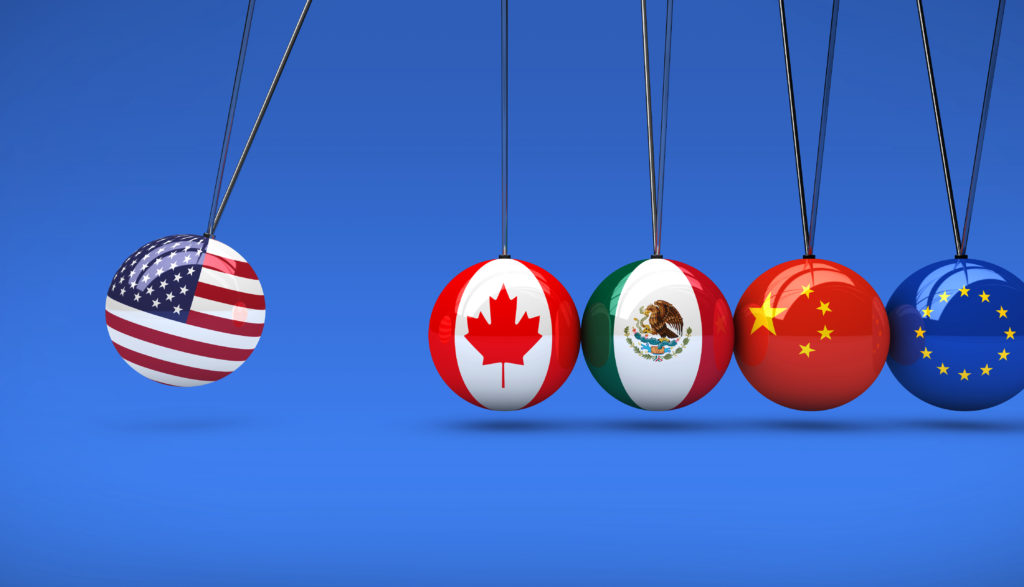
As globalism morphs into regionalism, company decision-makers need to roll with the changes or risk getting steamrolled. Though the dream of an integrated Latin America remains a distant goal, the North American economy is a very real and very valuable trade zone. The treaty is already in place -- known as USMCA (United States-Mexico-Canada Agreement) in the United States, T-MEC in Mexico, and CUSMA in Canada -- and it can serve as the framework for expanding preferential trade terms to appropriate countries in Central America.
There are challenges and opportunities in North America, but it’s clear there is value to be unlocked in Mexico and the rest of Latin America. Need proof? Look at how active China has been in the region. It is already second only to the United States in trade with Latin America. See China's Latin America Move.
China’s presence in Latin America will be a double-edged sword. On the one hand, big parts of your old supply chain may pop up in Central and South America as more Chinese companies set up shop. On the other hand, Chinese entities with varying degrees of Chinese state support/government subsidies will be competing with you for markets, resources, and influence -- and they are free to use tactics that are simply illegal for you.
La buena noticia para las empresas estadounidenses y de la UE es que tienen el potencial de liderar el desarrollo de una potente zona económica y garantizar la protección de los procedimientos esenciales, las salvaguardias y los derechos de propiedad. ¿La mala noticia? Va a suponer mucho trabajo. China creció gracias a los clústeres industriales impulsados por el gobierno, como los que tienen su sede en Shenzhen y Shanghái. México no cuenta realmente con zonas económicas especiales, aunque el programa IMMEX y la zona maquiladora en la frontera acaban desempeñando muchas de las mismas funciones.
B. A lo grande
The international brands succeeding in Mexico show up with capital, equipment, supply chain, and most of all, A PLAN. Many early China entrants had incomplete or inappropriate business plans, and it was considered acceptable to “figure things out on the ground” or even to rely on your China factory to figure things out for you. We still remember hilarious stories about Western businesses relying on their 22-year-old receptionists to negotiate with the Chinese tax authorities, or financial firms registering as “agriculture consultants” because their Chinese "partner" told them to do this because Chinese regulators favored that industry. That stuff doesn’t happen in Mexico. Heck, that stuff doesn't even happen in China anymore.
Mexico and LatAm typically require a degree of planning and scale that wasn’t always needed in Asia. There's a good chance you will need your own manufacturing facilities here. OEM, contract manufacturing, and “virtual operations” aren’t important parts of the local business environment. The most successful international players in Mexico are the auto makers, and they are spending heavily on brand new factories producing cutting edge components. These factories are mostly being run by Mexican managers who see themselves as a 100% part of the parent operation across the border in Irving, TX or Detroit, MI. Cross-border management teams are the rule, not the exception here. Mexican employees are on the HQ org charts and they see themselves as part of the team, which contrasts with Chinese operations that have mostly been separated by distance, time zones, language, culture – and in many cases, by conflicting goals.
C. Más vale pronto que tarde
México ofrece muchas ventajas para las marcas internacionales, pero la rapidez en la puesta en marcha no es una de ellas. Si dispones del tiempo y los recursos necesarios para planificar tu nueva operación, verás que México resulta mucho más sencillo que China. Imagina llegar en avión a Monterrey o Querétaro el jueves por la mañana, celebrar TODAS tus reuniones y estar de vuelta en casa el viernes por la noche. Pero una implantación adecuada en México lleva tiempo y requiere investigación y negociaciones. Una cosa que los mexicanos tienen en común con los directivos chinos es que no responden bien cuando se les apura y presiona por parte de directivos estadounidenses tensos y agresivos. Confía en nosotros en esto.

4. La última palabra sobre México
A las empresas que dependen de la fabricación en China para el mercado estadounidense les espera una «terapia de choque». Tienen la oportunidad de beneficiarse de la huida masiva de China o pueden verse aplastadas por ella. La región fronteriza de México ya se está saturando, y los inmuebles y otros recursos se están vendiendo rápidamente. Las empresas que planifiquen con antelación y empiecen a construir y a acceder a activos mexicanos desde el principio obtendrán una ventaja competitiva real y sostenible. Una de las ventajas que a menudo se pasa por alto al entrar pronto en México es la capacidad de trasladar su cadena de suministro desde China ahora (y desde el sudeste asiático más adelante) mediante un proceso ordenado y planificado. La salida de China no tiene por qué suponer una interrupción para su negocio, especialmente si empieza pronto a prepararse para la economía norteamericana. Quienes esperen hasta el último momento tendrán que apresurarse para encontrar capacidad y poner en marcha una nueva operación, y pagarán un alto precio.
We know that people don’t want to move their supply chains out of China. It’s difficult, expensive, and in some cases it’s impossible to replace specific types of products. But you need to start reading the writing on the wall. Washington and the EU are more determined than ever to separate from the Chinese economy. The risk of military conflict is real – and won’t necessarily be the result of high-level decision-makers. The Chinese navy and air-force use very aggressive tactics in neutral territory and are known for “playing chicken” with foreign forces. Again, reading the news for the last few weeks will tell you this. See India-China dispute: The border row explained in 400 words, Chinese jet came within 10 feet of U.S. military aircraft, Philippines, and China clash over new South China Sea flash point. China's last full-scale war stemmed from its 1979 invasion of Vietnam and relations between those two countries are alwas touchy. Then of course there is Taiwan and China's "unlimited friendship" with Russia, both of which could, with little to no warning, lead to a nearly complete cessation of economic relations between the US/EU and China.
En circunstancias normales, los «choques entre embarcaciones», los incidentes aéreos y las escaramuzas fronterizas pueden ser atenuados por diplomáticos profesionales. Pero estas no son circunstancias normales y el riesgo de que los pequeños conflictos se salgan de control es real.
Ningún país, y mucho menos ninguna empresa, tiene la capacidad de arreglar las relaciones comerciales entre China y el resto del mundo. Debemos jugar con las cartas que nos han tocado. Para muchas empresas, la carta de México se está revelando cada vez más útil en estos momentos.