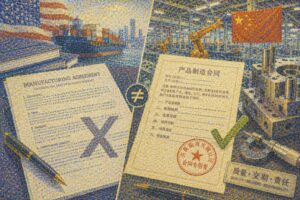
Las mejores estrategias para resolver disputas comerciales internacionales
When a Silicon Valley electronics manufacturer discovered that its Korean supplier had delivered $2.5 million worth of defective components, it was confronted with a situation all too common in today’s global economy: how do you resolve a commercial dispute when the other party operates under different laws, speaks a different language, and is located thousands of miles away? These challenges are routine in international commerce, where cross-border disputes aren’t just possible—they’re inevitable.
Companies operating internationally must navigate unfamiliar legal systems, differing cultural norms in business dealings, and enforcement mechanisms that vary widely from one jurisdiction to another. Disputes may arise from contract breaches, delivery failures, non-payment, or disagreements over quality and specifications, but international borders raise the stakes and complexities.
To avoid being caught off guard, businesses engaged in global trade must adopt proactive, well-structured dispute resolution strategies. These strategies should be designed early—well before conflicts arise—and must account for legal, operational, and cultural risks across multiple jurisdictions.
The Foundation: Dispute-Resistant Contracts
The most effective strategy for resolving international commercial disputes begins long before any conflict surfaces—with the contract. A well-drafted international agreement isn’t just a roadmap for the business relationship; it’s a blueprint for how disputes will be addressed if things go wrong.
Yet too many companies treat contract drafting as a box-checking exercise, rushing to finalize terms in their eagerness to close the deal. This haste often comes at a steep cost. Our international dispute resolution attorneys often see companies with legitimate grievances find their legal remedies severely constrained by poorly drafted contracts—either by cost, strategic futility, or a lack of enforceable provisions.
A well-crafted international contract should clearly specify the governing law, the jurisdiction or forum where disputes will be resolved, and the language in which proceedings will be conducted. These seemingly technical details take on immense importance when tensions escalate and communication deteriorates. Without clear provisions, parties can find themselves mired in expensive procedural battles before the substance of the dispute is ever addressed. See A Guide to Dispute Resolution Clauses in International Contracts.
Force majeure provisions deserve particular attention in international contracts. The COVID-19 pandemic was a stark reminder that global supply chains are far more exposed to disruption than their domestic counterparts. A supplier in Bangladesh may be prevented from fulfilling orders due to political unrest, while a manufacturer in Germany might be forced to shut down operations in response to shifting environmental regulations.
Without clearly defined force majeure language, these scenarios can quickly escalate into costly disputes over which party should bear the burden for events beyond anyone’s control. The challenge is compounded by the fact that the interpretation and enforcement of force majeure provisions vary significantly from country to country, making careful drafting even more essential in cross-border agreements. See e.g., Do Not Let Force Majeure be a Major Force In Your China Contract.
Payment and delivery terms demand even greater precision in international transactions. When goods cross multiple borders, navigate diverse customs regimes, and involve fluctuating currency values, even minor ambiguities can trigger major disputes. A sound contract should spell out exactly when title transfers, who bears the risk of loss during transit, and how inspection and acceptance will be handled—especially when parties operate in different time zones and under distinct commercial norms. See What are INCOTERMS, and How Important are They in International Contracts?
Strategic Arbitration: A Neutral Path for Dispute Resolution
While domestic disputes often head straight to court, international commercial disputes frequently call for a more strategic approach. Arbitration has become the preferred method for resolving many cross-border conflicts—and with good reason. Unlike litigation, which can tilt in favor of the party operating in its home jurisdiction, arbitration offers a neutral forum. Neither side enjoys a home-court advantage when proceedings are held in a neutral venue before arbitrators selected for their subject-matter expertise rather than local affiliations.
Arbitration’s global enforceability is a key strength. Under the New York Convention, arbitral awards are enforceable in more than 170 countries. That means a successful arbitration against a Mexican company, for example, can be enforced not only in Mexico but in virtually any jurisdiction where that company holds assets. In contrast, enforcing a court judgment across borders often requires initiating separate, full-blown legal proceedings in each foreign jurisdiction.
Confidentiality is another major advantage. When disputes involve trade secrets, proprietary manufacturing methods, or sensitive client data, public court proceedings can be highly damaging. Arbitration proceedings remain private, allowing companies to resolve complex issues without jeopardizing their reputation or exposing valuable commercial information to competitors.
However, arbitration is only as effective as the clause that governs it. Poorly drafted arbitration clauses can create costly delays and procedural uncertainty. A robust clause must clearly define the arbitration institution, the seat (or legal place) of arbitration, the language of proceedings, and the number of arbitrators. Ambiguity in any of these areas often leads to preliminary battles that undermine the very efficiencies arbitration is designed to deliver. For practical guidance on drafting effective clauses, see A Guide to Dispute Resolution Clauses in International Contracts.
Early Resolution: Negotiation and Mediation
Before initiating formal arbitration or litigation, experienced companies often explore whether a dispute can be resolved through direct negotiation or mediation. This early-stage approach is especially valuable when the parties hope to preserve their commercial relationship. In international business, replacing a trusted supplier or customer can take months—or even years—and typically involves extensive due diligence and onboarding costs.
Mediation offers distinct advantages in cross-border disputes. It’s significantly more cost-effective than formal proceedings, preserves confidentiality, and allows for flexible, business-driven outcomes that courts or arbitral tribunals often cannot provide. A skilled mediator can also bridge cultural gaps, helping parties recognize how misunderstandings—not malice—may be fueling the conflict, and guide them toward mutually acceptable, creative solutions that address the real business issues at stake.
The key to successful early resolution lies in timing and preparation. Once positions have hardened or tempers flared, mediation becomes markedly more difficult. By acting early and coming to the table well-prepared, companies dramatically improve the odds of finding a constructive outcome.
Detailed and well-maintained records also play a crucial role in resolving disputes early. Clear documentation can diffuse misunderstandings—especially when dealing with foreign suppliers, where language barriers and differing commercial practices are common. If negotiations fail, these records become critical evidence in any formal proceeding and can make or break efforts to enforce contract rights across jurisdictions.
Navigating the Jurisdictional Maze
In international disputes, the choice of where to resolve the conflict can be just as important as the merits of the case. Not all legal systems are created equal. Some offer efficiency, neutrality, and commercial sophistication. Others are plagued by delays, unpredictability, or systemic bias. In certain jurisdictions, a commercial case may take five years or more to reach resolution, while others offer streamlined procedures capable of delivering final outcomes within months. Enforcement also varies dramatically—some countries routinely recognize and enforce foreign judgments, while others make enforcement a near impossibility.
Years ago, our firm handled a $45 million dispute with three possible jurisdictions for filing. The problem? We feared all three might reject the case outright. Although we ultimately resolved the matter through negotiation—without filing in any of them—that uncertainty severely weakened our client’s position. The absence of a clear, enforceable dispute resolution clause in the contract forced the client to settle for far less than what might have been achievable with proper jurisdictional planning.
Evaluating a jurisdiction requires much more than checking a box on a contract. Key questions include: How long does litigation typically take? Do the courts have expertise in complex commercial matters—or are they ill-equipped to handle international business disputes? Can they issue interim measures such as asset freezes or injunctions to preserve evidence? Are there political, regulatory, or corruption risks that could influence the outcome?
Ideally, these factors are assessed before any conflict arises—during the contract negotiation phase. But when a dispute does surface, conditions on the ground may have shifted. A jurisdiction that seemed stable and business-friendly when the contract was signed may present new and unexpected risks when litigation or arbitration becomes necessary.
The Power of Detailed Documentation
In international commercial disputes, documentation often makes the difference between prevailing and losing. When companies operate across multiple languages, time zones, and business cultures, misunderstandings are common. A seemingly clear verbal agreement during a call may be interpreted very differently by parties from different cultural or legal backgrounds. Email chains can lose crucial meaning in translation, and practices considered standard in one country may appear unusual or even suspicious in another.
Successful international businesses adopt documentation practices that go far beyond routine recordkeeping. They implement systems designed to capture not only the agreements made but also the context and rationale behind key decisions. When the scope of work changes, they do not just note the change. They document the discussions that preceded it. When problems arise, they log the issue, the mitigation steps taken, and how the other party responded at each stage.
This level of documentation discipline may seem burdensome, but it creates real strategic value. Detailed records often defuse disputes before they escalate, especially in cross-border supplier relationships where cultural and linguistic gaps increase the risk of misinterpretation. And when conflicts proceed to litigation or arbitration, these same records become the backbone of a credible legal case. They often determine whether a contract can be successfully enforced in a foreign jurisdiction.
Specialized Dispute Resolution Counsel: Your Guide in International Disputes
International commercial disputes require legal expertise that extends well beyond general business law. Navigating multiple legal systems, coordinating across time zones and languages, and managing jurisdictional risk all demand counsel with deep experience in the legal and strategic complexities of cross-border conflict.
Effective international dispute resolution lawyers must be adept at handling conflicts of law, working with local counsel when necessary, and advising on the enforceability of judgments or arbitral awards across different jurisdictions. They also need a solid grasp of the commercial realities of international trade. This includes familiarity with industry norms, sensitivity to cultural differences that can influence proceedings, and the ability to manage evidence collection and witness coordination across national boundaries.
The choice of counsel becomes especially critical in arbitration. Unlike court litigation, which is governed by formal procedural rules, arbitration is far more flexible. This flexibility rewards strategic thinking and advocacy skills, but it can also expose parties to risk if their lawyers are unfamiliar with international arbitration practice. Experienced counsel can use this openness to shape the process and secure favorable outcomes, while inexperienced practitioners may inadvertently increase both cost and exposure.
Beyond Legal Tools: Commercial Leverage and Strategy
In some cases, the most effective way to resolve an international dispute has little to do with formal legal action. When applied thoughtfully and ethically, commercial pressure can achieve results that legal proceedings alone may not deliver. Strategic moves such as suspending future shipments, withholding payments under letters of credit or escrow arrangements, leveraging relationships with shared business partners, or using reputational pressure can all prompt a more favorable and timely resolution.
The key to using commercial leverage effectively is understanding the other party’s business priorities and vulnerabilities. A supplier that relies heavily on your company for revenue may be more motivated to settle than one for whom your account is marginal. Likewise, a customer who depends on your products to meet their own production commitments may be far more willing to negotiate than one with alternative supply sources already lined up.
At the same time, commercial leverage must be exercised with care. What is considered a standard business tactic in one country may be viewed as coercive or improper in another. The goal is to create strong incentives for resolution, not to trigger new legal claims or escalate the conflict unnecessarily. Understanding both the legal boundaries and the cultural context is essential to using leverage in a way that is both effective and sustainable.
Applying Strategy to Real-World Disputes
Legal frameworks are essential, but successful resolution of international commercial disputes depends just as much on strategic thinking rooted in operational realities. The following are three key areas where companies can apply targeted strategies to protect their interests and reduce risk:
1. International Dispute Resolution Strategies
Every jurisdiction presents its own legal, cultural, and commercial landscape. Effective dispute resolution plans must be customized accordingly. A sound approach blends preventive measures—such as carefully negotiated contracts, clearly defined governing law, and jurisdiction clauses—with responsive tools like arbitration, mediation, and negotiated settlement. No single formula fits every dispute. Instead, each situation requires a tailored mix of legal precision and commercial leverage.
2. Resolving Business Disputes with Foreign Suppliers
Disputes involving overseas manufacturers and vendors are among the most frequent and financially damaging. Whether the issue stems from defective goods, missed delivery deadlines, or nonconforming materials, the best outcomes often result from early action. This includes prompt review of contractual documents, escalation pathways built into the agreement, and culturally informed engagement—often through negotiation or mediation—before litigation becomes necessary.
3. Legal Enforcement of International Contracts
Securing a favorable decision is only the beginning. Enforcing that outcome across borders is frequently more difficult. Companies must evaluate enforcement prospects at the outset, including the applicability of treaties like the New York Convention, local procedural rules, asset discovery challenges, and the likelihood of resistance by the opposing party. This is the stage where well-drafted contracts and experienced international counsel make the most difference, converting legal success into meaningful results.
The most successful companies treat international dispute resolution not as a reactive legal function, but as an integrated component of their global business strategy. This means embedding dispute prevention and resolution capabilities into daily operations, training key personnel in early intervention techniques, and establishing relationships with experienced counsel in priority markets before conflicts emerge.
Equally important is the ability to learn from past disputes. Companies that treat each conflict as a source of insight—rather than merely a disruption—gain valuable perspective for improving future contracts, vendor relationships, and operational protocols. Over time, this learning loop helps international operations become more efficient, resilient, and profitable.
The global marketplace offers immense opportunity for those willing to engage with its complexity. Companies that invest in thoughtful, proactive dispute resolution strategies not only protect their interests but gain a competitive edge. They are better equipped to manage risk, preserve relationships, and pursue international growth with confidence. In cross-border commerce, the line between success and failure often hinges on one critical question: how effectively can your business resolve the disputes that are bound to arise?
If your company is facing a cross-border dispute or looking to minimize international legal risk, our experienced international litigation and arbitration team is here to help.
Frequently Asked Questions on International Commercial Dispute Resolution
1. What should be my immediate response when an international dispute emerges?
Empiece por revisar su contrato para comprender la legislación aplicable, el mecanismo de resolución de disputas y las disposiciones jurisdiccionales. Al mismo tiempo, conserve todas las comunicaciones y la documentación pertinentes, y notifique inmediatamente a su asesor jurídico. El tiempo es fundamental en las disputas internacionales, especialmente cuando las pruebas pueden estar dispersas a través de las fronteras o cuando puede ser necesario un recurso provisional.
2. How do I decide between litigation and arbitration for my international dispute?
El arbitraje suele ser la opción preferida en disputas transfronterizas porque ofrece neutralidad, confidencialidad y una mayor facilidad de ejecución a través de la Convención de Nueva York. Sin embargo, el litigio puede ser más adecuado cuando se necesitan recursos específicos de los tribunales, cuando ambas partes operan en jurisdicciones con sistemas jurídicos sólidos o cuando el arbitraje resultaría prohibitivamente caro.
3. Can I sue a foreign company in my home country’s courts?
It depends on several factors, including the contract’s jurisdiction clause, the foreign company’s contacts with your jurisdiction, and the forum’s rules on personal jurisdiction. Even if you can sue domestically, enforcing the judgment abroad can be difficult without applicable treaties or reciprocal recognition statutes. See e.g., Enforcing U.S. Judgments in China: What You Need to Know.
4. Why is the New York Convention so important for international disputes?
The New York Convention on the Recognition and Enforcement of Foreign Arbitral Awards makes arbitration awards enforceable in over 170 countries. This gives arbitration a near-global enforcement mechanism and makes it significantly more effective than litigation for resolving international commercial disputes.
5. When should I consider mediation in an international dispute?
La mediación es especialmente útil en las primeras etapas del proceso de disputa, antes de que aumenten los costos legales y se endurezcan las posiciones. También es valiosa cuando la prioridad es preservar la relación comercial o cuando los malentendidos culturales pueden estar contribuyendo al conflicto. La mediación permite soluciones confidenciales, creativas y rentables.
6. How long should I expect international arbitration to take?
La mayoría de los arbitrajes internacionales duran entre 12 y 24 meses desde su inicio hasta el laudo definitivo. Sin embargo, los plazos varían en función de la complejidad de la controversia, el número de partes y las normas de la institución arbitral elegida. Los procedimientos de arbitraje de emergencia pueden proporcionar medidas cautelares en cuestión de días o semanas si se requiere una acción urgente.
7. What types of commercial disputes work best in arbitration?
El arbitraje es ideal para disputas comerciales complejas relacionadas con el cumplimiento de contratos, obligaciones de pago, empresas conjuntas, derechos de propiedad intelectual, acuerdos de distribución y proyectos de construcción. Funciona especialmente bien cuando ambas partes son entidades sofisticadas que valoran la confidencialidad, la flexibilidad procesal y la exigibilidad.
8. What are the main disadvantages of arbitration?
El arbitraje puede ser costoso, especialmente en disputas de menor cuantía, y suele ofrecer derechos de apelación limitados. Las cláusulas de arbitraje mal redactadas pueden dar lugar a retrasos procesales o impugnaciones jurisdiccionales. Además, los árbitros tienen una autoridad más limitada que los tribunales para obligar a terceros a presentar pruebas o dictar órdenes provisionales vinculantes en determinadas jurisdicciones. Aunque es eficaz en muchas disputas comerciales, el arbitraje suele ser menos eficaz que el litigio para obtener medidas cautelares inmediatas que pongan fin a una infracción de propiedad intelectual en curso.
9. How do I actually enforce an arbitration award or court judgment in another country?
La ejecución requiere presentar una acción de reconocimiento y ejecución en la jurisdicción donde la parte contraria tiene activos. Los laudos arbitrales suelen ser ejecutables en virtud de la Convención de Nueva York y las leyes locales. Las sentencias judiciales, por el contrario, se basan en estatutos de reconocimiento locales, tratados o regímenes de ejecución recíproca, que pueden ser menos predecibles.
10. Can I include both litigation and arbitration options in my contract?
Sí, pero hay que hacerlo con cuidado. Algunos contratos designan el arbitraje para ciertos tipos de disputas y el litigio para otros, o incluyen una estructura por niveles: mediación seguida de arbitraje o litigio. La ambigüedad en este ámbito puede provocar costosas disputas jurisdiccionales. Una cláusula mal redactada puede retrasar los procedimientos varios meses y costar decenas de miles de dólares en honorarios legales solo para resolver a qué jurisdicción pertenece el caso.
11. How do I choose the right arbitration institution?
Entre los factores clave se incluyen la reputación de la institución, su experiencia en el manejo de disputas similares a la suya, las normas procesales, la eficiencia administrativa, la estructura de tarifas y la neutralidad y conveniencia de la sede del arbitraje. Instituciones como la CCI, la SIAC, la HKIAC y la LCIA se utilizan habitualmente en casos internacionales, pero el conocimiento de la región también puede ser relevante.
12. What happens if the other party simply refuses to participate in arbitration?
El arbitraje puede continuar incluso si una de las partes se niega a participar, y el tribunal puede emitir un laudo vinculante. Dicho laudo es generalmente ejecutable en virtud de la Convención de Nueva York. Sin embargo, la ausencia de una parte demandada puede limitar la capacidad de los árbitros para evaluar plenamente los hechos, lo que puede influir en el resultado final. En algunas jurisdicciones, la incomparecencia de una de las partes también puede complicar el proceso de convertir el laudo arbitral en una sentencia judicial a efectos de ejecución.
13. Should I always include a mediation step before arbitration?
La mediación puede ser un paso útil para fomentar una resolución temprana y demostrar buena fe. Sin embargo, debe estructurarse con plazos claros para evitar retrasos. Algunas partes prefieren que la mediación sea opcional en lugar de obligatoria. En mi opinión, las cláusulas de mediación obligatoria suelen ser contraproducentes, ya que las partes realmente interesadas en llegar a un acuerdo recurrirán a la mediación sin que se les exija hacerlo.
14. Do different legal systems approach contract breaches differently?
Aunque el incumplimiento de contrato se reconoce generalmente en todas las jurisdicciones, la respuesta de los tribunales puede variar considerablemente. Por ejemplo, los tribunales estadounidenses suelen «rellenar los huecos» con términos razonables. Por el contrario, los tribunales chinos no suelen aplicar términos que no estén expresamente escritos. Comprender estas diferencias es fundamental a la hora de redactar acuerdos transfronterizos.
15. What types of damages can I recover in international disputes?
La mayoría de los sistemas jurídicos permiten la indemnización por daños directos. La indemnización por daños consecuentes, daños punitivos o honorarios de abogados varía según la jurisdicción. Los tribunales estadounidenses son más propensos a conceder indemnizaciones sustanciales por lucro cesante, mientras que los tribunales de países como Vietnam y México tienden a ser más conservadores. La ley aplicable y el foro competente determinarán qué recursos están disponibles y son ejecutables.
16. Can I recover my attorney’s fees and costs in international disputes?
En el arbitraje, la parte ganadora suele recuperar sus honorarios y costas, pero esto depende de las normas arbitrales, la sede del arbitraje y la discreción del tribunal. En los litigios, la recuperación varía según la jurisdicción. Algunos países aplican la norma de «el perdedor paga», mientras que otros, como Estados Unidos, suelen exigir que cada parte corra con sus propias costas, salvo que el contrato disponga lo contrario. Incluir una cláusula clara de transferencia de honorarios puede ser decisivo.
17. How critical is the language specification in international contracts?
Extremadamente importante. El idioma influye en la interpretación de los contratos, las obligaciones de traducción y la tramitación de los procedimientos legales. Si el contrato no lo especifica, los tribunales locales pueden recurrir por defecto a su idioma nacional. Las ambigüedades causadas por términos incoherentes o mal traducidos pueden dar lugar a disputas, aumentar los costes y complicar la ejecución.
18. What’s the risk of having parallel proceedings in multiple countries?
Los procedimientos paralelos pueden dar lugar a resultados contradictorios, a la búsqueda del foro más favorable y a gastos legales considerables. A menudo surgen cuando los contratos carecen de cláusulas jurisdiccionales claras o cuando las partes se apresuran a presentar demandas en diferentes foros. Para minimizar este riesgo, es esencial redactar los contratos con cuidado y aplicar una estrategia disciplinada en los litigios.
19. How can I protect against fraud in international transactions?
Start by conducting due diligence on all counterparties. Use verified documentation, escrow mechanisms, or letters of credit for payment security. Limit upfront exposure, involve local counsel early, and consider political risk insurance where appropriate. Maintaining trusted relationships on the ground often provides the best early warning system.
20. What special considerations apply when dealing with state-owned entities?
Las entidades estatales pueden invocar la inmunidad soberana para eludir responsabilidades o el cumplimiento de la ley. Los contratos deben incluir renuncias claras a la inmunidad y estar estructurados de manera que aborden la jurisdicción, el cumplimiento y el riesgo político. También puede ser prudente contratar un seguro contra riesgos políticos. Las disputas con este tipo de entidades suelen ser delicadas desde el punto de vista diplomático y normativo.
21. Do I always need local counsel for international disputes?
In most cases, yes. Local counsel are essential for navigating procedural rules, understanding enforcement mechanisms, and working effectively within local court systems. Even in arbitration, local lawyers often play a critical role in gathering evidence, preparing witnesses, and addressing cultural nuances that could affect the outcome. For example, we are currently representing a Vietnamese company in a U.S. case and have engaged Mississippi-based local counsel despite having a strong in-house litigation team. The need for local expertise becomes even more pronounced when proceedings take place in a foreign jurisdiction, such as Mongolia.
22. How do force majeure clauses affect international disputes?
Las cláusulas de fuerza mayor excusan el incumplimiento durante acontecimientos extraordinarios, pero deben redactarse con precisión. La cláusula debe definir los acontecimientos que dan lugar a la fuerza mayor, describir las obligaciones de notificación y aclarar las consecuencias del incumplimiento. La COVID-19 ha puesto de relieve la importancia de que los contratos internacionales incluyan cláusulas de fuerza mayor claras y actualizadas.
23. What are the most common mistakes in international dispute resolution?
Entre los errores más frecuentes se encuentran las cláusulas de resolución de disputas vagas o contradictorias, la falta de documentación, las expectativas poco realistas en cuanto a la aplicación, el desconocimiento de las diferencias culturales y jurídicas, y dejar que las emociones dicten la estrategia. Tratar las disputas internacionales como problemas puramente jurídicos, en lugar de cuestiones estratégicas de negocios, suele ser la causa fundamental del fracaso.
24. How can I prevent international disputes from occurring?
Use comprehensive, clearly worded contracts tailored to cross-border realities. Vet counterparties thoroughly. Document all communications and key decisions. Build relationships with reliable partners, and develop internal protocols for issue escalation. Good communication—especially across cultures—is a powerful risk prevention tool.
25. What should I look for when selecting counsel for an international dispute?
Elija bufetes con una trayectoria probada en disputas comerciales internacionales, un profundo conocimiento de su sector y experiencia en las jurisdicciones pertinentes. Busque capacidades multilingües, sólidas redes de asesores locales y éxitos prácticos en litigios o arbitrajes transfronterizos. La fluidez cultural, la capacidad de respuesta y el pensamiento estratégico son tan importantes como los conocimientos jurídicos.