







How to Find, Vet, and Contract with a Reliable Overseas Manufacturer
A U.S. company paid about $2 million to have toys manufactured in Vietnam. Not a single toy was ever made. When the company contacted my law firm about suing the Vietnamese manufacturer, our international litigation lawyers reviewed its contract and discovered something the buyer had never realized: it had no contract with the Vietnamese manufacturer. Its agreement was with a sourcing consultant operating out of a $600-a-month office in Hong Kong. The company that was supposed to make the toys had no contractual obligations to our client, and the consultant had few apparent assets. Our client decided that spending more money on litigation made little sense. The $2 million was gone.
I have given well over 100 speeches on protecting intellectual property when manufacturing overseas, and I start nearly all of them by saying that three things matter most: a good manufacturer, a good contract written for that country, and good IP registrations. I put the manufacturer first because that choice matters even more for product quality and on-time delivery than it does for IP.
Someone almost always asks how to find a good manufacturer, and my initial response is usually, "With great care." If pressed for details, I explain that finding a factory willing to make your product at an attractive price is the easy part. You need to know who you are dealing with, whether they can make your product properly, and whether they have the financial resources to deliver what they promise. You also need to protect yourself if they don't. My firm's international lawyers regularly hear from companies that skipped one or more of these steps. By the time they contact us, their money is often gone, their products are late or defective, and their chances of recovering their losses are slim.
Here is how we recommend avoiding these problems.
1. Where to Find an Overseas Manufacturer
There are three common ways to find an overseas manufacturer. The first is to use sourcing websites such as Alibaba or Global Sources. We have worked with companies that found excellent manufacturers through these platforms and maintained successful relationships with them for years. We have also represented companies whose experiences were unmitigated disasters. These websites generally work best for relatively simple, standard products. The more your product depends on specialized engineering, precise tolerances, or proprietary technology, the less you should rely on an online listing or supplier rating.
Alibaba offers programs that provide refunds for qualifying transactions, but those programs have rigorous conditions and limitations. I would never treat them as a substitute for investigating the supplier or having a contract that protects me. If your manufacturer disappears with your money, you do not want your entire recovery strategy to depend on persuading a sourcing platform to reimburse you. We get at least an email a month from somone who bought something through Alibaba and wants us to sue Alibaba for not giving them a refund due to obvious product quality problems.
The second approach is to identify several potential manufacturers through online research, trade shows, or industry referrals and then visit them. I strongly favor this approach for any substantial manufacturing relationship. Seeing the factory and meeting the people who will make your product can tell you things you will never learn from photographs or video calls. If you cannot make the trip, hire a qualified local manufacturing consultant to inspect the facility for you. The third approach is to hire a sourcing agent or trading company to find and manage manufacturers.
Should you use a sourcing agent?
I have long described most China sourcing agents as either crooks or incompetents, with a fair amount of overlap between the two. But there are definitely sourcing agents out there who are worth more than their weight in gold. That is my assessment based on the deals I have seen, and I have seen plenty. Choosing a bad sourcing agent can be far worse than choosing a factory yourself. Before recommending an agent, I want to know what a company is buying, how many factories it needs to manage, whether it has experienced purchasing and engineering personnel, and who will handle inspections and production problems. If it has the people and experience to manage production directly, I usually favor going straight to the factory. Some of our clients have eliminated their sourcing agents and discovered that their factories would sell directly to them for substantially less. We have also had clients cut out their sourcing agents and then learn from their suppliers that the agents had been charging them 45 percent (not the 5 percent claimed) and taking an additional 15 percent from the suppliers.
Some agents charge upfront fees, others take a percentage of purchases, and trading companies generally make their money by buying from factories and reselling at a markup. A 5 percent commission on a $50,000 order is $2,500 and might be perfectly reasonable. On $5 million in annual purchases, that same commission is $250,000. If the agent is doing little more than forwarding purchase orders, I would have a hard time justifying that. Whatever arrangement you choose, you need to know how your intermediary gets paid, what it is obligated to do, and which factory will actually make your products. One of the oldest tricks in this business is the sourcing agent who talks about "our factories" as though it owns them. For more on this, see Overseas Sourcing Agents: How to Find a Good One, Pay It, and Protect Your Business.
2. Investigate Your Manufacturer Before Sending Any Money
Once you have identified a few promising manufacturers, investigate them before spending heavily on travel, product development, or negotiations. The first thing to determine is whether the company is who it claims to be. This sounds obvious, but it is remarkable how often companies skip it. We have seen businesses contract with companies that do not legally exist, factories with no manufacturing capabilities, and intermediaries pretending to own factories. Sometimes the manufacturer is real but so deeply in debt or entangled in litigation that doing business with it is asking for trouble.
At Harris Sliwoski, we regularly conduct foreign company due diligence investigations. Depending on the country and the amount at stake, we investigate:
- Legal identity and ownership. Does the company legally exist? Who owns and controls it? Who has authority to sign contracts? In China, obtaining the exact registered Chinese company name is essential.
- Financial condition and assets. Is the company financially sound? Does it own meaningful assets, or is it essentially a shell company?
- Litigation and regulatory history. Has it been sued repeatedly, failed to pay judgments, or incurred significant government penalties? Is it properly registered and licensed?
- Manufacturing capabilities. Does it own or operate the factory it claims to operate? Does it have the equipment and experience to make your product?
- Business reputation. What do government records, industry sources, and local-language searches reveal about the company and its owners?
In China, important information about a company's ownership, financial problems, and litigation history often never appears in English. Obtaining reliable information has also become more difficult because of restrictions on access to corporate data and the risks created by China's counter-espionage laws. As I explained in my 2024 testimony before the U.S.-China Economic and Security Review Commission, this work increasingly requires specialists fluent in Mandarin who understand the available records and the legal and technological restrictions on obtaining them.
I also want to know what valuable assets a manufacturer owns. A company with equipment, property, intellectual property, and an established business has more to lose by behaving badly than one with no meaningful assets. Those assets also improve your chances of collecting if you eventually obtain a judgment. The amount of due diligence should reflect the amount at risk. A $50,000 order for standard products does not necessarily justify the same investigation as a $5 million manufacturing commitment. But even for a small order, I would insist on verifying the company's legal identity, business registration, and payment instructions.
At the very beginning of COVID, we were averaging around 20 of our $1,500 due diligence reports a week, mostly for companies looking to buy masks or other PPE. Around 25 percent of those reviews caused our clients to walk away from their proposed transactions. Though that percentage has since declined, just about every month we still have a client discover that the company it was about to do business with was not what it claimed to be. I sometimes think we should charge a percentage of whatever we save clients who walk away. Just kidding!
A small lie is a good reason to walk away
Years ago, a lawyer friend sent me an article by manufacturing consultant Renaud Anjoran, with whom our lawyers have worked on multiple occasions. His article, China Supplier Vetting, Part 1: Background Checks, contains excellent advice about identifying dishonest suppliers.
Renaud made his most important point simply: "Any little fraud ... IS a fraud." Suppose a company tells you it owns a factory, but your investigation reveals that it is actually a trading company. There is nothing wrong with using a trading company, but there is plenty wrong with one lying about being a manufacturer. Companies that commit small frauds are telling you something about what they will do when bigger sums are involved. I have heard buyers excuse this sort of dishonesty by saying that everyone does business that way in China or some other country. That's nonsense. There are plenty of good, honest manufacturers in China, Vietnam, India, Mexico, and elsewhere. You do not need to tolerate dishonesty to manufacture overseas.
Some warning signs are easy to spot. Do an internet search on the company's name, including its local-language name, along with terms such as fraud, scam, and lawsuit. Compare its addresses, telephone numbers, and registration information across independent sources. Ask for customer references and actually contact them. I have lost count of how many times I have typed a company's name and the word "scam" into Google while on the phone with someone asking us to sue that company for bad products or no products. Quite often, information that should have stopped the buyer from sending money was available all along.
Be particularly cautious if a supplier suddenly asks you to wire money to a different company, an individual's bank account, or an account in an unexpected country. Verify the instructions independently before paying.
3. Visit the Factory and See What Is Really There
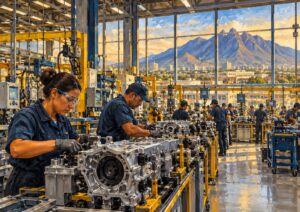
A manufacturer can be a legitimate company and still be a terrible choice for your products. This is why I tell clients to visit the factory before placing a substantial first order and to keep visiting once the relationship is established. I have seen factories making virtually identical products using machinery and production methods that differ by decades. One uses old equipment and minimal quality controls; another uses modern automated machinery and carefully documented procedures. Both claim on their websites to be world-class manufacturers.
In my speeches, I used to show a photograph of a factory as it appears on its website, followed by a photograph of what the factory actually looks like in real life. The difference can be considerable. I am convinced that a buyer who makes the trip personally, rather than sending only a paid inspector, becomes a real person to the factory's management. The factory knows the buyer cares enough to show up and is more likely to take that buyer seriously. I believe the visit itself improves the odds of getting good products. That does not mean every company needs to fly overseas to inspect every order. For relatively simple products, such as T-shirts, a good local quality-control firm can often handle the job. For complicated or safety-critical products, such as airplane parts, the consequences of inadequate oversight are far greater.
Start with the raw materials warehouse. Are the materials consistent with what the factory claims to manufacture? Are they properly stored and organized? Where do critical components come from, and what happens if a supplier fails to deliver? An empty warehouse is not automatically evidence of trouble, but management should be able to explain its inventory and purchasing practices. Next, examine the finished-goods warehouse and shipping area. Are products properly packed and labeled? Where are they being shipped? Pay attention to how the factory loads containers. We have learned a surprising amount about manufacturers simply by watching how they handle finished products. On the production floor, determine whether the factory has the equipment, technical personnel, and capacity to make your products on schedule. Ask what work it subcontracts and whether those subcontractors will have access to your designs or other confidential information.
I would also insist on meeting the person responsible for quality control. Ask to see inspection records and find out what happens when a product fails inspection. A factory with no meaningful quality-control system should worry you. One of our clients learned the hard way that an Indian supplement manufacturer's claimed Good Manufacturing Practice certification was fake. The factory lacked the capabilities our client needed, and the resulting losses were substantial. We had another client that was buying electrical products stamped as UL certified. They weren't. Have important certifications independently verified. A certificate does you little good if the factory printed it itself.
Finally, spend time with the people who run the factory. You need an honest discussion about production capacity, delivery schedules, and how management handles problems. If the factory checks out, invest time in the relationship. Good manufacturers are worth cultivating. Most importantly, if you have concluded that a factory is unsuitable, move on, but be sure to do so correctly.
4. Make Sure Your Contract Is with the Right Company
Many years ago, an American company contacted us after learning that its $2 million order of Christmas tree lights would not arrive in the United States until December. For a company selling Christmas lights, December delivery is a disaster. We called the Chinese factory, and it told us it had never heard of our client. It turned out our client had unknowingly been dealing through a sourcing agent. We figured this out by examining Chinese-language documents. The factory had stopped producing the lights because the sourcing agent owed it money. Our client had no direct contract with the factory and ultimately had to pay millions more to get its lights delivered on time.
This is why I want to know exactly who will make the products, who will receive payment, and which company will be legally responsible when something goes wrong. Sourcing-agent contracts create another problem. A European company received defective shoes from its Chinese manufacturer and refused to pay the remaining $800,000 or so. It was then sued in China by its own sourcing agent. The agent's contract entitled it to compensation for brokering each transaction regardless of whether the manufacturer delivered acceptable products. The agent had a good chance of winning, and our client eventually settled. Contracts like that are disturbingly common.
When a sourcing agent genuinely acts on your behalf, I still prefer a direct manufacturing agreement with the factory and a separate agreement covering the agent's services. When a trading company is legitimately acting as the seller, a different arrangement can work, but that company must assume clear contractual responsibility and have sufficient assets to stand behind its obligations. Be especially careful about companies operating through affiliates in Hong Kong, Singapore, Taiwan, or elsewhere. Such arrangements are common, but if your contract is with a company that has no meaningful assets while another company owns the factory, you had better understand what rights you have against each.
Your manufacturing agreement also needs to cover the problems that actually arise in international manufacturing. It should specify exactly what products are to be made, their required quality, delivery deadlines, inspection rights, and what happens if the manufacturer fails to perform. For many products, detailed specification sheets are essential. The agreement should also address unauthorized subcontracting, defective products, payment schedules, warranties, and remedies. I generally favor arrangements that keep meaningful leverage in the buyer's hands until the manufacturer has performed. Depending on the transaction, that can involve retention payments, security, or guarantees.
The governing law and dispute resolution provisions matter just as much. For exa ple, a contract that lets you sue a Chinese manufacturer in California is of limited value if the manufacturer has no assets in the United States. Chinese courts have become more willing to recognize and enforce U.S. judgments, but doing so remains expensive, time-consuming, and uncertain. For most relatively small manufacturing disputes, it makes little economic sense. See Enforcing U.S. Judgments in China: What Judgment Creditors Need to Know. A contract you cannot enforce against a company with assets is little consolation when your manufacturer has taken your money and disappeared.
5. Protect Your Intellectual Property Before the Factory Sees It
One American company retained what it believed was a leading U.S. manufacturer of a particular sporting goods product. The U.S. manufacturer said it would arrange to make the product in China. About a year later, our client discovered that the U.S. company owned no factory in China. It had subcontracted production to an unrelated Chinese manufacturer, which had begun selling our client's product as its own and had obtained a patent relating to the product. The dispute eventually led to extensive, expensive litigation in China and several U.S. states. Our client had never known who was actually making its product or what prevented that manufacturer from exploiting its designs.
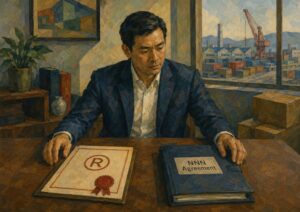
Before providing a prospective manufacturer with valuable designs, technical information, or manufacturing processes, make sure your intellectual property is protected. We frequently use NNN Agreements addressing non-disclosure, non-use, and non-circumvention. An ordinary Western nondisclosure agreement often fails to address the more serious risk that a factory will use your designs to make competing products. Not every manufacturing transaction requires an NNN. If you are buying ordinary products from a supplier's existing catalog, an elaborate confidentiality agreement often accomplishes little. The protections should reflect what you are disclosing and what the factory could do with it.
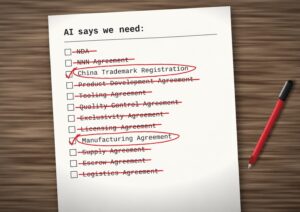
Trademarks require separate attention. Most countries are first-to-file jurisdictions, and we have repeatedly seen manufacturers, sourcing agents, and third parties register foreign companies' trademarks before those companies do. This creates serious problems when the buyer tries to export its products or change factories. See China NNN Agreement or Trademark Registration? Usually Both. f your manufacturer will develop your product or make custom molds, you also need agreements establishing ownership of the resulting designs, improvements, and tooling. Paying for a mold does not automatically guarantee that the factory will return it when you change suppliers. Our guide to molds and tooling in international manufacturing explains these issues in more detail.
6. Inspect Your Products Before Paying for Them
Too many companies contact us about defective products, or products that never arrived, after they have already paid the manufacturer in full. Most manufacturers will not ship before receiving final payment. I understand that. But there is no good reason to pay that final amount without first arranging an inspection. For most substantial manufacturing relationships, we recommend using an independent inspection company to examine the products against your specifications before shipment, with satisfactory inspection a condition of final payment. For complicated products, inspections during production matter as well. It is much easier to correct a problem after 500 units have been made than after 50,000 defective units are finished.
We once dealt with a company that bought a large shipment of fish from China. When the container arrived in Seattle, the buyer discovered that it contained some old, unusable fish and a large quantity of broken bricks. By then, the supplier had disappeared. That is why inspection procedures need to reflect the risks of the transaction. Examining samples or finished products is not enough when a supplier can substitute other goods during loading. For those situations, supervised container loading and verification of seals are important. Your manufacturing agreement should establish your inspection rights, acceptable defect levels, and what happens when goods fail inspection. It should also preserve appropriate remedies for defects discovered after delivery, because even a good inspection will not catch everything.
Product quality and legal compliance are separate matters. A product can meet your specifications and still violate safety, labeling, customs, or import requirements. Depending on what you manufacture and where you sell it, you also need to investigate the origin of materials and components and whether your supplier can document compliance with relevant laws. Our article on knowing and mapping your supply chain explains why this matters.
Keep checking your manufacturer
A factory that performs well on its first few orders can become a problem later. Ownership changes, financial trouble develops, experienced managers leave, and factories sometimes take on more business than they can handle. The risks increase when manufacturers are struggling financially. A factory that believes it is going out of business has less incentive to protect its reputation or maintain product quality. That is when you start seeing requests for larger deposits, unexplained price increases, late deliveries, and attempts to substitute cheaper materials. Pay attention to those signs. Keep reviewing quality and delivery performance, visit periodically, and recheck your supplier's financial and legal condition before significantly increasing your purchases. I have watched too many companies ignore warning signs because they had worked successfully with the same factory for years.
Why You Need to Do This Before Something Goes Wrong
One of the most frustrating parts of international litigation is explaining to a company that it has a good legal claim but no economically sensible way to pursue it. We regularly hear from businesses that lost between $3,000 and $100,000 to overseas suppliers. In many of these cases, litigation is a terrible economic proposition. A demand letter in the supplier's own language rarely accomplishes much against a company that has already decided to cheat you. Suing in the United States is expensive and often leaves you with a judgment you cannot economically collect. Suing overseas also requires substantial legal fees, and if you ordered products under a poorly drafted purchase order rather than a proper manufacturing agreement, your position can be weak from the start.
The calculation changes when more money is at stake, particularly if the manufacturer has identifiable assets and you have an enforceable contract. Even then, litigation is expensive and uncertain. I have spent decades helping companies deal with failed overseas manufacturing relationships. Some of our clients, however, have maintained overseas manufacturing relationships for decades, and those relationships have contributed enormously to their success. There are excellent manufacturers in China, Vietnam, India, Mexico, and elsewhere. Finding one is worth the effort.
Investigate your manufacturer before sending it money. Visit the factory or have someone reliable do it for you. Protect your IP, use contracts that work in the country where your products are being made, and inspect your products before making final payment. I would much rather have a client pay us to investigate a manufacturer and find out it is bad than pay us ten times as much to explain why suing that same manufacturer is probably a waste of money.
If you are considering a new overseas manufacturer, Harris Sliwoski can help with foreign company due diligence, international manufacturing agreements, and intellectual property protection.