





China Plus One in 2026: Why to Consider a Backup for Your China Factory
I recently spoke with a Beijing lawyer friend I have worked with on many cross-border disputes, and he asked how our China manufacturing work was going. "China is totally back," I told him. During the worst of the U.S.-China tariff battles, companies regularly came to us after trying to find manufacturers in Mexico, Vietnam, or elsewhere. They had concluded that the alternatives could not make their products, could not make them at the required quality or volume, or were too expensive even after accounting for the China tariffs. We hear that story much less now. Most companies contacting us about manufacturing in China have already decided to manufacture there.
He then asked about China Plus One, or China+1, the practice of adding manufacturing or sourcing outside China to reduce dependence on it. I told him we still discuss it about once a month, usually because I raise it. Often the client is already in a dispute with a Chinese manufacturer or with Sinosure, China's state-owned export credit insurer. At that point I want to know what happens to the company's business if its Chinese factory stops shipping. The answer may matter more than the legal merits of the dispute.
I have written about China Plus One since 2014, and my advice has changed less than the enthusiasm surrounding the strategy. China remains difficult to replace. A company can have very good reasons to keep manufacturing there and equally good reasons to make sure it has somewhere else to go.
Why China Is Still So Hard to Replace
China's advantage is the industrial system it has spent decades building. In one manufacturing region, a buyer can often find a capable factory, the component suppliers that feed it, the engineers who can fix a design problem, and the tooling shops that can make a replacement part in days. For a complicated product, having all of those people close together saves time and money that may never show up in a factory's quoted unit price.
This is especially important for small and midsize American importers, whose Chinese manufacturers may handle product development, component sourcing, tooling, packaging, and production. In another country the buyer may have to provide complete engineering files, arrange component supply, and manage far more of the process itself. A factory in Mexico or Vietnam might make an excellent product once the buyer solves those problems, but the cost of getting there can still make the move uneconomic. We have seen businesses spend months exploring alternatives and then decide to keep buying from China. I have no quarrel with that decision. The danger lies in assuming that a good relationship with one factory makes contingency planning unnecessary.
The China Plus One Conversations That Begin with a Dispute
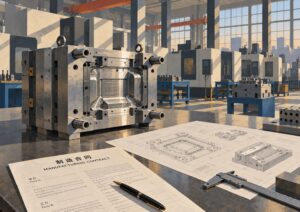
Consider a client we wrote about earlier this year. Its Chinese manufacturer demanded an immediate 34 percent price increase, and the factory had the client's molds, designs, and customer information. The buyer had signed a single agreement combining its manufacturing, tooling, and confidentiality protections, but the overlapping provisions and unclear remedies left it in a weak position. We advised against suing to recover the molds because, under that contract and in those circumstances, making new molds was likely to be quicker and less expensive. The new molds took longer than expected, production stopped, and the interruption nearly bankrupted the company.
Another American company told its Chinese manufacturer it needed a second factory to meet increased demand. It was not planning to leave China or even cut its purchases from the existing supplier. The factory nevertheless claimed ownership of the Chinese trademarks and patents covering the products and threatened to stop any other Chinese factory from making or exporting them. The parties settled, but only after six lawsuits in four different cities and two countries.
Those cases are why I ask about the buyer's ability to move production before discussing litigation strategy. I want to know who owns the molds, whether the buyer can actually retrieve them, and whether it has the native design files and specifications. I also want to know whether another factory could make the product and whether an unidentified subcontractor or component supplier has something the buyer cannot readily replace. A favorable judgment several years from now will not fill next month's customer orders.
Sinosure can make the calculation harder. A buyer that withholds payment over defective goods may find itself facing collection demands from Sinosure or its agents, and the dispute can affect its access to credit from other Chinese suppliers. We have handled more than 100 Sinosure matters, and one of my first questions is how much the company needs to keep sourcing from China. A business with no realistic alternative may need to approach the dispute differently from one that can keep operating elsewhere. Leaving China does not erase a legitimate debt or settle a contract claim, but it can change how dependent the buyer is on the Chinese manufacturing system while the claim is resolved.
Building a Second Plant in Thailand, and Who Can Afford It
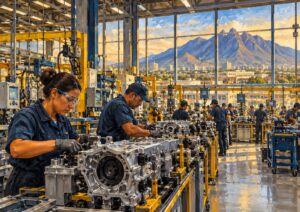
A recent AmCham Shanghai article on China Plus One in Thailand features Mark Plum and Alex Bryant of East West Associates, who have spent decades helping companies manufacture in China and Southeast Asia. One of their clients wants to replicate its Suzhou production at a new facility in Rayong, Thailand, making the same product to the same standard in either location and shifting work between them as costs, freight, duties, demand, and capacity change. For a company with the resources to run two plants, that flexibility has real value.
East West Associates describes recent greenfield projects costing $50 million to $100 million and taking roughly 18 to 24 months from the initial decision process to operation. Thailand has a substantial manufacturing base in electronics, automotive components, appliances, and HVAC equipment, and its Board of Investment can offer valuable incentives for qualifying projects. For companies prepared to build and operate a second plant, those advantages deserve attention. Many of our American importer clients are looking for a contract manufacturer, not a second plant, and a company buying $500,000 or $2 million worth of product a year cannot approach China+1 as a $50 million construction project.
AmCham Shanghai's 2026 China Business Report provides some context. Among its 262 responding member companies, the share redirecting planned China investment to other markets fell to 39 percent, the lowest in several years, and 48 percent of those redirecting investment chose Southeast Asia. Those figures tell us what AmCham Shanghai's members are doing, and many of them have substantial operations in China. They tell us much less about an American importer looking for a second contract factory.
The Problem with a Second Factory That Still Depends on China
A well known luxury brand client of ours moved manufacturing from China to Vietnam before COVID and for years told us how much it preferred Vietnam. Then it announced it was planning to move back to China. Its Vietnamese operation still needed components from China, sometimes on short notice because of design changes or inventory problems, and flying those parts in was driving up the costs. I told that story in our earlier discussion of whether companies should leave China.
Another client moved manufacturing from China to Latin America and discovered that it still needed a small spring from China. A spring can be a minor item on the bill of materials and still keep a capable factory from shipping finished product. That is the kind of dependence companies too often seem to find out about after they've committed to a new factory.
There is a geopolitical reason to look this closely at components. A disruption involving Taiwan could affect shipping and manufacturing well beyond the Taiwan Strait, and China has used export controls on critical materials, including rare earths, in its trade disputes. On November 9, 2026, China's Ministry of Commerce extended the suspension of certain October 2025 export controls through January 10, 2027. But the export licensing requirements imposed on seven rare-earth elements in April 2025 remain in effect. If both of your factories need a critical material that only China can reliably supply, moving final assembly has not solved that risk.
Tariffs and Country of Origin: Do the Math Before Moving
U.S. tariff rules have changed repeatedly in 2026. On February 20, the Supreme Court held in Learning Resources, Inc. v. Trump that the International Emergency Economic Powers Act did not authorize the president to impose tariffs. That decision did not eliminate the longstanding China-specific Section 301 duties or tariffs imposed under other statutes. In July, the Office of the U.S. Trade Representative imposed new Section 301 duties on imports from 60 economies over their failure to prohibit or effectively restrict imports made with forced labor.
China itself faces a new 12.5 percent duty on covered products, generally on top of its existing Section 301 tariffs. For a Chinese product already subject to a 25 percent Section 301 tariff, that can mean 37.5 percent in combined Section 301 duties before ordinary customs duties, assuming no applicable exemption. Vietnam and Thailand also face the new 12.5 percent duty on covered products, while Mexico faces 10 percent, with an exemption for goods entered duty-free under the USMCA. There are important product exemptions, including for goods subject to Section 232 tariffs. Those separate tariffs, which cover certain steel, aluminum, and other products, have their own requirements and do not necessarily disappear when manufacturing moves to another country. The point is to calculate the duties on your actual product before assuming that leaving China will save you money.
Country of origin is a separate problem. Shipping finished Chinese goods to Thailand for repackaging does not ordinarily make them Thai goods, though genuine manufacturing in Thailand can change the result, depending on the product and what the factory does. No universal percentage of local content automatically makes every product Thai, Vietnamese, or Mexican. Mexico is more complicated still because a product may have Mexican origin for one customs purpose and fail to qualify for preferential treatment under the USMCA. As we explain in our guide to moving manufacturing from China to Mexico, the USMCA has product-specific requirements, and Chinese inputs can affect whether the finished product qualifies for preferential treatment when it enters the United States. At the July 1, 2026 joint review, the United States declined to renew the USMCA in its existing form, though the agreement remains in force.
The Uyghur Forced Labor Prevention Act creates another risk for products manufactured outside China when they incorporate covered inputs from Xinjiang or from entities on the UFLPA Entity List. A factory move does not necessarily eliminate that exposure. For an important relocation decision, I would want a customs specialist to determine the proper classification, the applicable origin rules, and the total duties before anyone signs a long-term manufacturing commitment. When the answer is uncertain, U.S. Customs and Border Protection's binding-ruling process is worth considering.
Protect the Ability to Move Before You Announce You Might
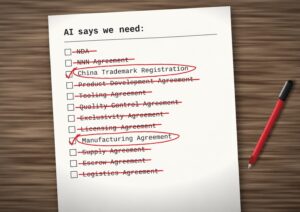
A company considering China+1 should review its existing Chinese manufacturing relationship before giving anyone else its designs or telling its current factory it might lose business. Start with what you will need to make the product elsewhere. Verify who owns the tooling, whether the contract requires its return, who has the native CAD and other technical files, and whether your factory can legally withhold them. Register and protect important trademarks and other intellectual property in the countries where you manufacture and plan to manufacture. Our articles on China exit planning and IP and protecting IP when manufacturing beyond China explain why this work should come before the supplier learns of your plans.
We have seen what happens when a company gets the timing wrong. In one case we described years ago, a U.S. buyer told its Chinese manufacturer it would be moving production to Mexico and Thailand and then discovered that someone in China had registered its brand names and logos as trademarks in those countries. The company now faced an obstacle to manufacturing under its own brand in the very places it hoped to go. I would rather spend money on trademark searches and filings before the move than on a fight over who has the right to use the brand afterward.
Good contracts also matter when things go wrong. One client's Chinese manufacturing agreement clearly gave it ownership of the molds at its factory. When the factory refused to release them, we retained Chinese litigation counsel, filed suit, and secured a court order freezing the manufacturer's bank accounts within about five days. The factory released the molds the next day. We have written about that case and why the contract mattered. The result was unusually quick, and the availability of that remedy depends on the facts and the local court. It is a useful contrast with the company forced to remake its molds after its contract failed to give it a practical path to recovery.
Once a new manufacturer is identified, the legal work continues. The agreement needs to fit the country's law and the actual production arrangement. The buyer needs clear rights over its designs, tooling, and product-development work, enforceable specifications and quality standards, meaningful restrictions on unauthorized subcontracting, and a sensible way to resolve disputes against the party that actually controls production. A Chinese NNN or manufacturing agreement should not simply be relabeled for use in Thailand or Vietnam. A company building its own factory, rather than hiring a contract manufacturer, also has investment, labor, tax, and environmental requirements to deal with.
What I Recommend to Smaller Importers
Start with the product, not a list of supposedly hot manufacturing countries. Thailand may be an excellent choice for an electronics or appliance maker and Mexico for products sold mainly in North America, but what matters is whether an actual factory can meet your specifications, volume, price, delivery needs, and compliance requirements, using components it can reliably obtain. Count the complete landed cost of the finished product and the expense of managing a second supplier. I see no point in moving production if it means worse products or costs that make your business uncompetitive.
For many smaller businesses, I would begin by qualifying a backup manufacturer without immediately moving a large portion of production. Have it make samples and, where feasible, a trial production run. Verify its legal identity and capabilities, see whether its suppliers can support the product, and establish how long it would take to increase production if the Chinese factory stopped. At the same time, secure the rights and technical information you need to use that backup. Some companies will find that meaningful diversification is too expensive for now. They will at least know their exposure and can decide whether additional inventory, alternative components, or better contracts would reduce it.
I am happy to help a client keep manufacturing in China when China remains its best option. What I do not want is for that client to discover, in the middle of a fight over invoices or molds, that nobody else can make its product and that its current factory knows it.