Foreign Contractors and Distributors: The International Sales Shortcut That Often Backfires
Many companies want foreign sales without a foreign footprint: no subsidiary, no payroll, no local employees, no leased office, no permanent commitment. That can be a sensible way to test a market. But for many businesses, that first move into international sales is also the start of expensive and unanticipated problems.
In the early 2000s, Western companies rushed into China before they understood it. I would urge them to start smaller by using a distributor, an agent, or some local partner. Most wanted the opposite. They wanted control, speed, and the comfort of telling their boards they were “in China.”
Now many companies have overcorrected. Tariffs, sanctions, supply-chain shocks, and geopolitical risk have made U.S. businesses wary of putting people, assets, and legal entities into foreign markets. So they are going back to distributors, sales agents, “independent contractors,” and other ways to sell without putting down roots.
The calls we are getting now sound like this: “We called him an independent contractor, but now the foreign labor authority says he was really our employee, and they also want to tax us for doing business in their country for the last three years. We did not expect any of this.”
The appeal is obvious: sell abroad without forming a company there. Find someone in the country, give the relationship a low-commitment label, pay a commission or margin, and start selling. This works only when the structure matches reality. In many countries, a casual sales arrangement can create employment claims, commercial agent rights, tax exposure, regulatory problems, and ugly fights over customers, commissions, exclusivity, and termination.
A good overseas partner can help a company test a market before it spends real money. But too many companies treat these arrangements as informal, low-risk workarounds. They sign long-term distributor agreements with no performance requirements. They call people independent contractors while treating them like country managers. They hand foreign representatives broad authority without asking the basic questions: Is this person really independent? Can this person bind the company? Who owns the customer? What happens when the relationship ends?
An independent contractor label will not force a foreign court, tax authority, or labor agency to see the relationship the company’s way. “Distributor” is just as dangerous a label if the distributor is not really buying and reselling for its own account. What matters is not the label, but what the person does, how they get paid, who owns the customer, who handles product obligations, and how the company gets out.
The $650,000 Wake-Up Call
A U.S. equipment manufacturer hires a sales representative in Spain to develop customers, visit prospects, and close sales. The agreement calls him an independent contractor. The company gives him a company email address and a regional sales title, sends target lists, sets pricing direction, and checks in every week.
When the company terminates him, the “contractor” goes to the local labor authority and says he was the company’s employee in everything but name.
The authority looks at the working relationship: control, dependence, title, customer-facing role, daily work. The bill can include unpaid employer social contributions, severance, vacation pay, penalties, and legal fees. We have seen these disputes cost seven figures, especially when a country’s income tax authorities step in as well.
How the Contract Stops Matching the Relationship
The country changes. The pattern does not. A U.S. business does not want to form a subsidiary, hire locally, run payroll, register for taxes, or deal with local product, privacy, warranty, and employment rules. So it finds someone in the target country and signs a short U.S.-style independent contractor agreement.
The agreement says the person is not an employee, will pay their own taxes, cannot bind the company, must sue in the United States, and can be terminated at will. Then the business behaves differently from the contract.
The representative becomes the company’s face in the country, visiting customers, quoting prices, discussing delivery, offering discounts, handling warranty questions, and sometimes accepting purchase orders. Customers see a company representative. Management sees “just an independent contractor.”
That gap between paper and practice is where the trouble begins. While sales are coming in, nobody wants to revisit the paperwork. But when the company terminates the contractor, swaps in a new distributor, decides to sell directly, or gets pulled into a tax or regulatory issue, the old agreement suddenly matters. Nine times out of ten, it is so badly written that it harms the company that wrote it.
Just today, I examined an “independent contractor” agreement that referred to the independent contractor as an “employee” multiple times. It also put so many controls on what this contractor/employee could do that it harkened back to the days when I worked 8 to 4 in a factory in Michigan and needed approval from a union boss to leave my station to go to the bathroom.
“Independent Contractor” Is Not a Defense
A title at the top of a contract does not change the relationship. In nearly all countries, classification depends on what the parties actually do, and local authorities look at the operational facts. Did the company control how the work was performed? Was the person economically dependent on it? Did customers see the person as part of the company? Could the person quote prices, approve discounts, accept orders, or make promises? A court will care less about the independent-contractor clause than about the company email address, the title, the sales instructions, and the customer-facing role.
The problem is simple: the business wants the benefits of a local employee, sales office, or distributor without the obligations that come with that control. Few legal systems let companies have it both ways. A real independent contractor has multiple clients, controls how the work is done, bears commercial risk, avoids misleading titles, and cannot bind the company. Many foreign sales “contractors” fail that test badly.
If you are running an overseas sales arrangement now, the relationship is easy enough to test yourself. The more of the following that are true, the less likely the independent contractor label holds:
- working only or almost only for the company;
- taking a fixed monthly payment;
- using the company’s title, email address, or sales materials;
- negotiating prices or making promises to customers;
- being restricted from selling for others;
- handling imports, registrations, warranties, or customer complaints;
- collecting customer data; or
- holding exclusive territory rights with no clear sales targets.
- If several are present, the relationship may not be what the contract says, and neither a foreign court nor a tax authority is bound by the label you gave it.
When the “Contractor” Becomes an Employee
The most obvious risk is misclassification. The company thinks it hired a contractor. The contractor later says he was an employee. The issue often surfaces when the company tries to end the relationship. Employee status can mean unpaid wages, vacation, benefits, employer social contributions, payroll taxes, severance, penalties, interest, and attorneys’ fees. Some countries add administrative sanctions for failing to register as an employer.
This can happen even when the person signed a contract that expressly disclaimed employee status, invoiced through his own company, or asked to be treated as a contractor. Employment laws in many countries protect workers even from agreements they willingly signed. In fact, I have seen some governments use the disclaimer as additional evidence: why did you feel the need for a provision disclaiming your employee’s ability to claim to be an employee unless you knew he was well-positioned to make such a claim?
The risk rises when the contractor is an individual, works full-time or nearly so for one company, takes a fixed monthly payment, cannot realistically work for others, and is presented to customers as part of the team. The more the relationship looks like employment, the less the contractor label helps.
The risk also rises when you assume that what counts as an independent contractor in another country is the same as in yours, or when you try to use the same agreement in multiple countries.
The Commercial Agent Trap Most U.S. Companies Miss
Employment classification is only the first issue. A person can be a true independent contractor and still hold legally protected rights as a commercial agent. A commercial agent builds the market, introduces customers, negotiates deals, or gets orders over the line. He may invoice the company, operate independently, and still not be an employee. Local law may protect him anyway because the work created customers and goodwill for the principal’s products.
A commercial agent may be entitled to notice, unpaid commissions, a termination indemnity, or compensation tied to the goodwill he built in the territory. These rights can apply even if the contract says otherwise, even if it chooses U.S. law, and even if the company thought it could walk away whenever it wanted.
Many countries will take seriously a claim from an agent who spent years developing a market, introducing customers, building trust, and creating value the principal still enjoys after termination. A U.S. manufacturer appoints a sales representative in Mexico. Over several years, the representative introduces the product, works trade shows, cultivates distributors, negotiates with customers, and builds a steady stream of orders. Five years in, the manufacturer decides the market is worth handling directly, or wants a larger distributor.
It terminates the representative and assumes that ends things. The representative sees it differently: “I built this market for you. You are still selling to customers I brought in. You owe me.” In some countries, that argument supports a real termination claim.
How Companies Lose Control of the Market
At the start, the foreign representative knows the customers, the language, the trade shows, and the local habits better than the company does. That is useful until it becomes leverage. If the agreement does not say who owns the customer list, domain name, website, social media accounts, trademark filings, and market data, those assets become weapons when the relationship ends.
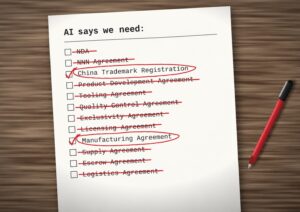
Trademark risk deserves its own attention. In many countries, trademark rights turn on registration, and the first to file can create serious problems. A local contractor, agent, or distributor may register the company’s brand, logo, product name, or domain in his own name. Sometimes this is deliberate. Sometimes he thinks he is helping. Either way, it becomes a mess. Companies should file key trademarks before they start selling into a country. Filing early is almost always cheaper than recovering the brand after the relationship sours.
In many countries, the party that uses a trademark can gain rights to it. If your country representative is using what you think is your trademark, sort this out now, before “your” trademark is deemed your country representative’s trademark.
Customer ownership matters just as much. If the contractor builds the market, the company will want to keep those customers after he is gone. The contractor may see them as his, especially if local law gives him commercial agent rights or the contract says nothing about post-termination sales.
A Distributor Helps Only If It Is Really a Distributor
Some businesses hear about contractor risk and decide to call the person a distributor instead. That helps if the person is actually a distributor. It does not help if the label is false, or if the agreement gives away a market for nothing in return.
A true distributor buys products and resells them for its own account. It earns a margin, carries commercial risk, may hold inventory, and sells in its own name. A sales agent promotes or negotiates sales for the company; the customer buys from the company, and the agent takes a commission. The distinction drives tax, liability, customer ownership, product obligations, termination rights, competition law, and control. Distributor relationships carry their own risks too: dealer termination laws, franchise rules, warranty obligations, competition restrictions, and notice or compensation requirements.
We see one distributor problem constantly: a foreign distributor asks for exclusivity, seems connected, signs a long-term agreement, and then sells nothing. It does not build the market, attend trade shows, call on customers, hire a sales team, or spend a dollar promoting the product. Years later the supplier finds a better distributor, wants to terminate the first, and we deliver the bad news: termination may trigger a lawsuit the supplier could lose. The reaction is nearly always the same: “They sold nothing. How can we be stuck?”
Maybe the distributor acted in bad faith. But courts enforce bad bargains all the time. If the supplier wanted minimum sales, milestones, marketing obligations, reporting duties, or termination rights for nonperformance, those terms had to be in the agreement.
The next question is usually this: why would a distributor sign a contract it never intended to perform? Often the answer is simple. It wanted to keep the supplier out of the market. Maybe it had a competing product, wanted to protect another relationship, or wanted leverage. The strategy worked because the supplier gave away the territory without requiring sales.
So these agreements need teeth: minimum sales, purchase commitments, marketing obligations, reporting, exclusivity tied to performance, and termination rights. If a distributor wants exclusivity, it should have to earn it and keep earning it. One that sells nothing should not be able to block the market for years.
The Real Fight Usually Starts at Termination
At the start, the company wants sales and the representative wants the work. Nobody wants to spend money on the breakup. The fight usually starts for one of two reasons: the sales fail, or the sales succeed. If they disappoint, the company wants out. If they succeed, the company wants the market in-house or the representative wants a better deal. Either way, the representative may claim the company is cutting him out of value he created.
The agreement should spell out how the relationship ends: notice, grounds, commissions, pending orders, customer transition, trademark use, inventory, warranties, records, and dispute resolution. Local mandatory law may override the contract, so check it before sending a termination notice.
Tax Is Often the Sleeper Issue
Tax risk stays hidden until the sales grow large enough for someone to care, and then it can become the biggest problem in the room. In tax language, this is the permanent establishment problem. The practical question is simpler: has the company stopped merely selling into the country and started doing business there through a local person?
The answer is fact-specific and varies by country and treaty. The risk rises when the person on the ground negotiates contracts, plays the lead role in closing sales, holds inventory, uses an office for the company’s business, accepts orders, or works almost exclusively for the company. Companies often assume they are safe because they have no foreign subsidiary, but a subsidiary is not required. The wrong sales arrangement can be enough. The consequences can include back taxes, penalties, interest, VAT or GST exposure, withholding obligations, and a long fight with a tax authority the company may win only after real cost and disruption.
The same exposure surfaces in financing, investment, and M&A. A buyer or investor will ask where the company sells, who sells for it, and whether the arrangement created local tax presence. One sloppy contractor relationship can cut valuation, delay closing, or force money into escrow.
The Compliance Problems That Surface Too Late
Employment, agency, and tax get the most attention, but a foreign contractor, agent, or distributor can also create regulatory problems that sit quietly until a customer complains, a shipment gets stopped, or a regulator starts asking questions.
Product Legality and Import Rules
The product may not be legal to sell without registrations, certifications, labeling changes, import approvals, local warranties, or a licensed importer. This comes up constantly with regulated and semi-regulated products: anything involving health, safety, performance claims, labeling, warranties, or technical standards. When the local contractor says there is no problem selling it, treat that as a sales pitch, not legal advice.
Anti-Corruption, Sanctions, and Export Controls
A local representative may deal with state-owned companies, hospitals, procurement officials, military buyers, or politically connected distributors. High commissions, vague services, offshore payment requests, hidden end customers, unusual shipping routes, requests for cash, and pressure to keep things undocumented are all warning signs. If something goes wrong, “That was our contractor, not us” will not get the company far, least of all if it saw the red flags and looked away.
Data Privacy and Customer Information
If the representative collects customer data, including names, contact details, payment information, warranty claims, and marketing leads, privacy laws may apply. Sending that data to a U.S. company can trigger privacy notices, data-processing terms, cross-border transfer rules, and breach notification duties. Companies ignore privacy because the person is “just doing sales.” But sales is exactly where customer data gets collected.
A contract alone will not fix all of this, but it should say who handles registrations, labeling, warranties, returns, recalls, customer complaints, data protection, and regulatory inquiries. A generic independent contractor agreement answers none of these questions.
When These Arrangements Actually Work
There is nothing wrong with using a foreign contractor if the relationship is actually a contractor relationship. A lower-risk contractor has an established business, multiple clients, no authority to bind the company, no misleading title, and no real integration into its sales operations. Even then, the company must check employment, commercial agency, tax, product-regulatory, and privacy issues in the relevant country.
A limited market test may call for a narrow referral arrangement with no authority to negotiate or bind. A serious market entry may require a real sales agency agreement, a true distribution agreement, an employer-of-record arrangement, a subsidiary, or a local hire. A regulated product may need product registrations, a licensed importer, local labeling, and a local warranty structure before any sales begin. Match the structure to the size of the opportunity and the regulatory risk. A low-value market test does not need what a serious country launch needs.
Structure the Relationship Before It Becomes a Claim
A foreign sales agreement should not be a lightly edited U.S. contractor or distributor form. It should match the country, the product, the sales role, the regulatory burden, and the exit plan.
For contractors and sales representatives, the key issue is authority. Can the person quote prices, approve discounts, accept orders, handle imports, manage warranties, collect customer data, or appear to customers as the company’s local office? For distributors, the key issue is performance: minimum purchases, marketing obligations, reporting duties, and real consequences for falling short. Exclusivity should be earned and kept.
The agreement also needs to say what happens when the relationship ends: who owns the customers, market data, domains, regulatory filings, trademarks, social media accounts, pending commissions, and transition obligations. It should bar the contractor or distributor from registering the company’s brand assets in its own name, and it should require compliance with anti-corruption, sanctions, export control, privacy, product, and import rules.
The fix depends on the relationship. A narrow referral arrangement may work for a small market test. A true distributor model may work if the distributor buys inventory, carries risk, and sells in its own name. An employer of record can reduce payroll and classification risk, but it will not solve tax, permanent establishment, or commercial-agent problems if the person still functions as the company’s local office. If the market is large enough and the person is really part of the team, the cleaner answer is usually a local hire, a local entity, a real distributor, or a proper sales agency agreement under the law that actually matters.
Labels do not solve international sales problems. Structure does. If someone is selling overseas for the company, the agreement must match the actual relationship, the applicable law, the value of the market, and the exit plan. Otherwise, the shortcut can become the most expensive part of the expansion.