Buying Chinese Brands: The Three Keys
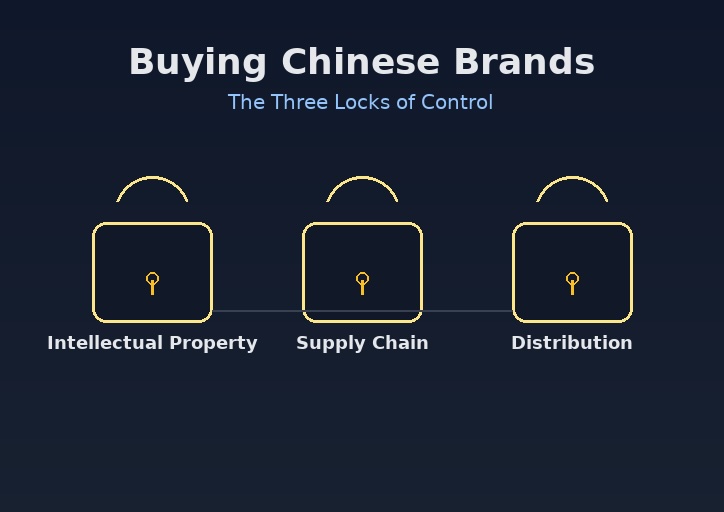
There are three keys to buying a Chinese brand: CNIPA-recorded IP, a China-enforceable supply contract, and distribution channel control.
U.S. Foreign Direct Investment and the New CFIUS Rules The Committee on Foreign Investment in the United States (CFIUS) is the front line of America’s national security defense in an era of volatile geopolitics. For many technology companies, understanding CFIUS is essential to raising capital, structuring deals, and ensuring long-term viability. Established in 1975, CFIUS
Is Hong Kong Irrelevant? I recently had a nearly two-hour conversation with a Beijing lawyer friend of mine. He’s with a Chinese law firm, and our talks often involve exchanging insights about our respective countries—both of us aiming to better understand emerging trends for our law firms’ future focus. I value these discussions highly as
The U.S. Outbound Investment Final Rule: What It Means for American Business Executive Summary Effective Date: January 2, 2025 Key Impact: Restricts U.S. investments in Chinese tech sectors Affected Industries: Semiconductors, quantum computing, AI Penalties: Up to $368,136 or 2x transaction value Required Action: New compliance programs by January 2025 On October 28, 2024, the
China for SMEs Even amid riasing political and economic tensions, the China market remains attractive to certain businesses, especially SMEs, because of its massive middle class (about 400 million) and its robust, relatively accessible manufacturing ecosystem. However, the complexities of doing business in China can present significant challenges, and for companies lacking the resources of
As lawyers, we spend a lot of time fielding good, bad, weird, interesting, deep, superficial, and all types of other questions from people. We’re generally expected to be oracle-level wizards, a lot like people are treating AI now. In this series, we’ll share some of these questions that people ask us, along with our answers.
Should You Work for a Chinese Company? As lawyers, we spend a lot of time fielding good, bad, weird, interesting, deep, superficial, and all types of other questions from people. We’re generally expected to be oracle-level wizards, a lot like people are treating AI now. In this series, we’ll share some of these questions that
The Update on the TikTok Ban In The Ticking Clock to a TikTok Stop, I discussed the TikTok ban bill then under consideration in the United States Congress. The bill aimed to address concerns over national security and data privacy, stemming from TikTok’s ownership by ByteDance, a Chinese company. Fast forward to today, and the bill
Navigating the Nuances When Working with Foreign Companies and Legal Professionals Way back in 2009, I wrote a blog post on the challenges and cultural differences I encountered while working with lawyers in Asia. At that time, my observations were primarily based on representing American companies entering Asian markets. Since then, this one post has