







Paying Chinese Suppliers in Dollars or RMB: Why Your Contract Matters
The yuan's rise against the dollar in 2026 reminded me of a lunch I had in 2021 with Jared Van Orden and Devin Taylor of GPS Capital Markets. The yuan had strengthened sharply then, too, and Chinese manufacturers were demanding price increases from their American customers. Jared asked how many of those manufacturers had offered discounts when exchange rates moved in their favor. We both knew the answer.
I've seen this problem many times in our China manufacturing practice. A buyer agrees on a price, commits to production, and then learns the factory wants more money because exchange rates have changed. By then, the manufacturer often has the buyer's deposit and molds. Choosing between dollars and yuan determines who initially bears the currency risk, but that means little if the factory can demand more money halfway through production. Your manufacturing contract needs to make the agreed price stick.
Should You Pay Your Chinese Manufacturer in Dollars or RMB?
If your company earns its revenue in dollars, a fixed dollar price makes budgeting easier. You know your dollar cost for orders covered by that price, without taking on the direct exchange-rate risk between ordering and payment. Your Chinese manufacturer has a different perspective. Its employees, utilities, and domestic material suppliers are usually paid in renminbi (RMB), China's currency, commonly called the yuan. Receiving RMB eliminates the need to convert dollars to cover those expenses and reduces the factory's exchange-rate exposure. A manufacturer may offer a lower RMB price because it no longer has to worry about what its dollar payments will be worth when converted to yuan.
Other Chinese manufacturers prefer dollars because they buy imported components in dollars or have other dollar-denominated expenses. Their currency preference reflects their costs and financial arrangements, which aren't necessarily the same as yours. I would ask for prices in both currencies. Make sure the quotations cover the same products, quantities, delivery terms, and payment schedule. Then compare the total costs, including currency conversion and banking fees.
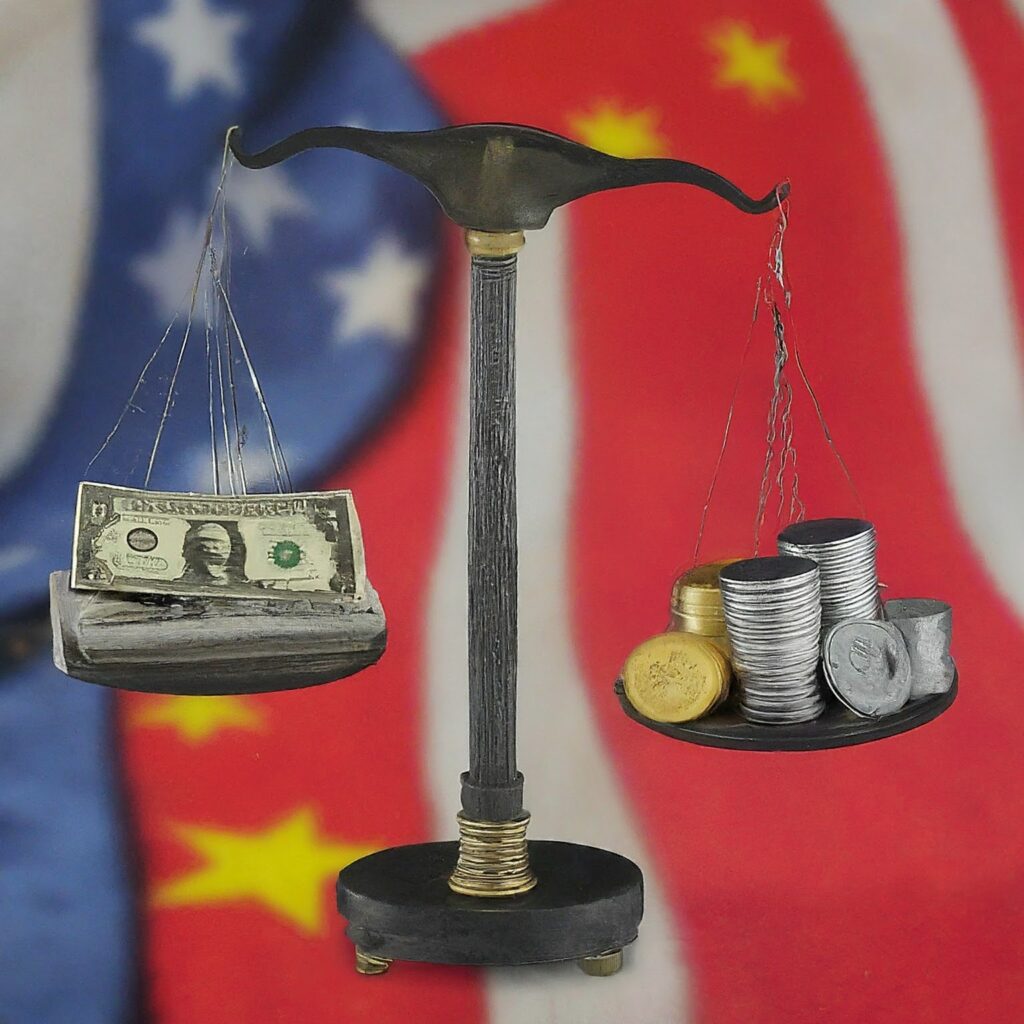
Suppose your Chinese manufacturer offers to produce a product for either $10 or RMB 70 per unit. At an exchange rate of seven yuan to the dollar, those prices are equivalent. Now suppose the yuan strengthens and one dollar buys only RMB 6.5. If you agreed to pay RMB 70 per unit, your dollar cost rises to approximately $10.77. On an order of 100,000 units, that exchange-rate movement adds nearly $77,000 to your manufacturing costs. If you instead agreed to a fixed price of $10 per unit, your dollar cost remains $10 for orders covered by that commitment. The manufacturer absorbs the immediate exchange-rate loss. When the yuan weakens, the reverse happens: RMB pricing becomes cheaper in dollar terms, while the manufacturer benefits from a fixed dollar price because the dollars it receives buy more yuan.
When Paying in RMB Makes Financial Sense
RMB payments deserve serious consideration, particularly for companies buying substantial quantities from China. The Reserve Bank of Australia reported in August 2026 that the share of Chinese trade settled in RMB had roughly doubled since 2021, reaching around 35%. Part of that growth initially came from trade between China and Russia, particularly Russian oil exports, and the figure tells us little about RMB use among American importers. But the banking arrangements for international RMB payments are well established, so American companies should evaluate RMB pricing rather than assume dollars are their only practical option.
If your manufacturer offers a lower RMB price, find out what that price will actually cost you. Get quotations from your bank and an established foreign-exchange provider. Banks and currency specialists charge fees and earn money through exchange-rate spreads, and those costs vary considerably. A discount that looks attractive at the published exchange rate can disappear after conversion costs.
There is also a practical distinction between onshore RMB (CNY) and offshore RMB (CNH). They are markets for the same currency, but their exchange rates and settlement arrangements can differ. An American company can make cross-border RMB payments to an eligible Chinese supplier without establishing a Chinese subsidiary. Before agreeing to pay in RMB, confirm with your bank and the manufacturer that the receiving account can accept the payment, what documents are required, and whether the quotation covers an export transaction rather than a domestic Chinese sale. That last distinction can affect VAT treatment, export documentation, and the actual price.
Be particularly careful if switching currencies also means changing bank accounts or payment recipients. Verify any new instructions independently. Payment should ordinarily go to the Chinese company that signed your manufacturing agreement. If the supplier wants payment sent to a different company, get proper written authorization and confirmation that the payment satisfies your debt to the contracting manufacturer. An unexpected change in banking instructions is also a warning sign for the bank account switch scam, which has cost international buyers millions.
For companies making substantial or recurring RMB payments, I strongly recommend investigating currency hedging. A forward contract, for example, can lock in an exchange rate for a future payment. If you know you'll owe your Chinese manufacturer RMB 5 million in three months, securing that exchange rate now can protect your dollar costs against an unfavorable currency movement. There are trade-offs. A forward contract can leave you worse off than an unhedged payment if exchange rates move in your favor. It can also create problems if your factory delays production or an order is canceled, leaving you with a currency commitment you no longer need. RMB hedging costs and availability depend on the provider, transaction size, and payment date, so get an actual quotation rather than assuming an attractive forward rate will be available.
My starting position for smaller American companies earning their revenue in dollars is fixed USD pricing. It's straightforward and easier to manage. But if the Chinese factory offers a meaningfully better RMB price, I want to see the numbers. I would not advise a client to pay more simply because dollars are familiar, nor would I advise betting on where the yuan will be six months from now. If currency movements threaten your profit margins, look into hedging rather than trying to predict exchange rates.
Why Your Fixed Manufacturing Price May Not Be Fixed
A Chinese factory squeezed by a stronger yuan has a financial problem. Its workers and suppliers still expect to be paid, and its profit margins have shrunk. But that doesn't give it an automatic right to charge its customers more. If your manufacturing agreement establishes a fixed price for accepted purchase orders, the factory generally cannot unilaterally increase that price simply because exchange rates have moved against it. Chinese law provides limited relief for extraordinary changes in circumstances. Article 533 of China's Civil Code permits renegotiation when an unforeseeable change outside ordinary commercial risk makes continued performance clearly unfair. If negotiations fail, a court or arbitral institution may modify or terminate the contract. Ordinary exchange-rate fluctuations generally fall within commercial risk.
The Supreme People's Court's 2023 interpretation, Article 32, reinforces the distinction between ordinary commercial risk and extraordinary changes. It also confirms that parties cannot exclude Article 533 in advance. A manufacturing agreement can still allocate ordinary exchange-rate risk to the factory, making it harder for the manufacturer to argue that an unfavorable currency movement was outside the risk it agreed to bear. What concerns me more is whether the factory is obligated to keep producing at the agreed price. Several years ago, our lawyers were negotiating a manufacturing agreement for a client using a Vietnamese factory. The agreement supposedly locked in the manufacturer's prices, but the factory refused to commit to accepting future purchase orders at those prices. Our lawyer explained that the price guarantee was effectively worthless. Whenever the factory wanted more money, it could simply refuse new orders until the buyer agreed to pay.
We encounter the same problem with Chinese manufacturers. A price guarantee means very little if the factory remains free to reject future orders whenever it wants more money. We discuss this problem in China Manufacturing Contracts: Why Your Draft Does Not Work. A meaningful price guarantee requires the factory to accept and fulfill qualifying purchase orders at the agreed price. That generally requires a purchasing commitment from the buyer as well. No sensible manufacturer will guarantee pricing indefinitely to a customer who refuses to commit to buying anything. But if you're committing to substantial purchases over a specified period, you should get meaningful price protection in return.
The agreement also needs remedies if the factory refuses to produce or deliver goods covered by an accepted order, particularly when it already has your deposit or finished products. In our China manufacturing agreements, we often use liquidated damages provisions tied to specific breaches, including late delivery. A defensible damages amount can help support an application to a Chinese court to preserve the manufacturer's assets, potentially including a freeze of its bank accounts. The freeze is not automatic. It requires a separate court application, satisfaction of the applicable legal requirements, and often security from the buyer. Chinese courts can also reduce excessive agreed damages. We explain these issues in How to Get Your China Product Deliveries on Time.
What Your China Manufacturing Contract Should Say About Currency
Our China manufacturing lawyers address currency and pricing before production begins. Once the factory has your money and moving production would take months, your negotiating position is considerably weaker. The agreement must identify both the currency used to establish prices and the currency used to make payments. Those can be different. A contract might establish a $10 unit price but require payment in RMB. If so, it needs to specify how the conversion works, including the exchange-rate source and the date used to calculate the payment. The rate on the purchase-order date can differ substantially from the rate when payment becomes due.
I generally favor fixed pricing for an agreed period, with ordinary exchange-rate risk expressly allocated to the manufacturer. Some Chinese factories accept this for three or six months but refuse a longer commitment. Others insist on a provision permitting price adjustments when exchange rates move significantly. Those arrangements are negotiable, but the formula needs to be clear. For example, the parties can agree to adjust prices if the exchange rate moves more than 5% from a specified reference rate. The contract should state how that movement is calculated, whether the adjustment applies to the entire product price or only the portion affected by currency changes, and whether it applies to existing orders or only future ones.
If the factory wants protection when the yuan strengthens, I want to know why my client shouldn't receive a corresponding price reduction when the yuan weakens. Unless the manufacturer is offering something substantial in return, I see no reason to accept that imbalance. The agreement should also allocate bank charges and conversion costs and establish payment deadlines. If the manufacturer delays issuing an invoice, it should not be allowed to use that delay to select a more favorable exchange rate. These provisions belong in a China-specific manufacturing agreement that identifies the actual Chinese legal entity, establishes enforceable production and delivery obligations, and addresses ownership and return of the buyer's molds and tooling. For most mainland Chinese manufacturing relationships, our preference is a bilingual agreement with Chinese controlling, governed by Chinese law, and enforceable in an appropriate Chinese court.
A manufacturing contract drafted for American business disputes often provides little leverage against a Chinese factory. You need an agreement designed for enforcement where the manufacturer and its assets are located.