






The Nvidia Scandal and the China Business Problem We Keep Seeing
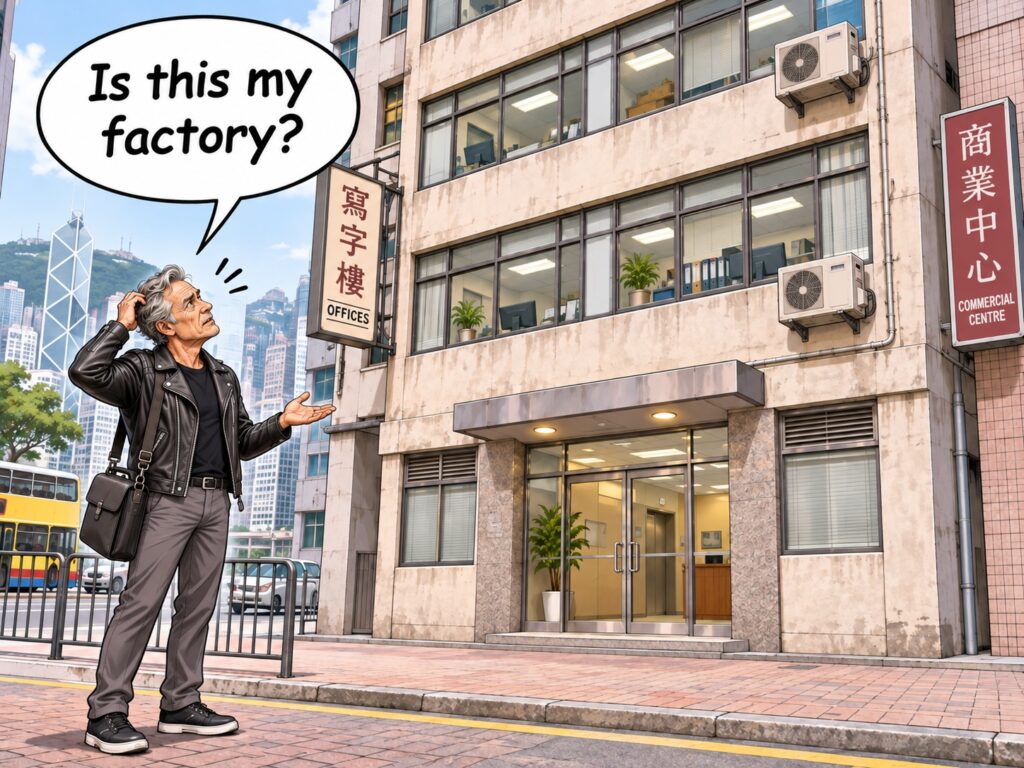
Around twenty years ago, an American company called us because its $2 million order of Christmas tree lights was not going to arrive in the United States until December. For a company selling Christmas lights, December delivery is a disaster. We contacted the Chinese factory, only to learn that the people there had never heard of our client. After speaking with the factory and reviewing Chinese-language documents, we discovered that the American company had unknowingly been dealing through a sourcing agent that owed money to the factory. The factory had stopped production because it had not been paid, and our client had no direct contract with the company actually making its products. The American buyer ended up paying millions more to get its lights delivered in time.
I have told that story for years because the underlying mistake is so common. A company thinks it knows its Chinese manufacturer because it has been doing business with the same people for years. It knows who sends the invoices, who answers the emails, and where to wire the money. What it sometimes doesn't know is which company actually controls production, who owns the assets, and who will be responsible when something goes wrong. As I explain in our guide to overseas manufacturing due diligence, those are things you need to establish before sending money or committing your business to a supplier. The scandal surrounding Nvidia and its former CEO, Jensen Huang, has brought a much larger and more complicated version of these questions into public view.
The Nvidia Scandal and the Question of Who Controlled Megaspeed
On November 12, 2026, Nvidia announced Jensen Huang's resignation as CEO amid revelations of his affair with Alice Huang (no relation), a Chinese businesswoman and former executive of Megaspeed International, a Singapore-based purchaser of Nvidia's advanced computing equipment. American intelligence officials reportedly suspect Alice Huang of having connections to Chinese intelligence. China denies those allegations, and no public proceeding has established that she engaged in espionage or that Jensen Huang was coerced into acting on China's behalf. Much of the coverage has focused on the affair and its national security implications, but the business relationships surrounding Megaspeed deserve attention too. According to The Washington Post's investigation, Megaspeed's assets increased from approximately $33 million in 2023 to $3 billion in 2024. A relatively obscure company had become a major purchaser of some of America's most strategically sensitive technology, yet basic questions remained about who financed and controlled it and where its chips ultimately went.
My longtime friend David Dayton recently wrote an excellent article about the controversy, I Don't Own a Leather Jacket or Have a Chinese Mistress. David has spent more than 30 years working in China and Southeast Asia, speaks Mandarin and Thai, and understands Chinese business as well as anyone I know. His article examines the leverage China's business and political system gives the government over companies and individuals. I share many of his concerns, particularly those involving opaque business relationships and the financial pressures facing Chinese manufacturers. Our law firm regularly encounters both problems, usually without the billion-dollar transactions or espionage allegations.
David also points readers to an analysis by Desmond Shum, whose book Red Roulette described the complicated relationships among businesspeople, political figures, and wealth in China. In Alice Huang: The Spy Narrative Misses Her Real Business, Shum suggests Alice Huang may have been operating as a commercial intermediary, or what Chinese businesspeople sometimes call a white glove. A white glove acts on behalf of others while obscuring the identity or interests of the people behind a transaction. Shum traces Huang's involvement in Chinese investment firms, offshore holding companies, and corporate acquisitions. His theory is that her value may have come from arranging transactions and financing for business interests whose involvement was not readily apparent. I find his analysis plausible, though it remains a theory.
Government investigations have since added important facts. On November 12, Singapore's Ministry of Home Affairs disclosed that its police and customs authorities had begun investigating Megaspeed and related parties in February 2025 over suspected false declarations involving computer servers. Singapore questioned Alice Huang in June 2025 and held her passport while investigating. In February 2026, it concluded there was insufficient evidence to establish that she had committed the suspected declaration-related offenses. It also determined that she had knowingly provided investigators inaccurate information to minimize her role in Megaspeed. Singapore issued her a stern warning, barred her from returning, and expressly stated that it had not investigated her for espionage.
A subsequent joint statement from the U.S. Departments of Commerce and Justice disclosed that Commerce began investigating Megaspeed in 2024 over possible semiconductor diversion. In May 2025, investigators requested Nvidia's records concerning sales to Megaspeed. The following month, Nvidia placed Megaspeed on its "no sell" list, and American officials conducted an on-site end-use check in Singapore. The Justice Department subsequently took the lead in a criminal investigation. Megaspeed denies wrongdoing and has retained outside counsel to investigate the allegations concerning its business, and neither government has established that it unlawfully diverted Nvidia chips.
The United States has also tightened its export controls. A Commerce Department rule effective November 19, 2026 addresses certain advanced semiconductor transactions and arrangements through which companies in restricted jurisdictions obtain significant computing capacity from overseas data centers. For covered transactions, the rule calls for due diligence concerning direct and indirect ownership or control by persons in specified restricted jurisdictions.
According to The Wire China's investigation, Alice Huang served as Megaspeed's managing director from March to November 2023, when the company's shares were transferred to another Singapore entity, Swiftdata. Yet Singapore identified her as Megaspeed's CEO, chairperson, and a key controller during its 2025 investigation, American officials interviewed her as CEO in June 2025, and Megaspeed itself says she did not leave the company until August 2025. Those records were not necessarily misleading, because someone can give up a registered directorship and keep running a business. That is exactly why a company's registered owners and directors do not always tell you who is making its decisions.
Your Contract May Be with the Wrong Chinese Company
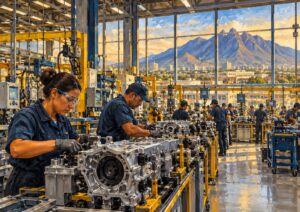
Most foreign companies doing business in China will never encounter anything resembling the Megaspeed investigation. Their problems are far more ordinary. They purchase products, pay deposits, provide technical information, and expect their suppliers to perform. Trouble begins when the company named in the contract is not the company controlling what matters.
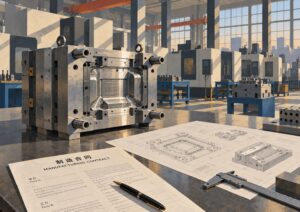
My colleague Arlo Kipfer recently wrote about a U.S. company our firm represented that had been buying molded plastic products from what it believed was a single Guangdong manufacturing operation. For nearly two years, everything ran through a Hong Kong company that provided quotations, issued invoices, accepted payments, and described the mainland factory as its own production facility. Then the American buyer found a less expensive supplier and decided to move production. When it asked for its molds back, the Hong Kong company explained that it did not own the factory and had no molds to return. The mainland factory was a separate legal entity with which our client had never contracted, and it claimed ownership of the molds because it had paid the toolmaker to produce them.
Our client had spent substantial money on tooling it could not establish that it owned. The factory holding the molds had signed no agreement with our client, while the Hong Kong company that signed the contract had no control over the molds. That is an especially bad position to be in after deciding to change manufacturers. Hong Kong intermediaries can perform perfectly legitimate and valuable functions, including sales, financing, logistics, and export documentation. But related companies remain legally distinct unless there is a basis for holding one responsible for another's obligations. You cannot assume that a mainland factory is bound by a contract merely because the Hong Kong intermediary calls it "our factory." Depending on the transaction, proper protection may require a direct agreement with the factory, a three-party contract, a guarantee, or separate agreements allocating responsibilities among the companies involved.
Our lawyers frequently encounter international manufacturing disputes where the company that signed the agreement has few assets and the company holding the products, molds, or technical information never agreed to return them. Sometimes the legal claims are strong enough to pursue. Other times we have to tell the client that litigation would probably cost more than it could realistically recover. That is a terrible conversation to have with a business owner who believed a signed contract meant the company was protected.
How Chinese Manufacturers Gain Leverage Over Their Customers
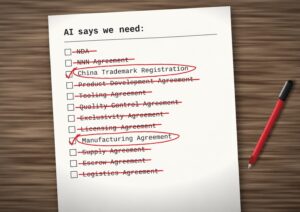
A manufacturer that controls the assets your business needs can have enormous leverage even when your contracts identify the correct company. A recent example involved an American company whose Chinese factory demanded an immediate 34% price increase. The factory held the company's molds and designs and had access to its customer information. Two years earlier, the buyer had signed a single agreement that mixed manufacturing, NNN, and tooling provisions together. When our lawyers reviewed it, they found overlapping provisions and unclear remedies. We advised against suing to recover the molds because the contract was too muddled and obtaining useful relief was too uncertain. We recommended making replacement molds as quickly as possible. Unfortunately, the new molds took longer than expected, and the resulting production shutdown nearly bankrupted the company. I discuss that matter in China Manufacturing Contracts: When One Agreement Is Not Enough.
The factory's power came from its possession of assets the buyer needed to keep operating. Even if the customer believed it had a valid legal claim, it could not afford to wait months for a resolution while its business was falling apart. I have seen companies spend a great deal of time negotiating contractual protections that look impressive on paper while giving surprisingly little attention to whether they can actually enforce those protections against a manufacturer that refuses to cooperate.
Another client came to us after telling its Chinese manufacturer it wanted to add a second factory to accommodate increased demand. The manufacturer responded by claiming ownership of the Chinese trademarks and patents covering our client's products. It threatened to seek injunctions against any other Chinese factory that attempted to manufacture or export those products. Six lawsuits later, the parties reached a settlement. What troubles me most about that case is that the American company had not threatened to leave China or reduce its orders. It simply wanted more manufacturing capacity. I wrote about that dispute in How to Negotiate Lower China Manufacturing Prices Without Putting Your Business at Risk.
Some Chinese manufacturers respond constructively when a buyer asks for lower prices or additional production capacity. Others react aggressively to requests the buyer considers entirely reasonable. Sometimes the factory has a legitimate contractual position. Sometimes it is using whatever legal or practical leverage it possesses to protect its business, including claims that ultimately prove difficult to sustain. Before advising a client to negotiate aggressively with an existing manufacturer, I want to know what that factory controls, what rights it can credibly assert, and how much damage it can cause if negotiations go badly. A company that thinks it is strengthening its bargaining position by threatening to move production may instead be warning its supplier to secure whatever leverage it has left.
China's Economic Problems Make These Risks Worse
A manufacturer can perform beautifully for fifteen years and become a serious problem in year sixteen. China's industrial overcapacity and intense price competition have placed many manufacturers under substantial financial pressure. An October 2026 analysis by the Mercator Institute for China Studies explains how government support, inexpensive financing, and local protectionism allow some Chinese manufacturers to continue operating with extremely low profits or substantial losses. A factory can offer attractive prices and run a full production schedule on modern equipment while struggling to pay its employees or suppliers. Foreign customers often have little idea how serious those financial problems have become until their manufacturer starts demanding larger deposits, delaying shipments, substituting inferior materials, or refusing to release finished goods.
Not long ago, a Midwest furniture company wired $800,000 to a Chinese manufacturer it had worked with for nearly twenty years. The furniture never arrived. The factory closed, its owner disappeared, and the company was left with little realistic prospect of recovering its money. I described that case in China Manufacturing Risks: When Your Reliable Supplier Stops Being Reliable. That client had not selected an unknown factory based on an attractive website or a suspiciously low quotation. It had been doing business with the same manufacturer for almost two decades. The length of the relationship made the company comfortable, but it did nothing to protect the buyer when the factory failed.
Many financially troubled Chinese manufacturers are doing everything they can to survive in extraordinarily competitive markets. But severe financial pressure can change how a factory behaves, especially when it already controls valuable customer assets. This is why I increasingly recommend investigating the financial condition of existing suppliers rather than reserving due diligence for new ones. A twenty-year relationship tells you something about a manufacturer's past performance. It does not tell you whether that manufacturer can pay its bills today.
Protect Your Business Before the Relationship Deteriorates
I have given well over 100 speeches on protecting intellectual property when manufacturing overseas, and I start nearly all of them by emphasizing three things: choosing a good manufacturer, having contracts that work in the country where production takes place, and protecting the intellectual property essential to your business. The Nvidia controversy adds another reason to pay close attention to the first two. You need to know who actually controls the companies, money, and assets involved, and you need contracts that reflect those realities.
Start by verifying the actual identity of your Chinese business partner. Establish its registered Chinese legal name and its ownership structure to the extent ascertainable, litigation history, and financial condition. Determine whether it owns or operates the factory it claims to operate, who receives your payments, and whether any sourcing agents or trading companies are involved. If a factory asks you to pay a different company or suddenly changes its bank account, investigate before sending the money. I strongly favor visiting factories and meeting their management before entering substantial manufacturing relationships. But a factory visit does not establish that the people showing you around legally own the business, and corporate registration records do not always tell you who exercises practical control. Factories change ownership, accumulate debt, and lose important customers with little warning to their foreign buyers, so these checks need repeating even for suppliers that have performed well for years.
Your contracts must reflect the actual manufacturing arrangement. If a mainland factory will manufacture your products, hold your tooling, or receive sensitive technical information, the agreements need to address that factory's responsibilities. The correct structure depends on the transaction and may involve several legal entities. A manufacturing agreement should cover production, quality, pricing, delivery, ownership, termination, and remedies, with dispute-resolution provisions designed around where enforcement will be needed. Be especially careful about pricing provisions. We have seen manufacturers agree to fixed prices while retaining an unrestricted right to reject future purchase orders. When the factory wants more money, it simply refuses to accept additional orders at the agreed price. A pricing provision that does not actually commit the factory to supply products may provide much less protection than the buyer expects.
Protect your tooling, trademarks, and technical information before the factory has them. For companies developing or manufacturing custom products, this often means a China NNN agreement before disclosing sensitive information, followed by manufacturing, product development, and tooling provisions appropriate to the transaction. These agreements serve different purposes. An NNN agreement can restrict unauthorized disclosure, use, and circumvention involving your information, but it does not automatically establish ownership of your molds, register your trademarks, or require the factory to manufacture products at agreed prices. Our China NNN agreement guide explains these distinctions in more detail. I also want clients to maintain complete copies of their designs, specifications, and manufacturing files, and to know exactly where their tooling is stored. If another factory cannot reproduce your product without the current manufacturer's cooperation, you need to understand that dependency before a dispute starts.
You should also know how you would move production if you had to. Not every company needs two factories simultaneously producing the same products, but a business that depends heavily on one manufacturer should know what replacing that manufacturer would entail. How long would it take to qualify another factory? Could you retrieve your molds? Would you need new tooling? Are your Chinese trademarks registered in your company's name? Does your current supplier possess technical information or claim rights that could interfere with production elsewhere? Those answers tell you how much practical leverage your supplier has, and they help determine when and how to discuss changes in the relationship. I have seen companies create expensive problems simply by announcing their intention to leave before securing the intellectual property and assets they would need for the move.
These precautions are much easier to negotiate while the manufacturer still wants your business. Once a factory suspects it is losing an important customer, it may become far less willing to clarify ownership, return tooling, or agree to restrictions it previously would have accepted. I want clients to establish those rights when everyone is still getting along, not after the factory has stopped answering emails.
What a Good China Contract Can Actually Accomplish
None of this means Chinese manufacturers can ignore a well-drafted contract without consequences. One of our clients had a manufacturing agreement that clearly established its ownership of molds sitting in a Chinese factory. When the client decided to move production, the factory refused to return them. We worked with Chinese litigation counsel to sue the manufacturer and seek an order preserving its assets. Within approximately five days, the Chinese court froze the factory's bank accounts. The factory released the molds the next day.
I discuss that case in How to Sue a Chinese Company. It was an unusually fast result, and I would never suggest that most Chinese manufacturing disputes end that way. But our client had an agreement written for enforcement in China, the defendant had assets a Chinese court could reach, and the legal remedy put immediate financial pressure on the manufacturer. Those circumstances changed the factory's calculation. Contrast that with the company whose factory demanded a 34% price increase and whose resulting production shutdown nearly put it out of business. Both companies had signed contracts. Only one had a legal position that allowed it to recover its tooling quickly.
Manufacturing in China still makes excellent commercial sense for many of the companies I advise, and many Chinese suppliers are reliable long-term partners. My concern is with companies that become so comfortable with an existing relationship that they stop paying attention to who controls their money, tooling, products, and intellectual property. They assume their contracts protect them because they have never needed to test those contracts.
The questions about corporate identity and control raised by the Megaspeed investigation also arise in the ordinary manufacturing disputes my firm handles. If you depend on Chinese suppliers, compare the companies named in your contracts with the companies that actually receive your money, manufacture your products, hold your tooling, and possess your technical information. If they don't match, find out why. You may have a perfectly legitimate arrangement that needs better documentation, or you may discover that the company holding something essential to your business has never agreed to give it back.