







Retailing in China: Three Hard Truths for Foreign Brands
Editor's note (October 2026): We originally published this article in February 2010. China's retail market has changed dramatically since then, particularly with the growth of e-commerce, social commerce, and direct-to-consumer sales. In 2025, online sales of physical goods accounted for 26.1% of China's total retail sales of consumer goods, according to China's National Bureau of Statistics. The observations below reflect the retail market Renee Hartmann encountered while building Eno. Her central advice about understanding distribution and aligning incentives with retail partners remains useful. For current guidance on the legal and commercial aspects of selling in China, see our Selling Products in China: The Legal and Distribution Guide.
By 2010, our law firm was receiving nearly as many inquiries from companies wanting to sell their products in China as from those wanting to manufacture there. These companies were discovering that selling to Chinese consumers posed challenges that had little to do with the manufacturing problems they already understood. Foreign brands selling in China also had to deal with legal issues that depended on their products and how they entered the market. These included trademark ownership, distributor contracts, import approvals, product regulations, and restrictions on certain sales practices. Getting the legal arrangements wrong could undermine an otherwise successful retail strategy.
In February 2010, I invited Renee Hartmann, co-founder of the Chinese apparel brand Eno, to explain what she had learned about building a retail business in China. Shortly afterward, Fast Company ranked Eno eighth among China's ten most innovative companies. Renee later founded China Luxury Advisors and has continued advising major retailers and consumer brands around the world. Although China's retail market has changed substantially since 2010, her observations about working with retail partners and building a market remain worth reading.
Guest post by Renee Hartmann, originally published February 2010.
Why Distribution Is the Biggest Challenge in China Retail
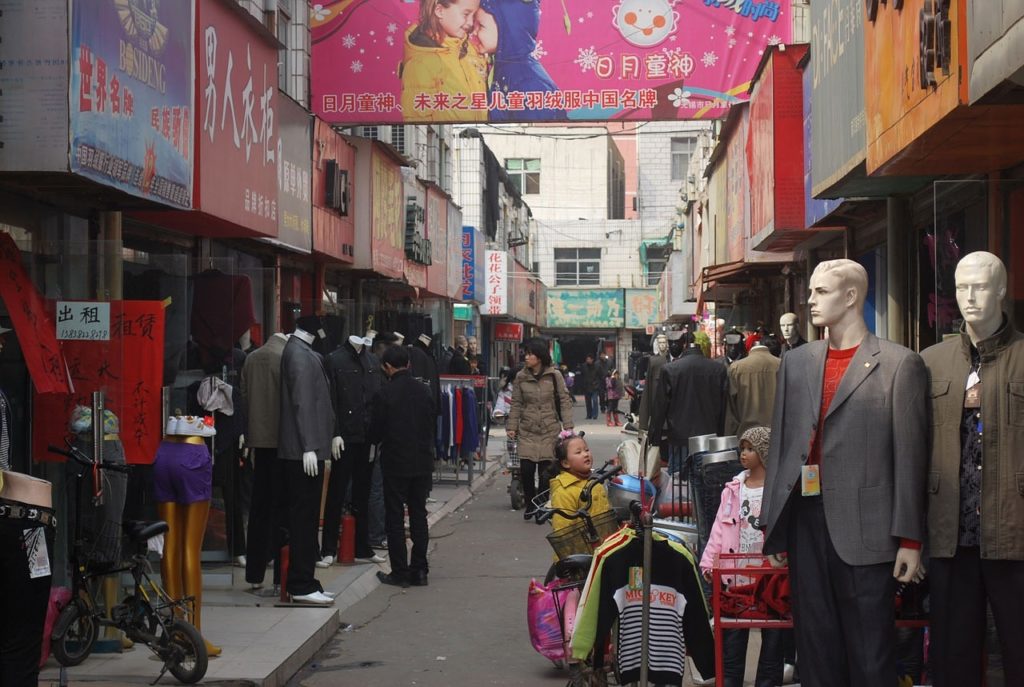
For the apparel brands we encountered, distribution was often the hardest part of entering China. A foreign brand could not assume that the wholesale channels it relied on elsewhere would be available or effective, particularly outside China's largest cities. Selling in China required more than just meeting customer expectations. You often had to create the customer base yourself. The retail channels familiar to foreign brands were not always available, and those that existed frequently worked differently. This meant developing your own retail concept and either operating it directly or finding capable local partners to do so, adding risk and complexity to an already difficult undertaking.
Take apparel, for example. At the time, many apparel brands expanded through single-brand stores operated by local retail partners rather than through stores they owned themselves. Some of these arrangements resembled franchising, but others were ordinary distribution or dealership relationships. The distinction matters because China has its own commercial franchise regulations, and the legal treatment depends on how the business arrangement actually operates.
What This Means for Your Brand
For brands relying on independently operated, single-brand stores, this model created three requirements:
- Your brand must be strong enough to draw foot traffic.
- Your product line must be broad enough to stock an entire store.
- You must create and maintain a retail concept that stands out.
Based on my experience at eno, these requirements shaped three guiding principles for brands looking to sell in China through this retail model.
1. You Must Act Like a Retailer—Whether You Want To or Not
Operating in China means becoming a capable retailer, even if retail isn't your core strength. You’ll need to develop store designs, point-of-sale materials, product displays, retail training manuals, and seasonal campaigns. This level of execution goes well beyond what wholesalers do in most other markets. At eno, we support our Tier 2 and 3 city partners with marketing assets, visual merchandising, training, signage, and even store construction guidance. We also collaborate on inventory selection and help manage the department store-driven promotional calendar. This is in addition to traditional brand marketing, including social media, PR, grassroots marketing, and sponsorships.
2. Your Retail Partners Have Their Own Financial Priorities
Retail partners have their own financial priorities, and those do not always match the brand owner's long-term plans. Some partners focus on immediate sales and inventory turnover, even when aggressive discounting damages the brand's positioning. At eno, we found that our retail partners knew how to sell and control costs, but we also had to account for the tension between their short-term sales objectives and our longer-term brand strategy. We actively seek feedback from our retail partners because their blunt, practical insights often help us improve product-market fit. Increasingly, our partners even ask us to co-develop their own product lines, demonstrating how brand-building and retail savvy can complement one another.
Editor's note (2026): Foreign brands also need to consider China's Anti-Monopoly Law when determining how much control they can exercise over their distributors' resale prices. Certain fixed and minimum resale price arrangements are restricted. For more on structuring these relationships, see our article on international distribution agreements.
3. Look Good in Tier 1 Cities, Make Money in Tier 2 and 3
Retail in Beijing and Shanghai is costly. Rent is high, competition fierce, and consumer expectations are sky-high. For many brands, flagship stores in Tier 1 cities are loss leaders, serving as branding investments rather than immediate revenue drivers. But these image stores matter. Retailers from smaller cities look to Tier 1 markets to find brands worth bringing home, and an impressive Shanghai store can help persuade them that a brand has the potential to succeed in their own markets.
When we were building Eno, we directed much of our expansion toward cities such as Chengdu, Chongqing, Wenzhou, and Hangzhou. These markets offered different cost structures and opportunities from Beijing and Shanghai, and they were central to our strategy for making the retail business profitable.
2026 update: Chengdu, Chongqing, and Hangzhou now rank among China's "new first-tier" cities. The economics of expansion vary by brand, product category, location, and retail partner. Foreign brands should not assume flagship stores must lose money or that smaller cities necessarily offer higher profits.
Where These Lessons Apply
These lessons came from building an apparel brand through single-brand stores and local retail partners. Companies selling food, cosmetics, electronics, or other products through established wholesale channels face different requirements, while online retail presents another set of opportunities and problems. What Eno's experience taught us was that a foreign brand needed to understand how its local partners made money, what they were willing to invest, and whether their decisions would help build the brand over time. Those were questions we had to answer long before opening the next store.
For a more recent perspective on these same challenges, listen to Renee Hartmann discuss what Nike and Under Armour got wrong in China in an August 2026 interview.