







Retailing in China: Three Hard Truths for Foreign Brands
As China evolves from the “factory of the world” to a global growth engine, more foreign businesses are shifting their focus from manufacturing in China to selling their products there. These days, companies reaching out to our law firm are just as likely to ask how to sell into China as how to produce goods within it.
Fortunately, the legal aspects of China retail—business registration, contracts, intellectual property protection—are not especially complicated. The real challenge lies in adapting to the vastly different retail landscape in China.
To help foreign brands understand what it takes to succeed in China’s retail sector, I invited Renee Hartmann , co-founder of China Luxury Advisors, to share her on-the-ground experience. Just before her company eno was named one of Fast Company’s Ten most innovative companies in China, she graciously agreed to contribute the insights below.
Why Distribution Is the Biggest Challenge in China Retail
Despite the focus on IP protection and pricing, distribution is the single greatest hurdle for most brands entering the Chinese market.
Selling in China requires more than just meeting customer expectations—you often need to create the customer base yourself. In many sectors, traditional retail channels simply don’t exist. You may need to invent your own retail concept and either operate it directly or find capable partners to do so, introducing additional risk and complexity.
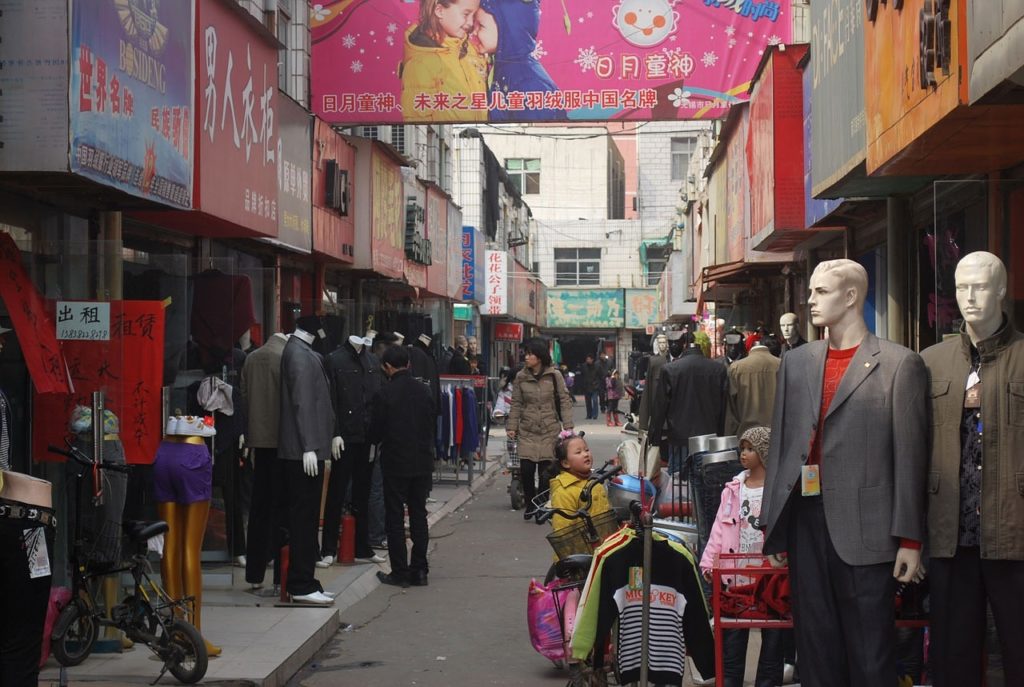
Take apparel, for example. In China, the vast majority of stores selling clothing, footwear, and accessories are single-brand retail stores. You’ll see Nike, Adidas, or North Face signs—but over 99% of these locations are run by third-party retail operators, not by the brands themselves.
This system is similar to franchising in the West, although in China, franchise fees are rare due to the underdeveloped legal framework. Instead of multi-brand stores like Foot Locker or Macy’s, China’s retail environment is dominated by thousands of these single-brand locations.
What This Means for Your Brand
This unique structure brings three key implications:
-
Your brand must be strong enough to draw foot traffic.
-
Your product line must be broad enough to stock an entire store.
-
You must create and maintain a retail concept that stands out.
Based on my experience at eno, these insights have crystallized into three guiding principles for any brand looking to sell in China.
1. You Must Act Like a Retailer—Whether You Want To or Not
Operating in China means becoming a capable retailer, even if retail isn’t your core strength. You’ll need to develop store designs, point-of-sale materials, product displays, retail training manuals, and seasonal campaigns. This level of execution goes well beyond what wholesalers do in most other markets.
At eno, we support our Tier 2 and 3 city partners with marketing assets, visual merchandising, training, signage, and even store construction guidance. We also collaborate on inventory selection and help manage the department store-driven promotional calendar. This is in addition to traditional brand marketing—social media, PR, grassroots, sponsorships.
2. Chinese Retailers Aren’t Long-Term Investors—They Want Profits Now
Chinese retail operators absolutely care about your brand—but only if it helps them make money now. They’ll invest in your success, but only in the short term. They’re experts at selling and managing costs. If discounting your product moves inventory, they’ll do it—even at the expense of your long-term brand image.
At eno, we actively seek feedback from our retail partners. Their blunt, practical insights often help us improve product-market fit. Increasingly, our partners even ask us to co-develop their own product lines—proof of how brand-building and retail savvy can complement one another.
3. Look Good in Tier 1 Cities, Make Money in Tier 2 and 3
Retail in Beijing and Shanghai is costly. Rent is high, competition fierce, and consumer expectations are sky-high. For many brands, flagship stores in Tier 1 cities are loss leaders—a branding play more than a revenue driver.
But these image stores matter. Retailers from smaller cities look to Tier 1 markets to find brands worth bringing home. If your store looks great in Shanghai, it boosts your chances of expansion elsewhere.
At eno, we focus our growth efforts in cities like Chengdu, Chongqing, Wenzhou, and Hangzhou, where costs are lower and brand-hungry consumers are eager to engage. These Tier 2 and 3 cities are where profitability is made.
Final Thoughts: China Retail Means Rethinking Everything
These rules apply most directly to brands using a single-brand retail model. If your product already has established distribution channels (e.g., food, health & beauty, electronics), your challenges will differ—think shelf space, promotions, and visibility.
But no matter your product or sector, distribution in China is a challenge. To succeed, you’ll need to rethink your brand and your approach—from product development to retail execution.