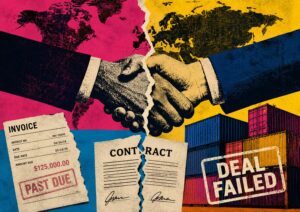
In 2014-2015, China Plus One was all the rage, and everyone (including us) was talking about the risks of companies putting all their eggs in one "China basket." It was determined a China Plus One strategy was the way to counter those risks. This strategy involved companies having some/most of their products made in China, but having some other portion of their products made elsewhere. I'm thinking a consulting firm like McKinsey or Boston Consulting came up with this plan, but I don't know if that was in fact the case.
Around that same time, many of our clients discussed the pros and cons of a China Plus One strategy with us. I do not remember how many such clients discussed such a strategy with us, but for the sake of analysis here, let's say it was 100. And of that 100, I estimate about 50 actually conducted serious research regarding doing this. Of this 50, I estimate the following occurred:
35家企业决定维持现状。这些公司认为,自付成本和/或其他地区的更高生产成本,不足以支撑将任何生产环节转移出中国。
2. 八家公司意识到将所有产品转移到其他地方生产会更有利。我记得有几家服装公司和家居用品公司将全部生产转移到了越南。一家公司把所有鞋类生产转移到安哥拉,另一家公司则将部分家居用品的生产转移到了乌克兰。
3. 七家公司将生产分散 在中国与其他国家之间。据我所知,部分生产转移至泰国、墨西哥和越南等国。在这些案例中,未将全部生产转移的原因包括以下一项或多项:
-
- 在未对新国家/供应商进行更多实地测试之前,不愿将全部生产转移过去。
- 不愿将所有生产转移,因为新国家的成本更高。
- 他们不愿将所有生产转移,因为他们希望实现生产多元化。
我不清楚上述所有企业的当前状况,但确实知道其中部分企业虽然曾将部分生产转移出中国,最终却又将所有生产都迁回了中国;而另一些企业虽然最初只是将部分生产转移出中国,最终却将所有生产都迁出了中国。
我还记得的是,当初将生产转移出中国的多数企业,在新国家的新供应商处都曾遇到过问题。而我总会提醒他们:当初初入中国市场时,他们也经历过类似的困境。
To sum it up, China Plus One was a mixed bag. With hindsight, my conclusion -- and it does not take deep analysis to say this -- is that the success of this strategy depended mostly on the company moving from China, the product moving from China, and the quality of the supplier in the country to which the move was made.
I am writing about China Plus One today because that strategy is back and back big right now, though it is commonly being called, "diversifying away from China," "decoupling from China" (yes, we have clients who call it this), or "getting the hell out of China as best we can."
Once again, diversification away from China is taking many forms. In Sony separates production of cameras for China and non-China markets, Nikkei writes how Sony moved its production of all cameras it sells in Japan, the United States and Europe from China to Thailand, as "part of growing efforts by manufacturers to protect supply chains by reducing their Chinese dependence." Sony's China plant will continue producing cameras,but those cameras will be strictly for China's domestic market.
In tracing Sony's decision to move production out of China, Nikkei mentions how Sony first shifted its manufacturing of cameras bound for the United States after "tensions heightened between Washington and Beijing," and then shifted the rest later.
Nikkei also notes how other Japanese companies are moving production out of China, including Canon, which moved a chunk of its camera production from China back to Japan, and Daikin Industries which will soon be making air conditioners "without having to rely on Chinese-made parts"
Similarly, in Taiwan's Foxconn and others accelerate investment in Mexico, Reuters writes of how Foxconn "and other Taiwanese tech suppliers are increasing their production capacity in Mexico to meet a growing demand for electric vehicles (EVs) and servers to be made in North America."
Our law firm has been seeing similar plans and actual production movements with our clients -- especially since Russia invaded Ukraine. In just the last year, our international manufacturing lawyers have helped companies with moving some or all of their production from China to Mexico, Thailand, India, Indonesia, the Philipines, Korea, Taiwan, Colombia, and Peru, among others.
The desire of companies to move out of China is both stronger and more urgent today than back in 2014-2015, but the percentages of companies that actually make such a move are not that different from back then. The big issue for those who choose not to move their production from China elsewhere is that even if they do move production from China, they will be getting so many component parts from China that the move just doesn't make sense. A high level supply chain executive at Fortune 20 company recently told me of how despite the media always touting his company having moved large swaths of its production out of China, the bulk of the products it is making outside China are still made up mostly of Made in China parts.
然而,我预计外国对华零件的需求将逐渐消退。
随着越来越多的企业将生产转移出中国,更多零部件制造商也正在并将继续将生产转移出中国。这将促使更多企业撤离中国,形成良性循环,进而推动更多零部件制造商离开中国。这种趋势在某些行业已然显现,但进展缓慢。 我同时注意到,中国零部件制造商正大规模将生产转移至越南、墨西哥等地。这在某种程度上是好事——为寻求撤离中国的企业提供了更多选择;但另一方面,这极大增加了确定特定产品原产地/关税/税费的复杂性。详见《中美关税:您现在能做些什么》。
那款在墨西哥使用50个零部件组装的手机充电器,是否真正符合《美墨加协定》或美国关税政策中的墨西哥制造标准?如果其中22个零部件直接来自中国,12个来自在墨西哥的中国制造商,其余来自墨西哥或美国制造商呢?这些在墨西哥的中国制造商是否真正于墨西哥境内生产零部件,还是仅将零部件从中国运至墨西哥?该充电器是否在墨西哥实现了实质性转变? 参见《规避中国产品关税:实质性转变是关键》。