The Next China: Why China May Still Be Its Own Successor
Businesses worldwide are constantly searching for the next big opportunity, and for many, that means finding “the next China.” But while countries like Vietnam and India are indeed on the rise, understanding where the real future growth lies requires a closer look. This post argues that the most promising successor to China’s current economic engine might just be China itself, specifically its rapidly developing second-tier cities.
Which Country Is the Next China?
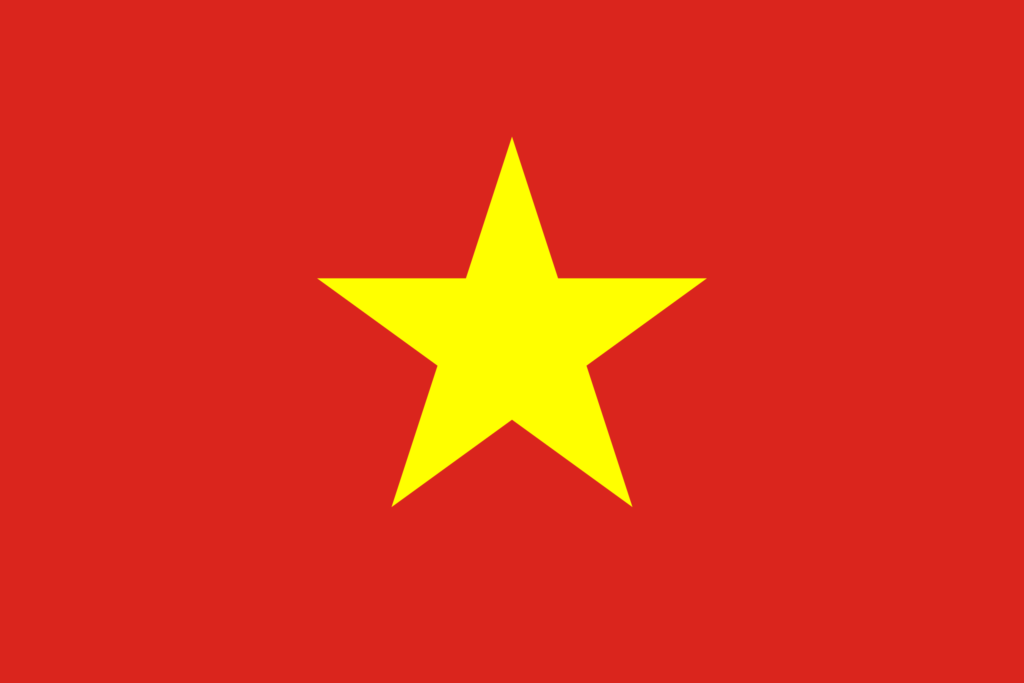
Just about every promising emerging market gets mentioned as a potential “next China.” The other BRICS—India, Brazil, and Russia—are perennial contenders. Poland, Mexico, Turkey, Thailand, and Malaysia also appear frequently on lists. But the country that continues to rise to the top of this conversation is Vietnam.
Vietnam’s Economic Rise
Since 1990, Vietnam has posted some of the world’s highest GDP growth rates. It’s become an increasingly popular manufacturing and sourcing destination, with many companies seeing it as a lower-cost alternative to China. Vietnam absolutely presents compelling business opportunities.
But my pick for the “next China”? It’s China itself—particularly for the next decade.
China’s Second-Tier Cities: The Real “Next China”?
When people refer to the next China, they’re usually thinking about duplicating the success stories of Shanghai, Shenzhen, and Beijing. From this perspective, China’s own second-tier cities—such as Tianjin, Qingdao, Dalian, Shenyang, and Chengdu—are poised to become the new engines of growth. These cities offer:
- Robust infrastructure
- Lower labor and operating costs
- Improving quality of life for foreign and domestic business stakeholders
Most importantly, they benefit from the foundation laid by China’s first-tier cities—and they’re leveraging that to fuel their own rapid development.
Why the China Model Is Hard to Copy
I agree with this New York Times article which posits that there will be no next China for a very long time:
The flavor of the moment is the “China model,” whereby a controlling government carefully injects capitalism into its economy to spur exports and foreign investment. Yet few, perhaps none, of the countries who hope to emulate China’s success have a real chance of doing so.
In the past couple of years, the China model has apparently become the favorite of authoritarian regimes looking to enrich themselves while assuaging any restless citizens with the prospect of riches. Iran, Syria, and Vietnam jumped on the bandwagon early on.
The article posits that “many different conditions led to China’s success” and no other country has “them in the same combination.” The so-called “China model”—a blend of centralized political control and carefully managed market liberalization—is being eyed by governments from Iran to Vietnam. But as the article notes, few countries have the full mix of attributes that made China’s rise possible.
Here are just a few of those key factors:
Political stability
China has maintained a relatively stable internal and regional posture. In contrast, countries like Syria or Iran have faced international sanctions or ongoing regional conflicts.
Government control and efficiency
China’s centralized political structure allows for swift decision-making in areas like infrastructure development and foreign investment. In many democracies or less centralized regimes, policy implementation is far slower.
Vast labor supply
China’s urbanization continues to produce a steady stream of low-cost labor. Many other emerging markets—due to size or public health issues—can’t match this dynamic.
Consumer market size
China’s middle class is massive and growing. While India may rival China in population, very few other nations come close to the consumer potential China offers. Brands create entire product lines just for the Chinese market—something few countries can inspire.
Is Vietnam a Viable Contender?
Vietnam may come the closest to replicating China’s trajectory. With over 80 million people, a controlling government, relative stability, and growing trade relations, Vietnam ticks many boxes.
But the comparison has limits:
- Corruption in Vietnam remains a major obstacle.
- Vietnam’siInfrastructure, while improving, lags far behind China’s.
- Vietnam’s smaller size means its long-term scalability is more constrained.
Conclusion is Still the “Next China”
I’m a strong believer in Vietnam’s future. I think it will continue to grow, particularly as it deepens integration into the global economy and secures World Trade Organization (WTO) membership. But for many companies, Vietnam still isn’t a viable full-scale alternative due to infrastructure limitations and sector-specific barriers.
China’s unique advantages are not easily duplicated. And with second-tier cities surging, China is not only the China of the past—but also very likely the China of the future.