Requisitos para los agentes de la DMCA en las empresas en línea
Designar a un agente de la DMCA es fácil. Cumplir realmente con la ley es más difícil.
La mayoría de las plataformas en línea consideran que la designación de un agente de la DMCA es una tarea administrativa que se realiza una sola vez. Eso es un error.
Designan a un agente, publican una política y dan por hecho que han resuelto el asunto. Entonces surge un conflicto real. Una notificación llega a la bandeja de entrada equivocada. El contenido se retira demasiado rápido o no lo suficientemente rápido. Un competidor utiliza una reclamación por derechos de autor como arma de presión. Lo que parecía un simple trámite se convierte en un problema legal y operativo. Contar con un agente de la DMCA es importante, pero eso no constituye tu programa de cumplimiento normativo.
Qué hace realmente un agente de la DMCA
Un agente de la DMCA es la persona o entidad designada para recibir notificaciones de infracción de derechos de autor en nombre de un proveedor de servicios en línea, de conformidad con la Ley de Derechos de Autor para el Milenio Digital. Si el titular de los derechos de autor considera que en tu plataforma aparece material infractor, la DMCA establece un procedimiento para enviar una notificación de retirada. Dicha notificación se envía a tu agente designado. Si se retira el contenido y el usuario considera que la retirada fue errónea o indebida, ese mismo agente recibe la contranotificación.
Para las empresas que dependen de contenidos generados por los usuarios, anuncios en mercados online, reseñas, materiales alojados, aportaciones públicas o funciones comunitarias, esto no es solo un requisito técnico. Forma parte del marco en el que se basan las empresas a la hora de solicitar la protección de «puerto seguro» de la DMCA.
Un agente de la DMCA no es más que un punto de recepción. En el nivel más básico, un servicio de agente puede limitarse a recibir notificaciones y reenviárselas a usted. Los servicios más completos pueden ayudar con el seguimiento, el flujo de trabajo y el apoyo en materia de cumplimiento normativo. Los abogados, cuando intervienen, no suelen actuar como meros buzones. Asesoran sobre si una notificación es válida, cómo responder, si el contenido debe retirarse, qué deben incluir sus políticas y cómo reducir el riesgo legal. Muchas empresas confunden el hecho de tener un punto de contacto con disponer de un sistema que realmente funcione.
En qué se equivocan las empresas
Muchas empresas dan por sentado que designar a un agente equivale a contar con un proceso real. No es así. Un verdadero sistema de cumplimiento implica que las notificaciones recibidas sean revisadas por la persona adecuada, que las cuestiones legales se remitan a instancias superiores cuando sea necesario, que las contranotificaciones se gestionen de forma coherente y que las decisiones queden documentadas. También significa que la política publicada refleje lo que realmente hace su empresa y que su equipo interno sepa cómo responder a las reclamaciones presentadas de mala fe o de forma abusiva.
Ahí es donde empiezan los problemas que se podrían evitar. Una empresa designa a un responsable, pero no supervisa la bandeja de entrada de forma sistemática. Llegan notificaciones, pero nadie se hace cargo claramente del proceso. El contenido se retira demasiado rápido porque el equipo no comprende el procedimiento de contranotificación. O bien se ignora una notificación problemática porque nadie es consciente del riesgo legal u operativo que conlleva. Así es como los pequeños incumplimientos normativos se convierten en problemas empresariales de mayor envergadura.
¿Cuánto cuesta un agente de la DMCA?
La respuesta depende de lo que estés comprando realmente. En el segmento más económico, algunos servicios externos cobran unas cuotas anuales modestas, además de la tasa de registro de la Oficina de Derechos de Autor. En la mayoría de los casos, lo que ofrecen es un punto de contacto designado y un servicio básico de reenvío de notificaciones.
Eso puede ser suficiente para una empresa con un volumen de contenido reducido, una exposición limitada y un equipo interno que ya sabe cómo gestionar adecuadamente las notificaciones. Sin embargo, muchas empresas no se encuentran en esa situación. Los servicios más completos cuestan más porque incluyen supervisión, asistencia en los flujos de trabajo, ayuda con las políticas o revisión legal. Una vez que entran en juego el análisis legal, la evaluación de las contranotificaciones, los problemas con infractores reincidentes o la gestión de disputas, ya no estás pagando solo por el reenvío. La verdadera pregunta es si estás pagando por el reenvío de mensajes o por un sistema que ayuda a proteger tu negocio.
Por qué los servicios baratos suelen quedarse cortos
Un servicio de bajo coste puede resultar perfectamente adecuado para una tarea concreta: actuar como contacto designado y reenviar las notificaciones recibidas. Pero eso suele ser todo lo que hace. Por lo general, no evalúa si una notificación de retirada es suficiente a primera vista. No evalúa si el material presuntamente infractor realmente infringe los derechos de autor. No te ayuda a analizar el uso legítimo, la confusión de identidad, las tácticas abusivas de retirada o las respuestas estratégicas. No redacta tu política, no forma a tu equipo ni te ayuda si tu proceso interno falla.
Un servicio de reenvío puede cumplir con un trámite administrativo, pero no sustituye al criterio jurídico, a la disciplina operativa ni a un proceso de cumplimiento normativo real.
Por qué la mayoría de los bufetes de abogados no actúan como agente registrado
A menudo nos piden que actuemos como agente registrado para nuestros clientes. Normalmente nos negamos, y lo hacemos por el bien del cliente.
Si un bufete de abogados actúa como agente designado, se convierte en el destinatario oficial de todas las notificaciones de retirada enviadas al cliente. Esto puede incluir notificaciones legítimas, spam, reclamaciones abusivas, citaciones judiciales y todo tipo de mensajes que poco tienen que ver con la correcta aplicación de los derechos de autor. Por lo general, esta situación resulta perjudicial tanto para el bufete como para el cliente. El bufete de abogados tiene ahora que supervisar el punto de recepción de forma constante, redirigir las notificaciones de forma correcta y rápida, y gestionar los mensajes operativos antes incluso de que haya comenzado ningún análisis jurídico real. También se crea el riesgo de que el cliente empiece a tratar al bufete como la primera parada para todas las quejas, independientemente de si se requiere un dictamen jurídico o no.
En la mayoría de los casos, la mejor estructura consiste en recurrir a un contacto interno o a un servicio externo para la gestión inicial, mientras que el asesor jurídico externo se encarga de redactar la política, revisar los avisos importantes, asesorar en caso de litigios e intervenir cuando el criterio jurídico es realmente decisivo.
Los riesgos reales de equivocarse en esto
Una gestión inadecuada puede acarrear graves consecuencias legales y comerciales. Los procesos deficientes o incoherentes pueden socavar la posición de «puerto seguro» de una empresa. Una notificación mal gestionada puede agravar un conflicto que debería haberse resuelto en una fase temprana. Algunas empresas reaccionan de forma exagerada y retiran contenidos legales sin un análisis suficiente, lo que puede dañar las relaciones con los clientes, alterar los listados y minar la confianza en la plataforma. Otras se dejan manipular por competidores, trolls o personas malintencionadas que utilizan las reclamaciones por derechos de autor como medio de presión comercial en lugar de como una medida legítima de cumplimiento de la ley.
Muchas empresas también gestionan las notificaciones de forma puntual, de modo que cada equipo toma decisiones diferentes y no existe una norma interna clara. Esa falta de coherencia conlleva sus propios riesgos.
Un ejemplo habitual de cómo esto sale mal
Esto nos pasa constantemente. Un competidor envía una notificación de retirada estratégica dirigida a un anuncio o contenido importante de un rival. La notificación llega a una bandeja de entrada genérica. El equipo, para evitar problemas, retira el contenido de inmediato. Solo más tarde alguien se para a preguntarse si la notificación era excesiva, defectuosa o simplemente una maniobra táctica.
Para entonces, el daño ya está hecho. Se han perdido ingresos. El vendedor o usuario afectado está furioso. La plataforma se enfrenta ahora a un problema empresarial, un problema de relación con el cliente y un problema legal, todo ello por haber tratado el cumplimiento normativo como una simple tarea administrativa en lugar de como un proceso real.
Lo que las empresas deben tener en marcha
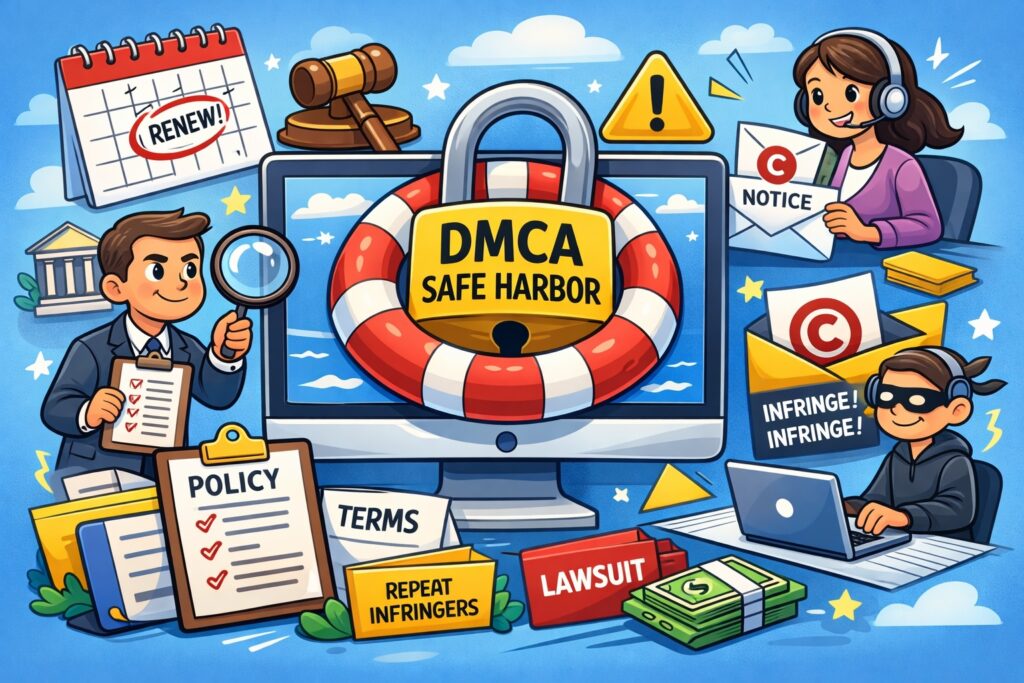
Si tu plataforma aloja o facilita contenido de los usuarios, necesitas algo más que un nombre inscrito en un registro federal. Necesitas un agente debidamente designado, una política por escrito que refleje la actividad real de tu empresa, un proceso interno de escalamiento para que tu equipo sepa quién revisa las notificaciones y cuándo interviene el departamento jurídico, y un plan viable para las contranotificaciones y las retiradas objeto de controversia. También necesitas un sistema fiable de mantenimiento de registros. En situaciones de mayor riesgo, necesitas tener acceso a una revisión jurídica.
También es necesario contar con una política sobre infractores reincidentes que vaya más allá de unas simples palabras en un documento. Las limitaciones de responsabilidad de la DMCA solo se aplican si el proveedor de servicios ha adoptado, aplicado de forma razonable e informado a los usuarios de una política que prevea la rescisión, en circunstancias apropiadas, de los abonados y titulares de cuentas que sean infractores reincidentes. El propio caso de Cox sirve de útil advertencia en este sentido: antes de la sentencia del Tribunal Supremo sobre la infracción contributiva, los tribunales inferiores ya habían dictaminado que Cox no podía acogerse a la exención de responsabilidad de la DMCA porque su política sobre infractores reincidentes no se había aplicado de forma razonable.
Y no olvide la fecha de caducidad. Según las normas de la Oficina de Derechos de Autor, una designación caduca y deja de ser válida tres años después del registro, a menos que se renueve mediante una modificación o una nueva solicitud. La Oficina de Derechos de Autor envía correos electrónicos automáticos de recordatorio antes de la fecha de caducidad, pero esos avisos se envían a las direcciones de correo electrónico que figuran en el expediente, lo que en muchas empresas significa una bandeja de entrada desactualizada o que se envíen al empleado equivocado. Anote la renovación en el calendario con suficiente antelación a la fecha límite y considérela una prioridad absoluta, no una cuestión secundaria.
Cuando el asesoramiento jurídico aporta un valor añadido real
La pregunta difícil no es quién debe figurar como agente. La pregunta más difícil es quién ayudará a su empresa a diseñar y gestionar un proceso que funcione cuando la notificación sea grave, los hechos sean confusos o la parte reclamante utilice las reclamaciones de derechos de autor como medio de presión. Un asesor con experiencia puede ayudar a las empresas a establecer la estructura de designación, redactar o revisar políticas y condiciones de uso, examinar notificaciones graves o cuestionables, asesorar sobre contranotificaciones y coordinar la estrategia teniendo en cuenta los riesgos más amplios relacionados con la propiedad intelectual, el mercado, los contratos y los litigios.
Es ese trabajo —y no el mero trámite— lo que realmente protege a la empresa.
Tu refugio es frágil
Si tu empresa aloja contenido de usuarios, no lo consideres simplemente como un requisito de registro y nada más. Contar con un agente designado es importante, pero la designación por sí sola no protege a tu empresa. La verdadera protección proviene del sistema que hay detrás: tu política, tu flujo de trabajo, la responsabilidad interna, el mantenimiento de registros y tu capacidad para responder de forma inteligente cuando una controversia adquiere relevancia jurídica o comercial.
Esto es aún más importante ahora. En marzo de 2026, el Tribunal Supremo falló por unanimidad en el caso Cox Communications contra Sony Music Entertainment y rechazó el argumento de que una interpretación restrictiva de la responsabilidad contributiva dejaría sin sentido la cláusula de puerto seguro de la DMCA, explicando que dicha cláusula ofrece una defensa frente a la responsabilidad existente, no una fuente de nueva responsabilidad. Esto ayuda a definir el panorama de la responsabilidad, pero no hace que el cumplimiento sea opcional. Las empresas siguen sin querer defenderse en costosos casos de derechos de autor basándose en la teoría de que carecían de la intención requerida.
Los litigios sobre derechos de autor son cada vez más complejos, los conflictos relacionados con las plataformas suelen ser estratégicos, y el hecho de que un nombre figure en un registro no te salvará si tus procesos internos fallan o si tu registro ha caducado. Las empresas que gestionan bien estas cuestiones no son las que menos invierten en la protección de marcas. Son aquellas que consideran el cumplimiento normativo como una parte viva de sus operaciones, en lugar de un simple expediente acumulando polvo en un cajón.
Preguntas frecuentes
¿Necesito un agente de la DMCA para mi sitio web?
Si tu sitio web permite a los usuarios publicar, subir o compartir contenido, es casi seguro que deberías contar con uno. En el caso de las plataformas que alojan contenido publicado por los usuarios, contar con un agente designado válido es un requisito previo para poder acogerse a las protecciones de «puerto seguro» de la DMCA para dicho material. Para la mayoría de las plataformas que alojan material generado por los usuarios, merece la pena contar con esa protección.
¿Es obligatorio por ley contar con un agente de la DMCA?
No exactamente. La ley no te obliga a designar a un agente. Pero si quieres beneficiarte de la cláusula de exención de responsabilidad de la DMCA —que protege a los proveedores de servicios en línea que cumplan los requisitos frente a la responsabilidad económica por contenidos infractores publicados por los usuarios—, la designación es un requisito previo. Sin designación, no hay exención de responsabilidad.
¿Qué hace un agente de la DMCA?
El agente recibe notificaciones de retirada por motivos de derechos de autor de los titulares de los derechos y contranotificaciones de los usuarios cuyo contenido ha sido eliminado. El agente es el punto de contacto oficial para las disputas sobre derechos de autor relacionadas con su plataforma. Lo que ocurra a continuación dependerá del proceso interno de cumplimiento del proveedor.
¿Cuánto cuesta un agente de la DMCA?
Los servicios de designación prestados por terceros suelen costar entre unos 50 y unos pocos cientos de dólares al año, más la tasa de tramitación de la Oficina de Derechos de Autor. Los servicios más completos, que incluyen seguimiento, asistencia en los procesos de trabajo o asesoramiento sobre políticas, tienen un coste mayor. Una vez que entra en juego la revisión jurídica propiamente dicha de las notificaciones impugnadas, lo que se paga es el tiempo dedicado por los abogados, no la designación en sí.
¿Puede mi bufete de abogados actuar como mi agente de la DMCA?
Es posible, pero en la mayoría de los casos no debería hacerse. Hacer que tu bufete sea el destinatario oficial de todas las notificaciones de retirada, reclamaciones por spam y citaciones judiciales genera problemas operativos para el bufete y, por lo general, le cuesta al cliente más de lo que debería. La mejor estructura consiste en utilizar un contacto interno o un servicio externo para la recepción de estas comunicaciones y reservar a los abogados para el trabajo que realmente requiere un criterio jurídico.
¿Basta con designar a un agente de la DMCA para cumplir con la normativa?
No. La designación es solo un paso. El cumplimiento real también requiere una política escrita que refleje sus prácticas reales, un proceso interno definido para revisar las notificaciones y actuar en consecuencia, un plan para gestionar las contranotificaciones, un sistema de registro coherente, una política sobre infractores reincidentes que se aplique de verdad y criterio jurídico cuando una controversia se agrave.
¿Caduca mi registro en virtud de la DMCA?
Sí. Una designación caduca tres años después de su registro, a menos que se renueve mediante una modificación o una nueva presentación, incluso si no ha cambiado ninguno de tus datos. La Oficina de Derechos de Autor envía correos electrónicos de recordatorio antes de la fecha de caducidad, pero la eficacia de esos recordatorios depende de que la información de contacto que figura en el expediente sea correcta. Si no se renueva dentro del plazo establecido, la designación deja de ser válida hasta que se subsane.
¿Necesitas ayuda con el cumplimiento de la DMCA?
Harris Sliwoski asesora a empresas digitales, plataformas de comercio electrónico y fabricantes en materia de derechos de autor, protección de la propiedad intelectual y cumplimiento normativo en Internet. Podemos ayudarle a registrar a su agente de la DMCA, redactar una política que cumpla con la normativa y diseñar procedimientos de gestión de notificaciones que protejan realmente a su empresa.