

















Get in Touch with Our China Litigation and Arbitration Team
Get started by filling out the form, or call 1-888-330-0010 to schedule a free initial consultation.
"*" indicates required fields



But you will need our help with litigation in China.
Contact UsLitigation and judgment enforcement in China is a complicated process. Mainland Chinese courts generally do not enforce U.S. judgments, though there have recently been signs indicating that is changing. See Enforcing U.S. Judgments in China: What You Need to Know.
You therefore may have limited options for bringing suit against a Chinese company that has no assets in the United States or in a country that enforces U.S. judgments. China does enforce court judgments from many other countries, so it’s always critical to research judgment enforcement for the foreign country relevant to your case.
Suing in China via litigation or arbitration is surprisingly often a good choice, and our lawyers have handled many such cases in China, both as lead attorneys, and in helping other law firms with their China disputes.
Arbitration is another avenue worth considering for resolving disputes with Chinese companies. Arbitration offers several benefits, including confidentiality, flexibility in choosing arbitrators, and the ability to enforce arbitral awards internationally via the New York Convention on the Recognition and Enforcement of Foreign Arbitral Awards.
Our team of China litigation and dispute resolution lawyers is well-versed in both litigation and arbitration proceedings in China. We can assess your situation and recommend the best course of action to protect your interests and resolve your dispute effectively.
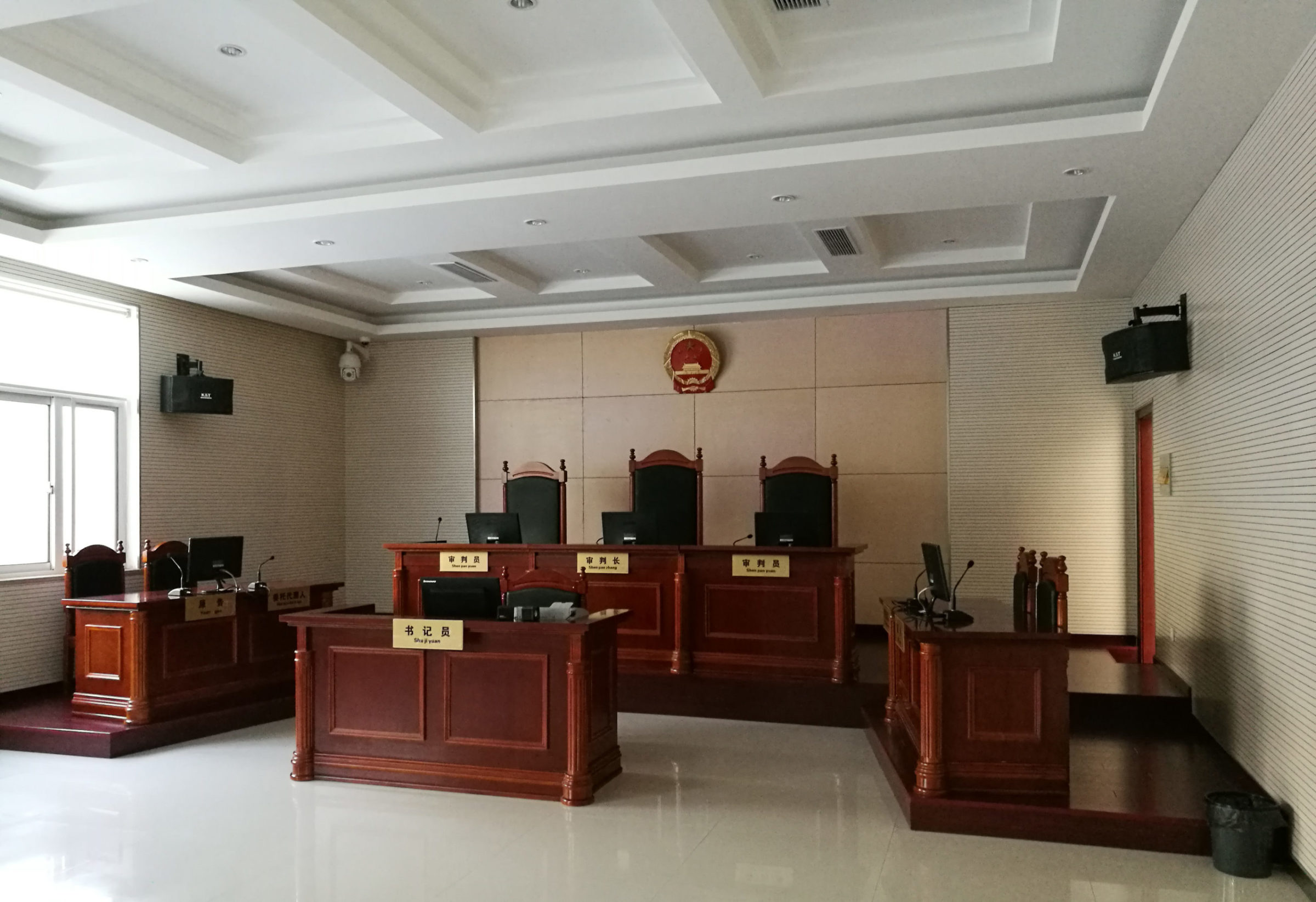
The first step in any legal dispute is establishing jurisdiction, which essentially means determining the appropriate court to hear your case. When your business dispute involves a Chinese company, jurisdiction becomes even more critical
When suing a Chinese company in the United States, you will need the typical contact inquiry necessary for suing any foreign company. See Asahi Metal Industry Co. v. Superior Court of California, Solano Cty., 480 U.S. 102 (1987); Glencore Grain Rotterdam B.V. v. Shivnath Rai Harnarain Co., 284 F.3d 1114 (9th Cir. 2002).
A U.S. court may not always have jurisdiction over a Chinese company. Even if it does, suing a Chinese company in the U.S. can be more complex than suing a domestic company due to several factors:
Our team of China litigation experts understands the intricacies of jurisdiction and can guide you through the process of effectively resolving your dispute with a Chinese company.
The current version is already quite informative, so instead of shortening it, we can improve the structure and flow to make it easier to digest. Here’s a revised version with those improvements:
Suing a Chinese company in a U.S. court requires following specific procedures for delivering legal documents (known as service of process). While this process may seem complex, adhering to the Hague Convention streamlines matters.
The Hague Convention on Service Abroad of Judicial and Extrajudicial Documents in Civil and Commercial Matters is an international treaty that simplifies the process of serving legal documents across borders. Since China adheres to this convention, you can leverage it to serve process on a Chinese company in your U.S. lawsuit.
Service of process under the Hague Convention involves submitting specific documents to China’s Ministry of Justice, the designated central authority. These documents typically include:
In our experience, Chinese courts typically take 3-8 months to effect service of process, but if the Chinese company you are suing is a powerful local business, service may take longer. It does help to repeatedly call and email the relevant Chinese court and China’s Ministry of Justice to help move the process along.
China formally objected to service by mail under Article 10(a) of the Hague Convention on Service and U.S. courts have held that objection valid. See DeJames v. Magnificence Carriers, Inc., 654 F.2d 280 (3d Cir. 1981), cert. den., 454 U.S. 1085; Dr. Ing H.C. F. Porsche A.G. v. Superior Court, 123 Cal. App. 3d 755 (1981).
United States Deposition and Discovery Rules Related to China
Once you file a U.S. lawsuit against a Chinese company, the court’s normal discovery rules apply. China, however, prohibits depositions on its soil, even with witness consent. In its declaration on accession to the Hague Convention on the Taking of Evidence Abroad in Civil and Commercial Matters, China stated it would not abide by those provisions granting consular officers the right to oversee depositions.
In 1989, China allowed a deposition in U.S. v. Leung Tak Lun, et al., 944 F.2d 642 (9th Cir. 1991), but advised that its grant of authority for that particular deposition should not be considered precedent. It has not permitted a deposition since, and conducting one in China may lead to arrest or expulsion. Even deposing a witness in China via the phone likely violates Chinese law and would not be a good idea for anyone planning to go to China.
The easiest way to depose a China‐based witness is usually to do so in the United States, Hong Kong or in a neutral third country.

While the Hague Convention on Evidence allows for document discovery in certain circumstances, obtaining documents from China for a U.S. lawsuit can be challenging. Here’s why:
What This Means for You
Due to these limitations, it’s crucial to carefully strategize your document discovery efforts in China by doing the following, among other things:
Consulting with an attorney experienced in China litigation can significantly increase your chances of obtaining the necessary evidence from China, and we would be happy to assist.

Litigating against a Chinese company in a U.S. court can present unique challenges, but it also offers certain advantages for U.S. companies. Here’s a breakdown of some key factors to consider:
Potential Advantages for U.S. Companies
Challenges to Consider
Importance of Legal Expertise
Successfully litigating against a Chinese company requires a deep understanding of both U.S. and Chinese legal systems. Consulting with an attorney experienced in China litigation can help you:
While there are advantages and challenges to consider, U.S. companies can successfully resolve disputes with Chinese companies through strategic litigation in U.S. courts. Partnering with the right legal team can significantly increase your chances of a successful outcome.
For further insights into suing a Chinese company in a United States court, you may find the Wall Street Journal article Chinese Companies Court Disaster informative. It’s written by one of our most experienced China litigators.

Chinese courts virtually always disregard U.S. judgments since there is no treaty or any reciprocal arrangement between China and the United States regarding recognition or enforcement of civil judgments.
If you’re suing a Chinese company with assets in the United States or a country that generally enforces U.S. judgments (such as the United Kingdom, Canada, or South Korea), filing your case in a U.S. court may be the best way to proceed. Otherwise, the judgment of a U.S. court may end up being of little to no use.
China is a signatory to the 1958 Convention on the Recognition and Enforcement of Foreign Arbitral Awards, so its courts generally will enforce foreign arbitral awards from recognized foreign arbitral bodies. Enforcement is less likely, however, for awards obtained by default. Chinese courts also sometimes delay foreign arbitration award cases for years as a way to hold off on enforcement and make their enforcement numbers look better than they may actually be.
Dispute resolution in China is possible through arbitration, though the process is more limited than domestic arbitrations. Plus, international attorneys have upped their game when it comes to crafting China arbitration clauses. Standard clauses often go to great lengths to protect Chinese companies and frequently don’t include specific language about how and when arbitration occurs.
China has some legitimate arbitral bodies, with the China International Economic Arbitration Commission (CIETAC) being the most prominent.
Generally, these arbitral bodies allow little to no discovery. Often, they permit no live testimony either, so expect them to try your case based on the documents. It typically makes sense to include provisions for English language proceedings in your China arbitration and as many foreign arbitrators as your Chinese counter-party will accept.
When suing a Chinese company in American courts isn’t the right solution, doing so in China may be. The Chinese court system differs from the one U.S.-based attorneys are used to, but it’s more navigable than many American lawyers believe it to be. Foreign companies can and do win cases against Chinese companies in Chinese courts. Though suing in China is usually possible, it’s best to do it with a comprehensive understanding of what the process will actually entail.
First, jurisdiction is rarely a challenge. Articles 3 and 237 of the Civil Procedure Law of the People’s Republic of China grant Chinese courts jurisdiction over international cases involving a foreign plaintiff against a Chinese company.
Second, Chinese courts will enforce the law set forth in a contract. However, Chinese judges emphasize the overall context and “fairness” of the case more than the legal technicalities their American counterparts focus on.
For example, if a company performs a contractual obligation poorly because of an individual employee, a U.S. court would almost certainly hold the company liable for all damages arising from the breach. On the other hand, a Chinese court might rule against liability or severely limit the damages, believing it unfair to penalize a company for the incompetence of one employee.
Third, Chinese courts prohibit nearly all discovery, so you’ll need to have a strong case at the outset to prevail. This precedent also means that you should build your case before you sue, especially since the time from filing to trial is usually less than a year.
Fourth, Chinese courts base their rulings almost exclusively on documentary evidence, not testimony.

Fifth, settlement is rare in Chinese business litigation matters. Litigation costs in China are almost always much lower than in the United States. Plus, after receiving a legal complaint, Chinese culture often views a settlement as losing face. The Chinese company you are suing may prefer to lose the case and blame it on the judge than to settle and have others perceive it as an admission of wrongdoing.
Sixth, Chinese courts rarely issue large damage awards, no matter the case. Businesses there typically operate with low margins, and the courts are reluctant to harm a functioning business or to cause layoffs. In particular, Chinese judges are hesitant to award damages for lost profits or for pain and suffering. Chinese courts simply do not award the sort of damages available in a U.S. court.
Seventh, the ability to collect judgments in China is still not near to the level of the United States or most of Europe, though it is getting better. Chinese courts often lack the authority to enforce collection and get little assistance from the other agencies who have the power to compel payment. In addition, Chinese companies sometimes find it more cost-effective to avoid a judgment by shutting down and re‐opening under a new name.

Dan Harris is a leading authority on China’s legal system and business environment. In addition to making frequent media appearances to speak on Chinese legal issues, they co-author the China Law Blog, which consistently ranks as one of the top English-language legal blogs in the world.
The ABA (American Bar Association) Journal named the China Law Blog as one of the 20 best legal blogs of all time, and for five years in a row the Journal’s readers voted it the best in its category. The China Law Blog offers readers a wealth of information about the types of clients we serve and the legal challenges we help them solve every day.
View BlogGet started by filling out the form, or call 1-888-330-0010 to schedule a free initial consultation.
"*" indicates required fields

“Harris Sliwoski expertly guided us through the formation of our company. They continue to assist with necessary registrations and compliance with numerous regulations. They were able to promptly answer all our many questions and provide understandable options, explanations and practical advice. We expect to continue to use Harris Sliwoski on a regular basis as our company expands. They were also able to introduce us other professional experts. We would not hesitate to recommend Harris Sliwoski to any companies in need of legal advice.”
 Three Continents Foods LLC
This law firm was a huge help as our company went through the process of commercial licensing in the California cannabis industry. They have helped us with a variety of legal issues in a timely fashion, while clearly communicating with us throughout the process. Everyone we’ve worked with at Harris Sliwoski is an expert in their field and we have always felt that we were in good hands through our legal representation.
Wil Crummer, CEO PRO Farms
Legal stuff is always scary. And I’ve had to play offense a couple times, begrudgingly. To have Harris Sliwoski have my back? It made things a lot less prickly. They quickly walked me through my options, and were refreshingly consistent in their communications, timing and billing. I’ve been lucky to stay out of the legal side of things my whole career, thankfully. When things went a little wrong, Harris Sliwoski quickly made things right.
Aaron Draplin, Founder Draplin Design Co.
I am impressed with this law firm. They answered all my questions regarding cannabis businesses and the California cannabis framework, and they have helped me with a variety of legal issues in a timely fashion, while always clearly communicating with us throughout the process. They also redirected me to other quality people for my business needs. Everyone I worked with at Harris Sliwoski is an expert in their field, and I was in good hands throughout my legal representation.
Corey T., CEO Thinc Cubed, LLC
I have been working with the lawyers at Harris Sliwoski for more than 20 years both as a business owner and as an executive at a large east-coast health system and that is because they have always efficiently provided high level and clear international law advice. Most recently, Harris Sliwoski provided legal support on many matters related to procuring medical products worldwide. Their support was particularly helpful to during the onset of COVID, when there was a big need for securing PPE quickly, all while navigating complicated international and domestic legal requirements. Harris Sliwoski’s team of international lawyers helped by conducting rapid-fire due diligence on potential suppliers, navigating the legal logistics for getting product from overseas and through U.S. customs, and drafting contracts to protect against various sorts of horribles. They did this by essentially providing what amounted to 24/7 service. I cannot recommend them highly enough.
Dan Pak Hospital Supply Chain Executive
Harris Sliwoski has represented our company in the legal cannabis industry for years. Harris Sliwoski has advised us in a wide variety of legal matters, and they are truly experts in their field. I would highly recommend Harris Sliwoski to anyone with questions about cannabis law, or any legal matters. They have been great for our Company, and will continue to guide us as our industry evolves
Matt Hurt, COO Cannabis Nation
You won’t find a better partner than Harris Sliwoski when trying to navigate the complex world of healthcare regulations. They not only give sound and reliable legal advice, but they are also very responsive and are able to guide you in a way that helps you reach your business objectives as well.
Joseph Axelrod, General Counsel Irwin Naturals
When we started the process of building a ‘seed to sale’ cannabis company in Oregon, we saw the need for expert legal counsel. The cannabis sector is fraught with potential peril at every turn, and we wanted the best legal advice we could find. After talking to several firms and individuals, we feel extremely fortunate to have chosen Harris Sliwoski as our legal counsel.
Tony Theiss, CEO and Co-Founder Redbarn Cannabis
We use Harris Sliwoski on all our international legal matters, including on our international litigation matters. We have over the last few years been involved in a couple big international legal disputes and Harris Sliwoski’s international dispute resolution team provided us with expert legal assistance on both matters. They were always very careful to explain to us what they were doing and why and what their actions would likely cost us in legal fees. Most importantly, we did extremely well on both cases and I have no doubt Harris Sliwoski was a big factor in that.
Kevin English, CEO We Are Camp
We have used Harris Sliwoski for legal help related to our international manufacturing. The lawyers with whom I worked had extensive familiarity with the international legal issues involved in our various projects and offered us key insights. I particularly appreciated how they always quickly and efficiently do what they say they will do and always within their cost estimates.
Andrea Barona Valladolid, Senior Legal Counsel Fairphone