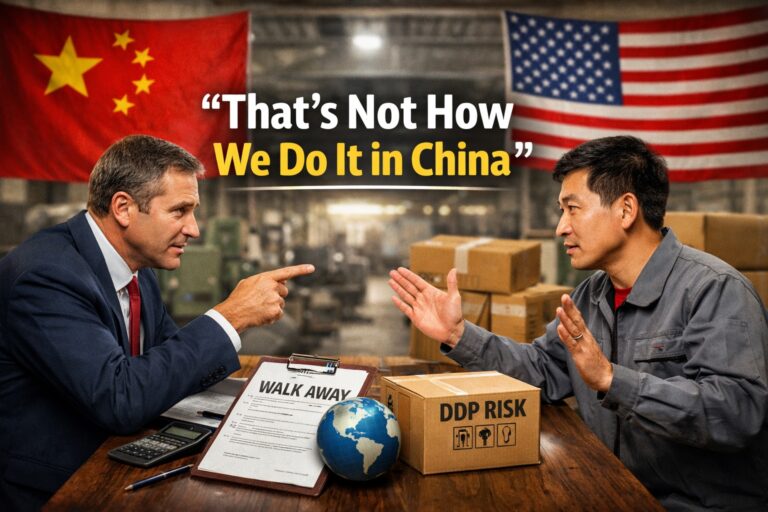
Two men sit at a table with paperwork, a calculator, and a box labeled "DDP RISK," with Chinese and U.S. flags in the background and the quote, "That's Not How We Do It in China.

How to Negotiate with Your Chinese Manufacturers

How to Negotiate with Your Chinese Manufacturers Most American companies hear the line “That’s not how we do it in China” and immediately start retreating. They soften their tone, over-explain, and offer compromises before they have identified what matters. They treat the phrase like a cultural law that cannot be questioned, instead of what it
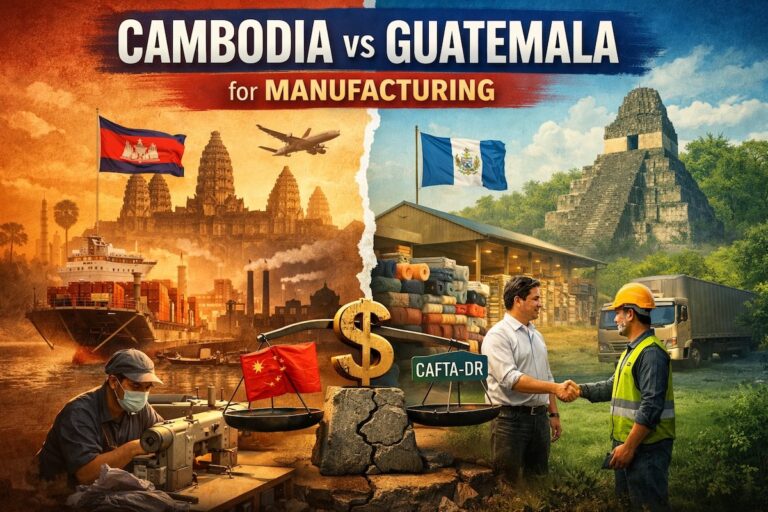
Illustration comparing manufacturing in Cambodia and Guatemala, featuring national flags, landmarks, a cargo ship, sewing machine, goods, and two men shaking hands beside a large dollar sign.

Finding Your China Substitute: Cambodia vs. Guatemala for Manufacturing:

Cambodia vs. Guatemala for Manufacturing For U.S. companies making labor-intensive products and looking to exit China, Cambodia and Guatemala come up repeatedly as lower-cost alternatives. I am bullish on Guatemala, but cautious on Cambodia. This is not because Cambodia cannot manufacture. It can. The issue is control. Cambodia’s risk profile is harder to manage and

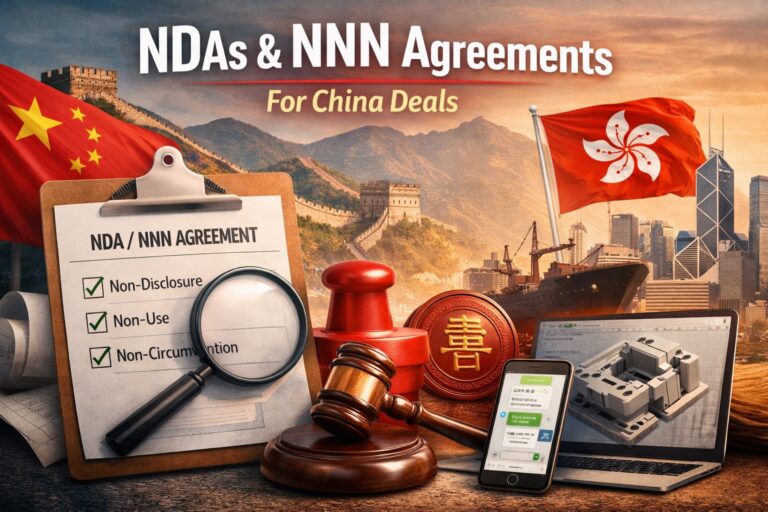
A display featuring China NNN Agreements and NDA documents, legal symbols, a phone, the Great Wall of China, and Chinese and Hong Kong flags, representing legal deals in China.

Templates Are Not Contracts: They’re Landmines

China NNN Agreements fail when they only block disclosure, ignore WeChat/CAD files, name the wrong company, or require enforcement you cannot afford. This blog post explains when you need an NDA vs an NNN agreement, common China traps (language, company chop, Hong Kong clauses), and what to send for a fast review.

White text on a blue background reads “The Pros and Cons of Manufacturing Integrators” with icons of gears, a robot arm, and tools in the background.

High End Manufacturing Integrators: The Pros and Cons for Companies That Cannot Afford Mistakes

High End Manufacturing Integrators: The Pros and Cons for Companies That Cannot Afford Mistakes Why Companies Are Turning to Manufacturing Integrators Companies that build sophisticated products tend to face the same pattern of problems. Overseas factories offer attractive pricing, but their incentives rarely match yours. Their priority is volume and machine utilization. Your priorities are

A red contract document with the text: "Why sign a new contract in China instead of adding an amendment?" in large white letters.

Why It’s Better to Sign a New Contract in China Than to Add an Amendment

Why It’s Usually Better to Sign a New Contract in China Than to Add an Amendment When working with Chinese manufacturers or other counterparties, foreign companies often ask our China business lawyers whether they can amend an existing contract instead of signing a new one. On paper, an amendment sounds efficient. In practice, it usually

Red graphic with Chinese flag elements, a warning sign, and bold text reading: "China Manufacturing Risks in 2025: Why They're Worse Than Ever.

China Manufacturing Risks in 2025: Why They’re Worse Than Ever

China Manufacturing Risks in 2025: Why They’re Worse Than Ever The New Reality of Manufacturing in China Twelve months ago, a U.S. company wired $800,000 to a trusted Chinese supplier it had worked with for years. The factory never shipped a single product. Instead, it shut its doors, the owner disappeared, leaving the American company

Subscribe To Our Blog

Explore the latest legal news and insight regarding China, cannabis, international law, immigration, dispute resolution and Web3.