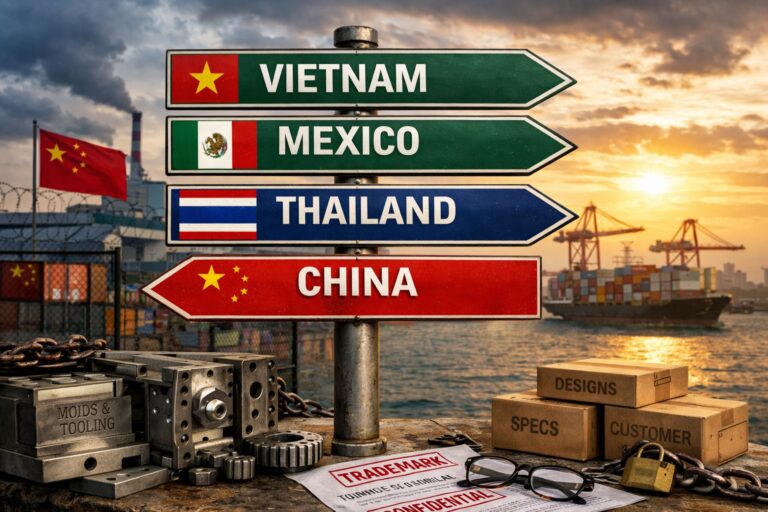
Directional signs with flags for Vietnam, Mexico, Thailand, and China near a shipping port, with containers, cranes, and industrial equipment in the background at sunset.

Your China Exit Strategy Is Also Your IP Strategy

Your leverage is usually strongest before your China factory knows you are leaving and before your plans in the new country become obvious to everyone else. That window does not stay open for long. Once it closes, fixing trademark gaps, tooling problems, and bad contracts becomes slower, more expensive, and much more difficult. Sometimes it does not just make the exit harder. Sometimes it makes the exit fail.

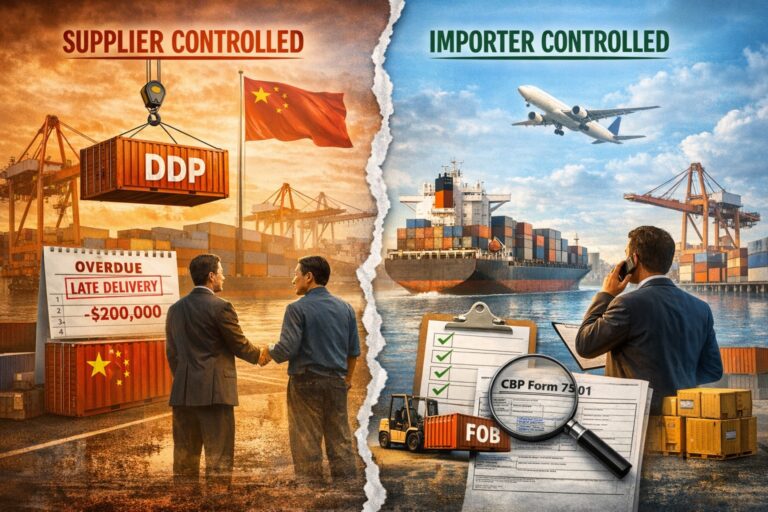
Split image contrasts supplier-controlled shipping (DDP, delays, costs, Chinese flag) and importer-controlled shipping (FOB, checklist, cargo, CBP form, airplane), highlighting the role of Import Controls in international trade.

Why Importers Should Control Freight and Customs From Day One

Why Importers Should Control Freight and Customs From Day One* Wally’s Widgets had a breakthrough product, a solid Chinese manufacturer, and a $2.8 million retail order. He also had a $200,000 late-delivery penalty clause and no experience importing from China. When the factory offered to handle shipping and customs under DDP terms – delivered duty

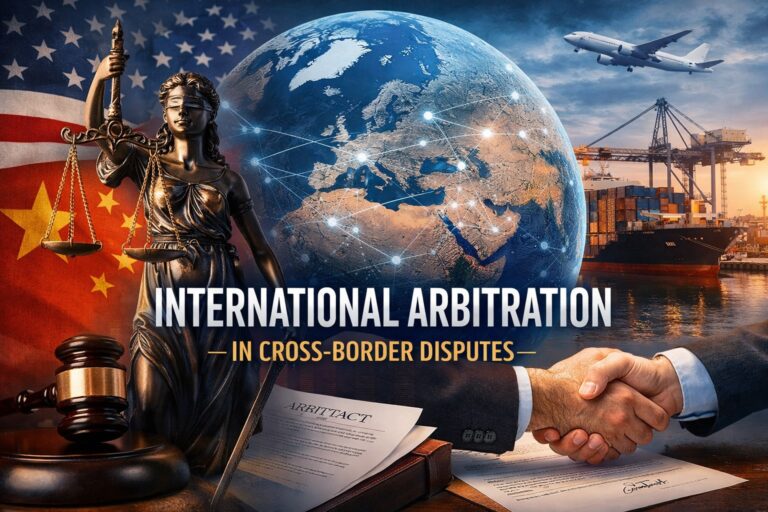
A collage featuring a globe, Lady Justice statue, shipping containers, a gavel, legal documents, a handshake, and the text "International Arbitration in Cross-Border Disputes" highlights the role of International Arbitration in resolving global conflicts.

International Arbitration in Cross-Border Contracts: What Companies Get Wrong

International Arbitration in Cross-Border Contracts: What Companies Get Wrong An industrial pump company signs a supply agreement with an overseas supplier, receives eight million dollars’ worth of defective goods, and does what seems logical: it sues in the supplier’s home court. Five years later, it has spent more on legal fees than the amount in

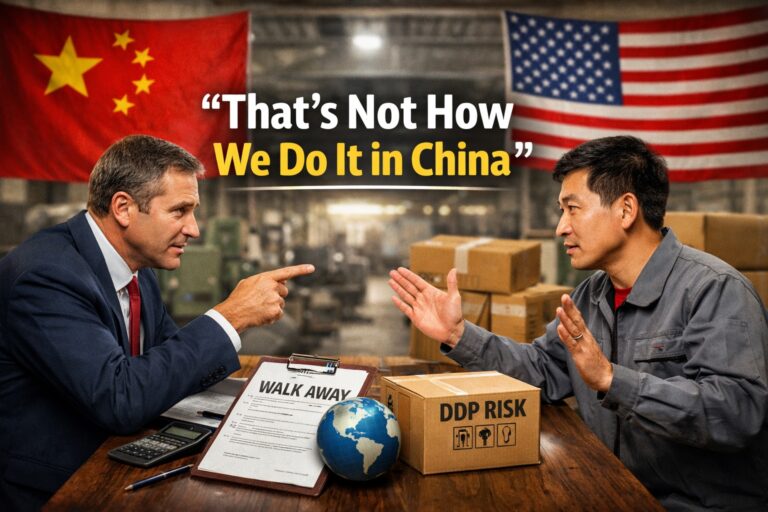
Two men sit at a table with paperwork, a calculator, and a box labeled "DDP RISK," with Chinese and U.S. flags in the background and the quote, "That's Not How We Do It in China.

How to Negotiate with Your Chinese Manufacturers

How to Negotiate with Your Chinese Manufacturers Most American companies hear the line “That’s not how we do it in China” and immediately start retreating. They soften their tone, over-explain, and offer compromises before they have identified what matters. They treat the phrase like a cultural law that cannot be questioned, instead of what it

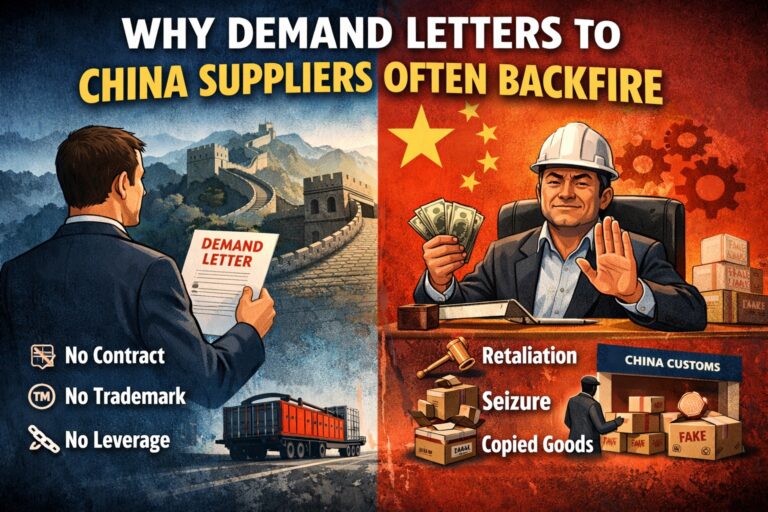
A man holding a demand letter faces China's Great Wall; on the right, a Chinese official rejects money beside symbols of retaliation, seizure, and copied goods, with warning icons below.

Why Demand Letters to China Suppliers Often Backfire

Why Demand Letters to China Suppliers Often Backfire Sending a quick demand letter to a China supplier can destroy your leverage. Twice last week, I had to explain that to companies that were not clients. Both wanted me to immediately send a demand letter to their China suppliers to force shipment of long-delayed product. I

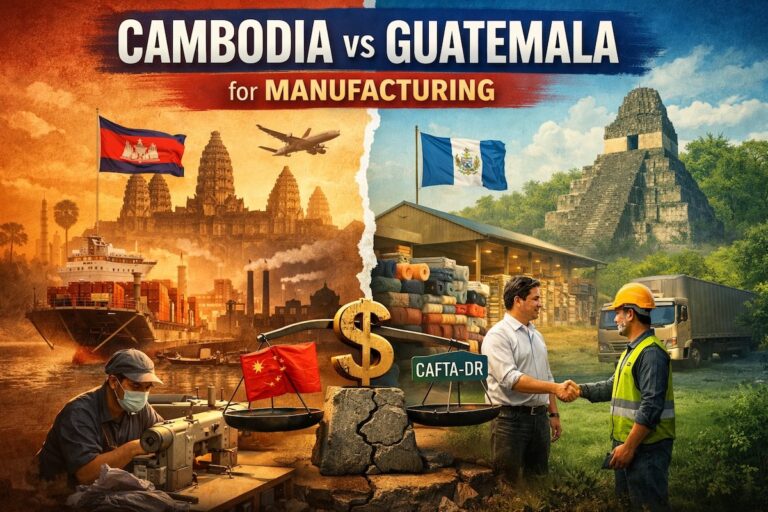
Illustration comparing manufacturing in Cambodia and Guatemala, featuring national flags, landmarks, a cargo ship, sewing machine, goods, and two men shaking hands beside a large dollar sign.

Finding Your China Substitute: Cambodia vs. Guatemala for Manufacturing:

Cambodia vs. Guatemala for Manufacturing For U.S. companies making labor-intensive products and looking to exit China, Cambodia and Guatemala come up repeatedly as lower-cost alternatives. I am bullish on Guatemala, but cautious on Cambodia. This is not because Cambodia cannot manufacture. It can. The issue is control. Cambodia’s risk profile is harder to manage and

Subscribe To Our Blog

Explore the latest legal news and insight regarding China, cannabis, international law, immigration, dispute resolution and Web3.