
Vince Sliwoski

Vince es un galardonado abogado mercantil, solucionador de problemas y negociador. Sus clientes abarcan desde inversores particulares y emprendedores hasta grandes empresas nacionales e internacionales. Con sede en Portland, Oregón, es socio director de Harris Sliwoski editor del Canna Law Blog del Psychedelics Law Blog.

Surreal scene of faceless figures at a table signing a Letter of Intent, surrounded by melting clocks, scales, charts, and large pens—a symbolic depiction of buying a business in the U.S.—with a contract on a pedestal in the background.

Buying a Business in the U.S., Part 4: Letters of Intent (LOIs)

Buying a Business in the U.S., Part 4: Letters of Intent (LOIs) In business purchase negotiations, parties often execute an early‑stage document called a letter of intent (“LOI”). You may also see it called a term sheet or even a memorandum of understanding (“MOU”). The label matters less than the document’s language and the parties’

Two people in trench coats and hats exchange documents labeled “NDA” and “Data Room” in an office filled with files, a briefcase, a magnifying glass, and a checklist on the wall.

Buying a Business in the U.S., Part 3: Nondisclosure Agreements

I recently wrote about how to find businesses for sale, and how to price them. Today I’ll discuss the very first contract typically signed by a buyer and seller in the life cycle of a small or closely-held business acquisition: the non-disclosure agreement (NDA). In nearly all deals outside of the straight “investment” or VC

A man sits at a desk reviewing papers, with a calculator, coffee mug, and business valuation folder, in an office overlooking a sunny street with shops.

Buying a Business in the U.S., Part 2: How to Price Them

“Price is what you pay. Value is what you get.” Warren Buffett said that. Buffett was talking about public companies, of course, but his maxim applies equally to purchases of small and closely-held business. Generally speaking, the lower the price, the better the value—if a buyer does their diligence, and assuming no fraud. At its

A woman at a desk reviews logistics on a laptop, with a U.S. map, business photos, graphs, and a van, suggesting business planning and distribution analysis.

Buying a Business in the U.S., Part 1: How to Find Them

Buying a Business in the U.S., Part 1: How to Find Them Welcome to the first installment in a series on buying a business in the U.S. This post explains how to find business purchase opportunities, for anyone interested in owning a small or closely-held business. In future posts, I’ll cover how small businesses are
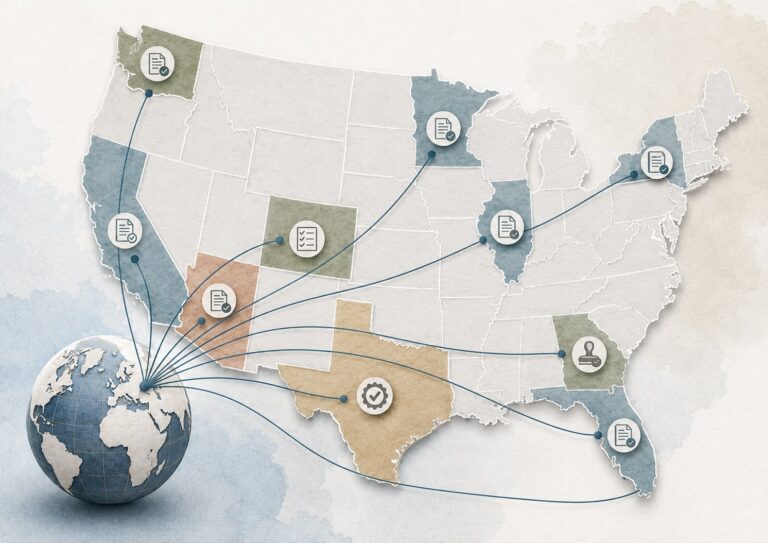

Stylized map of the United States showing lines from a globe to several states, each marked with icons representing documents and a user profile, highlighting the State Registration process.

International Companies and U.S. State Registration Requirements

International companies and U.S. state registration requirements We regularly help foreign-based businesses access U.S. customers by establishing a local presence. At the state level, the first step is choosing a state of incorporation, or registration. See Doing Business in the U.S.: Choosing a State of Formation. The state of formation is the primary jurisdiction where

Two businesspeople stand before a colorful U.S. map with highlighted states, a shipping container ship, an open book, a globe, and a city skyline—symbolizing company formation and nationwide business opportunities.

Doing Business in the U.S.: Choosing a State of Formation

Choosing a state of formation for doing business in the U.S. We work with many international companies and entrepreneurs doing business in the United States. For anyone entering the U.S. market, choosing a state of formation is a threshold decision— one that carries significant legal and tax implications. And while a handful of states are

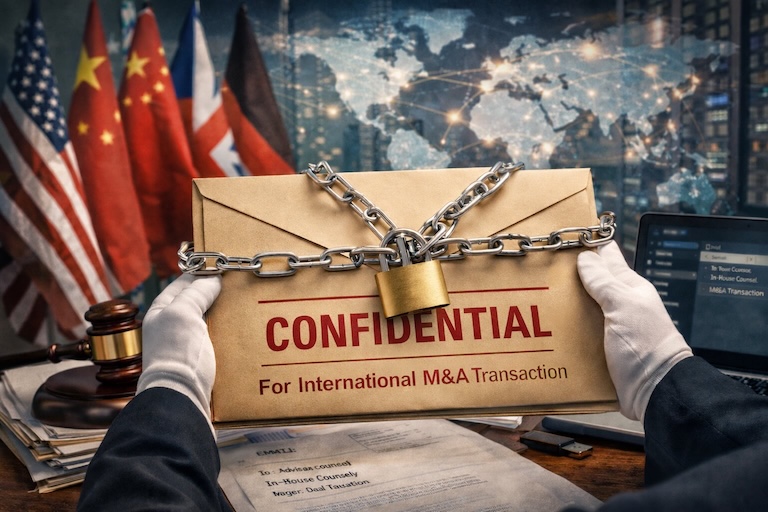
Unas manos enguantadas sostienen un sobre sellado con la etiqueta «CONFIDENCIAL: Para una operación transfronteriza de fusiones y adquisiciones», asegurado con una cadena y un candado; al fondo se ven banderas internacionales y documentos.

El secreto profesional entre abogado y cliente en las fusiones y adquisiciones transfronterizas: cómo se pierde el secreto profesional durante la operación

Attorney-Client Privilege in Cross-Border M&A: How Privilege Gets Lost During the Deal Last week we wrote about how attorney-client privilege can be lost in domestic M&A when brokers, consultants, and other non-legal advisors are pulled into legal communications. See Attorney-Client Privilege in M&A: How Brokers and Other Advisors Can Create Serious Risk. Cross-border deals contain

A la izquierda, la balanza de la justicia, un mazo y un expediente confidencial; a la derecha, figuras del mundo de los negocios identificadas como «corredor» y «asesor», junto a gráficos sobre fusiones y adquisiciones; en el centro, el texto «Secreto profesional entre abogado y cliente».

El secreto profesional entre abogado y cliente en fusiones y adquisiciones: cómo los corredores y otros asesores pueden generar riesgos graves

El secreto profesional entre abogado y cliente en las fusiones y adquisiciones: cómo los intermediarios y otros asesores pueden generar un riesgo grave Hoy hablaremos del secreto profesional entre abogado y cliente, de la importancia que tiene esta garantía en las operaciones de fusiones y adquisiciones, y de cómo evitar cometer errores. En concreto, analizaremos este apasionante tema en el contexto de la colaboración con intermediarios y otros asesores no jurídicos a lo largo del proceso

asesoramiento jurídico o empresarial

¿Asesoramiento jurídico o asesoramiento empresarial?

Legal advice versus business advice People hire lawyers to give them legal advice. Sometimes, people also hire lawyers to give them business advice. This may introduce thorny considerations because lawyers generally should not give business advice (more on that below). However, sometimes they can, and do (more on that too). As a business lawyer who