China Manufacturing Before Product Launch: Protect Your IP Before You Go Public
Kickstarter used to be the obvious moment when a startup stopped being invisible. Today the reveal can happen on Amazon, TikTok, at a trade show, or simply on the company's own website. The platform matters less than the timing: if you plan to manufacture in China, some of the most important legal work belongs before the rest of the world sees your product.
The order is straightforward. File the IP that needs to be filed before launch. Protect nonpublic information before sending it to prospective factories. Verify the Chinese companies receiving that information. Then settle development, tooling, manufacturing, and ownership before serious money starts moving.
See What Happens When the Order Gets Reversed
This is a composite of matters we have handled.
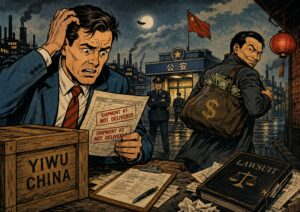
A startup begins talking with several Chinese factories about a new consumer product. The founders have filed a U.S. trademark application and assume they can deal with China later. One factory looks promising, so they send it CAD files, a bill of materials, and detailed engineering information under a generic NDA.
A few weeks later, the company launches on Kickstarter. The campaign takes off. Suddenly there are customers waiting, delivery promises to meet, and money available for tooling and production. Legal work moves down the list because getting the product made seems more urgent. Someone then files the startup's brand as a trademark in China. By the time the founders discover this, their preferred factory has spent months working on the product, has detailed technical files, and knows the startup cannot easily afford a production delay. The founders also realize that nobody clearly addressed ownership of the factory's engineering changes or what happens to the tooling if they move production elsewhere.
We have had clients come to us with different versions of this problem many times. Sometimes the trademark applicant has a connection to the company's Chinese factory, sourcing agent, distributor, or another party that learned about the product before launch. Sometimes the filing can be challenged. Sometimes the company has other options. None of those options is as attractive as having filed first.
Understand What Public Launch Does to Your Leverage
A public launch changes the relationship before you ever sign a Manufacturing Agreement. Other people can now see that your product exists, what you call it, and whether customers seem willing to buy it. At the same time, you are moving in the opposite direction: toward promised delivery dates, sunk development costs, paid tooling, and increasing dependence on the factory.
That is where leverage shifts.
Early in the process, walking away from a prospective manufacturer is annoying. Several months later, replacing a factory that holds your drawings, knows how to make the product, and controls the tooling can threaten the launch itself. Once customers are waiting, the factory knows that time matters to you. The point of doing the legal work early is to keep the factory from gaining leverage you could have avoided giving it.
File the IP That Cannot Wait
You may have no plans to sell in China. If your branded product is being made there, your trademark is already part of your China supply chain. That point surprises startups because they tend to think about trademarks in terms of sales markets. Manufacturing creates a different exposure. Your factory sees the brand before your customers do, the packaging is printed in China, and the branded goods have to leave China before they can reach customers elsewhere. A conflicting Chinese registration can interfere with manufacturing and exports even when you never sell a single product to a Chinese consumer.
As we explain in Manufacturing in China? Register Your Trademark Before Someone Else Does, this is why the core China trademark often belongs near the front of the line for companies manufacturing there.
China Is Still First-to-File
China is a first-to-file country. An American, European, Canadian, Australian, or other foreign trademark registration does not give you trademark rights in China. China's revised Trademark Law was adopted on June 26, 2026 and takes effect January 1, 2027. It strengthens the rules against applications filed without a genuine intention to use, excessive filings, and other bad-faith conduct. It also preserves the basic priority rule: when competing applicants seek the same or similar mark for the same or similar goods, the earlier application gets priority.
That means the new law gives legitimate brand owners more tools against abusive filings, but it does not make filing early any less important. Prior use, an existing business relationship, and evidence of bad faith can help in the right dispute. They are arguments you would rather never need to make.
The revised law also shortens the trademark opposition period from three months to two months beginning January 1, 2027. A company that discovers a problematic application after publication will have less time to act. For more on the changes, see Five Practical Steps Foreign Brands Should Take to Prepare for China's New Trademark Law. You do not need to wait for a China trademark registration certificate before launching. Registration takes months. What matters at the front end is getting the application filed and establishing your place in line.
A straightforward China trademark filing is generally a few-thousand-dollar decision. Fighting over a mark after someone else has filed it can cost many multiples of that, assuming the mark can be recovered at all. The filing still needs to be done correctly. China has its own classification and subclass system, and the applicant, mark, goods, classes, and subclasses all matter. We cover those issues in China Trademark Registration: Why U.S. Companies Need More Than a Filing Agent. After registration, companies that face counterfeiting risk should also consider recording the mark with China Customs, which can help stop infringing goods at the border.
Deal With Patents and Designs Before the Reveal
Patents and designs present an even harder timing problem because public disclosure itself can eliminate rights. China requires novelty for both inventions and designs. Its six-month exceptions for pre-filing disclosure are narrow and cover specific circumstances such as certain recognized exhibitions, prescribed academic or technological conferences, and unauthorized disclosure. A Kickstarter campaign, product page, TikTok video, trade show appearance, or ordinary public demonstration should not be treated as giving you a general grace period.
For a visually distinctive consumer product, a China design patent can be particularly valuable because the application generally needs to be filed before the design becomes public. If the protectable feature is how the product works rather than how it looks, involve patent counsel before launch. We discuss how startups should decide which forms of protection justify the cost in International IP Protection for Startups: What to Protect and Where.
The same review should confirm that the company owns what it plans to protect. Startups are often loose about work created by founders, outside designers, engineers, software developers, and contractors. Those ownership problems tend to stay hidden until an investor, buyer, or dispute forces someone to prove who owns what.
Protect Nonpublic Information Before You Send It
Putting a product on Kickstarter does not publish your CAD files, source code, bill of materials, manufacturing methods, or other information a factory needs to make it. Protect that information before it changes hands.
For China manufacturing, a standard Western NDA is usually the wrong starting point. An NDA focuses on disclosure. Your factory can hurt you without publicly disclosing anything: it can use your information to make a competing product, give the opportunity to an affiliated factory, or go around you commercially. That is why we use NNN Agreements—non-disclosure, non-use, and non-circumvention—for the right China manufacturing relationships. China NNN Agreements: The Hard Truth explains why the details matter as much as the acronym.
A useful China NNN begins with the correct Chinese company. The agreement should use that company's exact registered Chinese name and be executed in a way that binds it. The company chop is important, though it is not magic; the right chop on an agreement with the wrong entity does not solve anything.
The agreement also needs to be drafted for the place where you expect to enforce it. When Chinese-court enforcement is contemplated, Chinese should usually control, Chinese law will usually make more sense, and the dispute provision should point toward a forum that can reach the counterparty and its assets. A defensible agreed-damages provision gives the Chinese side a concrete financial consequence to weigh before it breaches.
If you have already selected your factory and can put a comprehensive Manufacturing Agreement in place before sending sensitive information, you may not need a separate NNN Agreement. The Manufacturing Agreement can contain the same protections. Do I Need a China NNN Agreement or a China Manufacturing Agreement? Usually Both. explains when the separate NNN earns its keep and when it does not.
Verify the Chinese Company Before You Choose It
Do not assume that the English company name on a quotation or website identifies the legal entity that will make your product. The company communicating with you may be a trading company or Hong Kong intermediary while a different mainland entity receives your files and runs production. We regularly see companies sign a solid contract with one entity while the company they actually need to control remains outside the agreement.
Before sensitive disclosure, confirm the recipient's exact registered Chinese name and make sure the company exists and is legally authorized to do what it says it will do. Before committing to the manufacturer, go further: determine who owns the company, who runs the factory, who will receive the technical information, and whether subcontractors or affiliates will be involved. These basic company checks regularly uncover reasons we tell clients not to move forward with a prospective manufacturer.
The same problem comes up when a Hong Kong company presents itself as the supplier while an unrelated or loosely related mainland company actually manufactures the goods. The Hong Kong Intermediary Trap: Do Not Bind the Wrong China Company explains why the distinction can determine whether your contract protects you at all. Your contract has limited value against a company that never signed it.
Set Ownership Before You Pay for Development
An NNN Agreement does not decide who owns new work created during product development. Suppose you bring the original concept and the factory changes the internal design, solves an engineering problem, and prepares the final production files. Who owns those improvements and files? Can you take them to another factory if the relationship ends?
A Product Development Agreement is appropriate when the Chinese side is doing genuine engineering, prototyping, testing, or other work needed to turn the concept into a manufacturable product. It should define the work and milestones, payment triggers, acceptance standards, ownership of newly created IP, and what happens if development fails.
Not every product needs a separate development agreement. Adding a logo or changing packaging is different from asking a factory to engineer a new electronic device. When meaningful development is occurring, however, paying the factory does not by itself settle ownership of everything the factory creates. For more on that distinction, see The 101 on China Product Development Agreements.
Lock Down Tooling and Production Before the Factory Becomes Hard to Replace
Once you choose the manufacturer, the agreement needs to govern the actual production relationship. A good Manufacturing Agreement should make the critical obligations measurable: what the factory must make and to what quality standard, when it must deliver and be paid, whether it can subcontract or use your IP for anyone else, and what happens when the goods are defective or the factory otherwise breaches. A purchase order and a chain of emails are poor substitutes once real money and production are involved.
The NNN protections that still matter should carry forward into the Manufacturing Agreement. If product development continues, the development and manufacturing provisions need to fit together rather than contradict one another. Tooling deserves special attention because it can turn into immediate leverage. Paying for a mold does not answer every question about who controls it, where it stays, how the factory can use it, or when it must be returned. The agreement should leave those points clear before the tooling is made or handed to the factory.
We have seen what happens when that work is skipped. A buyer decides to change factories and discovers that the original factory considers the molds its leverage. At that point, the nominal value of the tooling is almost beside the point. The real cost comes from recreating it while production stops and customers wait. Who Owns Your Molds? How Overseas Factories Hold Tooling Hostage—and How to Stop Them goes deeper into that problem.
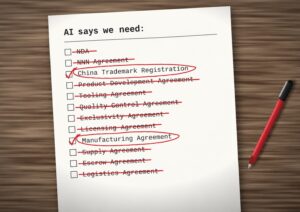
You do not need four separate contracts simply because there are four legal issues. A well-structured Manufacturing Agreement can include NNN and tooling provisions, and sometimes development terms as well. What matters is that each obligation and remedy is clear enough to stand on its own when something goes wrong. See China Manufacturing Contracts: When One Agreement Is Not Enough.
If You Have Already Launched, Triage the Problem Now
If the product is already public, find out what remains protectable before giving away more leverage. Search the China trademark register and file the marks that remain available. Have patent counsel determine whether patent or design rights survive the disclosure. Stop sending technical information to factories you have not verified, and put the right contracts in place before funding development, tooling, or production.
If somebody has already filed your mark, find out who did it and whether that person or company has a connection to your business. A factory, sourcing agent, distributor, former employee, filing service, or other party that already knew about the mark presents a different legal picture from a stranger who happened upon it independently. Prior use and bad-faith evidence can matter, particularly under China's strengthened trademark rules. The important thing is to investigate while you still have room to change factories, alter the launch schedule, challenge the filing, or pursue another solution. Every additional dependency makes the next decision harder.
Get the Sequence Right
A startup cannot spend unlimited money protecting every conceivable piece of intellectual property in every country. It should spend early money where waiting can permanently change the company's position. For a product being made in China, that means deciding what IP needs filing before the public reveal, protecting sensitive information before sending it to factories, knowing exactly who is receiving that information, settling ownership before paying for development, and locking down production and tooling before the factory becomes difficult to replace.
We have seen plenty of companies do these things in the opposite order. They launch first, disclose second, pay third, and call a lawyer only after someone else has filed the trademark or the factory controls something they need.
China Manufacturing Before Launch: FAQ
Do I need a China trademark if I only manufacture there?
Often, yes. If your brand appears on products or packaging made in China, the trademark is part of your China supply chain even if you never sell to Chinese consumers. A conflicting registration can create manufacturing and export problems, which is why the principal mark should usually be addressed before it becomes public.
Do I have to wait for my China trademark to register before launching?
No. China trademark registration takes months. For the timing issue discussed here, the important step is getting the application filed and securing the earlier filing date before somebody else files the same or a conflicting mark.
Can I use my U.S. NDA with a Chinese factory?
A standard U.S. NDA is usually a poor fit. China manufacturing risks extend beyond disclosure to unauthorized use and circumvention, and the agreement also needs the correct Chinese counterparty, appropriate execution, usable remedies, and an enforcement structure designed for China.
What IP should I consider before publicly showing my product?
Start with anything whose rights can be lost or seriously weakened by waiting. The core trademark often deserves immediate attention, and patents or China design patents should be considered before public disclosure when the product contains valuable technical or visual features.
What replaces the NNN Agreement once I choose the factory?
The Manufacturing Agreement becomes the main contract. It should carry forward the NNN protections that still matter and add the provisions needed for production, including specifications, quality, delivery, subcontracting, IP, tooling, and remedies. If genuine product development is still underway, a Product Development Agreement may also be needed.