










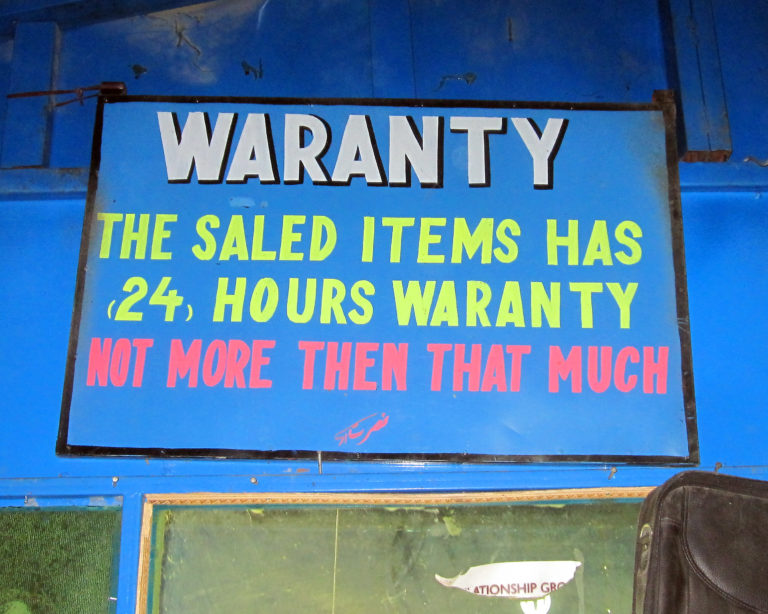
China Factory Warranties: What You Need and What You Can Get
When it comes to China factory warranties, buyers have a lot of options, but few are any good at all.
When it comes to China factory warranties, buyers have a lot of options, but few are any good at all.

Follow these three rules to succeed in selling your Made in China products in China.

A basic list of questions companies should be asking when seeking to decide whether to sue in a foreign country and the lawyers to use when doing so.

How to handle a China trademark expungement and reexamination action.

Citing the ongoing genocide, crimes against humanity, and other human rights abuses committed by the People’s Republic of China (China) against ethnic and religious minority groups in the western part of the country, Congress acted to strengthen CBP’s ability to enforce the forced labor prohibitions set forth in Section 307 of the Tariff Act of 1930 by enacting the Uyghur Forced Labor Protection Act (UFLPA) on 23 December 2021. To this end, the UFLPA applies a presumption that goods produced/manufactured (either wholly or in part) or mined in the Xinjiang Uyghur Autonomous Region (XUAR) or by entities designated on the UFLPA Entity List are made with forced labor and prohibited from entering the U.S.

When applying to register trademarks in China, it is not uncommon for brands to have their applications denied because of a similar trademark that has a prior right. This prior right may be an existing registration, or a pending application to register that was filed at an earlier date than yours. What to do if your brand finds itself in that situation?

A number of Chinese trademark law firms have of late been trying to drum up American clients on China trademark matters. I say this because my firm's China trademark lawyers have been getting a steady stream of emails from U.S. lawyers and companies contacted by these Chinese trademark law firms. The Chinese law firms are writing to U.S. lawyers and companies to alert them of trademark filings in China of the same trademarks owned by the company in the United States. These emails from the Chinese trademark attorneys to U.S. trademark attorneys usually go as follows:

A startup U.S. consumer product company with an ultra-hot new product line wrote one of my law firm's international lawyers asking what they should do to sell their product through a Chinese company that had expressed interest in being the U.S. company's "Chinese representative." After a few emails on various different legal subjects, our international lawyer wrote the following email (modified a bit) that provides such good and basic business advice that I wanted to share it here.

Whenever my law firm is retained to represent a company that is looking to provide goods or services to a new overseas buyer. China, one of the first things we want to know are the payment terms. If our client is going to get 100% payment before it provides thegoods or services, a written contract may not even be necessary. The old expression about posession being nine tenths of the law holds true, though I'd probably update it to say that it's 99 percent of the law when it comes to selling to many emerging market countries.

Our international litigators have lately been getting more than the usual number of emails/phone calls from companies (mostly American and European) wanting to pursue litigation against their Chinese manufacturers for bad product. In this post we explain one relatively easy way to reduce your bad product risks.