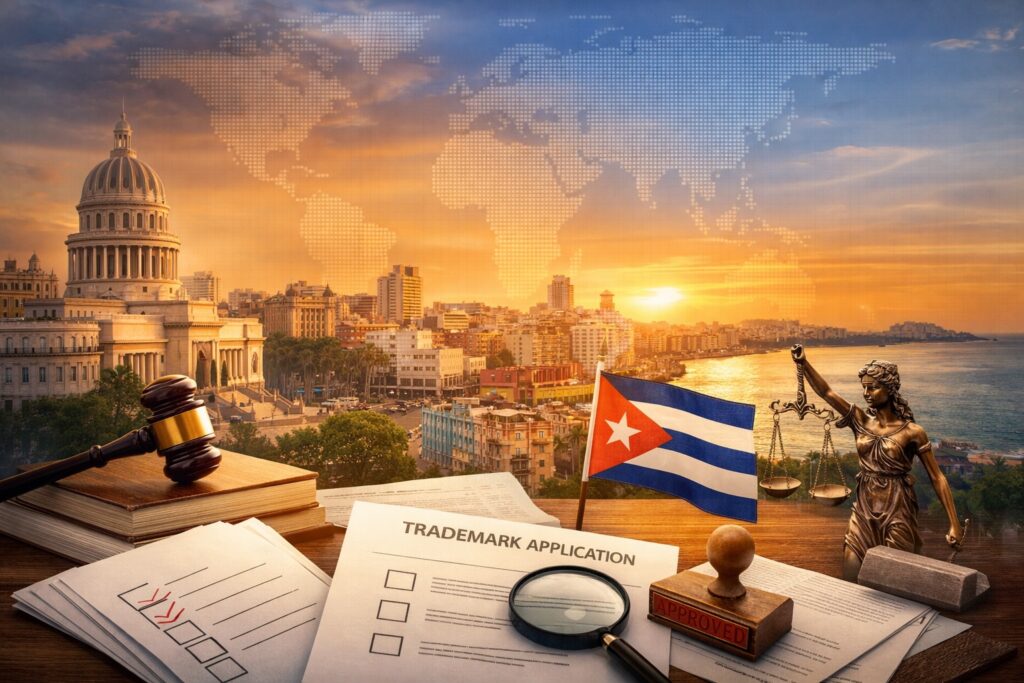
Why Companies Should Be Filing Trademarks in Cuba
For most companies (and trademark lawyers), Cuba is a someday problem. But someday problems in first-to-file countries have a way of becoming someone else’s mark.
The issue is not politics or timing. Cuba is a first-to-file trademark jurisdiction, and waiting too long can leave you fighting over a mark that should have been yours from the start.
We have seen this pattern for years in China and Vietnam. Cuba is different politically, but the trademark risk is familiar. A company assumes it has time. Someone else files first. Then prior use somewhere else does far less work than expected.
If Cuba could matter to your business later, that is reason enough to protect your mark there now.
Why Cuba Deserves Your Attention Now
Cuba is the kind of market companies postpone until later. That is exactly what creates the trademark risk. In a first-to-file country, delay can hand your mark to someone else, especially in a market that many foreign companies still treat as closed, uncertain, or not yet worth the trouble. That is where squatting happens.
The filing decision does not depend on knowing exactly when Cuba will change politically or economically. It depends on understanding that if Cuba could matter to your business later, early filing may be the cheaper and cleaner move now.
Cuba’s First-to-File Trademark System Changes the Timing
Prior use in the United States or Europe will not save you if someone beats you to the Cuban registry.
In first-to-file systems, waiting is not a neutral act. OCPI (Oficina Cubana de la Propiedad Industrial) administers Cuba’s trademark system, and OCPI’s own materials tie trademark protection to the Nice Classification. Cuba is also part of the broader international trademark framework. WIPO identifies Cuba as a member of the Paris Convention and the Madrid System, and OCPI’s own materials show Cuba’s participation in Madrid-system services.
U.S. Companies Can Protect Trademarks in Cuba
U.S. sanctions against Cuba remain broad and important. But U.S. law still leaves a narrow path for trademark protection even while the broader sanctions framework remains in place.
The operative OFAC provision here is 31 C.F.R. § 515.528, which authorizes non-designated persons to file and prosecute trademark applications and renewals, pursue opposition and infringement proceedings, and pay the government fees and reasonable attorney fees required to do so. That is the authority that makes Cuba trademark work possible for U.S. companies.
In Cuba, trademark rights are handled through the Oficina Cubana de la Propiedad Industrial, or OCPI.
Cuba Is a Real Trademark Filing Jurisdiction
Some companies still talk about Cuba as though it is too politically unusual to justify ordinary trademark planning. That is a mistake.
Cuba has a functioning trademark system. Applications are filed by class. OCPI examines them. Third parties can oppose them. Registrations can be renewed. Registrations can also become vulnerable if they are not used. OCPI describes its role in granting industrial property rights, and Cuba’s trademark framework sits comfortably inside the wider international IP system.
Cuba should be treated like any other serious trademark filing jurisdiction. That means deciding what to protect, identifying the right classes, getting ownership right, and filing with a long-term strategy in mind.
What Companies Get Wrong About Cuba
Companies usually get Cuba wrong in one of two ways: they assume it is still too restricted to matter, or they assume that if trademark protection is available, broader business activity must be opening up too. Both assumptions are wrong.
Treat Cuba as too early, and someone else may take your mark. Treat trademark registration as proof of broader market access, and you may misunderstand what U.S. law actually allows. Keep the filing question separate from the sanctions question.
Cuba’s Counterfeit Risk
Years ago, one of my firm’s lawyers spent two weeks in Cuba on a fact-finding trip (back when that was legal for Americans) and came away struck by the volume of counterfeit products openly circulating there. Counterfeit versions of certain products, including cosmetics, alcoholic beverages, and pharmaceuticals, circulate openly in Cuba. Some of those counterfeits also make their way into other Latin American countries.
Not every brand will face that exposure, but the Cuban market is not dormant and the risk is real. In a market where brand misuse is already part of the landscape, trademark protection matters more, not less.
The Cuba Trademark Filing Process
Applications are filed through OCPI and tied to Nice classes, so the filing needs to match the goods and services that actually matter to your business. OCPI examines applications, and accepted applications are published for opposition. The opposition period is 60 days from publication in the Official Bulletin. A Cuban trademark registration lasts 10 years and can be renewed for additional 10-year periods.
Foreign trademark applicants must proceed through a Cuban legal representative, designated representative, or official industrial property agent.
An Important U.S.-Law Caveat
Not every Cuba trademark issue is just a filing issue. Section 211 of the 1998 Omnibus Act is separate from the OFAC sanctions framework, and it can create serious problems for marks tied to businesses or assets confiscated by the Cuban government. That matters most with legacy Cuban brands and marks connected to pre-revolution ownership. Companies evaluating Cuba filings or enforcement should assess Section 211 exposure before assuming they have a clear path forward.
Cuba Trademark Filing Fees
OCPI currently lists the application fee at U 7,200 for up to three classes, plus U 2,400 for each class after the third. The registration grant fee is U 2,160. Renewal is U 7,200 for up to three classes, with grace-period renewal at U 8,640, and each renewal class after the third adds U 2,400.
OCPI presents fees in its own unit notation, “U.” The underlying Cuban resolution ties the tariff structure to national currency, but the tariff page itself does not provide a clean conversion. Even so, Cuban trademark filing fees are low by international standards.
Do Not File for Goods You Will Never Use
Under Cuban law, a registration becomes vulnerable to cancellation if the mark is not used within three years of registration or if use stops for a continuous three-year period after that. Overfiling can backfire. If you are going to register a mark in Cuba, the registration should fit a real plan. The plan does not require imminent market entry, but it should require more than a vague hope.
Why Filing in Cuba Now Makes Sense
If Cuba is even a plausible future market for your business, filing now may make sense because early filing is often cheap and late filing is often expensive. Cuba is easy to ignore. That is what creates the opening for someone else.
Cuba Trademark Takeaways
Cuba is easy to ignore. If your brand has real international value, especially in Latin America, Cuba is worth taking seriously now. Wait too long, and someone else may own the mark you should have filed yourself.
If you have questions about protecting your trademarks in Cuba or in any other emerging markets, please reach out.