China Employment Termination Today: Reinstatement Risk and What Employers Should Do
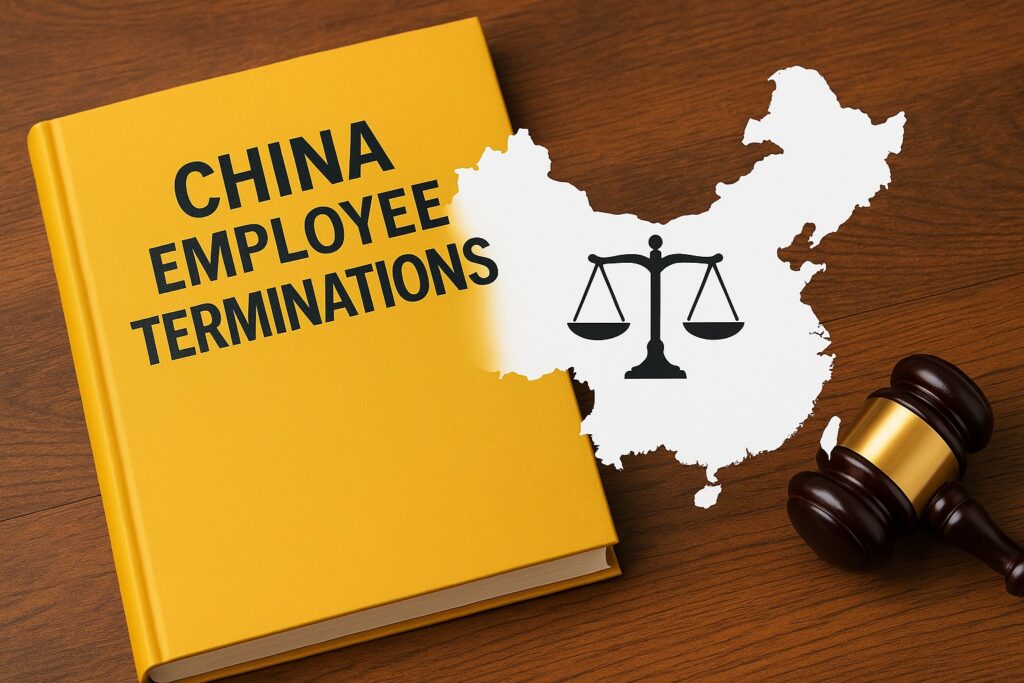
A Supreme People’s Court judicial interpretation effective September 1, 2025, has shifted the risk profile of China employment termination disputes. Employers that have treated unlawful termination claims as a predictable, mostly financial exposure should reassess that assumption, because it is now harder to avoid continued performance when an employee affirmatively asks for it.
One caution up front. China employment practice is local. National guidance from the Supreme People’s Court matters, but the speed and intensity of adoption can still vary by city and by decision maker, especially at the labor arbitration and basic court level.
Key takeaways
Interpretation (II) narrows and formalizes when tribunals and courts may find that an employment contract cannot continue to be performed after an unlawful termination, and that finding often determines whether reinstatement is ordered.
Interpretation (II) also clarifies wage exposure for the dispute period in cases where the contract can continue and the employee seeks wages for that period, calculated using the employee’s normal wage standard.
For employers with weak documentation, inconsistent handbook enforcement, or a habit of waiting too long to negotiate, termination disputes are more likely to become expensive, slow, and operationally disruptive.
What changed, in plain business terms
China termination disputes have always been document driven, and employers have always carried a heavy burden of proof. In many cases, however, employers relied on a practical workaround. Even if the employer lost on legality, it could often argue that the relationship could not realistically continue, pay statutory compensation, and move on.
Interpretation (II) constrains that workaround by listing when a tribunal or court may conclude that the contract already cannot continue to be performed after an unlawful termination. The result is not automatic reinstatement. The result is that some employer arguments that used to work are now less reliable, particularly in ordinary cases where the termination file is thin.
The baseline law employers need to remember
Article 48 of China’s Labor Contract Law is the core continued performance rule. If an employer terminates in violation of the law and the worker demands continued performance, the employer must continue performing the labor contract, unless it becomes impossible for continued performance of the labor contract.
The key question has always been when “impossible” applies. Interpretation (II) clarifies that question, and the practical implication for employers is that it will apply less often than many have assumed in routine disputes.
What Interpretation (II) says about when a contract cannot continue
Interpretation (II) identifies specific circumstances in which a court may find that an unlawfully terminated labor contract cannot continue to be performed.
These include circumstances where the labor contract expires during arbitration or litigation and there is no legal requirement to renew or extend it. They include circumstances where the employee begins receiving basic pension benefits. They include circumstances where the employer is declared bankrupt.
They also include circumstances where the employer is dissolved or ceases to exist as a legal entity, unless the dissolution results from a merger or division where employment obligations typically transfer to a successor entity. This carveout matters because a merger or division is often a corporate restructuring, not a true disappearance of the employer’s obligations.
Interpretation (II) further addresses cases where the employee takes another job that seriously affects performance of the original duties, or the employee refuses to terminate the new employment upon the employer’s request. Finally, it preserves a catchall category for other situations where continued performance is objectively impossible.
The phrase “objectively impossible” is doing real work. It signals a higher bar than inconvenience, interpersonal conflict, or an employer’s preference not to reinstate.
A concrete example of how leverage changes
Consider a common scenario. A foreign company terminates a sales manager in Shanghai for poor performance. Management is frustrated, but documentation is thin. There are no written warnings, no coherent improvement plan, and performance standards have been applied inconsistently.
The employee files for labor arbitration and demands reinstatement.
Before Interpretation (II), employers often argued that even if they lost on procedure, the relationship could not realistically continue. Tribunals sometimes accepted that framing and awarded compensation instead of reinstatement.
Under the new framework, that argument is weaker. Unless the employer can fit the facts into one of the defined categories or show objective impossibility, reinstatement becomes a credible remedy. Once reinstatement is credible, the employee’s settlement leverage increases sharply.
The hidden cost: back wages during the dispute period
Many employers focus on statutory compensation and underestimate time based wage exposure.
Interpretation (II) makes clear that where an employer unlawfully terminates a contract that can continue to be performed, and the employee seeks wages for the period between termination and continued performance, those wages should be paid at the employee’s normal wage rate.
Labor disputes can take many months and can extend significantly if the case proceeds beyond arbitration. The wage math escalates quickly for higher paid employees.
A simple illustration makes the point. An employee earning RMB 30,000 per month who accrues twelve months of dispute period wages represents RMB 360,000 in wage exposure, before legal fees, management time, and operational disruption.
Statutory compensation is a different bucket. In many unlawful termination scenarios, compensation is tied to statutory severance and is commonly calculated as twice the statutory severance amount, subject to caps and local rules. Dispute period back wages are separate, and in reinstatement driven disputes they can be the larger number.
Why many foreign employers misread where the risk is
Many foreign companies assume termination disputes can always be converted into monetary settlements, or they focus on whether an employee might try to sue outside China.
In practice, the meaningful leverage usually sits in local labor arbitration and local courts in China, where reinstatement and dispute period wages are real remedies. Once an employee frames the dispute around continued performance rather than money, the employer’s negotiating position can deteriorate quickly, particularly if the employer’s documentation is inconsistent.
Who this affects most
This change does not affect all employers equally.
Risk is highest for companies with large workforces, informal performance documentation, inconsistent handbook enforcement, or frequent reliance on position elimination or restructuring as termination grounds. Risk is also high for companies planning workforce reductions, because close cases become more expensive when reinstatement is a credible request.
Risk is moderate for smaller white collar operations that rely heavily on manager discretion and negotiate only after disputes escalate.
Risk is lower, though not eliminated, for companies that terminate infrequently and follow a disciplined, localized China termination process with strong documentation.
What to do this week if you have employees in China
Start by auditing any pending terminations and any recently completed terminations that are likely to be challenged. The goal is to assess whether you can prove lawful grounds and clean procedure, and whether you are prepared to live with reinstatement risk if you lose.
Next, identify your weakest potential termination cases before they become cases. Pick the roles where a termination would be most likely to end in a documentation fight and start building a record now, or decide in advance that these should be negotiated exits rather than unilateral terminations.
Then schedule a focused China employment compliance review covering your employee handbook, your performance management process, and your termination checklist. The goal is not perfection. The goal is to stop avoidable losses caused by documentation and process gaps.
Employer action steps that actually hold up
If you want fewer reinstatement problems, the solution is procedural discipline.
Your China employee handbook must be enforceable where your employees actually work, and it must be properly implemented.
Performance management must be treated as evidence creation, not an annual HR exercise. If you cannot prove your story with documents, you do not really have a story.
Termination checklists must be followed consistently, not treated as optional guidance.
Settlement strategy should be recalibrated. Weak cases usually cost less when resolved early, before reinstatement becomes the employee’s primary leverage.
FAQ
What is the single most common foreign employer mistake in China terminations?
Assuming the dispute will be judged the way it would be judged in the United States or Europe. In China, documentation and procedure usually decide the case.
What should we do before we terminate someone in China?
Conduct a pre termination audit of legal grounds, evidence, procedure, and local practice. If the record is weak, a negotiated separation is often the better option.
Does Interpretation (II) mean reinstatement will now be granted in most cases?
No. Tribunals and courts are being guided toward a narrower framework for denying reinstatement. Outcomes still depend on facts, proof, and local application, and local practice can vary meaningfully.
If we lose, can we still just pay compensation and end the relationship?
Sometimes. But if the employee demands continued performance and the case does not fit the defined “cannot continue” scenarios, reinstatement must be treated as a real risk.
What is the difference between unlawful termination compensation and dispute period back wages?
Unlawful termination compensation is generally a statutory damages concept tied to statutory severance, often calculated as twice statutory severance, subject to caps and local rules. Dispute period back wages are wages for the time between termination and continued performance, calculated at normal wage rates. They are separate, and the wage bucket is often the larger number in reinstatement driven disputes.
What does “objectively impossible to perform” mean in practice?
It signals a higher bar than workplace tension or employer preference. Employers should expect tribunals to demand concrete, provable reasons, not conclusions. Examples that often do not qualify on their own include statements like “we have lost trust,” “the team is uncomfortable,” or “reinstatement would be disruptive.” Examples that may qualify, depending on proof and local practice, include a documented inability to legally perform the work, a loss of a license required for the role, a proven and serious safety issue, or other facts that make continued performance genuinely impossible rather than merely undesirable.
Does eliminating the employee’s position defeat reinstatement?
You should not assume it does. Tribunals may scrutinize whether the elimination is genuine, documented, and tied to real operational changes, and whether continued performance is objectively impossible under Interpretation (II).
What if the employee already took another job?
Interpretation (II) addresses situations where the employee’s new employment seriously affects performance of the original duties, or the employee refuses to terminate the new employment upon the employer’s request. That can support a finding that the contract cannot continue, depending on proof and local application.
Does it matter which city the employee works in?
Yes. Labor arbitration and court practice are local. Interpretation (II) is intended to standardize outcomes, but regional differences in application remain.
We are planning a reduction in force in China. Does this change our approach?
It should make you more cautious. Workforce reductions already require careful process and consistent selection criteria. If reinstatement is more available in close cases, documentation and process discipline matter even more, especially for employees who are likely to argue the reduction is pretextual.
Does Interpretation (II) affect noncompete disputes?
Yes. Interpretation (II) also addresses noncompete related issues. If you use noncompete clauses in China, you should review your agreements and implementation practices with China employment counsel to ensure they align with current guidance.
Can we require employees to sign waivers of reinstatement rights?
Waivers and broad releases are commonly discussed in negotiated separations, but enforceability depends on the facts, including whether the separation was genuinely mutual, whether the employee received meaningful consideration, and whether local decision makers view the agreement as voluntary and fair. The safer approach is to focus on either building a lawful termination record or negotiating a true mutual separation with terms strong enough that the employee prefers a clean exit over pursuing reinstatement.
Does this apply to Hong Kong or Taiwan employees?
No. Interpretation (II) applies to mainland China. Hong Kong and Taiwan have separate legal systems.
Bottom line
China employment termination was never simple. Interpretation (II), effective September 1, 2025, makes it riskier to assume that an unlawful termination can always be resolved with a predictable payout. Employers that strengthen documentation, tighten procedures, and make earlier settlement decisions will be best positioned to manage reinstatement risk going forward.