A graphic with interconnected question marks and circles containing the letters "IP" and "P" on a dark blue background, suggesting questions or uncertainty about intellectual property.

A Global IP Protection Strategy FAQ

Global IP Protection Strategy FAQ My blog post yesterday, Global IP Protection: Why You Need a Strategy, Not Just an Application generated a lot of questions. In an attempt to answer those we received (and those we anticipate receiving), I give you the below FAQs. If you are manufacturing abroad, expanding internationally, or selling through


Illustration of a person with a telescope standing on a globe next to an upward arrow, a trademark symbol, and the text "You need a global IP strategy.

Global IP Protection: Why You Need a Strategy, Not Just an Application

Global IP Protection Strategy When brands think about protecting their intellectual property abroad, they often start with the most visible tasks: filing a trademark application, registering a patent, or sending a takedown notice to deal with a specific infringement. Those steps matter. On their own, though, they are tactical steps. They can be necessary, but

International litigation versus international arbitration

Is Arbitration Always the Answer? A Guide to Global (and China) Dispute Risks

Why International Arbitration Is the Cornerstone of Modern Global Risk Management The Global Business Reality: Cross-Border Disputes Destroy Deals Imagine a multinational manufacturer that spends almost five years caught in a foreign court system trying to recover a 2.5 million-dollar debt. By the time the case has crawled through local procedure and appeals, the company

White text on a blue background reads “The Pros and Cons of Manufacturing Integrators” with icons of gears, a robot arm, and tools in the background.

High End Manufacturing Integrators: The Pros and Cons for Companies That Cannot Afford Mistakes

High End Manufacturing Integrators: The Pros and Cons for Companies That Cannot Afford Mistakes Why Companies Are Turning to Manufacturing Integrators Companies that build sophisticated products tend to face the same pattern of problems. Overseas factories offer attractive pricing, but their incentives rarely match yours. Their priority is volume and machine utilization. Your priorities are

Illustration with the text "How to Protect the Value of your IP Portfolio," showing a shield, checkmark, briefcase, documents, and trademark and copyright symbols—key steps for monetizing your IP effectively.

Ten IP Monetization Mistakes That Quietly Destroy Global Trademark Portfolio Value

Ten IP Monetization Mistakes That Quietly Destroy Global Trademark Portfolio Value IP deals rarely fail because someone forgot to file a trademark. They fail because of small operational gaps that compound over time. The ten mistakes below directly erode valuation, licensing leverage, and your ability to survive diligence. Why IP Monetization Fails In Practice Deals

Orange graphic with the text "BEYOND CHINA: WHY YOU NEED A CENTRAL TRADEMARK HUB" next to a globe icon marked by location pins.

Beyond China and Why You Need a Central Trademark/IP Hub 

Beyond China and Why You Need a Central Trademark/IP Hub  What we’re seeing as companies diversify beyond China In recent years, a large chunk of our work has been helping long-term and new China clients shift manufacturing and supply chains to other parts of Asia, as well as to Latin America and Europe. As they

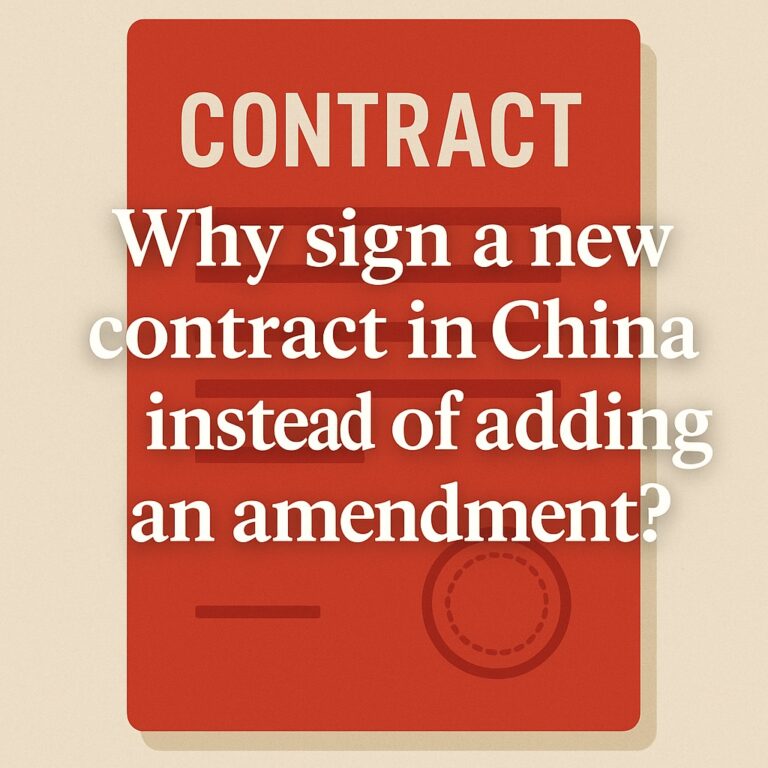
A red contract document with the text: "Why sign a new contract in China instead of adding an amendment?" in large white letters.

Why It’s Better to Sign a New Contract in China Than to Add an Amendment

Why It’s Usually Better to Sign a New Contract in China Than to Add an Amendment When working with Chinese manufacturers or other counterparties, foreign companies often ask our China business lawyers whether they can amend an existing contract instead of signing a new one. On paper, an amendment sounds efficient. In practice, it usually

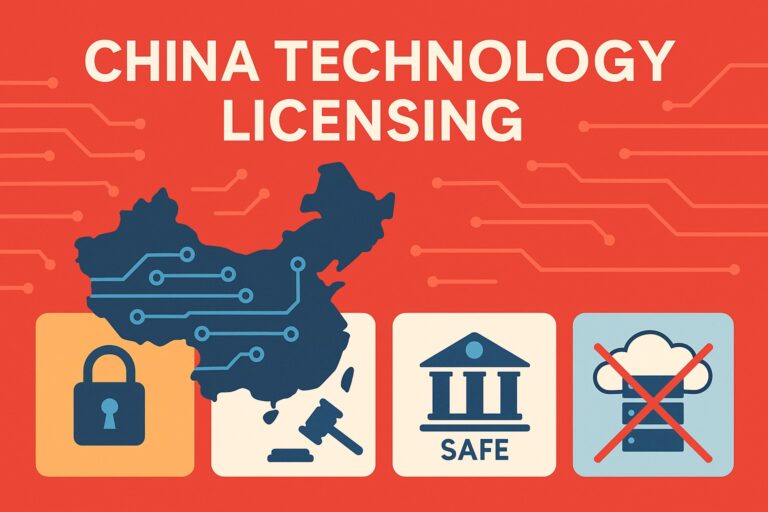
Infographic on China technology licensing, featuring a map of China with digital circuits, and icons for security, regulations, safety, and restricted cloud access.

China Technology Licensing: A Comprehensive Guide

Technology licensing lets you sell into China without a physical presence. Here is a 2025 playbook for diligence, export controls, IP protection, payment verification, and negotiating tactics that actually work.

Subscribe To Our Blog

Explore the latest legal news and insight regarding China, cannabis, international law, immigration, dispute resolution and Web3.