A graphic with the text "Inside the Trademark Mills: How Foreign Filing Abuses Are Undermining the U.S. Trademark System," featuring factory and magnifying glass icons.

China Trademark Mills Abuse the U.S. Trademark System

Inside the Trademark Mills: How Foreign Filing Abuses Are Undermining the U.S. Trademark System Earlier today, I received an unsolicited email from a Chinese IP firm—or someone claiming to be one. It's similar to other messages I’ve received over the years from so-called "firms." It read as follows: We are __________ Intellectual Property Co., Ltd.,

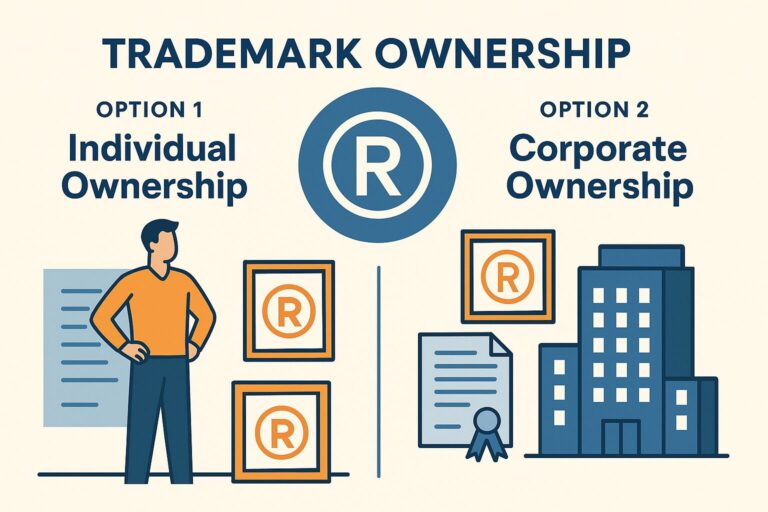
Illustration comparing individual and corporate trademark ownership, with a person on one side and an office building on the other, both displaying registered trademark symbols.

Who Should Own Your Trademarks: You or Your Company?

Who Should Own Your Trademarks? When launching a business, registering a trademark in the countries where you operate (including where you manufacture) is often, and wisely, one of the first steps you as an entrepreneur will take to protect your brand. But a deceptively simple question quickly arises: Who should own the trademark? You as

Illustration of a woman thinking with text "China Trademarks: The Goldilocks Principle of When to Register" and trademark symbols on a red background with a map of China.

When to Register Your China Trademark: The Goldilocks Principle

China Trademarks: The Goldilocks Principle of When to Register When it comes to China trademark registration, timing is everything. File too late, and someone else might beat you to your own brand. File too early, and you risk losing your trademark for non-use. Like Goldilocks, you need to get it just right. The Cautious Client:

Map of Russia and China with national flags, a large trademark symbol, and text warning of risks for foreign trademark holders in China due to Russian non-use cancelation actions.

Russia’s IP Crackdown: A Warning for Brands in China

Russia Non-Use Cancellation Actions Signal Risk for Foreign Trademark Holders in China Since Russia’s invasion of Ukraine in 2022, foreign trademark owners have faced an increasingly volatile and unpredictable intellectual property environment. Forced to navigate a spider's web of sanctions, corporate exits, and deteriorating diplomatic relations, many international brands scaled back or fully withdrew from

Image with the Chinese flag, a trademark symbol, and the text: "Navigating Trademark 'Use' in China: Your Essential Guide" on a blue background.

Navigating Trademark "Use" in China: Your Essential Guide

Navigating Trademark "Use" in China: Your Essential Guide The Cornerstone of Chinese IP Law: Understanding Trademark "Use" Navigating trademark law in China can be challenging, especially when it comes to understanding what counts as legitimate trademark "use." This guide will help you understand the key aspects of trademark use under Chinese law. It offers actionable

Illustration of a person thinking with icons for shopping, shipping, and e-commerce in front of a map of China, captioned "6 Smart Strategies for Selling to China Without Being in China.

6 Smart Strategies for Selling to China Without Being in China

At Harris Sliwoski, we've advised hundreds of companies on how to navigate China safely and profitably. The strategies below reflect what’s working in 2025 for companies that want China market access without China market exposure. Six Smart Strategies for Selling to China Without Being in China Can you tap into China’s trillion-dollar consumer market—without opening

China trademark transfer lawyer

Move Your China Trademarks NOW—Before It’s Too Late

Transferring Your China Trademarks: How to Move Them Safely and Strategically If your China trademarks are still owned by your China-based entity or by a company actively doing business in China, you’re exposed to significant legal and operational risks. These trademarks are valuable IP assets—but because they are registered in China, they remain subject to

Subscribe To Our Blog

Explore the latest legal news and insight regarding China, cannabis, international law, immigration, dispute resolution and Web3.