Two men shake hands in an office filled with engineers and machinery, overlooking a cityscape and harbor through large windows. Beware the Hong Kong Company—opportunity here often comes with unexpected challenges.

The Hong Kong Intermediary Trap: Do Not Bind the Wrong China Company

The Hong Kong Intermediary Trap: Do Not Contract with the Wrong China Company Foreign buyers like dealing with Hong Kong intermediaries. The emails are clear, the invoices look familiar, the bank account feels safer, and the person on the other end usually speaks better English than the factory contact. But in China manufacturing, invoices are
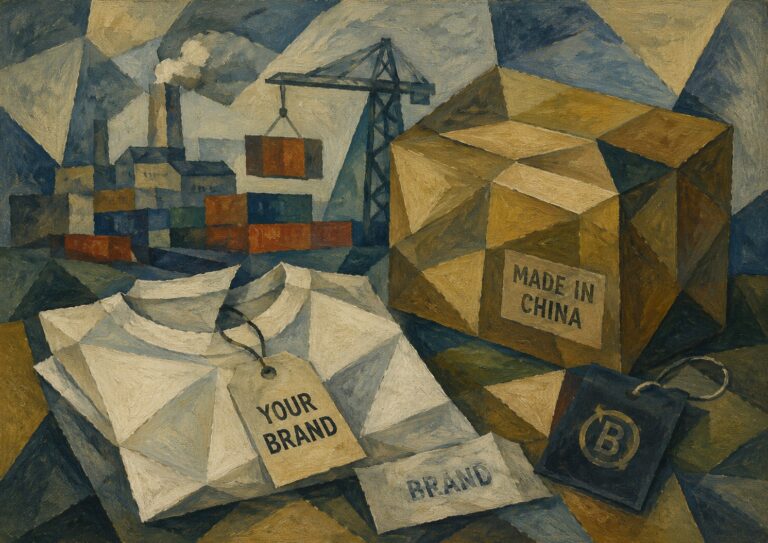
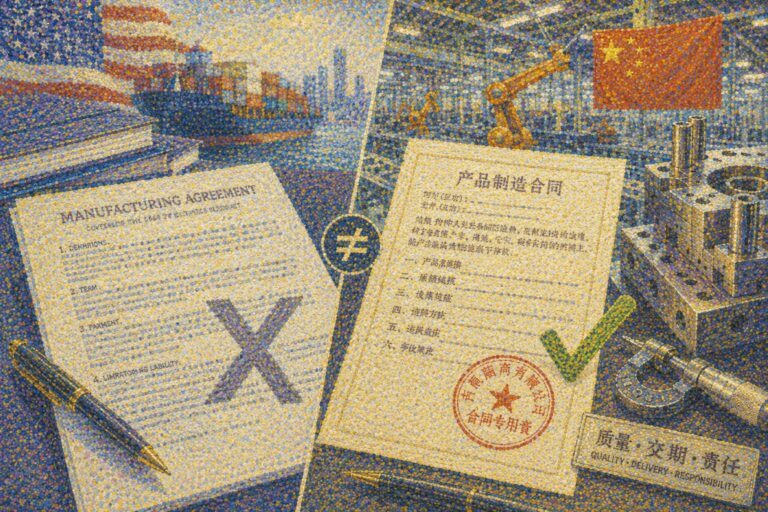
Two contracts side by side: a rejected English “Manufacturing Agreement” on the left and an approved China Manufacturing Contracts document on the right, set against industrial and shipping backgrounds with a Chinese flag.

China Manufacturing Contracts: Why Your Draft Does Not Work

China Manufacturing Contracts: Why U.S. Drafts Do Not Work Clients often send us a U.S. manufacturing agreement and ask whether it can save time or money on a China manufacturing contract. It cannot. Sometimes the ask is smaller: can we just spend a couple of hours reviewing it? We decline because we will not bill

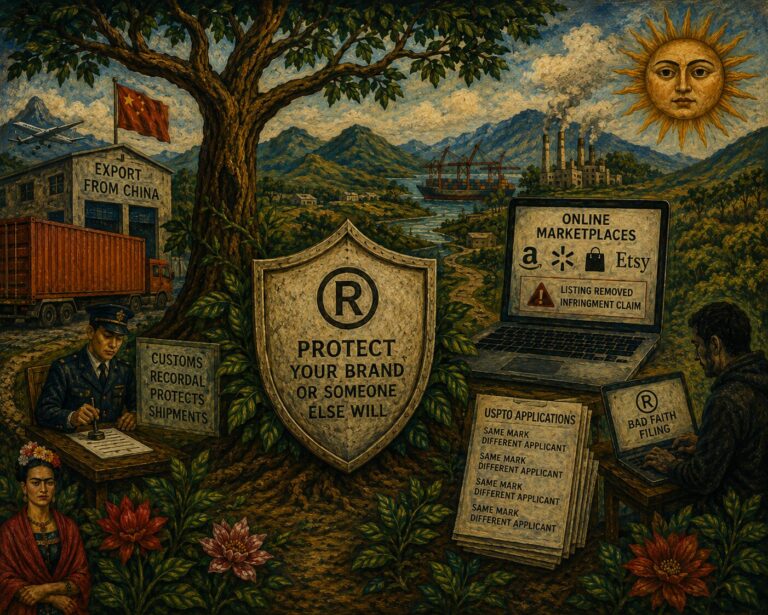
An oil painting depicting intellectual property protection, with elements of import/export, online marketplaces, and legal filings.

Trademark Squatters Are Coming for Your Supply Chain in Swarms Now

Trademark Squatters Are Coming for Your Supply Chain in Swarms Now For years, trademark squatters followed the same general script. They would identify a foreign brand that had not yet registered its trademark in China, the United States, or another key market. Then they would file first and wait. Eventually, the legitimate brand owner would

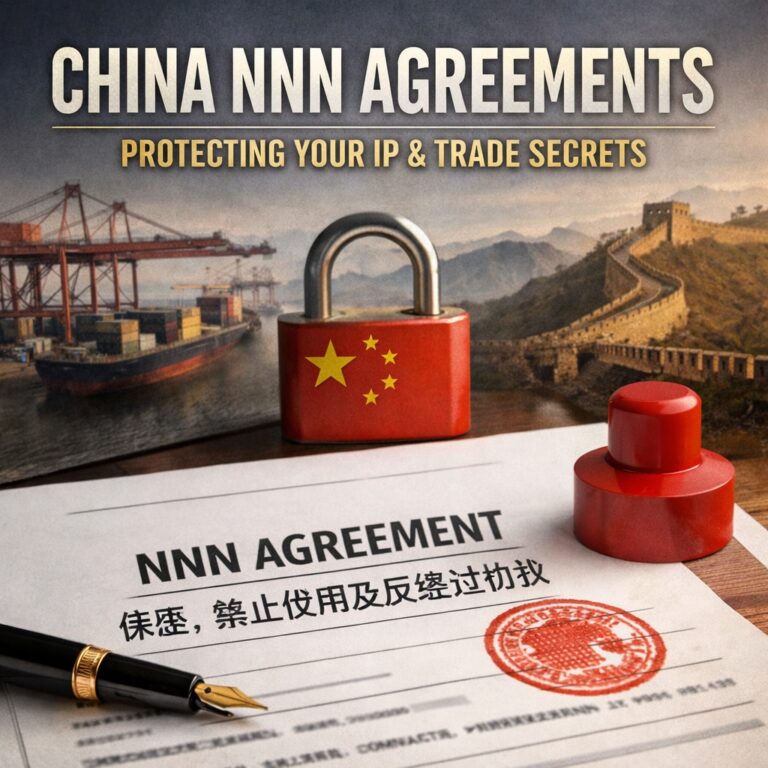
Image of a document labeled "NNN Agreement" with a red seal, a padlock featuring the Chinese flag, and a backdrop of shipping cranes and the Great Wall, symbolizing the importance of China NNN Agreements in international business.

China NNN Agreements: The Hard Truth

China NNN Agreements work when they deter Chinese companies from misusing your IP. Here is when they help, when they do not, and how to draft one that will actually work.

A confused man stands between symbols of money, justice scales, and a judgment document, representing a financial or legal decision dilemma in the context of international litigation.

International Litigation: Winning the Lawsuit Is Often the Easy Part

International Litigation: Winning the Lawsuit Is Often the Easy Part Companies often go into international litigation asking the wrong first question: can we win? That matters, of course. But in many cross-border disputes, it is not the most important question. The more important question is whether winning will ever lead to money. Our international dispute

Mexico manufacturing lawyers

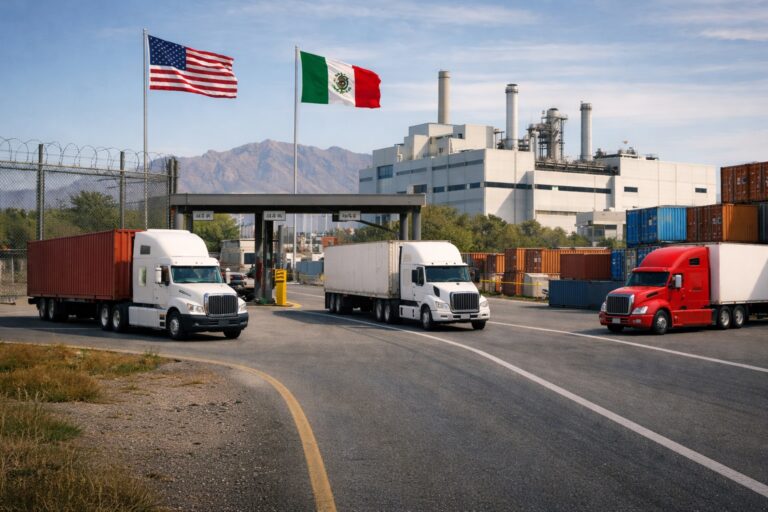
Moving Production to Mexico: What U.S. Companies Get Wrong

Moving production to Mexico is more than just a sourcing decision. It is a legal and operational rebuild. Companies that treat China/Mexico contracts, labor, IP, customs, and transition sequencing as afterthoughts often end up paying to fix avoidable mistakes.

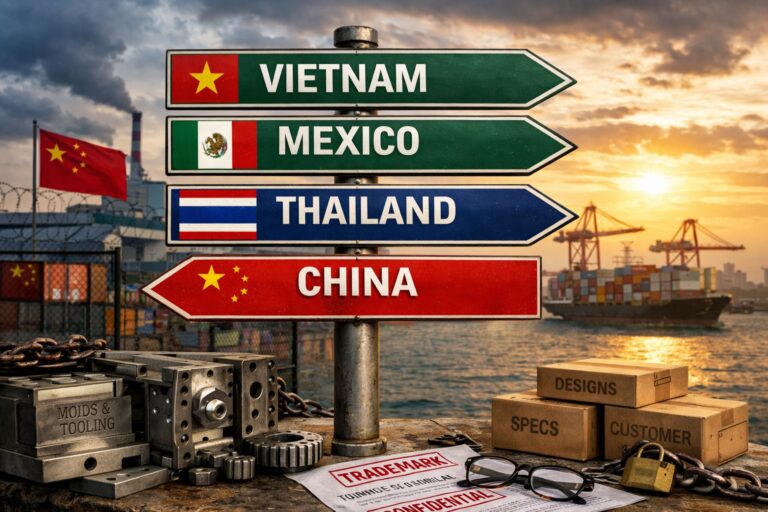
Directional signs with flags for Vietnam, Mexico, Thailand, and China near a shipping port, with containers, cranes, and industrial equipment in the background at sunset.

Your China Exit Strategy Is Also Your IP Strategy

Your leverage is usually strongest before your China factory knows you are leaving and before your plans in the new country become obvious to everyone else. That window does not stay open for long. Once it closes, fixing trademark gaps, tooling problems, and bad contracts becomes slower, more expensive, and much more difficult. Sometimes it does not just make the exit harder. Sometimes it makes the exit fail.

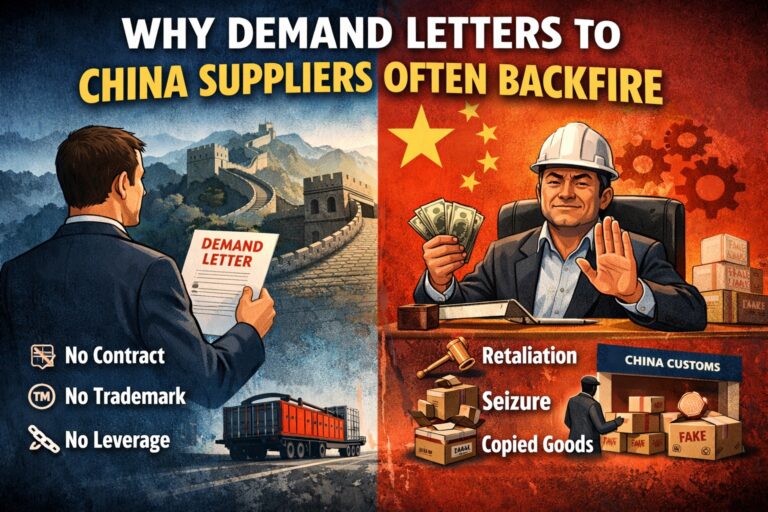
A man holding a demand letter faces China's Great Wall; on the right, a Chinese official rejects money beside symbols of retaliation, seizure, and copied goods, with warning icons below.

Why Demand Letters to China Suppliers Often Backfire

Why Demand Letters to China Suppliers Often Backfire Sending a quick demand letter to a China supplier can destroy your leverage. Twice last week, I had to explain that to companies that were not clients. Both wanted me to immediately send a demand letter to their China suppliers to force shipment of long-delayed product. I

Subscribe To Our Blog

Explore the latest legal news and insight regarding China, cannabis, international law, immigration, dispute resolution and Web3.