Registering Trademarks in Central America: How to Build a Country-by-Country Filing Strategy
A U.S. consumer-products company appoints one distributor to sell its products in Guatemala, El Salvador, and Honduras. It registers its trademark in Guatemala, where sales will begin, and plans to deal with the other countries later. Before the El Salvador launch, a local business applies for the same mark. The U.S. company must now decide whether to oppose the application, seek cancellation, negotiate for the mark, delay its launch, or use a different brand in El Salvador. Every option costs more than an early filing, and none guarantees a quick result.
The distribution agreement covered three countries. The Guatemalan registration covered one.
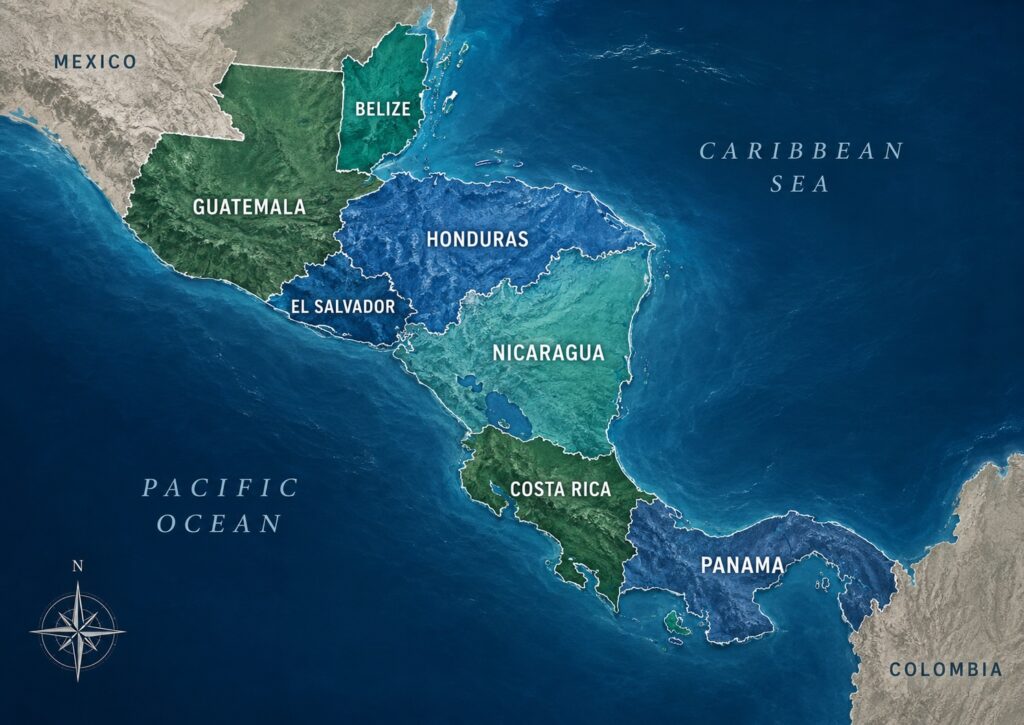
Businesses often enter Central America through regional distributors, shared packaging, Spanish-language advertising, and supply chains that cross several borders. Trademark rights do not follow that commercial structure. There is no single Central American trademark registration. A company seeking protection in Belize, Costa Rica, El Salvador, Guatemala, Honduras, Nicaragua, and Panama needs rights in each country where its brand faces meaningful exposure.
Across Central America, an early application usually gives the brand owner a much stronger practical position. The precise rule varies by country. Guatemala’s law ties trademark ownership to registration and application priority to the filing date and time, while Panama’s law gives priority to earlier use and, when the mark is not in use, to the first application or earliest priority claim.
An early filer is not guaranteed victory. Prior use, treaty priority, well-known-mark protection, bad faith, and a distributor’s or agent’s relationship with the legitimate owner can affect the result. These arguments usually require evidence, local proceedings, and legal expense, which makes them a poor substitute for a timely application.
In my experience, delay causes more trademark problems in Central America than any other filing mistake. The filing order should reflect where the company sells, where it expects to expand, where its products are manufactured and stored, and which third parties will see the brand before launch. This guide explains how to decide which countries belong in the first filing wave and how those applications fit into a broader international trademark strategy.
Regional Commerce Does Not Create Regional Trademark Rights
Central America is commercially integrated in ways that can make it look like a single market. Costa Rica, El Salvador, Guatemala, Honduras, and Nicaragua participate in the Dominican Republic-Central America-United States Free Trade Agreement, commonly known as CAFTA-DR. El Salvador, Guatemala, and Honduras are also pursuing a deeper regional integration process intended to facilitate the movement of goods and people. These arrangements shape how companies enter and serve the region. A distributor in Guatemala may also cover El Salvador and Honduras. Products manufactured in Honduras may be sold in Costa Rica and shipped through Panama. Advertising created for one Spanish-speaking market often reaches consumers in neighboring countries.
The trademark registers remain national. A Costa Rica registration creates no automatic rights in Panama, and an application in Guatemala does not reserve the mark in El Salvador or Honduras. Registering a company name, domain, or social-media account also does not replace a national trademark application. A conflict in one jurisdiction can delay a regional launch, disrupt distribution, and force the company to develop separate branding for one market. The filing plan should account for the full territory in which a distributor or other commercial partner will expose the brand, even when sales begin in only one country.
Build the Filing Plan Around Commercial Exposure
A company with an unlimited trademark budget can file in all seven countries before launch. Most businesses need to set priorities. Market size provides useful context, but it should not determine the filing order by itself. The better questions are where the company exposes the mark, where its operations depend on it, and where another party has both the opportunity and incentive to file first.
Current Sales and Near-Term Expansion
Countries where the company already sells normally belong in the first filing group. Markets scheduled for entry during the next two or three years often belong there as well, particularly when the company has identified a distributor, franchisee, or local partner. Online visibility compresses the timetable. A website accessible throughout Central America does not necessarily establish legally sufficient trademark use in each country, but it makes the brand visible before the company considers itself formally present. Once a mark gains recognition in one country, someone in a neighboring market can identify it and file an application. A company planning regional expansion should investigate availability across its priority countries before its first launch.
Manufacturing and Sourcing
Retail sales are only one source of trademark exposure. Factories, packaging suppliers, warehouses, and subcontractors often see a mark long before consumers do.
A company manufacturing apparel in Honduras may need trademark protection there even if it expects few sales to Honduran consumers. The same analysis applies when goods are assembled, labeled, packaged, or stored elsewhere in the region. A factory may receive product specifications, artwork, label files, molds, packaging designs, and launch schedules. Some of that information will reach employees and subcontractors that have no direct agreement with the brand owner. Registration in the manufacturing country can improve the owner’s position in disputes involving unauthorized production, excess inventory, diversion, or misuse of branded materials. Waiting for local retail revenue ignores when the brand first becomes exposed. A properly drafted international manufacturing agreement remains essential. The contract should control production, confidentiality, tooling, subcontracting, and inventory. The trademark registration supplies the national trademark right.
Distributor and Franchise Territories
The filing program should match the territory granted to each distributor or franchisee. Before appointing a distributor for five countries, the brand owner should investigate whether its mark is available in all five. Where timing permits, it should file the priority applications before the distributor begins advertising, approaching customers, or creating local online accounts. I do not let a distributor’s preferred launch sequence determine the trademark filing sequence. I look at the complete territory the distributor will cover and how quickly its marketing will make the brand visible in each country.
The agreement should identify the trademark owner and state that goodwill arising from authorized use belongs to that owner. It should prohibit the distributor from registering the mark, anything confusingly similar to it, or related company names, domains, and social-media accounts. An effective international distribution agreement should also address enforcement control, legal expenses, customer information, evidence of use, and what happens to local registrations and online accounts when the relationship ends. A contract does not create national trademark rights, but it can prohibit the distributor from claiming ownership and give the brand owner a direct remedy if the distributor files without authorization.
Logistics, Warehousing, and Counterfeiting Risk
Some countries matter because goods pass through them rather than because local consumers buy them in large quantities. Panama is the clearest example. The Colón Free Trade Zone is a prime logistics hub for markets in Central America, the Caribbean, and the Andean region. A company concerned about counterfeiting, diverted inventory, unauthorized transshipment, or misuse of branded packaging should examine where its goods enter, leave, and remain in storage. Panama may belong in the first filing wave even when domestic sales remain modest.
The same analysis applies wherever the company relies on a factory, warehouse, free-zone operator, freight forwarder, or major regional distributor. A useful trademark map follows the products as well as the customers.
Make the Core Filing Decisions Before Disclosure
Once the company identifies the countries that matter, it should coordinate its searches and applications. Seven national filings do not require seven unrelated strategies.
Search the Priority Countries Together
Trademark clearance must be conducted country by country. A search in Guatemala does not establish availability in El Salvador or Honduras, even when one distributor will cover all three. The searches should still be ordered and reviewed together. A conflict in a peripheral market may justify postponing or excluding that country. A conflict in a country central to the company’s manufacturing or distribution plan can make the proposed mark unsuitable for the wider region.
An early search leaves room to choose another mark, narrow the goods or services, approach the earlier owner, change the launch sequence, or accept a measured risk. Those options become much harder after packaging has been produced and distributors have begun advertising. Corporate-name databases, domain searches, marketplace listings, and general internet searches can reveal useful information. None replaces a search of the relevant national trademark register.
File Before the Mark Becomes Public
Businesses often wait until they have chosen a factory, signed a distributor, or confirmed market demand. Each step exposes the mark to people outside the company. Distributors receive territory plans and sales presentations. Factories see product names and packaging. Sourcing agents send information to subcontractors. Trade-show visitors photograph products months before launch.
Most commercial partners do not try to register a client’s mark. The small number that do can create years of legal and operational trouble. A bad-faith applicant can also be a stranger that notices an unprotected brand gaining traction. Prior use, foreign registrations, contractual obligations, reputation, and evidence of bad faith can affect a dispute. Their importance varies by country and depends on the evidence. Filing first usually gives the company a cleaner and less expensive position than trying to recover the mark later.
For most businesses, the priority applications should be filed before a public launch, distributor appointment, trade show, franchise offering, or detailed manufacturing disclosure.
Calendar the Paris Convention Priority Deadline
A company that recently filed a U.S. trademark application should immediately calendar the six-month Paris Convention priority period. The United States and all seven Central American countries are parties to the Convention. A qualifying application filed within the six-month period may claim priority from the U.S. filing date for the same mark and the goods or services covered by the earlier application, if priority is properly claimed and local requirements are satisfied.
This can give a company time to coordinate searches, budgets, and local counsel without surrendering its original priority date. The deadline should be treated as a hard planning date, not as a reason to postpone clearance or disclose the mark prematurely. I routinely ask for the first filing date at the beginning of an international trademark project. A company that contacts counsel in month seven has already lost an option that might have materially improved its position.
Put the Applications in the Correct Owner’s Name
The applicant should ordinarily be the entity that owns and controls the brand. Applications filed by distributors, employees, local partners, or loosely related affiliates create avoidable ownership problems. Even an honest filing made in another party’s name for convenience can become difficult to transfer after a reorganization, distributor termination, or dispute over money.
The company’s distribution, manufacturing, licensing, and joint-venture agreements should support the filing structure. Each agreement should identify the trademark owner and require the other party to cooperate with applications, renewals, evidence collection, and enforcement.
The company should also decide whether its existing trademark owner is the right entity for a growing international portfolio. Moving marks between affiliated companies after filing can require assignments, local recordations, tax analysis, and additional legal expense. It is usually cheaper to settle the ownership structure before the regional applications are submitted.
Prioritize the Core Word Mark
For most portfolios, the core word mark is the best first filing. A word-mark application protects the name without limiting the registration to one logo design. This flexibility matters when packaging, typography, and Spanish-language marketing vary from country to country. Logos, slogans, product designs, and trade dress can follow when their independent value justifies the cost. A distinctive logo may deserve its own application, but the brand name usually travels more easily across markets and design changes.
The owner should also identify the version of the name consumers will encounter. Filing an English-language mark while marketing under a Spanish translation, abbreviation, or local variation can create a gap between the registration and actual use.
Coordinate the Goods and Services
Consistent descriptions make a regional portfolio easier to manage. Copying the same description into every application without local review creates its own problems. National offices vary in their treatment of broad terminology, class headings, software, retail services, technical services, and emerging technologies. Wording accepted by the United States Patent and Trademark Office may draw an objection elsewhere.
The applications should cover the company’s actual and reasonably planned business. A narrow description can leave the next product or service outside the registration. An inflated list can increase costs, complicate examination, and create future non-use exposure. The owner, mark, classes, and core descriptions should be coordinated across the region. Local counsel can then make the adjustments required by national law and office practice.
Decide Whether a Country-Specific Brand Is Acceptable
A company that encounters an earlier trademark sometimes adopts a different name in that country. This can resolve the immediate conflict, but it creates continuing operational costs.
Separate packaging, websites, advertisements, distributor instructions, and enforcement programs may be required. Cross-border commerce makes the division hard to maintain because consumers encounter both names online and regional advertising rarely stops at a national border.
A local rebrand is sometimes unavoidable. An earlier owner may possess valid rights and have no interest in selling, transferring, or accepting coexistence. The company should resolve that issue before producing inventory. Coordinated clearance gives management time to select a mark that works across the priority countries or to plan a controlled local exception.
The Madrid System Reaches Only Belize
The Madrid System allows a trademark owner to seek protection in participating jurisdictions through an international registration administered by the World Intellectual Property Organization. Each designated country still applies its own law when examining and enforcing the mark.
As of August 5, 2026, Belize is the only Central American country participating in the Madrid System. The Madrid Protocol entered into force for Belize on February 24, 2023. Costa Rica, El Salvador, Guatemala, Honduras, Nicaragua, and Panama require national filing routes. Madrid can make sense when Belize forms part of a larger international portfolio. Direct filing may be more practical when Belize is the only desired designation or the owner wants local counsel to control the application from the outset.
An international registration remains dependent on its basic application or registration for five years. Problems affecting the basic mark during that period can affect the international registration and its designations. For a company filing throughout Central America, Madrid covers only Belize, so the other six jurisdictions still require national applications.
Central America Trademark Filing Priorities at a Glance
| 国家 | Filing route | Consider including the country in the first filing wave when |
|---|---|---|
| 伯利兹 | National filing or Madrid designation | The business sells into Belize, targets English-speaking or tourism markets, or already uses Madrid for a wider portfolio |
| 哥斯达黎加 | National filing | The regional operation involves medical devices, technology, technical services, research, or advanced manufacturing |
| El Salvador | National filing | A Guatemala or Honduras launch will expose the brand before formal Salvadoran entry |
| 危地马拉 | National filing | Guatemala is the first consumer market or the base for distribution across northern Central America |
| Honduras | National filing | Manufacturing, sourcing, packaging, warehousing, or subcontracting occurs in the country |
| Nicaragua | National filing | Regional visibility is increasing or a launch, distributor appointment, or expansion milestone is approaching |
| Panama | National filing | Goods move through ports, warehouses, free zones, or channels vulnerable to diversion and counterfeiting |
Your company's filing order should depend on your company’s products, operating model, supply chain, and expansion schedule.
Country-by-Country Trademark Filing Priorities
Belize Trademark Strategy
Belize differs from the rest of Central America because a company can use either a direct national filing or a Madrid designation. Its English-language system can also make the process feel more familiar to U.S. businesses. A company already managing an international portfolio through Madrid may find it efficient to add Belize as a designation. Direct filing can be preferable when Belize is the only new market, local handling is important, or the goods and services require close review.
The decision should turn on the company’s actual plans for Belize, including distribution, tourism-related sales, English-language marketing, and any wider Caribbean strategy.
Costa Rica Trademark Strategy
Costa Rica deserves early attention from companies operating in medical devices, life sciences, technology, advanced manufacturing, and related services. According to PROCOMER’s 2026 MedTech materials, Costa Rica hosts 13 of the world’s top 25 medical-device original equipment manufacturers. The sector has expanded beyond basic assembly into complex devices and research and development.
For these companies, the trademark analysis should extend beyond the finished product. A mark may appear on software interfaces, technical manuals, components, training materials, repair programs, research services, and facility signage before conventional consumer sales begin.
Costa Rica should move up the filing list when the local operation includes regulated products, software, technical services, research, or advanced manufacturing. The class strategy should reflect how the company earns revenue and supports its products, not just what appears on the box.
El Salvador Trademark Strategy
El Salvador remains a separate filing decision even when one distributor covers Guatemala, El Salvador, and Honduras. The deeper integration process among those countries does not combine their trademark registers. A regional distributor still creates exposure in three national systems.
Advertising and distributor activity in Guatemala can make the brand visible in El Salvador long before formal Salvadoran sales begin. Companies using one distributor across northern Central America should therefore clear the mark in all relevant markets before the first regional launch. El Salvador’s new Intellectual Property Law took effect in February 2025 and created a new legal and administrative framework. Companies relying on older procedural guides should confirm that the information reflects the current system.
Guatemala Trademark Strategy
Guatemala often belongs in the first filing group for consumer brands and companies planning distribution across northern Central America. A company may launch first in Guatemala and appoint one distributor for Guatemala, El Salvador, and Honduras. Filing only in the initial market creates an obvious gap once regional advertising begins.
Searching all three countries before the Guatemala launch can reveal whether the same mark will work throughout the distributor’s territory while the company still has time to change course.
Honduras Trademark Strategy
A Honduras filing decision should account for production exposure as well as projected sales. If a company uses a Honduran factory, the mark may become visible when the factory receives final labels, packaging, molds, or branded specifications. Suppliers, warehouse operators, employees, and subcontractors can gain access to the same materials before the public launch.
I generally move Honduras into the first filing wave when the company will manufacture or package branded products there, even if local consumer sales are expected to remain small. The relevant risk arises from the production relationship and the number of people who will handle the brand.
The manufacturing agreement should identify the trademark owner, restrict use of the marks, control excess production and subcontracting, and require the return or destruction of branded materials when the relationship ends. Registration gives the owner a stronger position if a production or diversion dispute later arises.
Nicaragua Trademark Strategy
Nicaragua is often deferred when a company has no immediate launch, distributor, or supply-chain activity there. For a business with a limited initial budget, that can be a reasonable decision. A brand operating in neighboring countries can still become visible in Nicaragua through regional websites, distributors, trade shows, social media, and cross-border travel. If another party files first, the owner may need to oppose the application, seek cancellation, negotiate a transfer, or adopt a different local mark.
I am comfortable deferring Nicaragua when there is no meaningful commercial exposure, but I want the decision tied to a specific review date. The trigger might be a distributor appointment, product launch, financing event, or approval of a broader Central American expansion plan.
Panama Trademark Strategy
Panama often belongs in the first filing wave for valuable consumer brands and companies concerned about logistics, diversion, or counterfeiting. Its ports and the Colón Free Trade Zone give the country commercial importance beyond the size of its domestic market. Products may enter storage, pass through logistics facilities, be repackaged, or move between regional markets.
A company should consider whether its products are likely to pass through Panama, whether unauthorized goods could use the same channels, and whether local enforcement would matter to the business. Domestic sales alone can understate Panama’s importance. The value of a Panama registration lies in Panama-specific enforcement and supply-chain leverage. It does not extend trademark protection into the rest of Central America, Colombia, or the Caribbean.
Budget for the Entire Filing Process
There is no reliable single price for registering a trademark across Central America. Government charges differ by country and arise at different stages. One office may collect much of the amount when the application is filed. Another may separate filing, publication, registration, certificate, and renewal charges.
The number of marks and classes also drives cost. Filing one word mark in one class in two countries is a different project from protecting a word mark and logo across several classes in all seven. A complete estimate should account for national-office charges, local counsel, clearance searches, translations, powers of attorney, authentication, publication, and responses to objections. Oppositions, assignments, licenses, and later portfolio changes will add expense when they become necessary.
Businesses should compare estimates through registration rather than comparing only the first filing charge. They should also ask what the estimate excludes and which events would generate additional fees.
Maintaining a Central American Trademark Portfolio
Registration does not end the work. The owner must track renewals, preserve country-specific evidence of use, and continue reviewing whether the portfolio matches the business. Non-use rules and evidentiary standards vary by country. A registration that remains unused for the applicable statutory period can become vulnerable to cancellation. Records should be preserved while the underlying transactions remain easy to document.
Useful evidence can include invoices to local customers, shipping and customs records, dated photographs of products and packaging, local advertising, distributor reports, and archived pages showing that the goods or services were offered in the country. The evidence should connect the mark, the covered goods or services, and the jurisdiction. A global website accessible in Honduras does not necessarily establish commercial use there. An invoice to a Honduran customer, supported by shipment and packaging records, creates a more useful record.
Use by a distributor or licensee should also be documented. The agreement should confirm the owner’s control and define the authorized use. Local counsel should determine whether a license, assignment, merger, name change, or ownership transfer must be recorded. A sound global IP protection strategy includes regular portfolio reviews. Those reviews should identify approaching renewals, ownership changes, inactive registrations, new products, and countries that have become important since the original applications were filed.
Frequently Asked Questions About Registering Trademarks in Central America
Can One Trademark Registration Cover All of Central America?
No. Belize, Costa Rica, El Salvador, Guatemala, Honduras, Nicaragua, and Panama maintain separate national trademark systems. Belize can be designated through the Madrid System, but the resulting protection applies only in Belize.
Which Central American Countries Participate in the Madrid System?
Belize is currently the only Central American member. Costa Rica, El Salvador, Guatemala, Honduras, Nicaragua, and Panama require national filing routes.
Does a U.S. Trademark Registration Protect a Brand in Central America?
No. A U.S. registration creates rights under U.S. law and does not provide trademark protection in any Central American country. A qualifying U.S. application can support a Paris Convention priority claim, but the company must still file applications in the countries where it wants protection.
How Long Does a U.S. Applicant Have to Claim Paris Convention Priority?
The priority period for trademarks is six months from the first qualifying application. The later application must cover the same mark, and priority extends only to the goods or services covered by the earlier filing. Local filing and documentation requirements still apply, so the applications should not be left until the final days of the period.
Should a Company File in Every Central American Country?
Not necessarily. The filing plan should reflect the company’s sales, manufacturing, sourcing, distribution, logistics, and enforcement exposure. A company entering one or two markets can begin more narrowly, provided it searches the deferred countries and sets a timetable for reviewing them.
Should a Company File Where It Manufactures but Does Not Sell?
Often, yes. Manufacturing exposes the brand to factories, suppliers, subcontractors, employees, packaging companies, and warehouses. The decision should be based on supply-chain exposure and the importance of the manufacturing relationship rather than local retail sales alone.
What Should a Company Do If Its Distributor Registers the Mark?
The brand owner may have grounds to oppose the application, seek cancellation, enforce its contract, or negotiate a transfer. The available procedures and likely outcome depend on the country, the agreement, the filing history, and the evidence of bad faith or prior rights. Filing in the owner’s name before appointing the distributor is safer. The distribution agreement should also prohibit unauthorized trademark, company-name, domain, and social-media registrations and require the transfer of rights obtained on the owner’s behalf.
How Much Does It Cost to Register a Trademark in Central America?
There is no meaningful regional price. The cost depends on the number of countries, marks, and classes; national fee structures; local-counsel charges; document requirements; and whether an application encounters an objection or opposition. The estimate should identify the expected cost through registration, the items excluded, and the events that would generate additional fees.
Protect the Brand Before the Regional Plan Depends on It
A regional commercial plan requires coordinated trademark work even though the legal rights remain national. The company should search and file in the countries tied to its sales, manufacturing, distribution, and logistics before the mark becomes widely visible. Early clearance and filing give the company more control over its brand, its launch schedule, and its relationships with distributors and factories. They also reduce the likelihood that expansion will depend on litigation, negotiation, or a costly local rebrand.
Harris Sliwoski’s international trademark lawyers work with local counsel to coordinate trademark searches, applications, portfolio management, and enforcement strategies throughout Central America and other international markets.