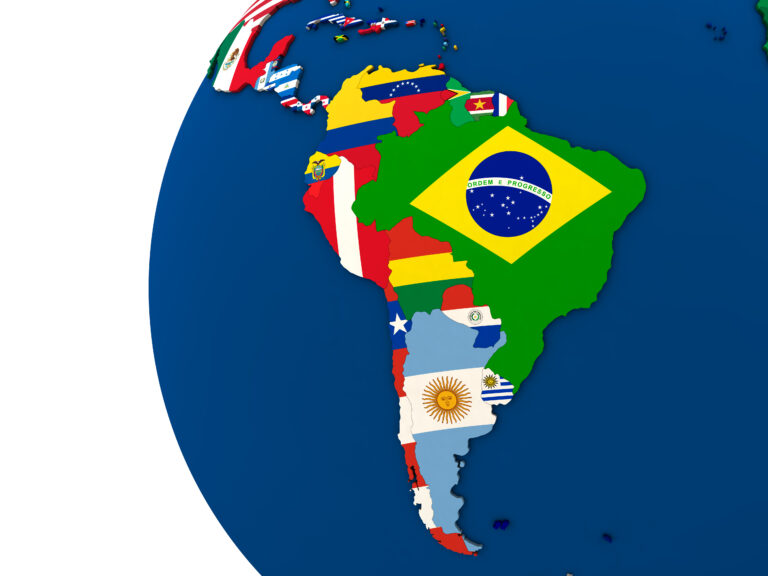
Latin America map with flags

What Growing China-Latam Ties Mean for Your Business

China-Latam ties are growing. This is an important development for businesses, and not just those in China and Latin America. For businesses in the United States and most of the global north, China presents a conundrum. The lure of its vast markets remains strong, and for many companies it remains the go-to location for manufacturing or sourcing their products. At the same time, there's increasing concern at home about China's behavior. If it was "just" a matter of human rights violations, there might be less concern overall with possible spill-on effects. However, there's also a—not unjustified—feeling that China has unfairly muscled its way to economic dominance. As a result, companies must walk a fine line as they seek the benefits of China engagement, in order to placate increasingly frustrated customers at home. But things are different in the global south.


Web3 and blockchain

Learning Chinese Web3 Vocabulary

Web3 China vocabulary. Chinese companies are investing in web3 technologies despite the countrywide crypto mining ban. Here is help learning Chinese web3 vocabulary.

China too big to fail

Is China Too Big to Fail?

Is China too big to fail? Evergrande’s insolvency shows that state control over China's banking system does not eliminate systemic risk in the Chinese economy.

worthless China contracts

Is Your China Contract Worthless?

Pretty much every week, at least one of our China lawyers will -- after a five minute review -- have to tell a potential client their contract is worthless. We see all kinds of worthless contracts. NDA and NNN Agreements, Manufacturing Agreements, Licensing Agreements, Distribution Agreements, Product Development Agreements, Employment Agreements. It goes on and on. And as tempted as I am to ask why these companies would think a US law contract that calls for disputes to be resolved in Boston or Des Moines would make sense in China, I always refrain from doing so, and I have seen some doozies, including the following:

Translate contracts for China

Translate Your Contract For China? Not Gonna Do It

Every few months someone will write one of my law firm's China lawyers asking them to translate an already written contract for China. We always refuse, not just because we are lawyers not translators, but because doing so would be a complete waste of time because contracts that work for the United States, Europe, Australia, Canada, etc., do not work for China and putting those contracts into Chinese won't change that. Indeed, it is ridiculous to think that an American business owner could draft a contract in English and that contract would work for China.

China NNN Agreements

China NNN Agreements and How to Give Them Real Teeth

As I noted in my previous post on China NNN agreements, for enforcement purposes you must make sure your China NNN agreement has teeth. To understand how enforcement works under Chinese law, we need to do a little work. The first point to realize is that the standard approach for enforcing an IP contract under the common law (this is the law in the United States and the UK and most of the British world) has no application under Chinese law. In the common law system, lawyers are mostly concerned with two issues. First, the rule that disfavors liquidated damage provisions. Second, the law/equity distinction that allows only for injunctive relief when a law (damages) remedy is not available.

The three keys to Protecting Your IP in China

The Three Keys to Protecting Your IP in China and Internationally

A new client the other day asked me what it should be doing to protect its IP in China and I asked whether they wanted the ten minute version or the ten day version. Fortunately for the both of us (and not surprisingly), they chose the ten minute version and the below is basically that.

Supply Chain risks

The Importance of Knowing, Understanding, and Being Able to Map your Supply Chain

As we continue to document in our customs and trade blog posts, import compliance and enforcement risk is higher than ever. And as recent experience suggests, this trend is not going to change anytime soon. By taking the preemptive supply chain verification and substantiation measures noted above, U.S. importers can manage and reduce these risk factors – and, in so doing, avoid becoming another CBP enforcement statistic.

trademarking Chinese words

Trademarking Chinese Words

For some brands, trademarking Chinese words or phrases might hit just the right note in terms of image. BBQ pork buns sound appetizing, but describing them as char siu bao provides a special touch. And for established brands from the Chinese-speaking world, Chinese words may already be an indelible part of their identity. Yet the

Subscribe To Our Blog

Explore the latest legal news and insight regarding China, cannabis, international law, immigration, dispute resolution and Web3.