









Nadja Vietz

Nadja focuses on assisting American and European companies in their foreign direct investments into Spain and Germany and on assisting European companies with their foreign direct investment into the United States.

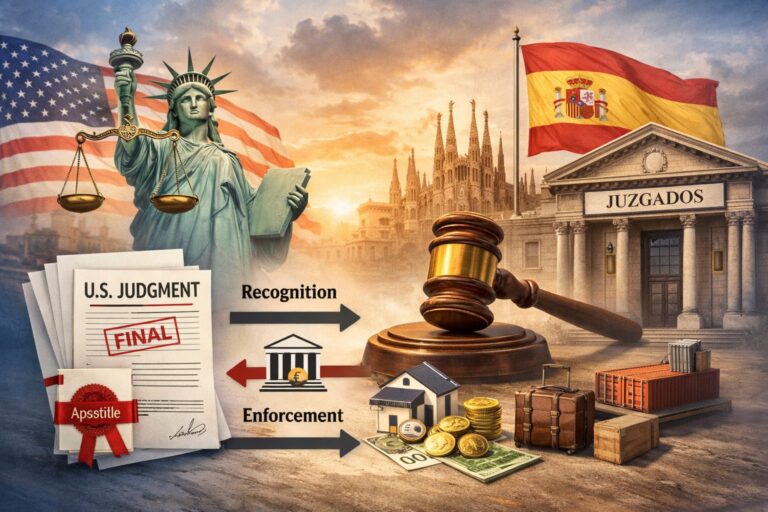
Illustration showing U.S. legal documents, a gavel, and symbols of money with the Statue of Liberty and U.S. flag on one side, and a Spanish courthouse and flag on the other, representing judgment recognition and enforcement.

Enforcing US Judgments in Spain: Recognition, Strategy, and Reality

Enforcing US Judgments in Spain: Recognition, Strategy, and Reality You won a final US money judgment against a Spanish defendant with assets in Spain. Now you want to get paid. Here is the reality: a US judgment does not enforce itself in Spain. To collect in Spain, you generally need a Spanish court to recognize


A Legal Primer on Doing Business in the United States

Doing Business in the United States: The Laws You Should Know

As the country with the world’s largest economy, the United States offers some of the best business opportunities in the world. However, the US legal system can also pose complex regulatory hurdles for foreign enterprises. Navigating these legal intricacies is crucial for foreign companies seeking to minimize risk and operate successfully in the expansive US commercial

Will Your U.S. Judgment Be Enforced Abroad?

Will Your U.S. Judgment Be Enforced Abroad?

My law firm is frequently contacted by U.S. lawyers with judgments they are seeking to enforce overseas. The lawyer is seeking our assistance to enforce its U.S. court judgment against a foreign company that did business with the lawyer’s U.S.-based client. The procedural history is nearly always the same. The litigator served the defendant and,

Money Laundering Prevention Undermines Spanish Corporate Law

Spain AML and UBO Compliance and Why Deals Stall

Spain AML and UBO Compliance: Why Deals Stall Over Beneficial Ownership and Source of Funds A foreign company can negotiate an acquisition in Spain, arrange the financing, agree on the documents, and still miss its closing because its bank or notary cannot verify who ultimately owns the buyer or where the money came from. This