











احذر من شروط الشحن FOB
If you purchase products from China (or most anywhere else oversees), do NOT use FOB as a shipping term.
If you purchase products from China (or most anywhere else oversees), do NOT use FOB as a shipping term.

Citing the ongoing genocide, crimes against humanity, and other human rights abuses committed by the People’s Republic of China (China) against ethnic and religious minority groups in the western part of the country, Congress acted to strengthen CBP’s ability to enforce the forced labor prohibitions set forth in Section 307 of the Tariff Act of 1930 by enacting the Uyghur Forced Labor Protection Act (UFLPA) on 23 December 2021. To this end, the UFLPA applies a presumption that goods produced/manufactured (either wholly or in part) or mined in the Xinjiang Uyghur Autonomous Region (XUAR) or by entities designated on the UFLPA Entity List are made with forced labor and prohibited from entering the U.S.

A startup U.S. consumer product company with an ultra-hot new product line wrote one of my law firm's international lawyers asking what they should do to sell their product through a Chinese company that had expressed interest in being the U.S. company's "Chinese representative." After a few emails on various different legal subjects, our international lawyer wrote the following email (modified a bit) that provides such good and basic business advice that I wanted to share it here.
Whenever my law firm is retained to represent a company that is looking to provide goods or services to a new overseas buyer. China, one of the first things we want to know are the payment terms. If our client is going to get 100% payment before it provides thegoods or services, a written contract may not even be necessary. The old expression about posession being nine tenths of the law holds true, though I'd probably update it to say that it's 99 percent of the law when it comes to selling to many emerging market countries.
Contents of this Article: Mexico is Highly Focused on the USMCA Mexican Agriculture Has Lessons for the U.S. and Beyond Mexican Manufacturing Cannot Replace China Yet Mexican Business Leaders are Ready in Spite of Their Government Utah is Focused on Mexico’s Success as a Solution to Several Problems All together now: “¡Bienvenidos a México!” The

Best Practices for Emerging Market Countries. The two minute version. Make the law your friend. Use good contracts. Protect your IP.

Miami is increasingly becoming an important hub for Asia business. The city’s enduring status as the “capital of Latin America” is perhaps the main driver of this trend, but ties to other parts of the world also play an important role, as does Miami’s (and all of Florida’s) own attractiveness as a business destination. The
But lately our international litigation team has been seeing a vertible ton of a particularly sinster scam: The “Sha Zhu Pan” (Chinese: 杀猪盘) or, “Butchering the Pig” scam. The typical email we receive from a victim of this forex or crypto scam is usually something like this.
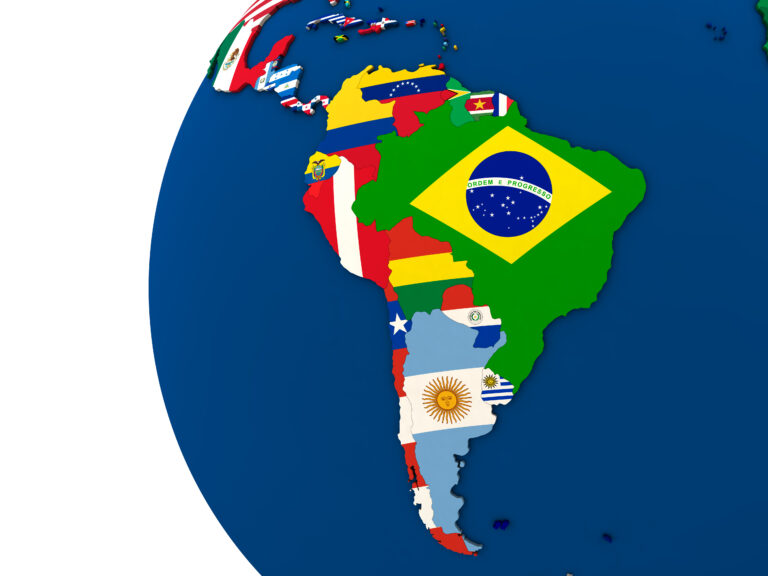
China-Latam ties are growing. This is an important development for businesses, and not just those in China and Latin America. For businesses in the United States and most of the global north, China presents a conundrum. The lure of its vast markets remains strong, and for many companies it remains the go-to location for manufacturing or sourcing their products. At the same time, there's increasing concern at home about China's behavior. If it was "just" a matter of human rights violations, there might be less concern overall with possible spill-on effects. However, there's also a—not unjustified—feeling that China has unfairly muscled its way to economic dominance. As a result, companies must walk a fine line as they seek the benefits of China engagement, in order to placate increasingly frustrated customers at home. But things are different in the global south.
Recently I sat in a presentation with some executives who were sharing best practices for tech companies when dealing with China and the world generally. These were companies that had great success at home and abroad but not surprisingly found China a more difficult market to tackle. Here are some of their tips, along with