








Trademarking Foreign Words in the United States
The fashion label Vetements spent nearly five years trying to register its name as a U.S. trademark for clothing. The problem was that vêtements is French for "clothing." The United States Patent and Trademark Office (USPTO) refused registration, and Vetements argued that the agency had no business translating the word when only a small fraction of Americans speak French. In May 2025, in In re Vetements Group AG, the Federal Circuit affirmed the refusal. It held that VETEMENTS was generic for clothing and online clothing stores, which made it unnecessary to decide whether the name was merely descriptive.
For some brands, trademarking foreign words or phrases might hit just the right note in terms of image. The word "bakery" might make consumers in Seattle think of their local Safeway, while boulangerie brings to mind flaky, buttery croissants in Paris. The mistake is assuming that a word that sounds distinctive to most Americans is distinctive under U.S. trademark law. The USPTO does not necessarily treat foreign words as meaningless simply because most Americans do not understand them. Once it translates a word, it can refuse registration because the English meaning describes what you sell, or because the word conflicts with an existing trademark that looks and sounds nothing like it.
The Doctrine of Foreign Equivalents
Vetements ran into what the USPTO calls the doctrine of foreign equivalents. Under it, a foreign word and its English equivalent can be considered confusingly similar if the word comes from a language familiar to an appreciable segment of American consumers. Likelihood of confusion is grounds for refusing registration under Section 2(d) of the Trademark Act of 1946, 15 U.S.C. § 1052(d). The USPTO uses the same translation when it decides whether a mark is descriptive or generic, which is where Vetements lost. Translating someone else's mark into Spanish, French, Italian, or Chinese does not necessarily get you around it either, because the USPTO looks at what the words mean even when their spelling and pronunciation are completely different. You can search your proposed name, find nothing that looks or sounds like it, and still run into a registered mark that means the same thing. A search that skips translations is not one I would rely on.
The example the USPTO likes to give involves WOLF and LUPO, the Italian word for "wolf." The Trademark Trial and Appeal Board (TTAB) found the two confusingly similar for clothing in In re Ithaca Industries, Inc., 230 USPQ 702 (TTAB 1986). The Board also affirmed a refusal to register BUENOS DIAS for bar soap based on the registered GOOD MORNING mark for shaving cream in In re American Safety Razor Co., 2 USPQ2d 1459 (TTAB 1987). It found EL SOL and SUN confusingly similar for related clothing and footwear in In re Hub Distributing, Inc., 218 USPQ 284 (TTAB 1983). AZUL and BLUE could presumably be confusingly similar too. Two words that share a meaning are not automatically interchangeable as a legal matter, though, and the outcome would depend on the goods, the other elements of the marks, and how consumers encounter them. The USPTO's threshold for what counts as a familiar language has not been very high. The TTAB has treated French and Russian as familiar enough to trigger the doctrine on evidence that under 1% of Americans spoke them. In re Thomas, 79 USPQ2d 1021 (TTAB 2006); In re Joint-Stock Company "Baik", 80 USPQ2d 1305 (TTAB 2006).
The federal courts treat the doctrine as a guideline rather than an absolute rule. In Palm Bay Imports, Inc. v. Veuve Clicquot Ponsardin, 396 F.3d 1369 (Fed. Cir. 2005), the Federal Circuit said the doctrine should apply only when the ordinary American purchaser is likely to stop and translate the foreign word into English. It found that improbable for VEUVE, French for "widow," on sparkling wine, and reversed the Board's finding that VEUVE ROYALE was confusingly similar to THE WIDOW. The applicant still lost, because the court affirmed the refusal based on two of Veuve Clicquot's other marks, VEUVE CLICQUOT and VEUVE CLICQUOT PONSARDIN. Winning the translation argument did not win the registration.
In Vetements, the court rejected the argument that a majority of Americans must understand the language. It held that the doctrine generally applies unless it is unlikely that the ordinary American purchaser would translate the word. The court put the burden of showing that on the party opposing translation, and found it enough that an appreciable number of Americans could translate VETEMENTS. The setting worked against Vetements as well, since a word meaning "clothing" appeared on clothing.
Fancy Foreign Words Won't Make Your Mark Fanciful
A foreign word can sound exotic to an American and still be generic or merely descriptive under U.S. trademark law. Section 2(e)(1) of the Trademark Act, 15 U.S.C. § 1052(e)(1), bars registration of merely descriptive marks absent an applicable basis such as acquired distinctiveness. Generic terms cannot be registered, even if consumers have come to associate them with a particular company. TMEP § 1209.03(g) explains how the doctrine of foreign equivalents applies to both. If the English meaning of your proposed trademark describes what you sell, its foreign origin is not necessarily going to save your application.
COFFEEHOUSE describes establishments selling coffee, though it should face no descriptiveness problem for gardening services or batteries. CAFÉ is descriptive of coffee shops, if not generic for them. Words like "café" and "boulangerie" are so widely used here that they are arguably no longer foreign words at all. Words most Americans never encounter take more work, because the examiner has to establish what the word means and then decide whether that meaning describes or names the goods. A merely descriptive mark can sometimes become registrable by acquiring distinctiveness, but a generic term cannot. Vetements argued that it had built substantial recognition in the fashion industry, but that could not save VETEMENTS once the name was found generic.
I have written about the USPTO's treatment of PITORRO, the Puerto Rican word for moonshine rum. The USPTO initially refused PITORRO for rum as descriptive and generic. The applicant pointed out that the USPTO's own description of pitorro called it illegal. It argued that its licensed rum therefore could not be pitorro, and it got its registration on that record. By the time I wrote about it, Puerto Rico had made it possible to distill pitorro legally, and the USPTO might reach a different result on the original application today. When an application for LUGO'S CRAFT PITORRO came in nine years after the PITORRO application, the USPTO treated CRAFT PITORRO as generic and required a disclaimer. As far as genericness goes, PITORRO is fair game for a line of baseball caps, where it would be arbitrary in the way APPLE is arbitrary for computers.
Translation and Transliteration: What the USPTO Requires
Applications containing non-English wording must include an English translation, subject to the limited exceptions recognized by USPTO examination practice. See 37 C.F.R. § 2.32(a)(9). For non-Latin characters, the application must include a transliteration together with either an English translation of the transliterated term or a statement that the term has no English meaning. See 37 C.F.R. § 2.32(a)(10). The translation tells the USPTO what the wording means, and the transliteration spells out non-Latin characters in Latin letters. Similar romanized wording can represent different words with different meanings, which is why the USPTO wants both. For applications filed on or after January 18, 2025, failing to provide a required translation or transliteration in the initial application can also trigger an additional USPTO fee for each affected class.
You cannot expect the USPTO to accept your translation at face value. Under TMEP § 809.01, examining attorneys must work out the meaning of non-English wording and the transliteration of non-Latin characters before conducting a proper search. They then search the wording as it appears, the transliterated wording, and the English translation. They can consult dictionaries, online materials, and other reliable references, and they can require corrections when a translation is inaccurate. The USPTO recognizes exceptions for foreign terms that already appear in English dictionaries and for certain foreign articles and prepositions used with English wording. It also recognizes one for words from dead or obscure languages.
A mark Din Tai Fung registered in 2021 shows both requirements at work. It includes the restaurant's name in Chinese characters, and Registration No. 6,431,563 records the transliteration DIN TAI FUNG and the English translation "tripod is calm and rich." When characters have no meaning as a combination, the applicant says so. Registration No. 5,905,702, for 同仁堂 (Tong Ren Tang), the Chinese pharmaceutical company, translates each character and then states that the three together have no specific meaning.
Indigenous and Obscure Languages: The Wawa Example
The third exception is the one that matters for Indigenous languages. Under TMEP § 809.01(b)(iii), it is generally unnecessary to translate wording from dead or obscure languages. The theory is that a word whose meaning American consumers do not recognize works in the marketplace much like an invented brand name. The USPTO applies no fixed speaker-count test and does not classify every Indigenous language as obscure. It decides the question case by case, based on what the term would mean to the people who buy the goods.
In General Cigar Co. v. G.D.M. Inc., 988 F. Supp. 647 (S.D.N.Y. 1997), the court concluded the applicant had no obligation to disclose that COHIBA means "tobacco" in the Taíno language, because American cigar purchasers would not have known that. In In re Spirits of New Merced, LLC, the TTAB found no evidence that the general public understood the proposed Miwok derivation of YOSEMITE, or that it was anything other than obscure to them. This exception governs the translation statement in an application. Whether the doctrine of foreign equivalents applies in examination is a related but separate question, so a missing translation statement does not make a word's meaning irrelevant.
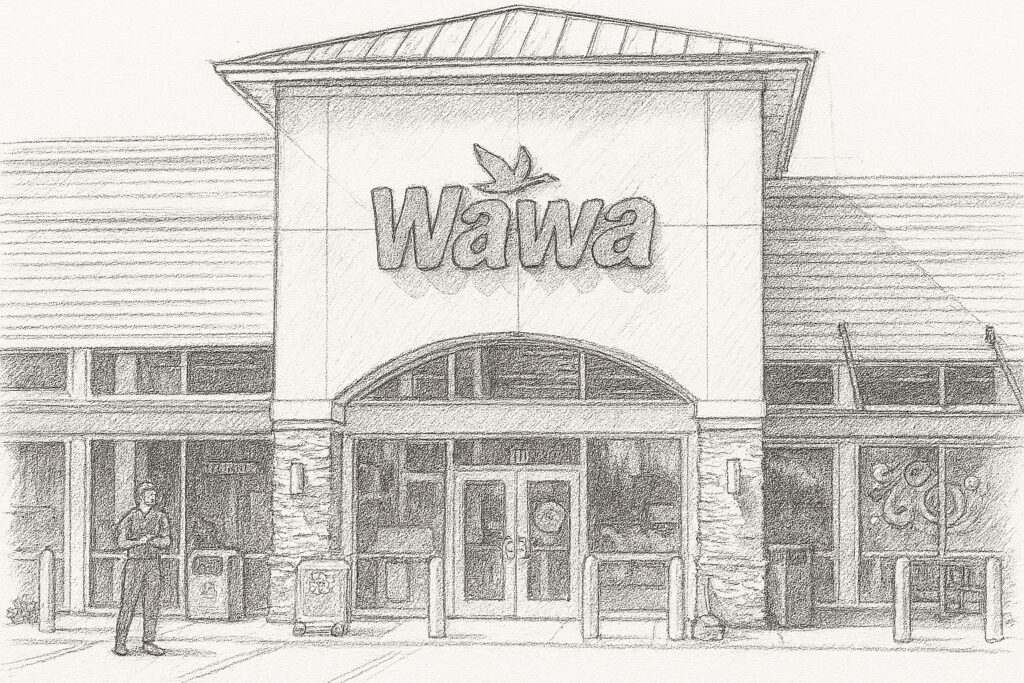
Wawa's federal registrations have repeatedly identified WAWA as a Native American word meaning "wild goose," starting with Registration No. 890,189 in 1970. The owner of the marks is Wild Goose Holding Co., Inc. Two WAWA design marks registered in 2024 show WAWA with a flying goose but carry no translation statement. They are Registration No. 7,552,388, for retail store services featuring gasoline, and Registration No. 7,572,176, for products including coffee, tea-based beverages, and ice cream. Whatever the reason, the absence of a translation statement does not, by itself, invalidate those marks or weaken Wawa's trademark rights.
Suppose a company applies to register WILD GOOSE for coffee. Relying solely on the doctrine of foreign equivalents, Wawa would face a meaningful obstacle in opposing it. It would need evidence that an appreciable number of American consumers can translate WAWA and would actually do so when buying coffee or gasoline. Its own translation statements would be relevant, but they do not establish that convenience-store shoppers understand the name that way. I suspect most Wawa customers think of WAWA as the name of their convenience store and nothing more. Any stronger case would come from ordinary trademark infringement and likelihood-of-confusion principles. That analysis would look at Wawa's registered marks, including its goose design, along with their commercial impression, the goods involved, and the rest of the evidence. A WILD GOOSE mark for an unrelated product presents different issues. Anyone planning a goose-themed brand should run an ordinary clearance search rather than assume the obscure-language exception settles the question.
A business choosing an Indigenous-language name should research the word's meaning and origin, including how the relevant community uses it. Historical spellings can differ from contemporary usage. An internet translation can be incomplete or wrong, especially for languages with few speakers and thin reference materials. If you find conflicting accounts of a word's meaning, disclose and address the uncertainty accurately instead of picking the translation most convenient for registration. A business does not necessarily need special permission just because a proposed mark has Indigenous linguistic origins. Whether separate legal restrictions apply depends on the circumstances, including any relevant tribal, federal, state, or other law. Before building a substantial brand around a word whose origins you do not fully understand, consult knowledgeable speakers or representatives of the associated community where appropriate. And do not mistake an exception to the USPTO's translation rules for permission to disregard the language or community a name comes from.
Chinese Characters and Pinyin
Chinese is neither dead nor obscure, and the doctrine of foreign equivalents applies to Chinese-language trademarks, including words written in pinyin, the romanization system commonly used for Mandarin. A company that wanted to register NIHAO, the Chinese greeting, would need to look hard at existing HELLO marks. Nihao is about as familiar as Chinese gets in the United States. Plenty of Chinese restaurants here use it, and China Southern Airlines named its inflight magazine after it. A shared meaning does not settle the analysis, because the USPTO must still consider whether consumers would translate the word where they encounter it and whether the marks are otherwise likely to cause confusion.
The same translation issues arise with less familiar pinyin terms and marks written in Chinese characters. The USPTO does not ignore their meanings simply because most Americans cannot read or pronounce them. In In re Advanced New Technologies Co. (TTAB 2023), the Board required a translation of ZHIMA, the pinyin for "sesame." The evidence showed that Alibaba, the original applicant, chose the name to evoke "open sesame" from the Ali Baba story.
Chinese characters do not receive different treatment simply because most Americans cannot read them. The same general principles apply to Japanese, Korean, Arabic, and other non-Latin scripts. Romanization adds its own complications, because different words can share a spelling and because it matters which Chinese you mean. BEZAU looks like an invented word, but it romanizes the Cantonese pronunciation of 啤酒, beer, which Mandarin pinyin renders as pijiu. A craft brewer claiming BEZAU as a fanciful coinage would have some explaining to do. We cover these issues in more detail in Trademarking Chinese Words in the United States.
The filing rules trip people up as well. When I was in Houston a couple of years ago, I talked with Chinese and Vietnamese restaurant owners and managers who had questions about protecting their names in the United States. Two issues that came up apply to anyone filing a non-English mark. First, Chinese characters are not in the USPTO's standard character set, so a Chinese-character mark has to be submitted as a special-form drawing rather than as a standard-character mark. The characters still function as the trademark, and special form is a filing requirement, not a reduction of the mark to a logo. Second, Vietnamese uses Latin letters, but the USPTO's standard character set includes only some Vietnamese letters with diacritics. The "à" in Hà Nội is on it and the "ộ" is not, so a Vietnamese name containing a letter missing from the list may need to be filed in special form as well. Companies planning Chinese-character trademarks should understand how Chinese-character trademarks are registered in the United States.
Companies doing business in China have another reason to pay attention. A brand can have an English name, a Chinese-character name, and a pinyin version, each carrying its own U.S. trademark risk. Clearance therefore has to cover the Chinese characters, their possible English translations, and the relevant transliterations along with the English spelling. The foreign equivalents doctrine does not guarantee that all versions will be treated as identical, and registering one version does not automatically protect the others. China handles translations and transliterations under its own rules, which we discuss in our article on trademark similarity across languages. A company selling or manufacturing in China also needs to register its trademarks there.
Playing Games With the USPTO Is Not Advised
Not surprisingly, applicants sometimes try to pull a fast one on the USPTO. They claim a word has no meaning in a foreign language, or translate it in a way designed to ease registration. Examining attorneys have foreign-language dictionaries, translation resources, and the internet, and they can and do question an applicant's statements about meaning. Your translation is also published in the Trademark Official Gazette and printed on the registration certificate, where competitors and potential challengers can read it. A careless translation creates needless examination problems, and a knowingly false material statement can raise more serious issues depending on the circumstances. So if you want to argue that your SHOUJI mark really means "severed head" (首级, shǒují) rather than "cellphone" (手机, shǒujī), be our guest. Just have the Chinese characters, pronunciation, and reliable linguistic evidence to back it up.
How to Clear and File a Foreign-Language Trademark
All of this should happen before you spend money developing and launching the name. That is why a proper trademark clearance search belongs in the naming process. For a foreign-language mark, that means searching the proposed wording, its English translation, recognized transliterations, and meaningful spelling variations. For an Indigenous-language term, it also means reliable research into the word itself. Then ask whether the translated term is descriptive or generic for what you sell. Do not assume a conflicting mark is harmless because it sits in a different international class. Trademark classes are administrative categories, and goods or services in different classes can still be related enough to create a likelihood of confusion.
Be consistent and accurate in your applications. Provide translations and transliterations where required, and make sure you have a sound basis for relying on any exception. If related applications use different translation statements, understand why and keep a record of the explanation. Registering a mark that contains foreign wording does not automatically protect its English translation, and a competitor's use of the English equivalent is not necessarily permissible either. Companies protecting brands in several countries also need an international trademark strategy that accounts for how their names are understood in each market.
A registration abroad does not clear a name for use in the United States. We previously described a case in which a company asked our firm to register the name of a new product in China. We recognized the name because a large international company already used it for services in the same broad industry. We told the client the name was a serious problem and declined to file. The client had another China agent file, obtained its China registration, and started selling in the United States under the new name. Within weeks, a cease-and-desist letter arrived from the larger company's U.S. counsel. The client rebranded rather than fight, and the cost and market disruption were severe enough that the business failed.